Artwork
If you knew how pretty you are!
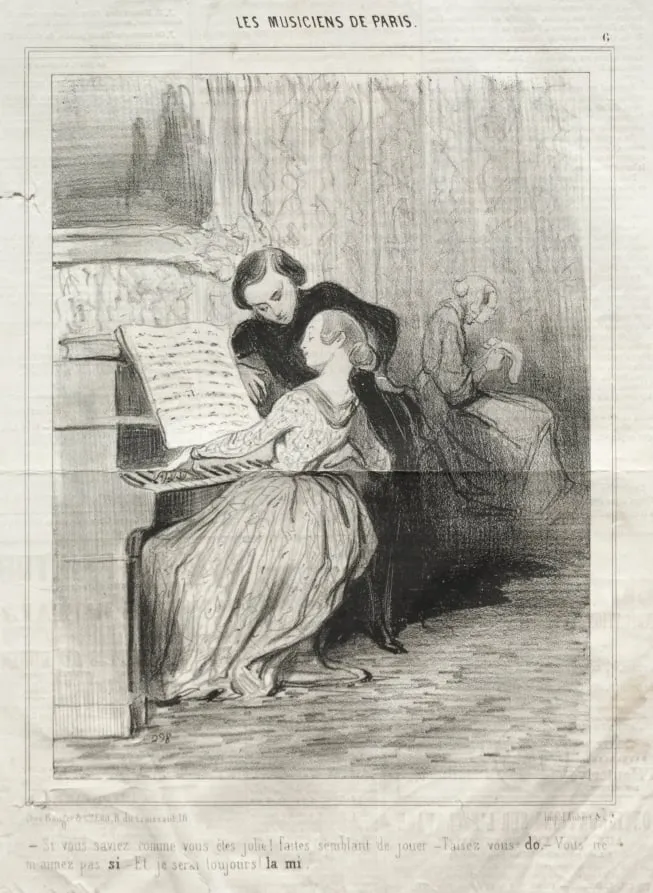
If you knew how pretty you are! is a print by the Romanticist artist Honoré Daumier. It dates from 1841 and is held in the collection of the Cleveland Museum of Art. This lithograph, published in Le Charivari on March 6, 1843, is the sixth plate from the series The Musicians of Paris.
About this work
Overview
This lithograph, published in Le Charivari on March 6, 1843, is the sixth plate from the series The Musicians of Paris. Originally introduced in La Caricature between 1841 and 1842, it reflects Honoré Daumier’s ongoing engagement with serialized satirical imagery. The work captures a fleeting, intimate moment between two figures, framed by the social rhythms of mid-19th-century Parisian culture.
Subject & Meaning
His elongated nose and tight grip on sheet music suggest awkwardness, while her poised expression implies awareness of his admiration.
The image depicts a man in a top hat, fixated on a young woman who returns his gaze with a knowing smile. His elongated nose and tight grip on sheet music suggest awkwardness, while her poised expression implies awareness of his admiration. The title, ironic in tone, critiques self-delusion and performative vanity, common targets in Daumier’s social commentary on urban life and romantic pretensions.
Technique & Style
Daumier employed lithography to achieve fluid, expressive lines with minimal detail, emphasizing gesture over realism. The contrast between the man’s exaggerated features and the woman’s restrained poise heightens the narrative tension. His use of shadow and simplified forms reflects a keen understanding of caricature as a tool for psychological insight, not mere ridicule.
History & Provenance
The print was produced during Daumier’s most active period as a political and social satirist for Parisian illustrated journals. It circulated widely through Le Charivari, a publication known for its sharp wit and accessibility. Though originally part of a serialized series, individual plates like this one were later collected by private patrons and institutions, preserving their cultural resonance.
Context
In the 1840s, Parisian print media flourished as a platform for public critique. Daumier’s work responded to the rising middle class’s preoccupation with appearances and social climbing. His depictions of musicians, clerks, and lovers often revealed the gap between public persona and private insecurity, mirroring broader anxieties in post-revolutionary French society.
Legacy
Daumier’s prints, including this one, influenced later generations of illustrators and cartoonists by demonstrating how everyday scenes could carry layered social critique. Though created for ephemeral publications, his lithographs gained recognition for their psychological depth and formal economy, securing his place in the history of modern visual satire.
Artist & collection
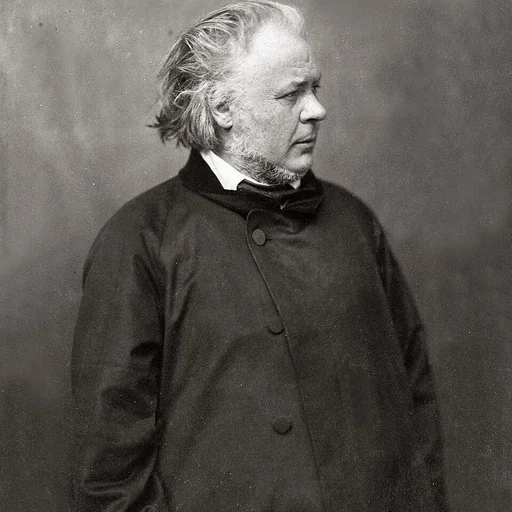
Artist
Honoré-Victorin Daumier was a French painter, sculptor, and printmaker, whose many works offer commentary on the social and political life in France, from the Revolution of 1830 to the fall of the Second French Empire in 1870.









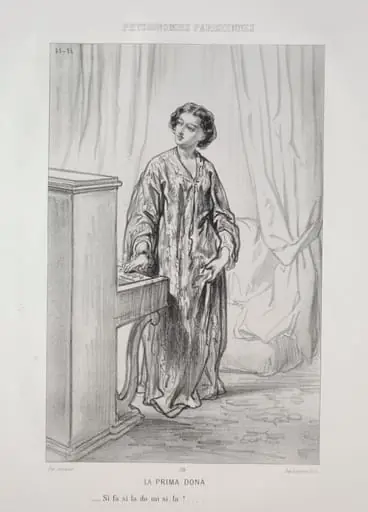 La Prima Dona
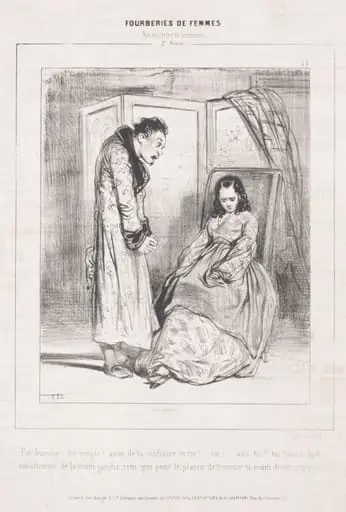 Fourberies de Femmes: En matière de sentiment
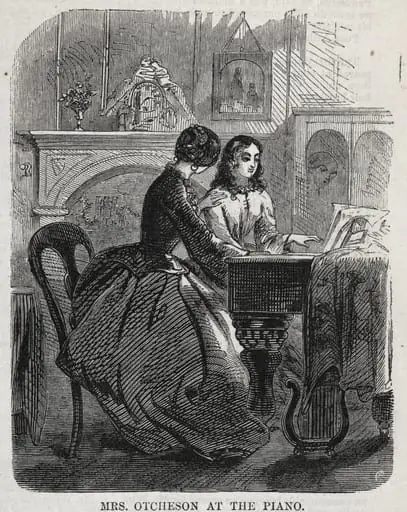 Mrs. Otcheson at the Piano
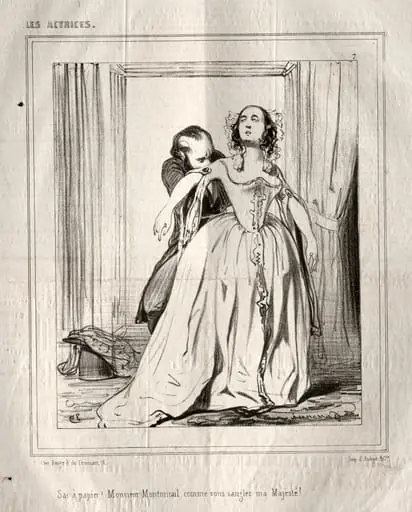 Les Actrices: Sac à papier! Monsieur Montmirail comme vous sanglez ma Majesté!
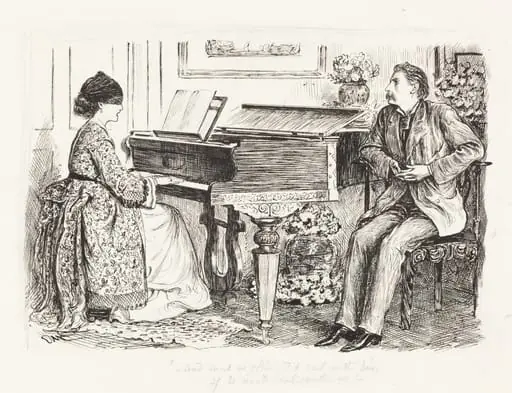 "--And mist or glim, I'd sail with him, if he would sail with me--"
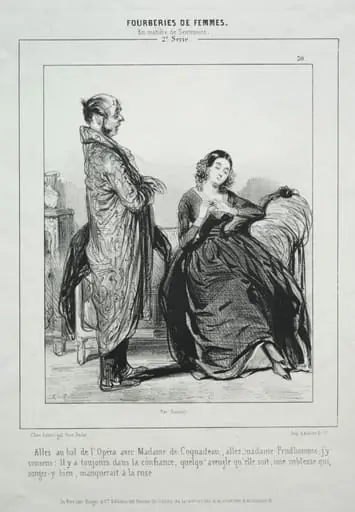 Fourberies de Femmes En Matière de Sentiment
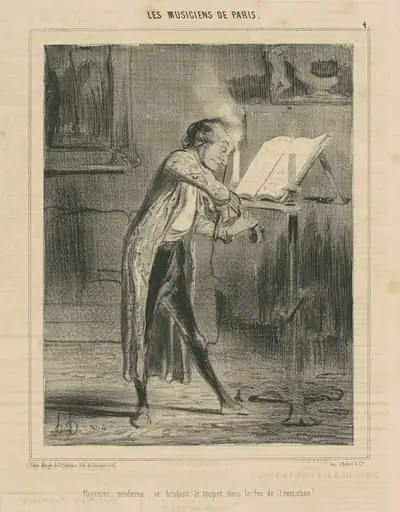 Paganini moderne ...
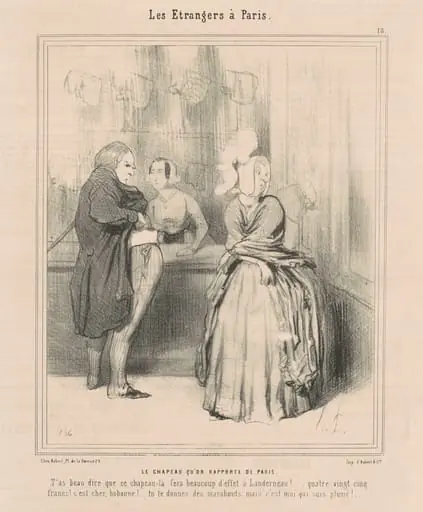 Le chapeau qu'on rapporte de Paris
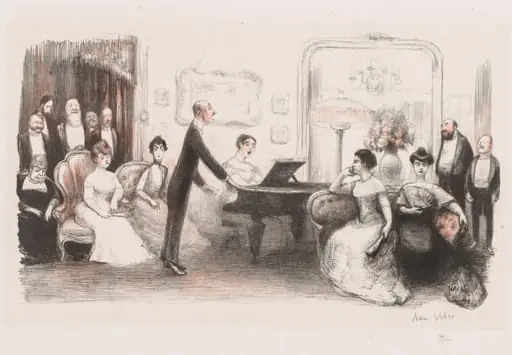 La Soirée Bourgeoise
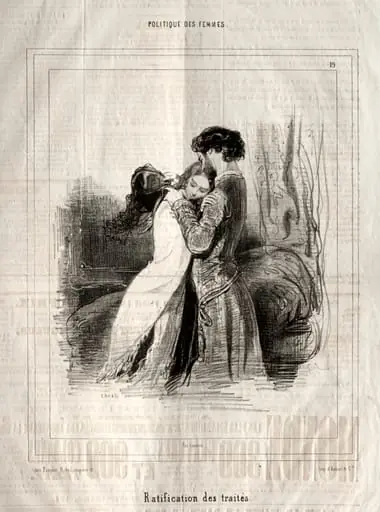 Politique des Femmes: Ratification des traités
 Les Martyrs
 Les Actrices: Le Rôle