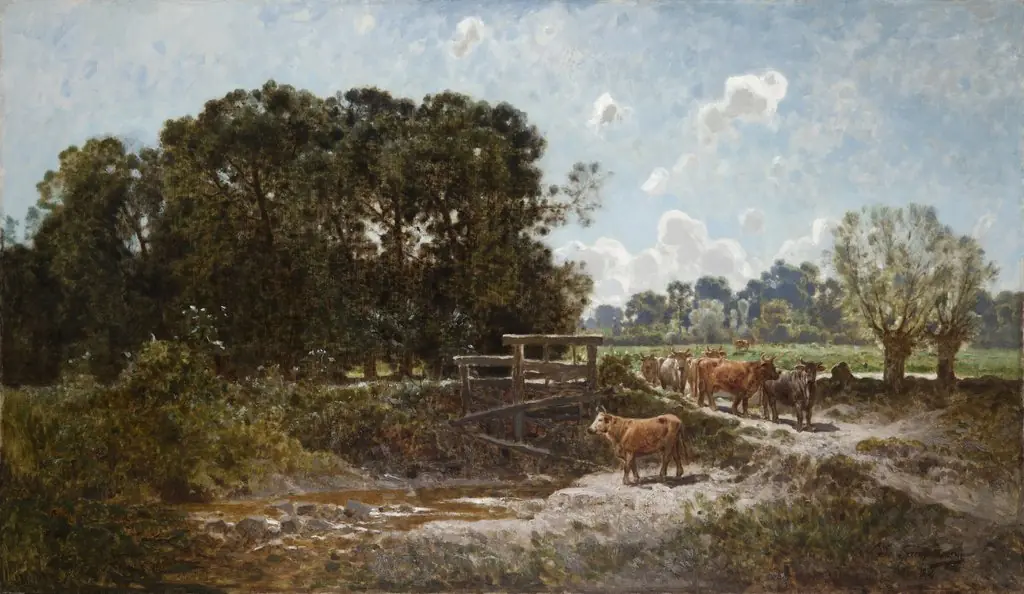
Artwork
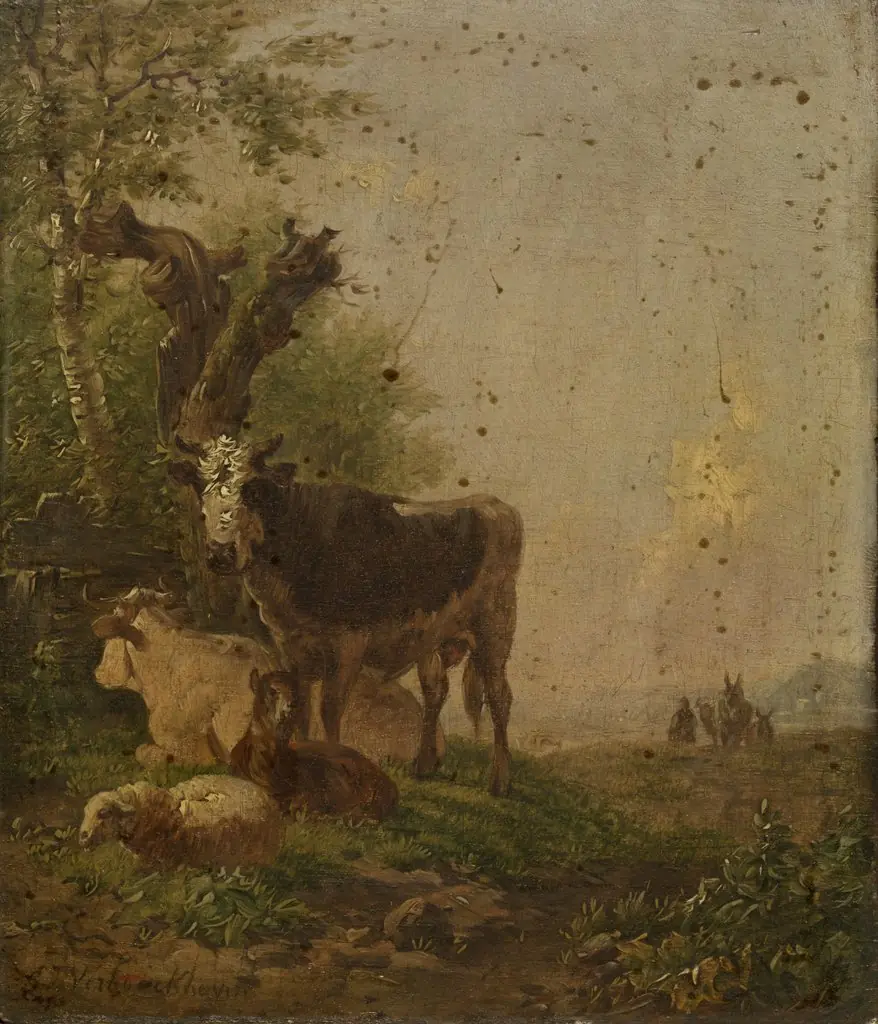
Farmyard with Cattle
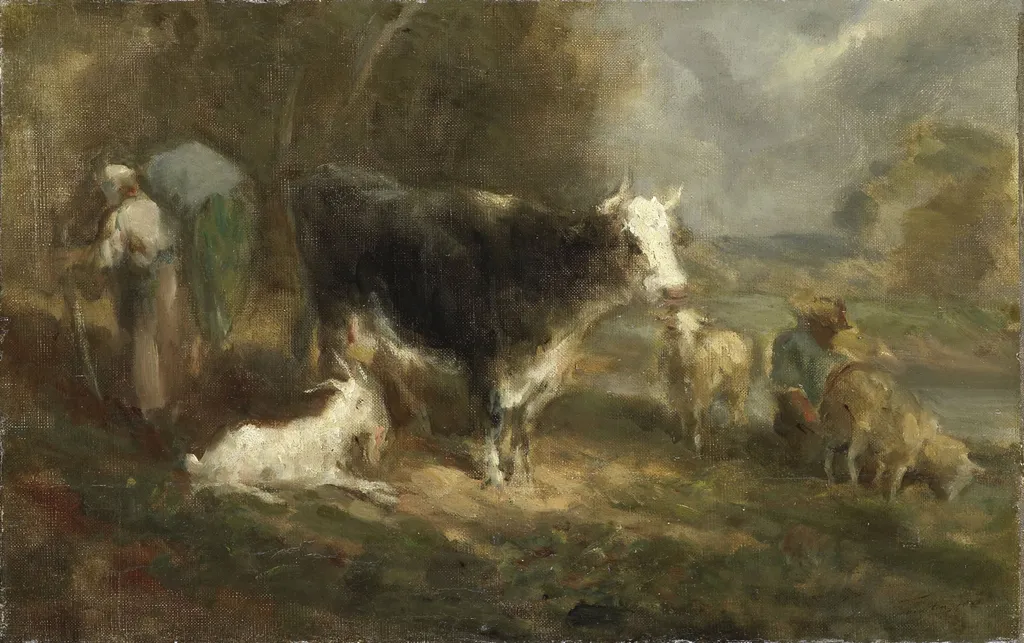
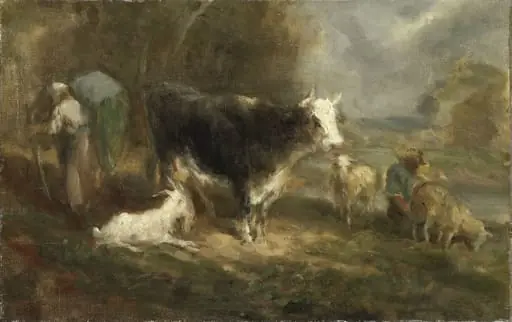
Farmyard with Cattle is an oil painting by the Realist artist Eugène Fromentin. It dates from 1849 and is held in the collection of the Rijksmuseum.
About this work
Overview
The work is part of the Rijksmuseum’s collection, where it reflects the artist’s early interest in pastoral subjects before his later travels to North Africa.
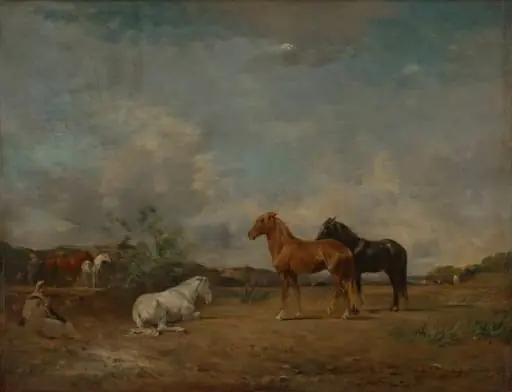
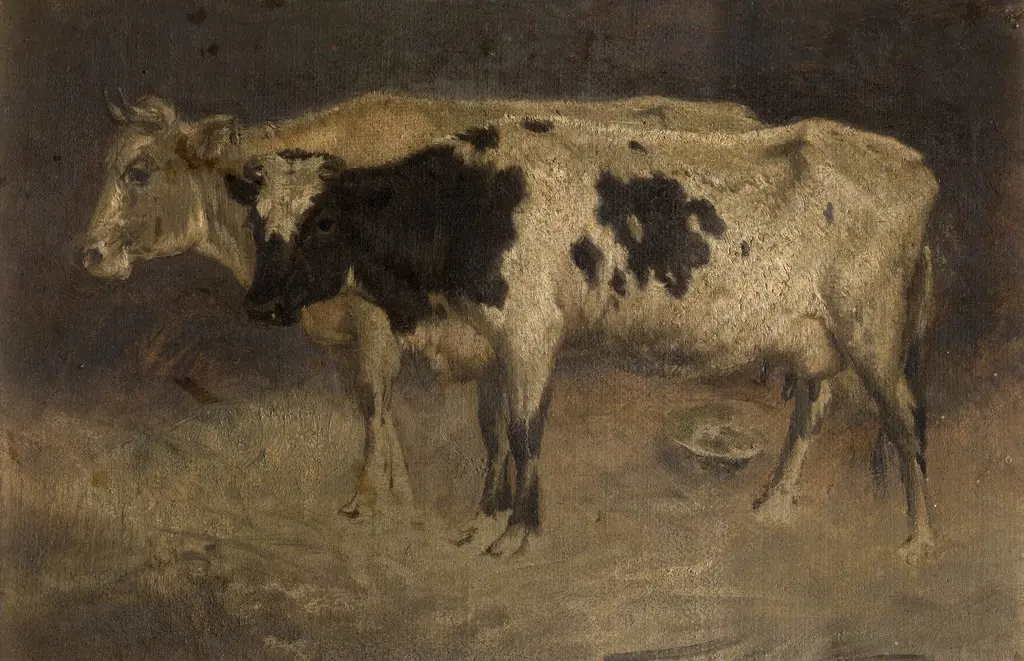
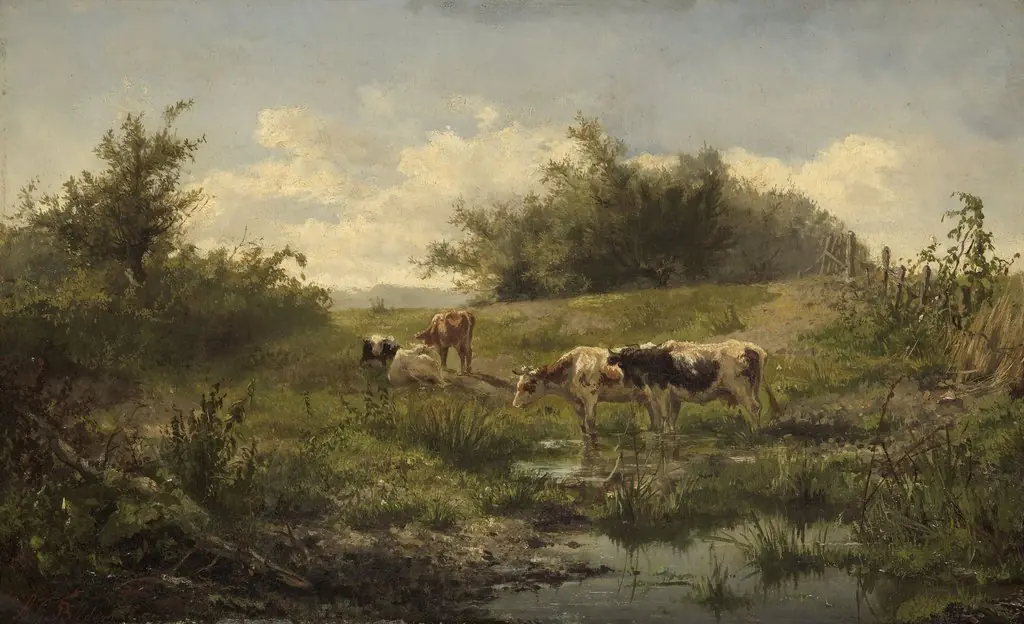
Painted in 1849 by Eugène Fromentin, this oil on canvas depicts a quiet rural scene centered on a black-and-white cow. The composition is deliberately unhurried, with animals arranged in a naturalistic grouping that suggests daily life rather than staged drama. The work is part of the Rijksmuseum’s collection, where it reflects the artist’s early interest in pastoral subjects before his later travels to North Africa.
Subject & Meaning
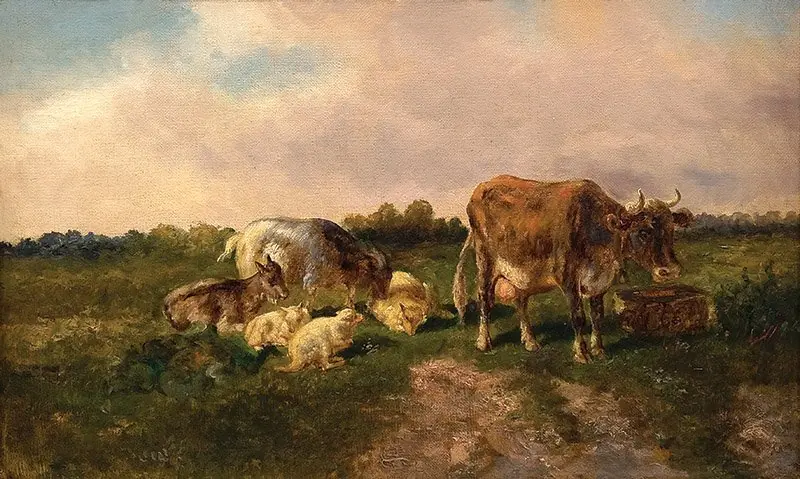
The painting presents a moment of stillness in farm life, with a cow standing calmly as a goat rests nearby and another animal, perhaps a pig or lamb, lingers on the right. No human figures are present, emphasizing the autonomy of the animals and the quiet rhythm of the farm. The absence of labor or human intervention invites contemplation of nature’s routine, free from narrative or moralizing.
Technique & Style
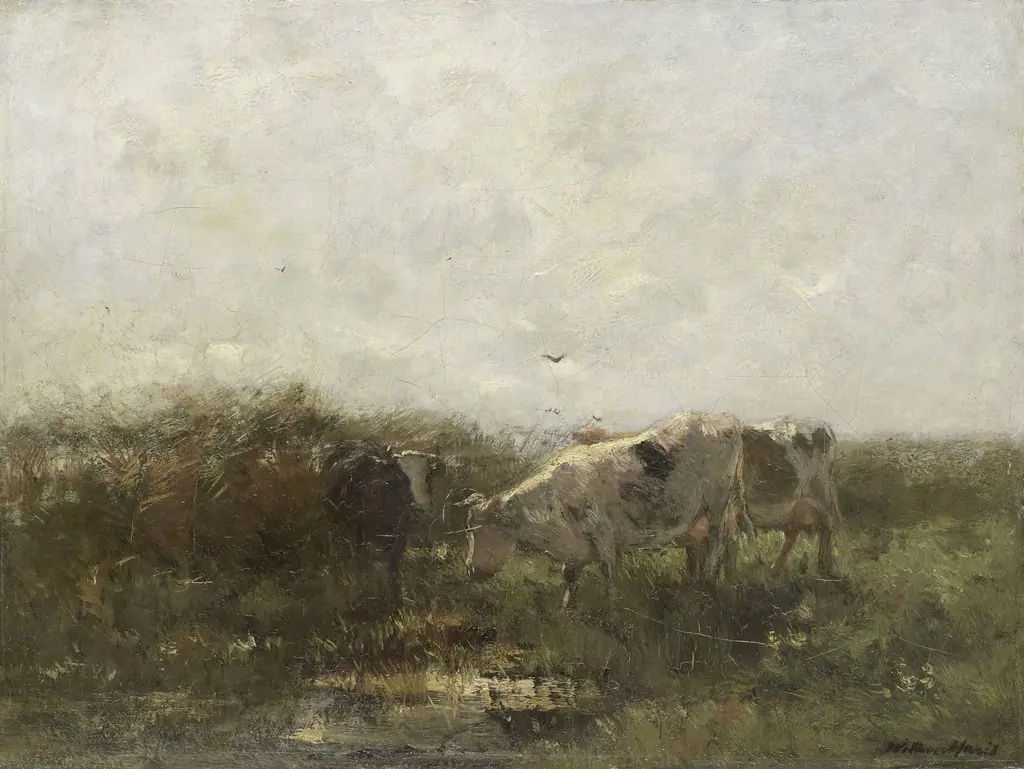
Fromentin employed soft, blended brushwork and a restrained palette of muted greens and earth tones to evoke a hushed atmosphere. The forms are rendered with gentle definition, avoiding sharp contours or dramatic lighting. This approach prioritizes mood over detail, aligning with early 19th-century tendencies toward lyrical realism rather than academic precision or romantic idealization.
History & Provenance
Created during Fromentin’s formative years in France, the painting predates his well-known North African journeys. It remained in private hands until acquired by the Rijksmuseum, where it has been held since the 19th century. Its presence in the museum’s collection underscores its significance as an early example of the artist’s engagement with rural European life before his stylistic shift.
Context
In the mid-1840s, French artists increasingly turned to everyday rural scenes as alternatives to historical or mythological subjects. Fromentin’s work aligns with this trend, reflecting a broader cultural interest in the quiet dignity of agricultural life. Unlike the dramatic realism of Courbet or the idealized landscapes of the Barbizon School, Fromentin’s approach is intimate and understated.
Legacy
Though less celebrated than his later Orientalist works, this painting illustrates Fromentin’s early sensitivity to atmosphere and natural observation. It contributes to the understanding of his artistic development and the broader 19th-century shift toward depicting ordinary rural existence with emotional nuance rather than grandeur.
Own this work as a print
Artist & collection