Artwork
On the Nile
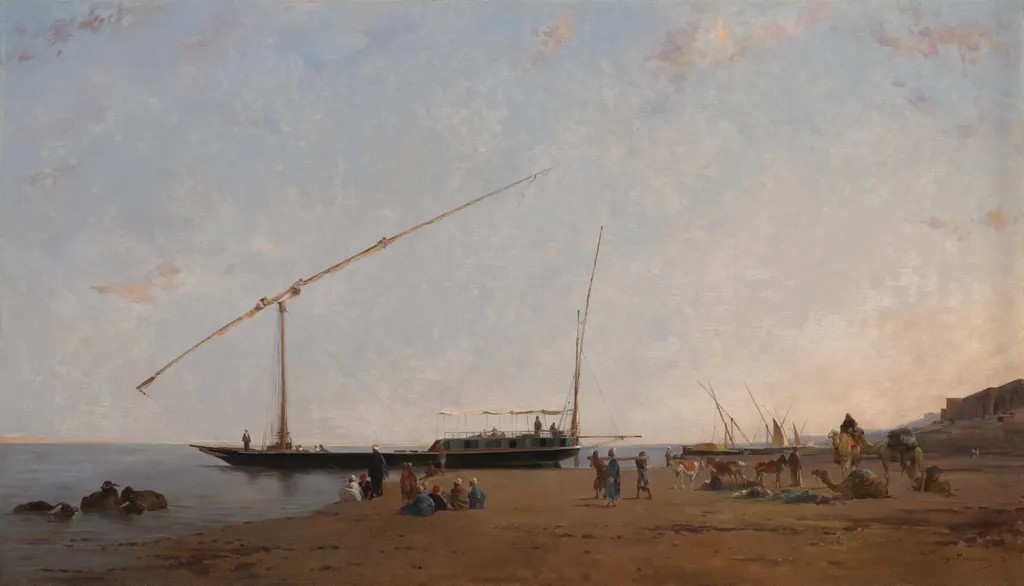
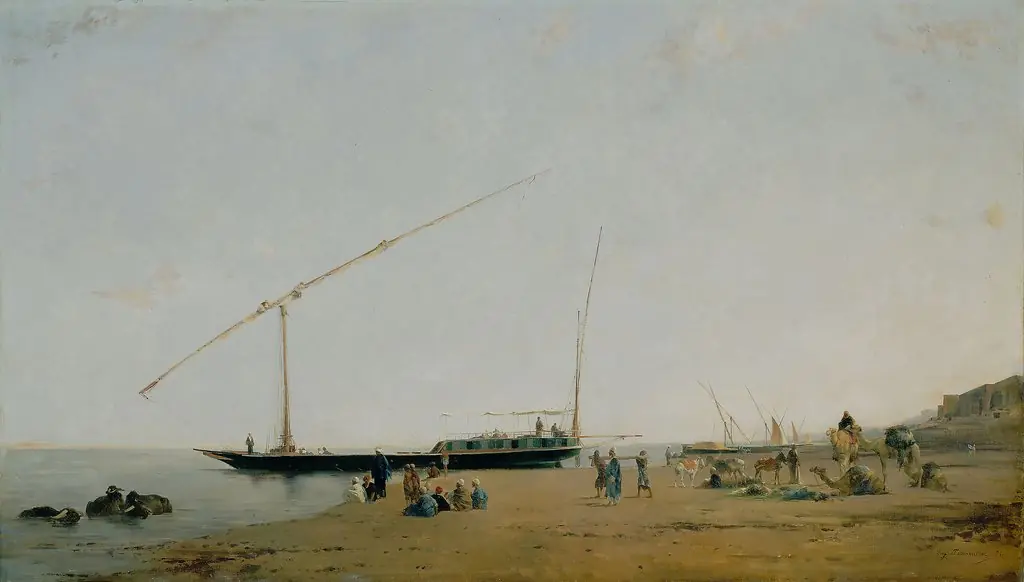
On the Nile is an oil painting by the Impressionist artist Eugène Fromentin. It dates from 1871 and is held in the collection of the Art Institute of Chicago.
About this work
Overview
The oil painting portrays a tranquil Nile scene where a caravan pauses on the riverbank while a sizable houseboat drifts near the low horizon. In the distance, a monumental structure—possibly the Luxor or Philae temple—looms behind the water, lending an architectural anchor to the composition.
Subject & Meaning
The work captures a moment of repose within the bustling river traffic of 19th‑century Egypt, juxtaposing human movement with the stillness of the landscape. The inclusion of the temple hints at the region’s ancient heritage, while the calm atmosphere suggests a contemplative pause amid travel.
Technique & Style
Executed in oil on canvas, the painting employs a restrained palette and careful delineation of forms, emphasizing the flatness of the horizon and the reflective surface of the water. The composition balances detailed foreground elements with a simplified background, reflecting Fromentin’s practice of translating field sketches into finished works.
History & Provenance
Eugène Fromentin created the piece after a 1869 journey to Egypt, during which he kept a diary and produced numerous sketches. His visit coincided with the inauguration of the Suez Canal, an event that informed his visual record of the region.
Context
The painting emerges at a time when European Orientalist depictions were beginning to lose their dominance, yet the opening of the Suez Canal signaled a new phase of colonial expansion. Fromentin’s work thus straddles the waning Romantic fascination with the East and the emerging imperial interests of the era.
Artist & collection