Artwork
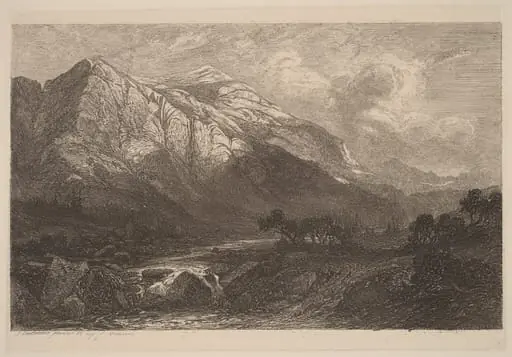
Auvergne: Lac d'Aidat, Auvergne
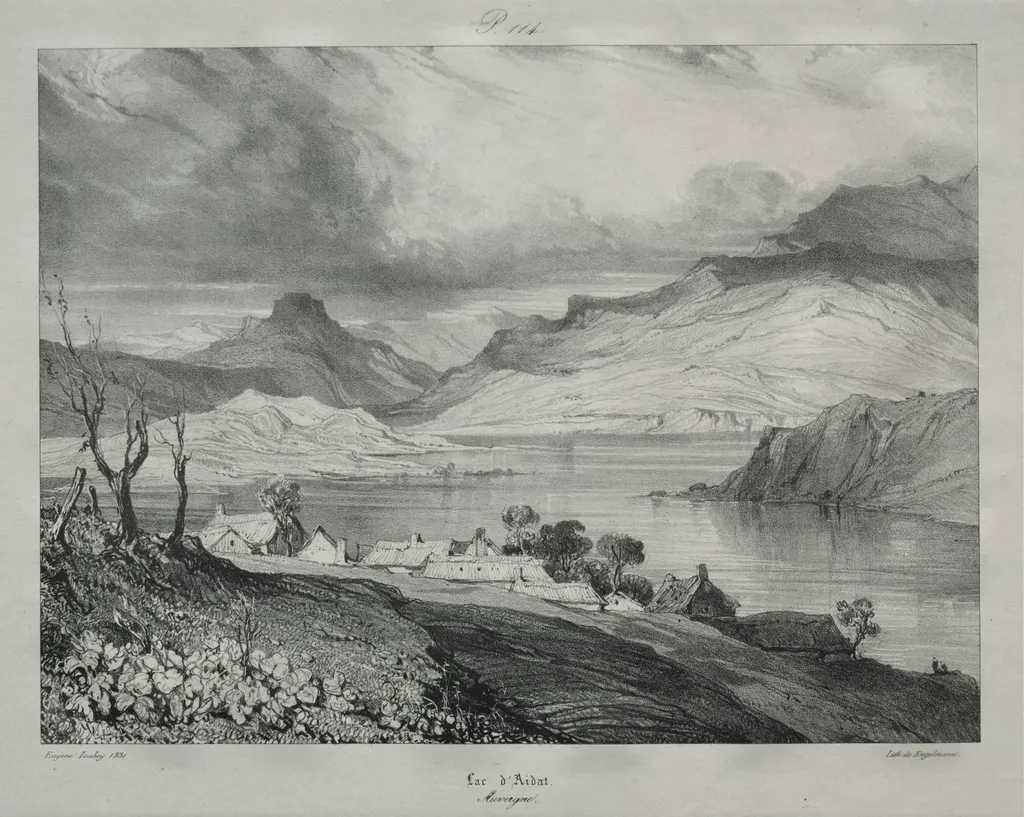
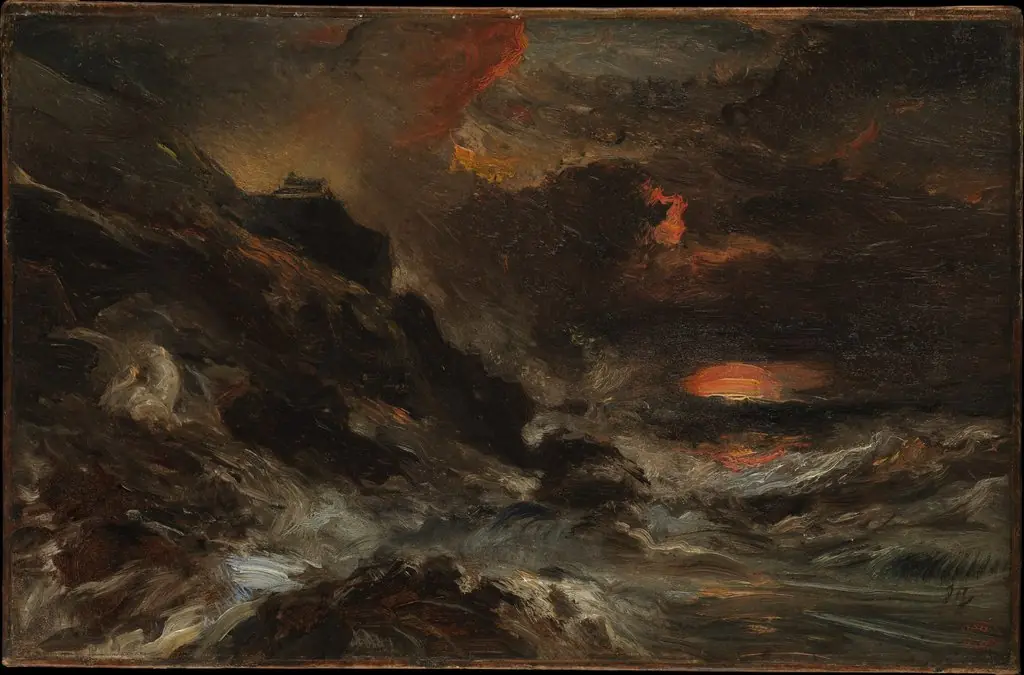
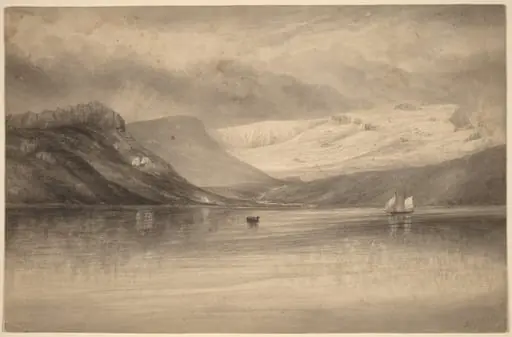
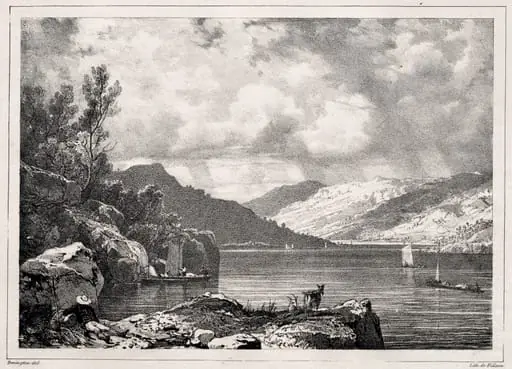
Auvergne: Lac d'Aidat, Auvergne is a print by the Romanticist artist Eugène Isabey. It dates from 1831 and is held in the collection of the Cleveland Museum of Art.
About this work
Overview
Eugène Isabey produced this lithograph in 1831 as part of a series documenting French regional landscapes.
Eugène Isabey produced this lithograph in 1831 as part of a series documenting French regional landscapes. Working primarily in watercolor and print, he focused on natural scenery with quiet precision. The work captures a tranquil view of Lac d'Aidat in the Auvergne region, emphasizing atmospheric conditions and topographical detail rather than dramatic narrative. It resides today in the collection of The Cleveland Museum of Art.
Subject & Meaning
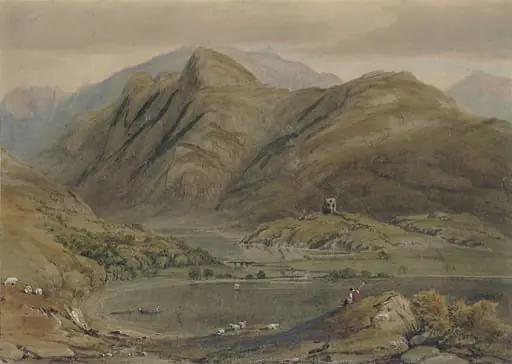
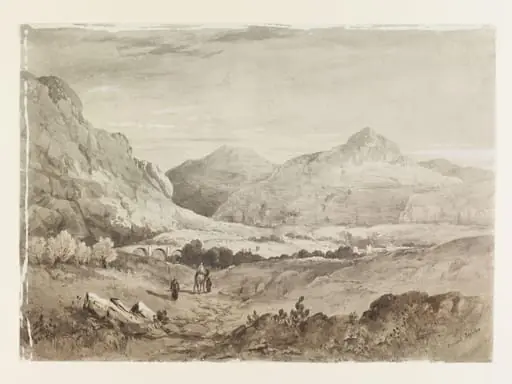
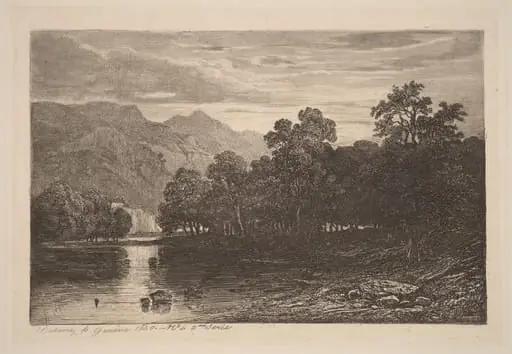
The scene presents a secluded lake nestled among rolling hills and distant peaks, with sparse human habitation visible on the horizon. The absence of figures and the subdued activity suggest contemplation of nature’s stillness. Isabey’s choice of location reflects a broader 19th-century interest in France’s less-touristed interior, framing the landscape as a quiet, unspoiled realm rather than a site of grandeur or myth.
Technique & Style
Isabey employed lithography to achieve subtle tonal gradations, using layered ink to render the sky’s shifting clouds and the lake’s reflective surface. The mountains are defined by soft, modulated grays, while the foreground vegetation is suggested with delicate, textured strokes. Light is distributed unevenly, enhancing spatial depth without theatrical contrast, aligning with Romanticism’s preference for mood over spectacle.
History & Provenance
Created during Isabey’s active period as a lithographer for travel publications, the print likely originated as part of a commissioned series promoting regional French scenery. It entered the Cleveland Museum of Art’s collection in the 20th century, where it remains as an example of early 19th-century French topographical printmaking, valued for its technical restraint and observational clarity.
Context
In the 1830s, French artists increasingly turned to domestic landscapes as national identity formed beyond urban centers. Isabey’s work aligns with this trend, paralleling the efforts of contemporaries like Corot and the Barbizon painters who sought authenticity in rural scenes. Unlike dramatic Romantic vistas, this image favors quiet observation, reflecting a quieter, more introspective strain within the movement.
Legacy
Though not widely exhibited, the print contributes to understanding the evolution of landscape representation in France. Isabey’s restrained approach influenced later generations of printmakers who prioritized atmospheric nuance over emotional intensity. Its preservation in a major American museum underscores its role as a document of both artistic practice and regional topography in the early Romantic era.
Own this work as a print
Artist & collection
Artist
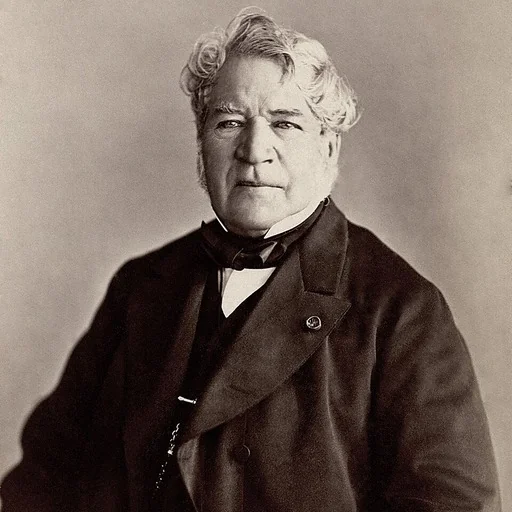
Eugène Louis Gabriel Isabey (French pronunciation: ; 22 July 1803 – 25 April 1886) was a French painter, lithographer and watercolorist in the Romantic style.