Artwork
Picturesque and Romantic Journeys in Old France: Auvergne (vol. II), Gorge of Royat, Plate 79
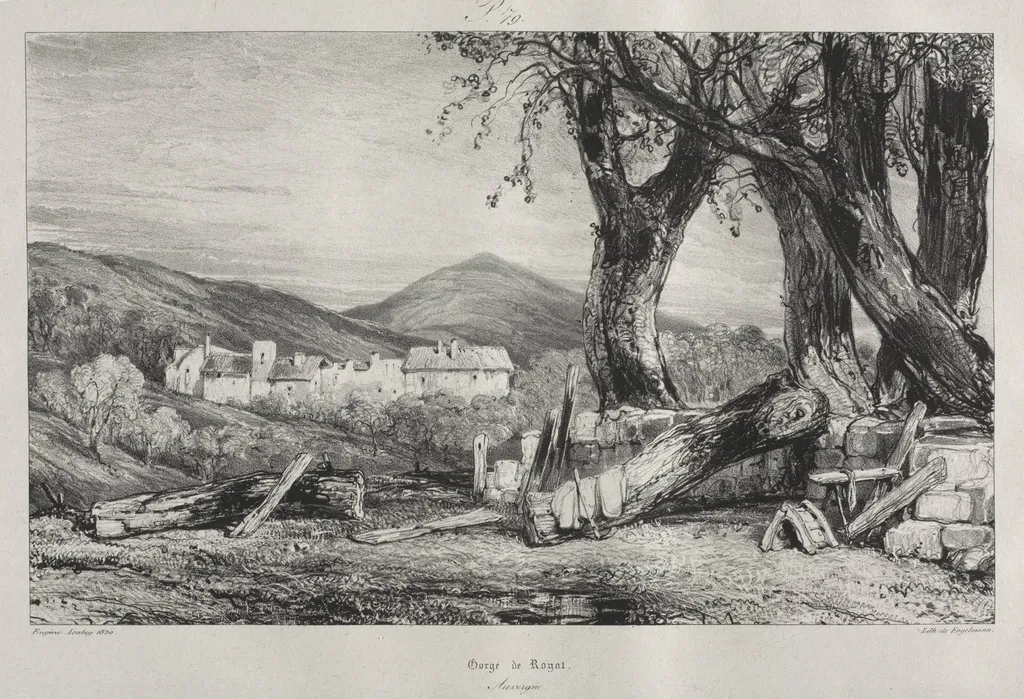
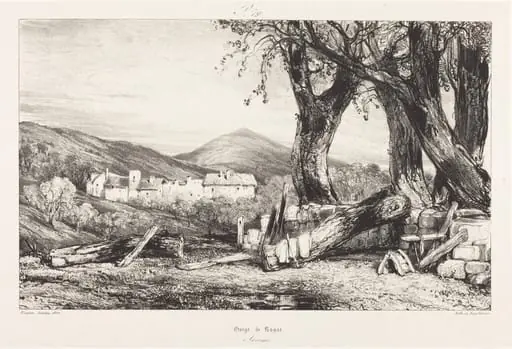
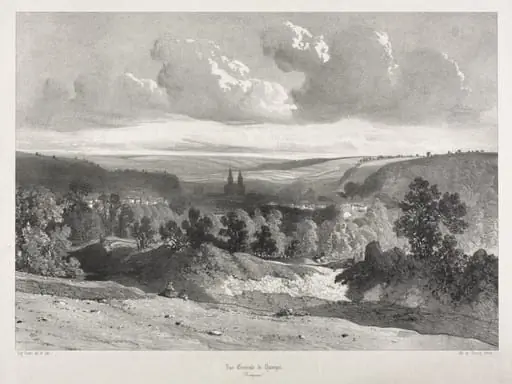
Picturesque and Romantic Journeys in Old France: Auvergne (vol. II), Gorge of Royat, Plate 79 is a print by the Romanticist artist Eugène Isabey. It dates from 1830 and is held in the collection of the Cleveland Museum of Art.
About this work
A few wooden tools lie nearby, like a saw and some planks, as if someone was working there before the tree crashed down.
This drawing shows a quiet valley with a small village nestled among rolling hills. In the foreground, a fallen tree blocks a dirt path, its tangled roots and broken branches scattered across the ground. A few wooden tools lie nearby, like a saw and some planks, as if someone was working there before the tree crashed down. The background has a few stone houses with thatched roofs, and the sky is soft and hazy.
The title says this is from a series about old France, and the artist made it in 1830. Notice how the artist used shading to make the tree look thick and real, while the village fades into the distance.
Next, look up chiaroscuro to see how artists use light and shadow like this.
Overview
Created in 1830 by Eugène Isabey, this lithograph is the seventy-ninth plate in a two-volume series documenting France’s rural landscapes. Part of a broader effort to record regional scenery, it captures a quiet moment in the Auvergne region, emphasizing natural decay and human presence through subtle detail. The work belongs to a genre that valued observation over idealization, reflecting a growing interest in France’s lesser-known topographies during the early nineteenth century.
Subject & Meaning
The scene portrays a forested valley near Royat, where a felled tree interrupts a dirt path, its roots exposed and scattered tools—saw, planks—suggesting recent human labor. Nearby, a cluster of stone cottages with thatched roofs rests gently against the hills. The composition evokes transience: nature reclaims human effort, and quiet abandonment replaces activity. There is no grand narrative, only the quiet persistence of place and the traces of those who once moved through it.
Technique & Style
Isabey employed fine, controlled lithographic lines to render texture and depth. The foreground tree is modeled with dense hatching, giving it weight and solidity, while the distant village is rendered in softer, lighter tones, creating atmospheric perspective. Subtle gradations of gray establish a hazy, diffused sky, enhancing the sense of stillness. The technique avoids dramatic contrast, favoring muted tonality to support the scene’s contemplative mood.
History & Provenance
The print was produced as part of a commercial publishing project commissioned to illustrate France’s picturesque regions. Isabey, known for his travel sketches, contributed numerous plates to this series, which was widely distributed among middle-class collectors. Though the original volume’s full provenance is not fully documented, surviving copies are held in French national collections and private archives, reflecting its role in shaping regional visual identity during the July Monarchy.
Context
In the 1830s, France experienced a surge of interest in its rural heritage, fueled by Romanticism and early preservationist sentiment. As industrialization advanced, artists and publishers turned to the countryside as a repository of authentic, unspoiled life. Isabey’s series aligned with this trend, offering viewers a nostalgic, non-idealized vision of provincial France—neither heroic nor pastoral, but quietly real.
Legacy
Though not widely exhibited today, the plate remains a representative example of early 19th-century French topographical printmaking. Its restrained aesthetic influenced later documentary efforts in regional surveying and ethnographic illustration. The work’s value lies not in spectacle, but in its patient observation—preserving a moment of rural life before it vanished from the changing French landscape.
Own this work as a print
Artist & collection
Artist
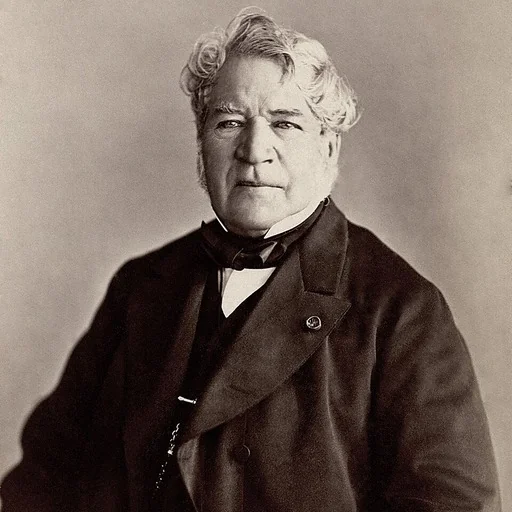
Eugène Louis Gabriel Isabey (French pronunciation: ; 22 July 1803 – 25 April 1886) was a French painter, lithographer and watercolorist in the Romantic style.

 Gorge de Royat, Auvergne
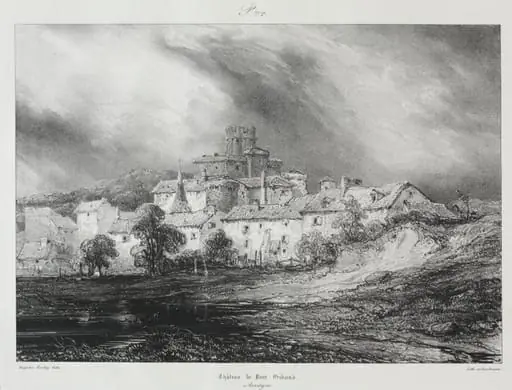 Voyages pittoresques et romantiques dans l'ancienne France, Auvergne: Château de Pont-Gibaud
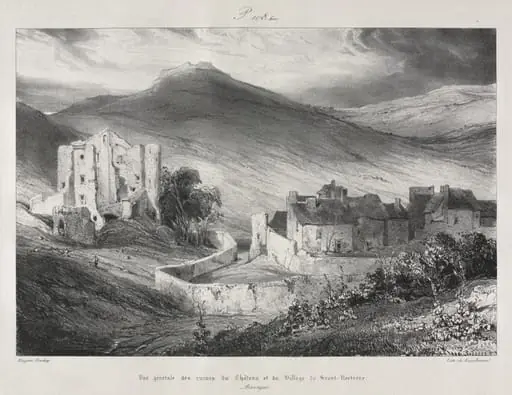 Voyages pittoresques et romantiques dans l'ancienne France, Auvergne: Ruines du château et du village de Saint Nectaire
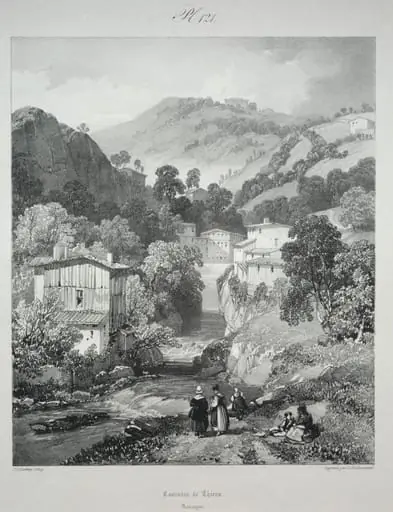 Voyages pittoresques et romantiques dans l'ancienne France. Auvergne: Cascades de Thiers
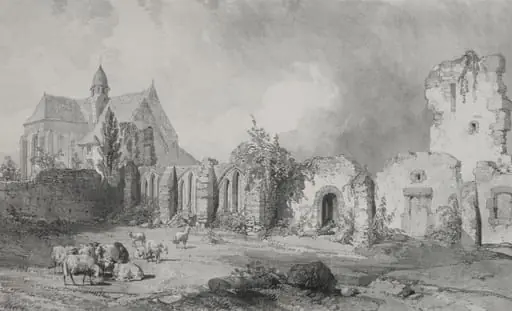 Voyages pittoresques et romantiques dans l'ancienne France. Bretagne: Abbaye de Relec
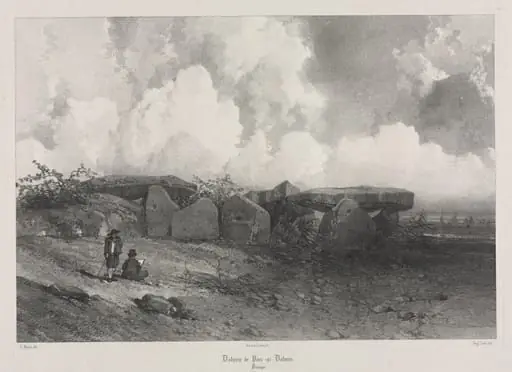 Voyages pittoresques et romantiques dans l'ancienne France: Bretagne: Dolmen de Parc-ar-Colmen
 Voyages pittoresques et romantiques dans l'ancienne France. Bretagne: Vue général de Quimper