Artwork
Loch Lomond
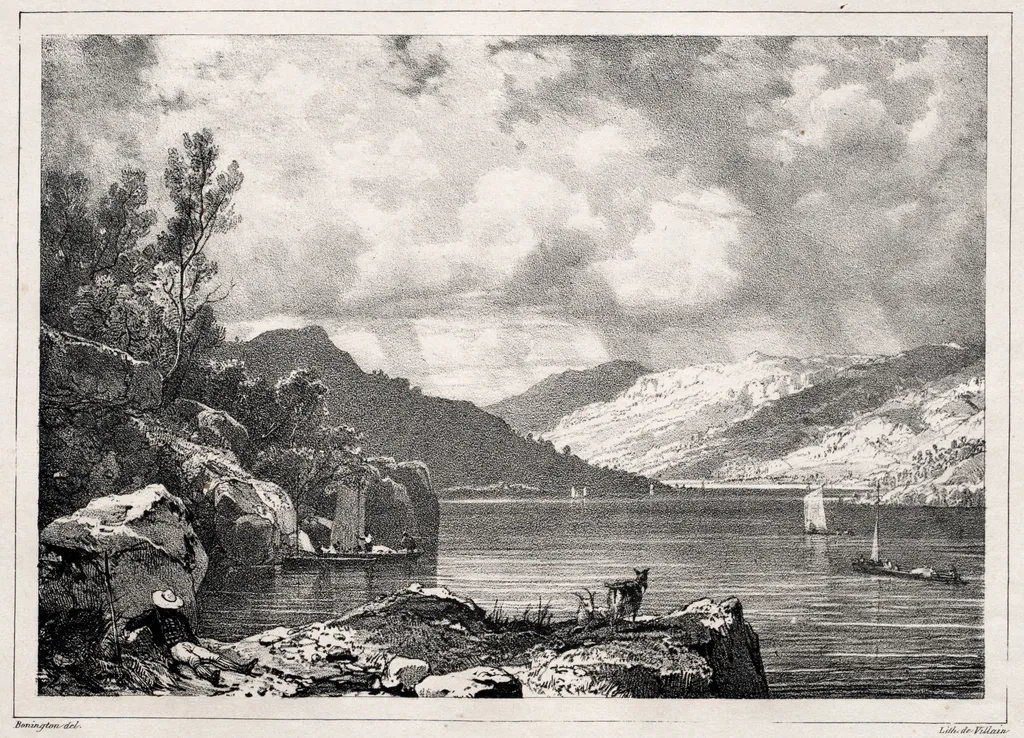
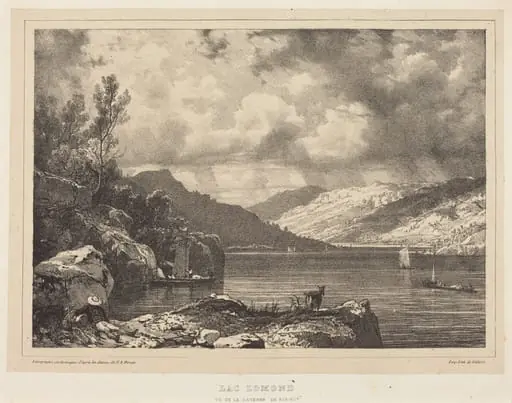
Loch Lomond is a print by the Romanticist artist Richard Parkes Bonington. It dates from 1826 and is held in the collection of the Cleveland Museum of Art.
About this work
Overview
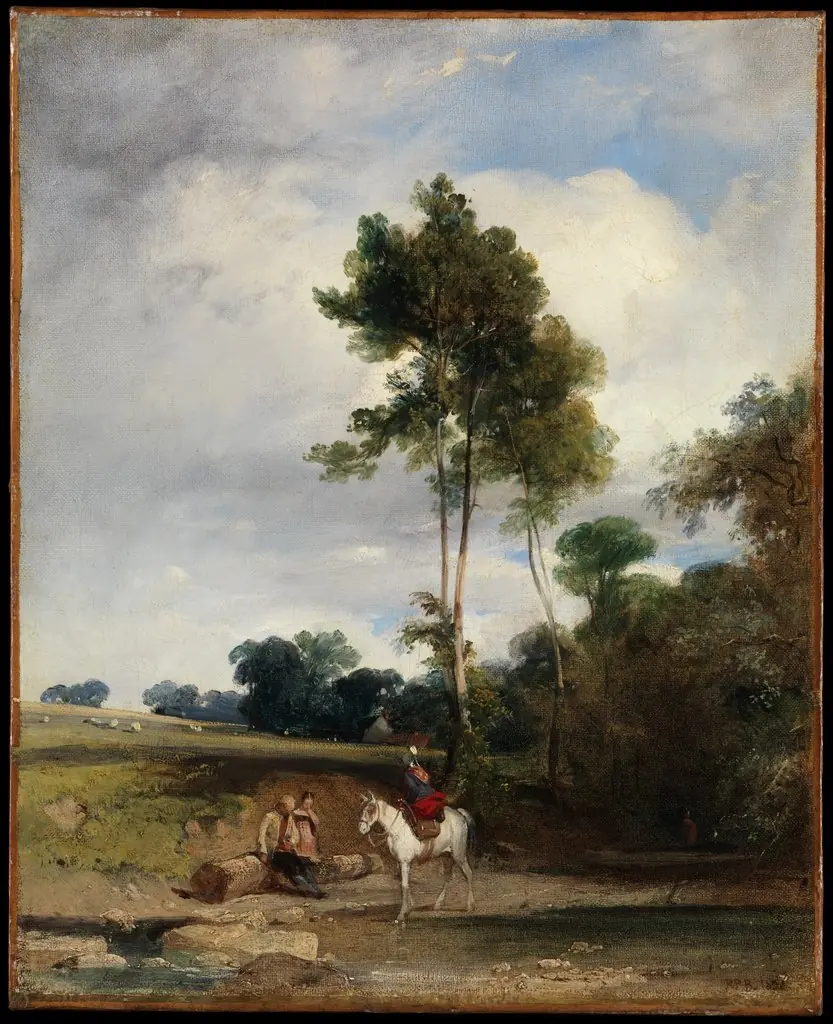
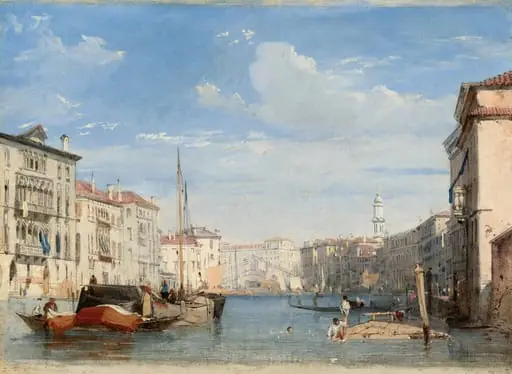
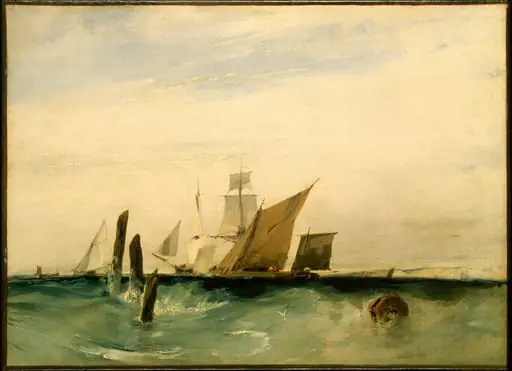
Loch Lomond is a 1826 print by English Romantic landscape painter Richard Parkes Bonington, characterized by serene natural beauty and atmospheric lighting, typical of his work.
Subject & Meaning
The print depicts a tranquil lake scene with surrounding rocky cliffs, snow-capped mountains, sparse shoreline trees, a calm lake surface, and a distant village with boats, evoking the power and mystery of nature, hallmark themes of Romanticism.
Technique & Style
Bonington employed soft shading to create a misty, ethereal effect in the mountains and clouds, blending traditional techniques with modern approaches, consistent with his influential Romantic style.
History & Provenance
Created in 1826, Loch Lomond reflects Bonington's signature focus on lakeside and coastal scenes, expansive skies, and delicate light effects, developed during his career spent largely in France.
Context
This work aligns with the broader Romantic movement, where landscapes were used to convey profound emotions and the awe-inspiring aspects of nature.
Legacy
As part of Bonington's oeuvre, Loch Lomond contributes to the artist's lasting impact on landscape painting, particularly in the blending of traditional and modern techniques within the Romantic era.
Own this work as a print
Artist & collection
Artist
Richard Parkes Bonington (25 October 1802 – 23 September 1828) was an English Romantic landscape painter.