Artwork
Fishing Boats at Anchor
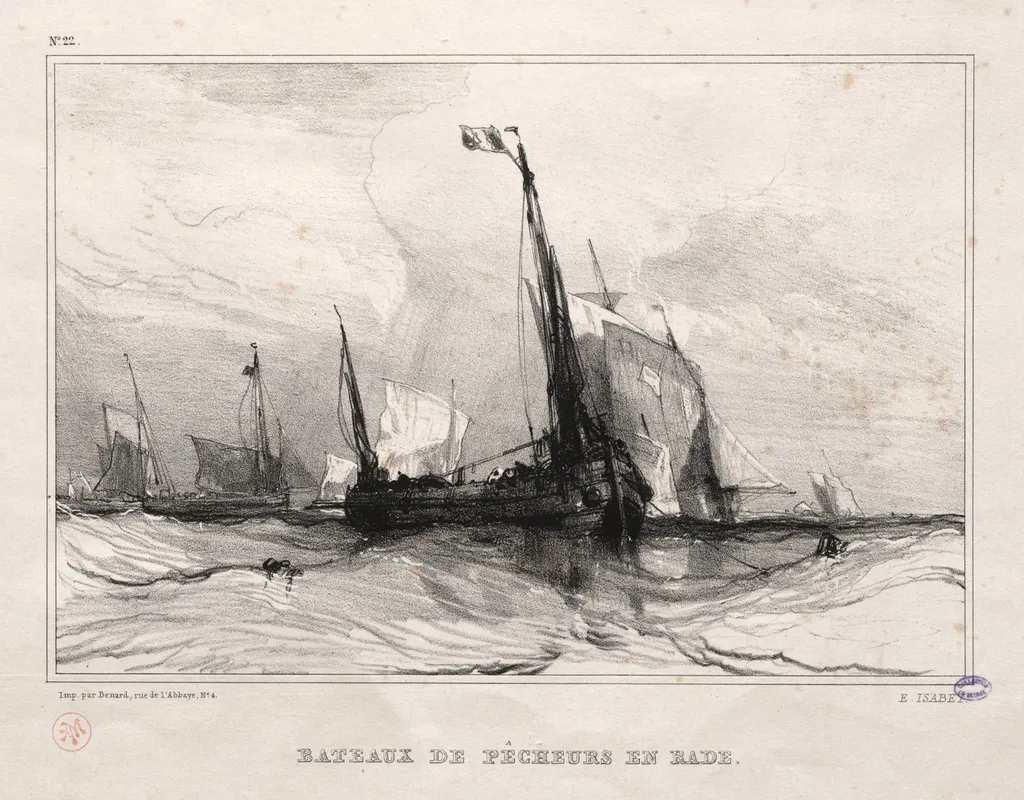
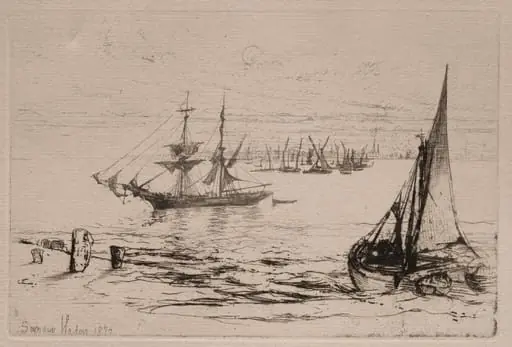
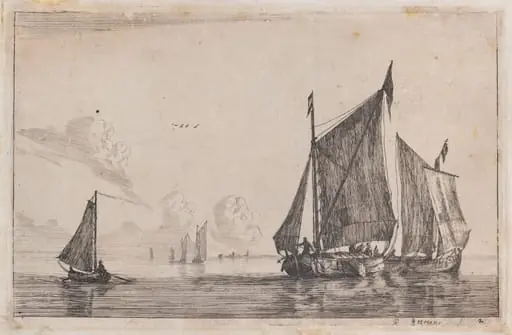
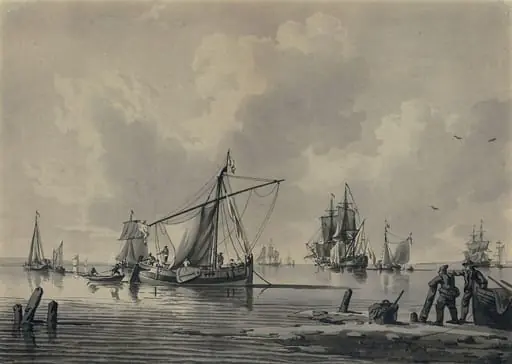
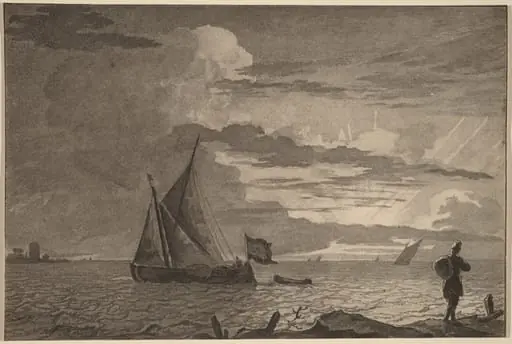
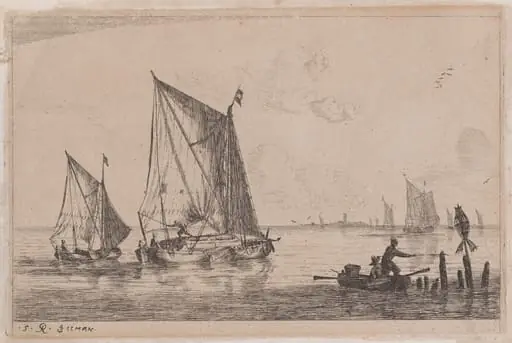
Fishing Boats at Anchor is a print by the Romanticist artist Eugène Isabey. It dates from 1836 and is held in the collection of the Cleveland Museum of Art.
About this work
Overview
The composition balances proximity and depth, with one boat near the foreground and two receding into the distance, suggesting a tranquil pause in daily labor.
Created in 1836 by French artist Eugène Isabey, this lithograph depicts three fishing vessels resting in calm coastal waters. Isabey, known for his maritime subjects, rendered the scene with delicate linework and subtle tonal shifts, emphasizing quietude rather than action. The composition balances proximity and depth, with one boat near the foreground and two receding into the distance, suggesting a tranquil pause in daily labor.
Subject & Meaning
The anchored boats represent a moment of respite after fishing, capturing the rhythm of coastal life. Isabey avoids dramatic narrative, instead focusing on the stillness of the vessels and the gentle ripple of water. This restraint reflects a Romantic sensibility that finds dignity in ordinary, transient moments, honoring the relationship between human labor and the natural environment without idealization.
Technique & Style
Isabey employed lithography to achieve fluid, expressive lines that suggest movement in the water and the loose hang of sails. Shading is minimal yet effective, using hatched strokes to imply light and shadow. The simplified forms and lack of fine detail prioritize mood over precision, aligning with Romantic ideals that valued emotional resonance and atmospheric effect over technical finish.
History & Provenance
The print was produced during Isabey’s active period as a lithographer, when he contributed to illustrated publications and maritime albums. While specific ownership history is not documented, the work aligns with his broader output for French audiences interested in coastal scenes. Its creation coincided with growing public fascination with seafaring life and the natural world during the July Monarchy.
Context
In 1830s France, Romanticism emphasized emotion, nature, and the sublime, often turning to maritime themes as symbols of human vulnerability and endurance. Isabey’s work responded to this cultural current, offering intimate glimpses of working vessels rather than grand naval battles. His focus on quiet, everyday moments distinguished his approach from more theatrical contemporaries.
Legacy
Isabey’s prints, including this one, influenced later generations of French artists interested in landscape and marine subjects. His ability to convey atmosphere with economical means helped bridge the gap between academic tradition and emerging realist tendencies. Though not widely exhibited today, his lithographs remain valued for their sensitivity to light, motion, and the quiet poetry of coastal labor.
Artist & collection
Artist
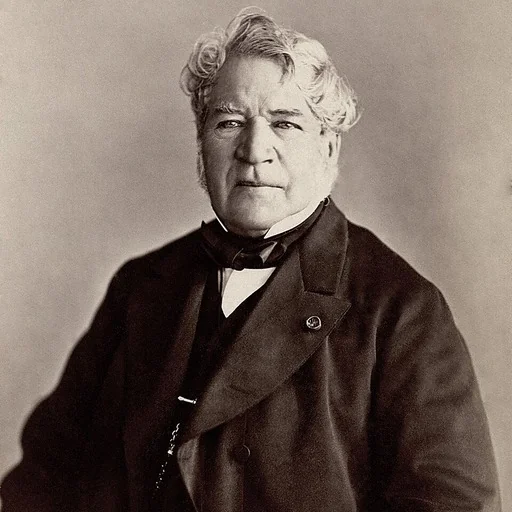
Eugène Louis Gabriel Isabey (French pronunciation: ; 22 July 1803 – 25 April 1886) was a French painter, lithographer and watercolorist in the Romantic style.