Artwork
Herder met kudde
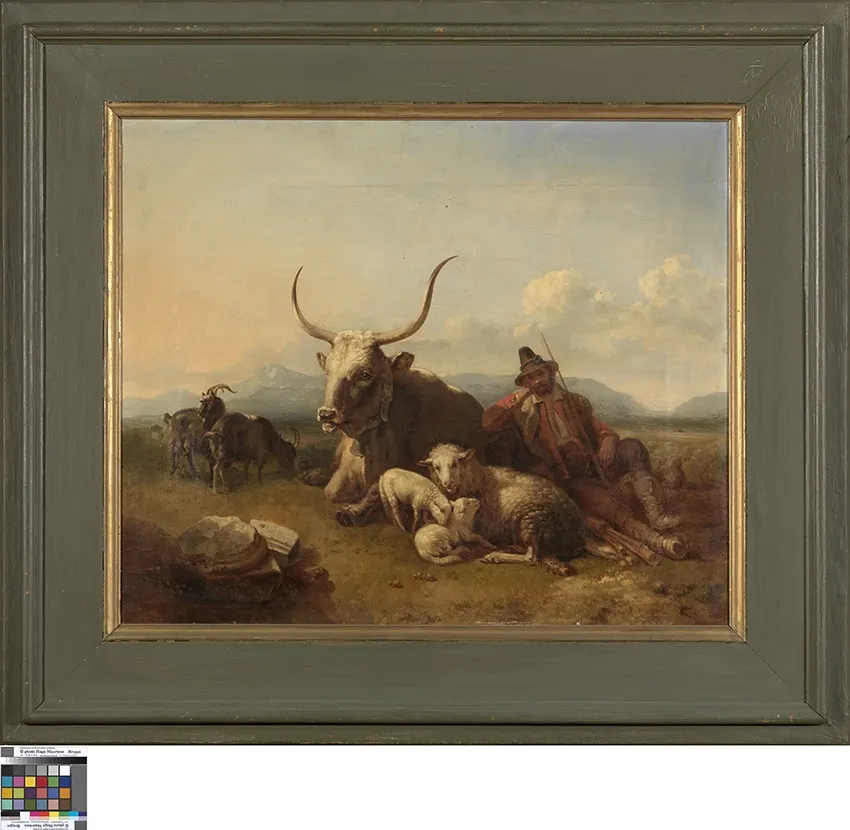
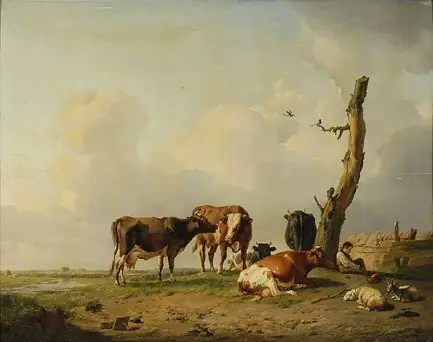
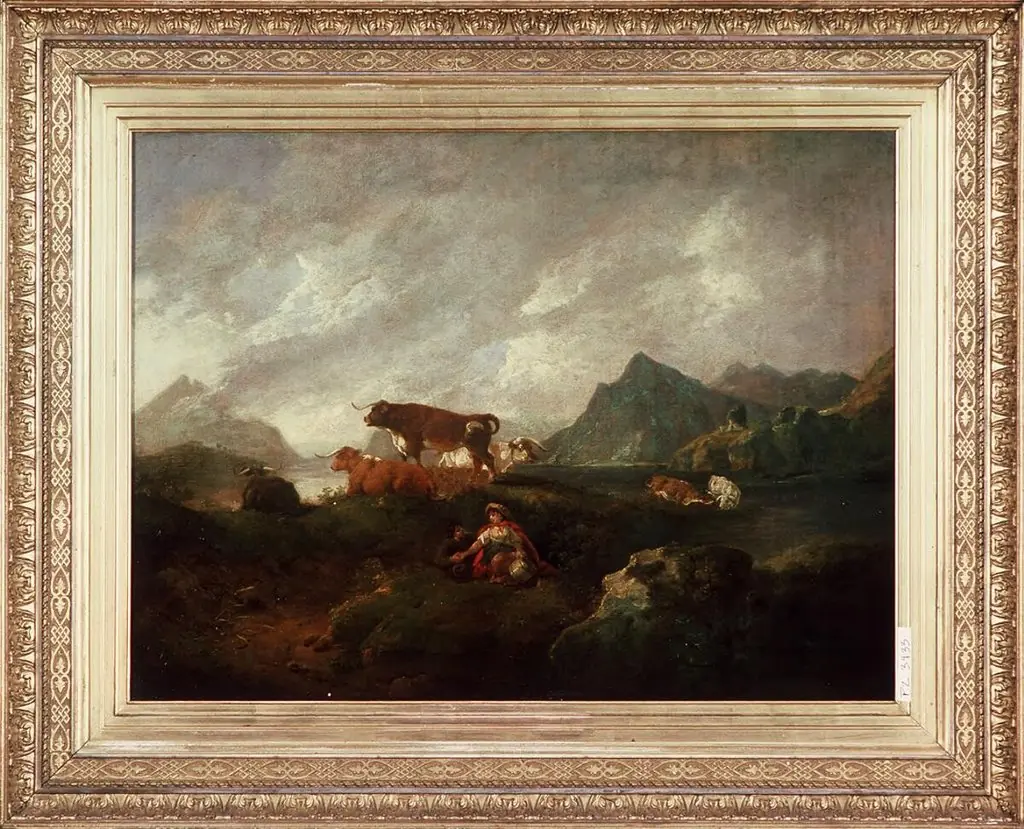
Herder met kudde is an oil painting by Eugène Verboeckhoven. It dates from 1801 and is held in the collection of the Groeningemuseum.
About this work
Overview
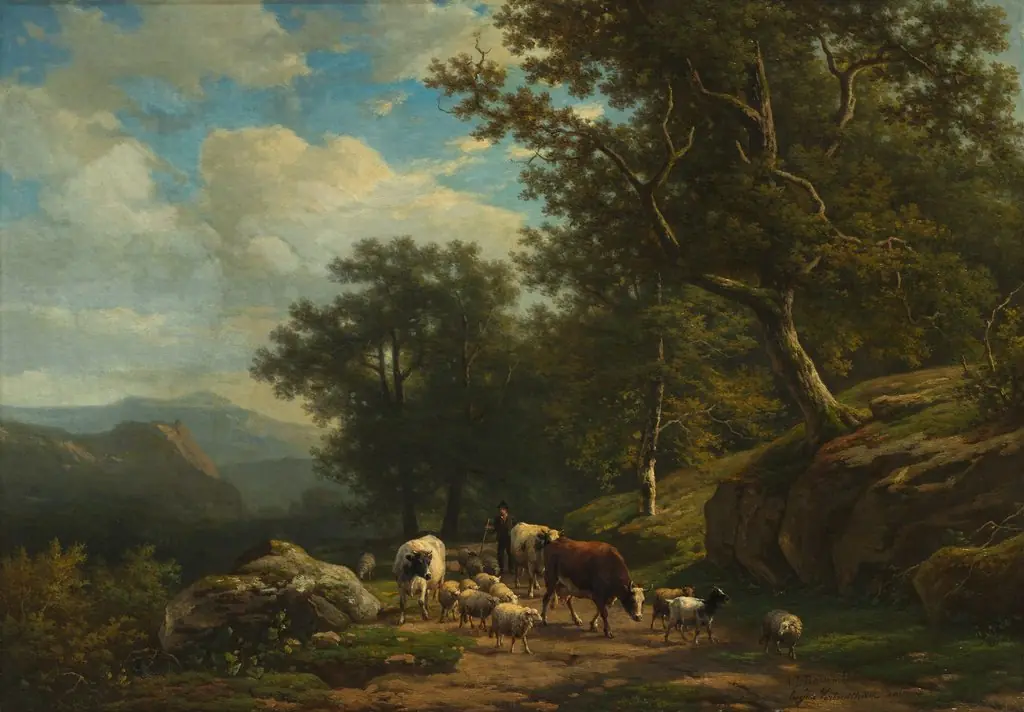
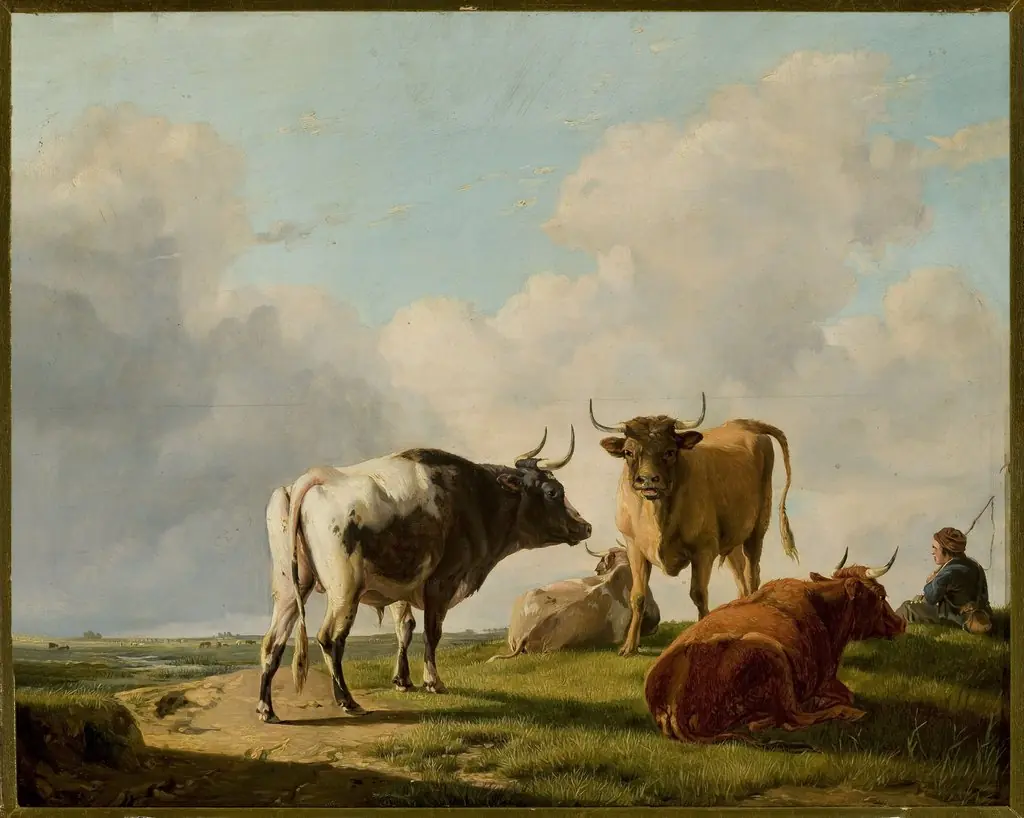
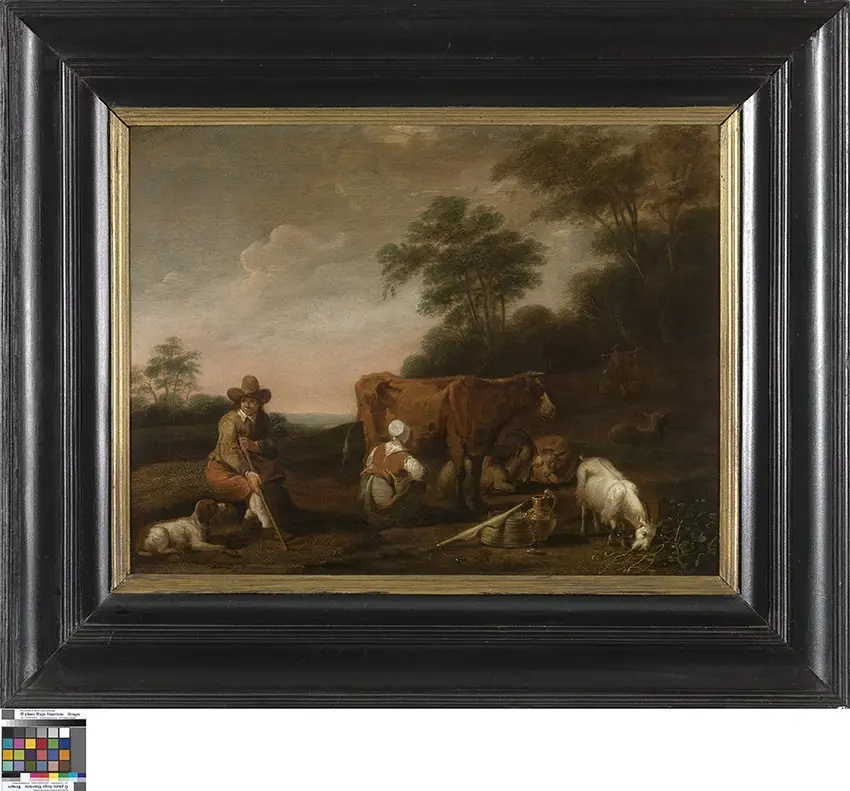
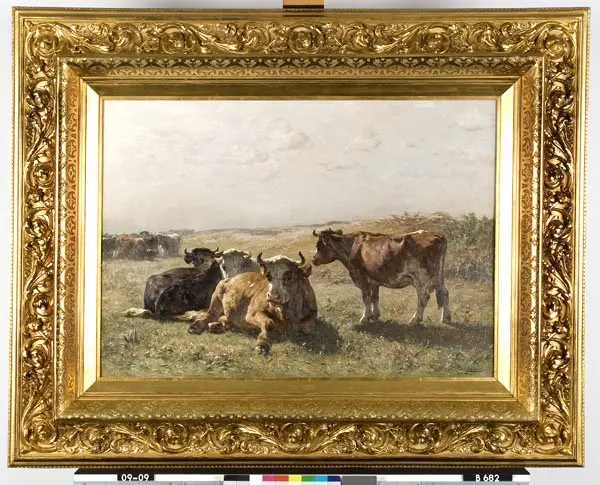
Eugène Joseph Verboeckhoven’s oil painting *Herder met kudde* was completed in 1801. The work presents a pastoral tableau in which a lone herder sits among a group of cattle, a goat and a lamb, all set against a muted, cloud‑filled sky. The composition balances figures and landscape, inviting the viewer to observe a quiet moment of rural life.
Subject & Meaning
The scene captures a typical Flemish countryside activity: a shepherd‑like figure, dressed in traditional coat and hat, rests beside a large horned cow while livestock graze on a verdant field. The inclusion of multiple species—cattle, goat, lamb—suggests a harmonious coexistence of farm animals under human guidance, reflecting the agrarian values of early‑19th‑century Belgium.
Technique & Style
Rendered in oil on canvas, Verboeckhoven employs chiaroscuro to model the forms, using contrasts of light and shadow to give volume to the animals and the figure. The brushwork emphasizes texture, from the sheen of the cattle’s hide to the soft foliage of the surrounding meadow, creating a realistic yet atmospheric effect.
History & Provenance
*Herder met kudde* is part of the permanent collection of the Groeningemuseum in Bruges. The painting entered the museum’s holdings as a representative example of Verboeckhoven’s early work, illustrating his lifelong interest in animal subjects that he later explored through etching, lithography and sculpture.
Artist & collection
Artist
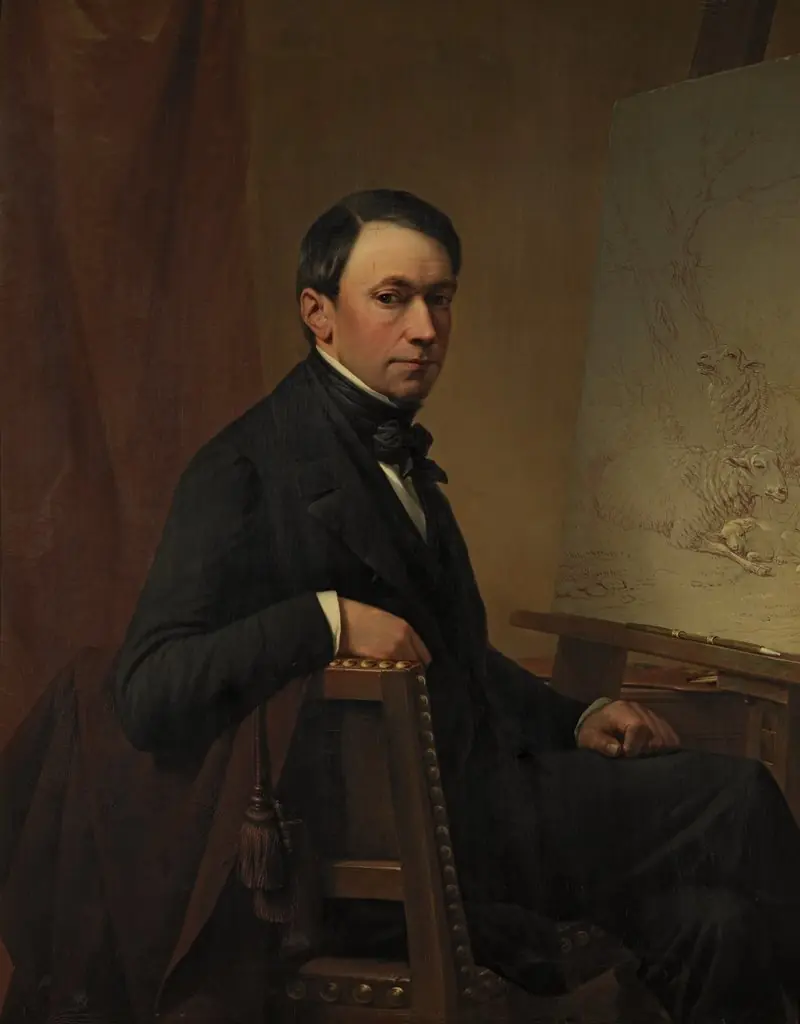
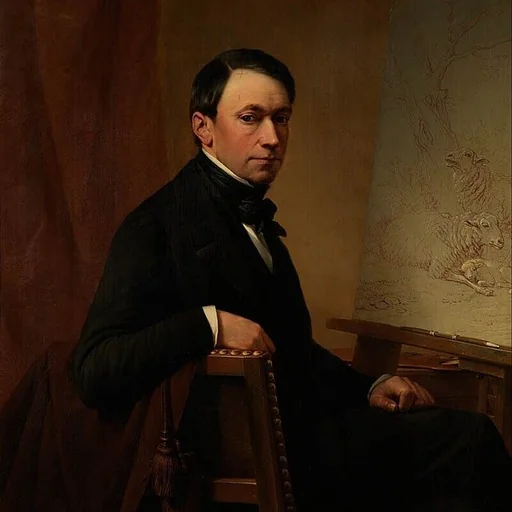
Eugène Joseph Verboeckhoven (9 June 1798 – 19 January 1881) was a Belgian painter, a sculptor, an etcher, an engraver, and a lithographer of animals, animated landscapes, and portraits.