Artwork
Four Figures
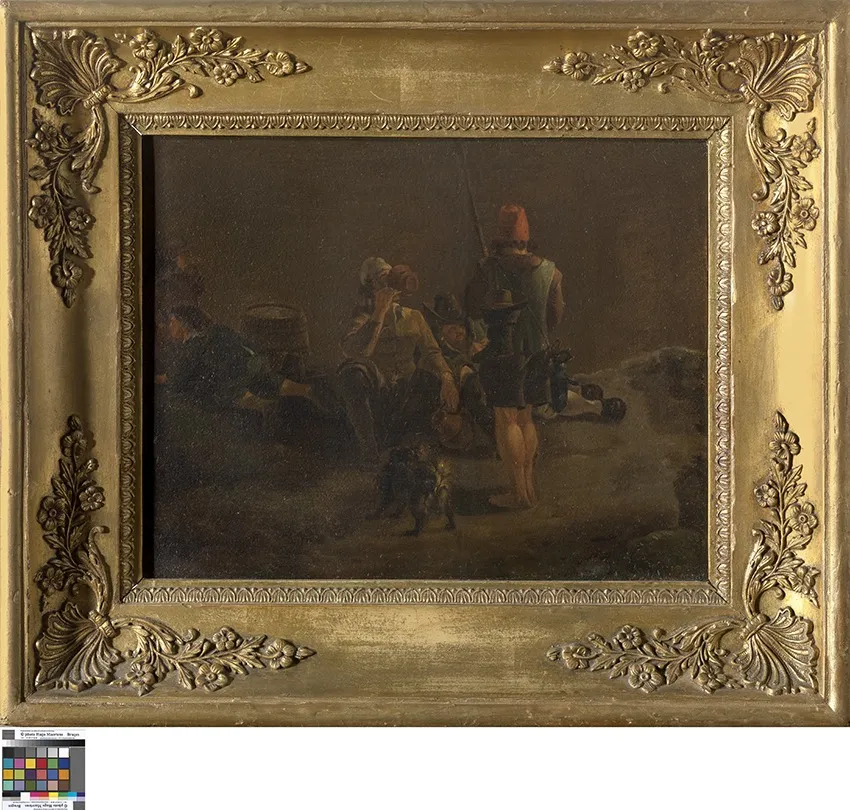
Four Figures is an oil painting by the Dutch Golden Age artist Jan Asselijn. It dates from 1615 and is held in the collection of the Groeningemuseum.
About this work
Overview
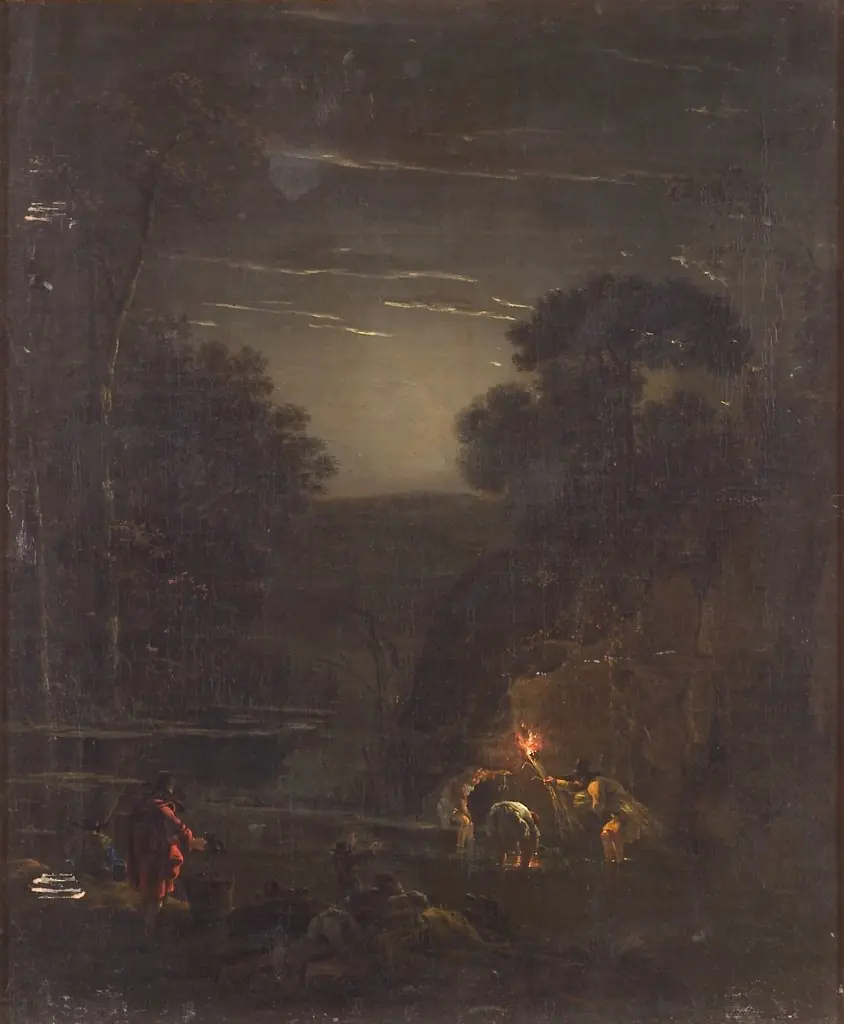
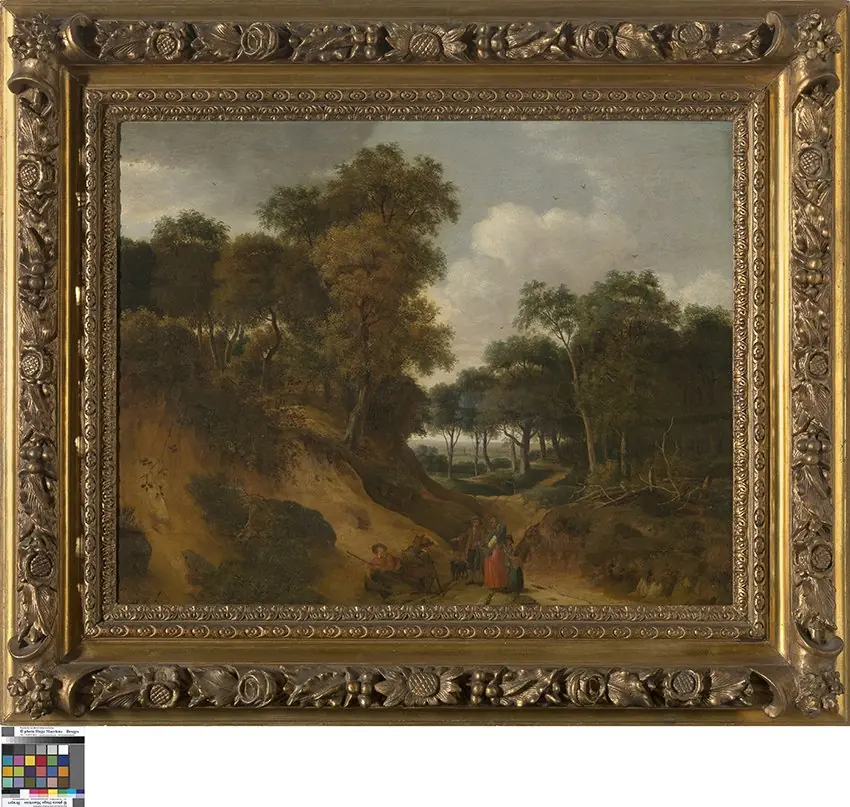
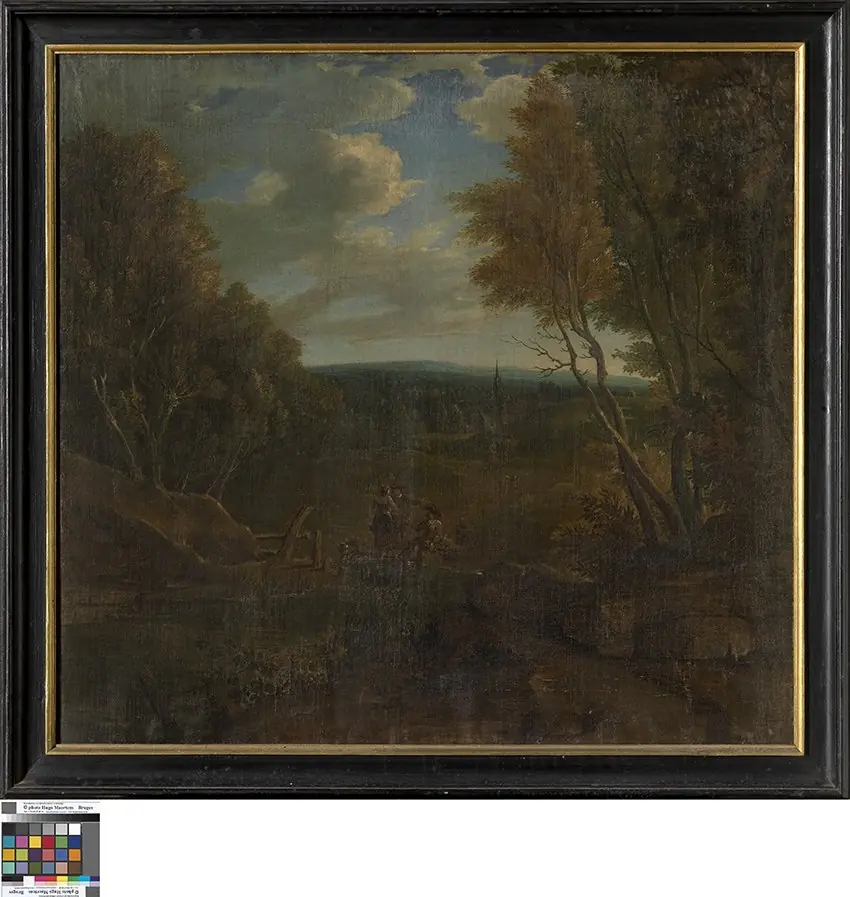
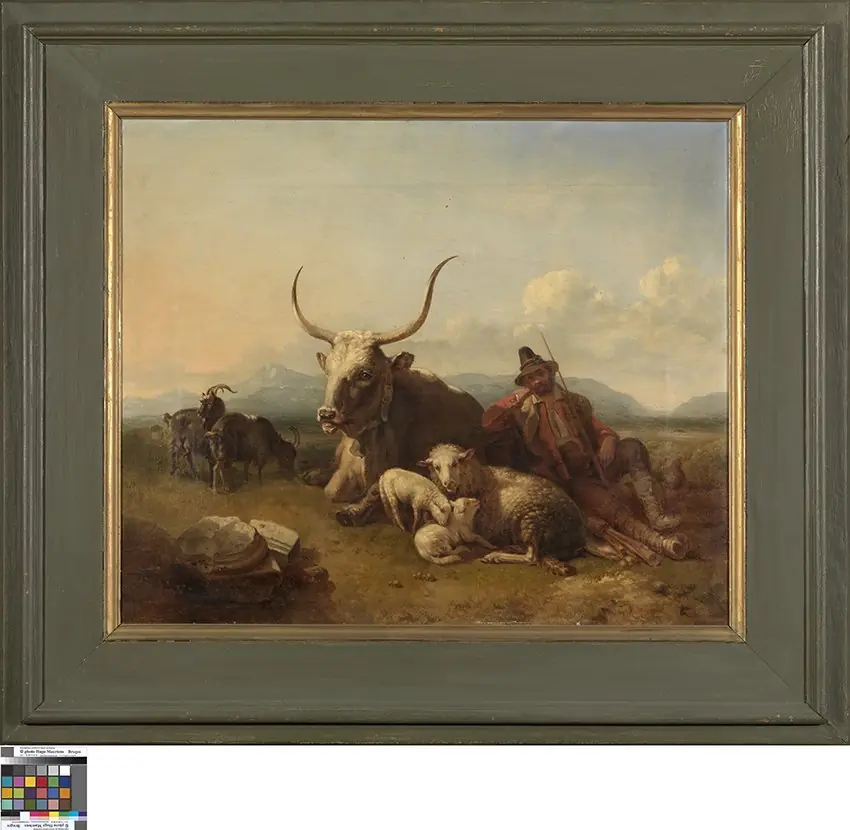
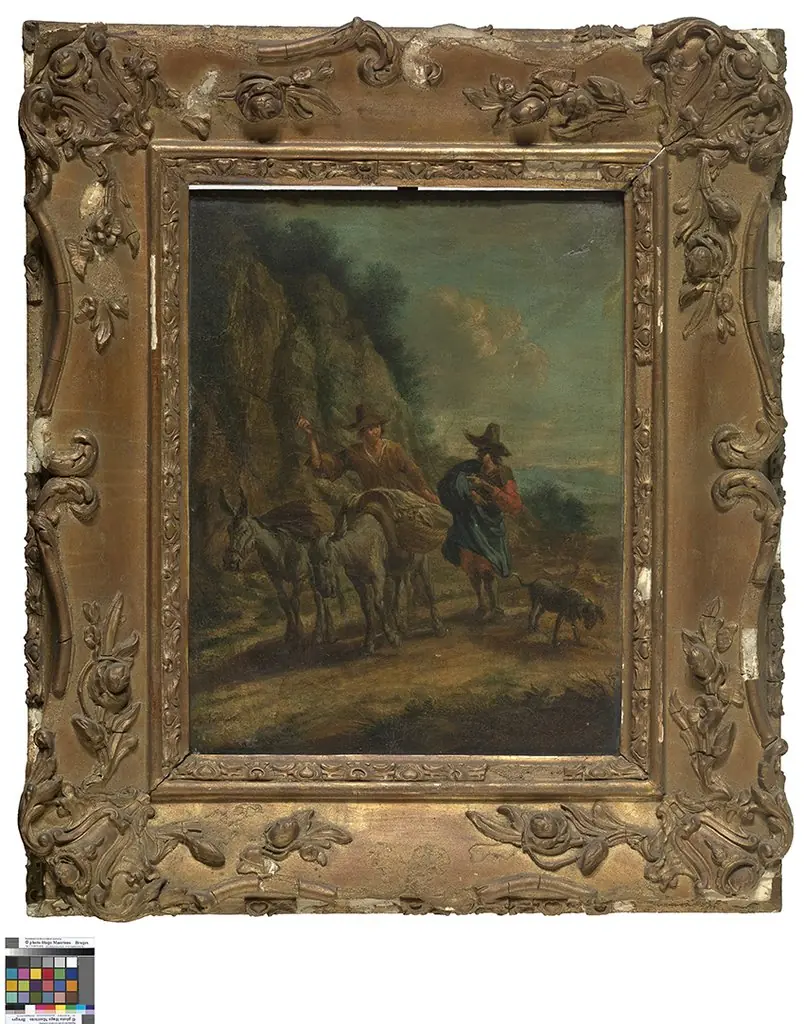
It presents a group of four individuals in a dimly lit setting, with a dog and a barrel as secondary elements.
Four Figures is an oil painting by Jan Asselijn, dated to around 1615. It presents a group of four individuals in a dimly lit setting, with a dog and a barrel as secondary elements. The work is part of the collection at the Groeningemuseum in Bruges. Though modest in scale, the composition emphasizes human presence through careful arrangement and lighting, reflecting early 17th-century Dutch interest in everyday scenes rendered with psychological nuance.
Subject & Meaning
The central figure, distinguished by a red hat and green tunic, holds a long staff or spear, suggesting a role as a guard, traveler, or laborer. A seated figure nearby and the presence of a dog imply a moment of pause or rest. The barrel may indicate a journey or trade. The grouping lacks narrative clarity, but the arrangement evokes quiet solitude and human endurance, typical of genre scenes from the period that favor mood over explicit story.
Technique & Style
Asselijn employs chiaroscuro to model forms and direct attention toward the central figure, using deep shadows to isolate the group against a dark ground. The brushwork is controlled but not overly refined, with subtle transitions between light and dark areas. The figures are rendered with restrained detail, emphasizing volume and posture over individualized features. This approach aligns with early Dutch naturalism, prioritizing atmospheric effect over decorative flourish.
History & Provenance
The painting has been in the Groeningemuseum’s collection since at least the 19th century, though its earlier ownership is undocumented. It was likely acquired during a period of increased institutional interest in Flemish and Dutch Old Master works. No significant restorations or alterations are recorded, and the painting retains its original surface and framing, preserving its early 17th-century character.
Context
Created during the Dutch Golden Age, Four Figures reflects the growing popularity of genre painting in the Low Countries. While larger works depicted biblical or mythological themes, smaller-scale scenes of ordinary life gained traction among collectors. Asselijn, known later for animal paintings, here engages with human subjects in a manner consistent with contemporaries like Pieter Bruegel the Elder, emphasizing quiet observation over dramatic spectacle.
Legacy
Though not widely exhibited or studied, Four Figures remains a quiet example of early Dutch genre painting’s capacity for emotional restraint. It contributes to understanding how artists of the time used light, posture, and minimal detail to suggest narrative ambiguity. The work’s endurance in a major museum collection underscores its value as a representative piece of regional artistic practice rather than a singular achievement.
Artist & collection