Artwork
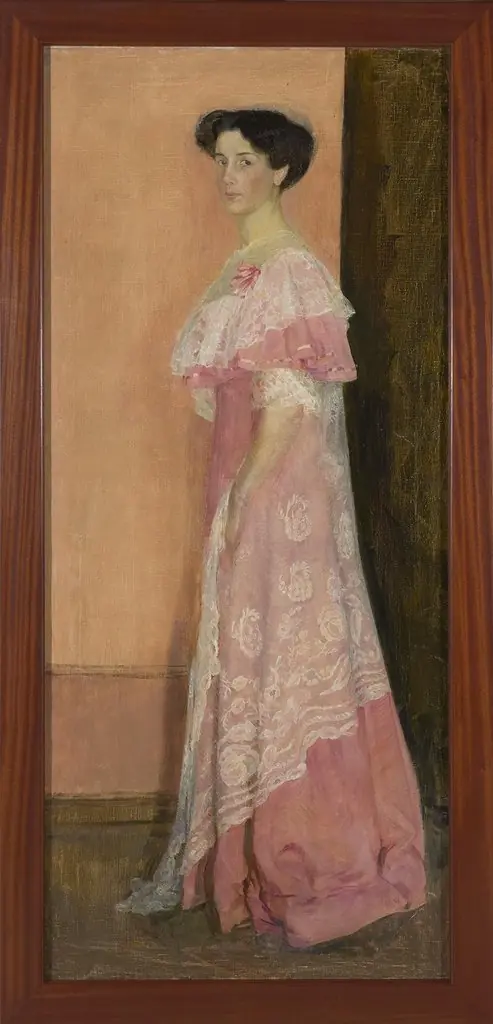
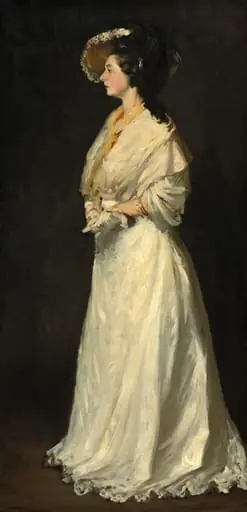
Tablou - portret întreg Elena Ceaușescu din profil, semnat și datat dreapta jos ”Eugen Palade 78”. Tablou comandat de Consiliul Culturii și Educației Socialiste și oferit în dar Elenei Ceaușescu la împlinirea vârstei de 60 de ani (ianuarie 1979).
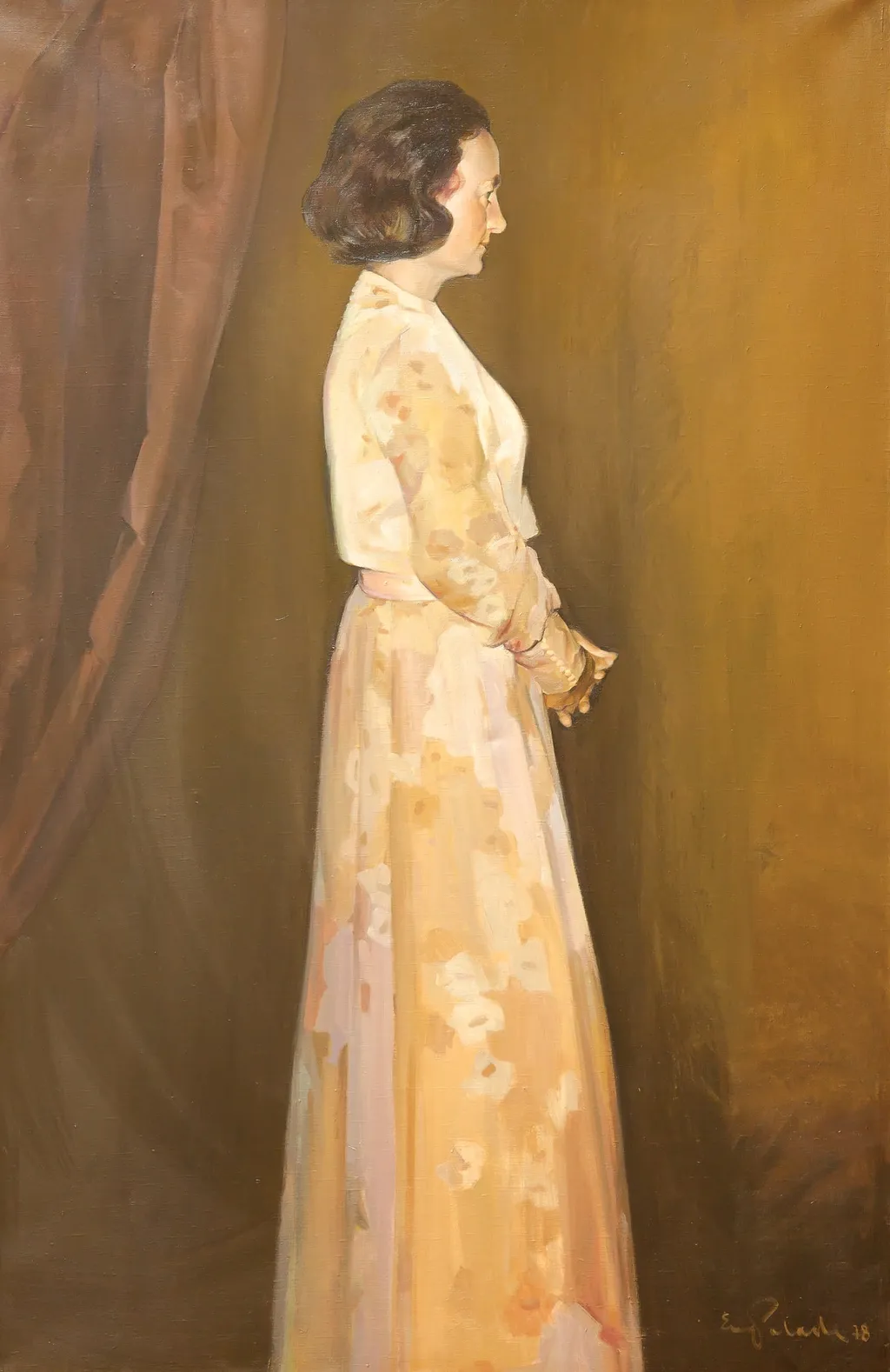
Tablou - portret întreg Elena Ceaușescu din profil, semnat și datat dreapta jos ”Eugen Palade 78”. Tablou comandat de Consiliul Culturii și Educației Socialiste și oferit în dar Elenei Ceaușescu la împlinirea vârstei de 60 de ani (ianuarie 1979). is a print by Eugen Palade. It is held in the collection of the National Museum of Romanian History.
About this work
Overview
Signed and dated by Eugen Palade in the lower right corner, the work reflects official state patronage during Romania’s communist era.
A full-length portrait of Elena Ceaușescu, painted in profile, was commissioned by the Council of Socialist Culture and Education as a birthday gift for her 60th anniversary in January 1979. Signed and dated by Eugen Palade in the lower right corner, the work reflects official state patronage during Romania’s communist era. The painting’s restrained composition and muted palette align with state-sanctioned artistic norms of the time.
Subject & Meaning
The subject, Elena Ceaușescu, is depicted standing sideways, hands clasped before her, exuding a composed, formal demeanor. Her attire—a light, patterned dress cinched at the waist—suggests modest elegance, while the neutral background eliminates contextual detail. The portrait functions as a ceremonial tribute, emphasizing dignity and quiet authority rather than personal expression, consistent with the cult of personality cultivated around the regime’s leadership.
Technique & Style
Palade employed loose, soft brushwork that allows colors to blend gently, avoiding sharp definition. The warm brown background, subtly tinged with red on one side, creates a quiet atmosphere without distraction. The rendering of fabric and hair is suggestive rather than meticulously detailed, prioritizing harmony over realism. This approach reflects a deliberate move away from rigid socialist realism toward a more lyrical, intimate mode of representation.
History & Provenance
Commissioned by the state’s cultural apparatus, the portrait was presented as an official gift in January 1979 to mark Elena Ceaușescu’s 60th birthday. Its creation and presentation were part of a broader effort to visually reinforce the legitimacy and reverence surrounding the regime’s elite. After the 1989 revolution, such works were removed from public display, and their provenance became a subject of archival interest rather than public celebration.
Context
Painted during the height of Nicolae and Elena Ceaușescu’s rule, the portrait emerged in a cultural climate where art served ideological purposes. While socialist realism demanded heroic or idealized forms, Palade’s softer style suggests a subtle shift toward personalization within state constraints. The absence of symbols of power—flags, books, or official settings—indicates an attempt to portray authority through quiet presence rather than overt spectacle.
Legacy
The portrait remains a documented artifact of Romania’s communist-era cultural production, illustrating how state commissions shaped public imagery. Though no longer displayed in official spaces, it survives in archives as evidence of the regime’s use of art to construct legitimacy. Palade’s restrained technique distinguishes it from more propagandistic portraits, offering a quieter, more ambiguous record of power.
Artist & collection
Artist
Eugen Palade spent the 1970s and 80s painting two people he never met: Nicolae and Elena Ceaușescu.

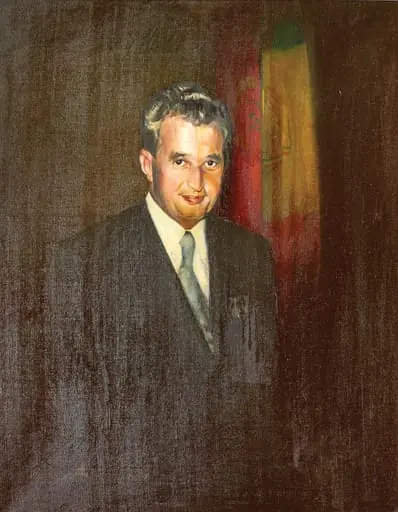 Tablou, ulei pe pânză, Portretul lui Nicolae Ceaușescu, nesemnat, atribiut lui Eugen Palade. Nicolae Ceaușescu cu două însemne de ”Erou al Republicii Socialiste România”, în spatele său steagul cu stema RSR și steagul PCR. Comandat și oferit de Ministerul de Interne, Direcția de Securitate și Gardă, 25 ianuarie 1978.
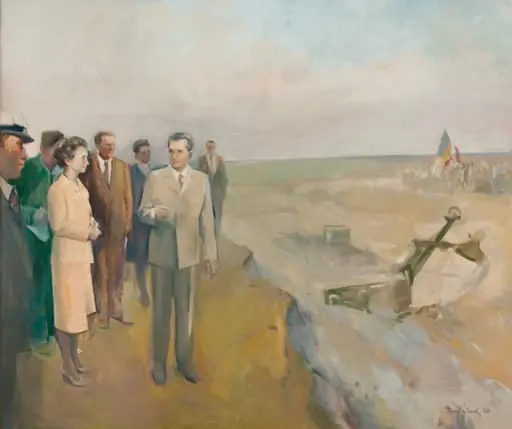 Tablou, ”Omagiu”, semnat Eugen Palade și datat dreapta jos.Tabloul îi reprezintă pe Nicolae și Elena Ceaușescu alături de membrii de partid în vizită de lucru la șantierul Canalul Dunăre București. Comandat de Comitetul Municipal de Partid București, 1988.