Artwork
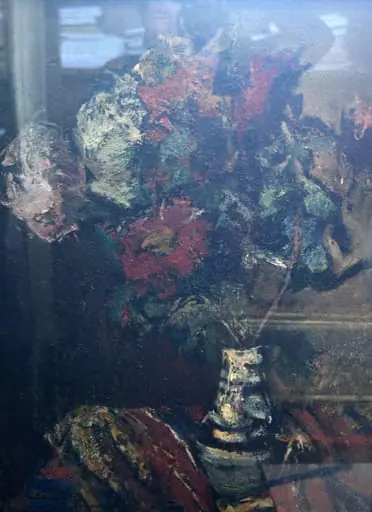
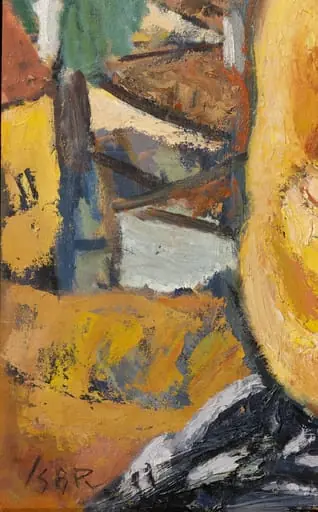
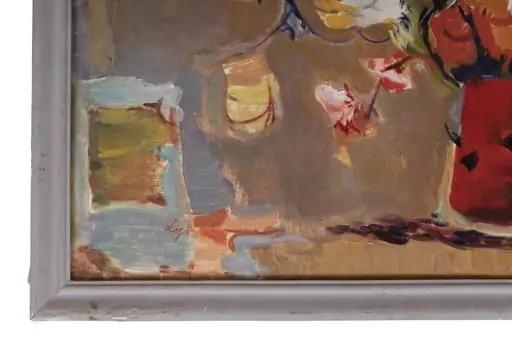
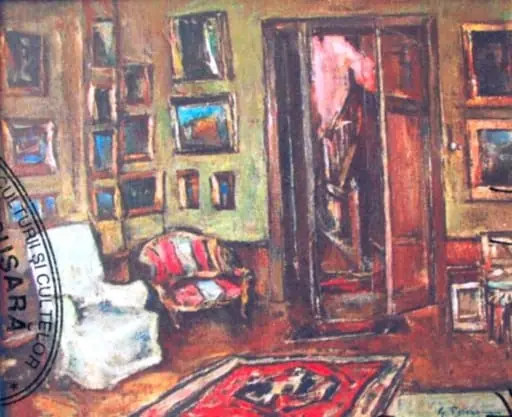
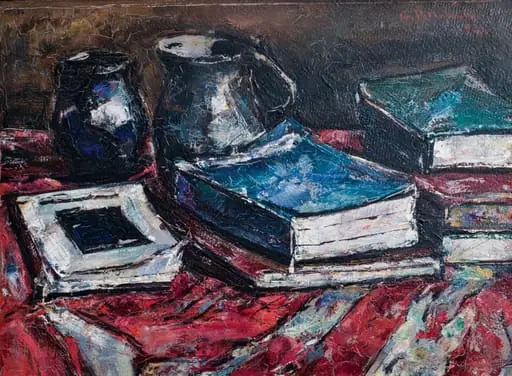
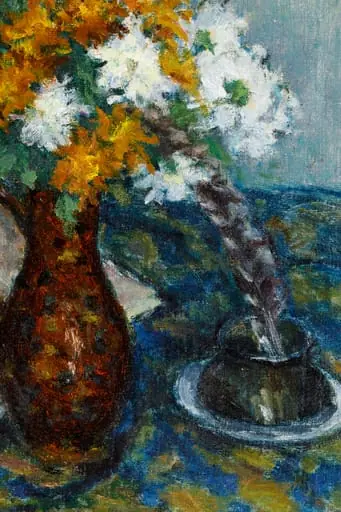
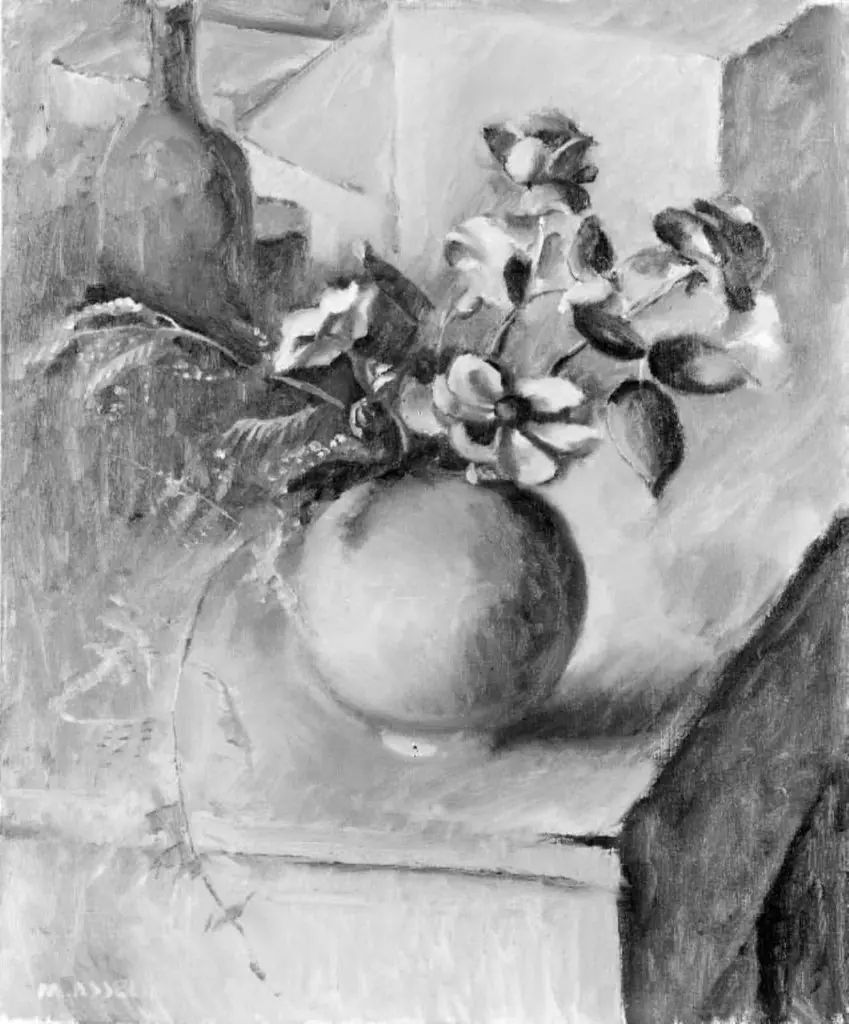
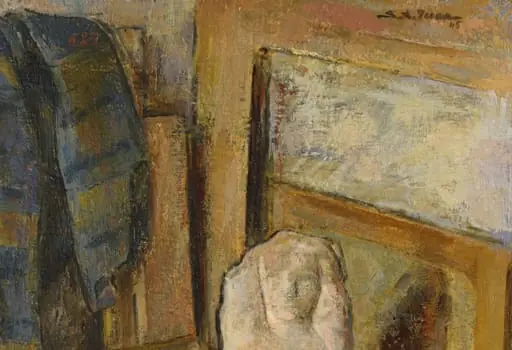
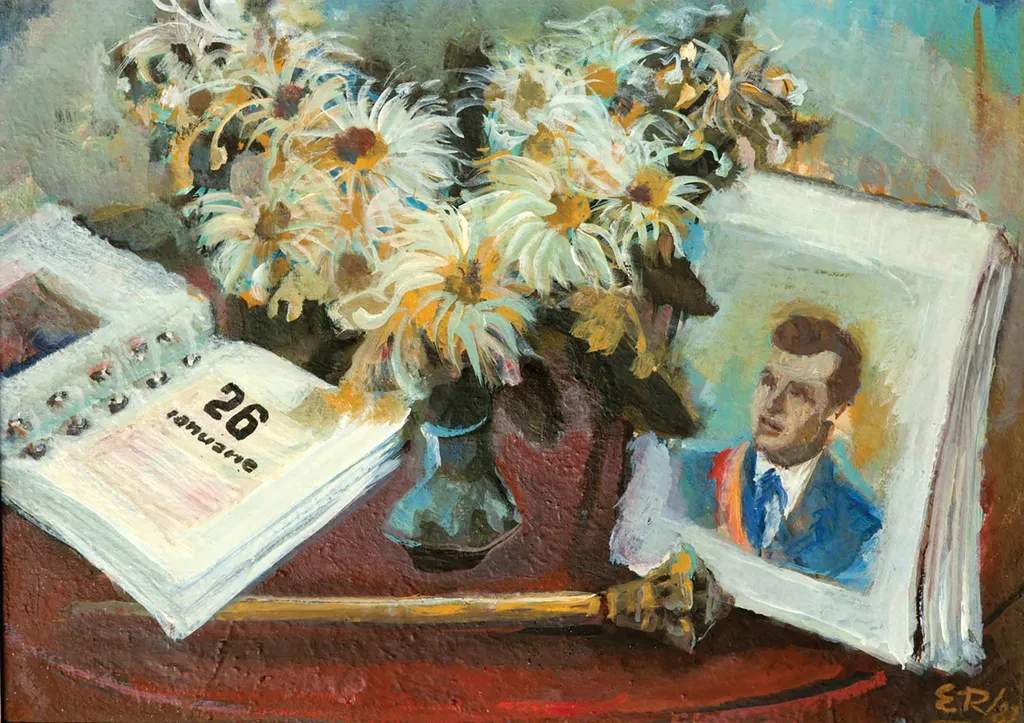
Tablou ,„Marea Aniversare” , semnat E.R. (Eugen Rascenco) și datat 1987 drepta jos. ”Marea Aniversare” se referă la data de 26 ianuarie, ziua de naștere a lui Nicolae Ceaușescu, data prezentată si pe agenda reprezentată în tablou alături de portrertul lui N.Ceaușescu, sceptrul prezidențial și o vază cu flori. Comandat de Comitetul Județean de Partid Vaslui (1987).
Tablou ,„Marea Aniversare” , semnat E.R. (Eugen Rascenco) și datat 1987 drepta jos. ”Marea Aniversare” se referă la data de 26 ianuarie, ziua de naștere a lui Nicolae Ceaușescu, data prezentată si pe agenda reprezentată în tablou alături de portrertul lui N.Ceaușescu, sceptrul prezidențial și o vază cu flori. Comandat de Comitetul Județean de Partid Vaslui (1987). is a print by Eugen Rascenco. It is held in the collection of the National Museum of Romanian History.
About this work
Overview
Painted in 1987 by Eugen Rascenco, this work was commissioned by the Vaslui County Party Committee to commemorate Nicolae Ceaușescu’s birthday.
Painted in 1987 by Eugen Rascenco, this work was commissioned by the Vaslui County Party Committee to commemorate Nicolae Ceaușescu’s birthday. The scene depicts a cluttered desk with symbolic objects: a portrait of Ceaușescu, a calendar marked January 26, a ceremonial scepter, and a vase of flowers tied with a blue ribbon. The loose brushwork and vivid pigments suggest a rapid, state-mandated production, typical of official commemorative art under the regime.
Subject & Meaning
The painting centers on the cult of personality surrounding Ceaușescu, using domestic objects to frame his birthday as a national ritual. The portrait, scepter, and calendar collectively transform a personal date into a state-sanctioned celebration. The flowers and ribbon evoke ceremonial tribute, while the disarray of the desk implies the performative, almost routine nature of such tributes under authoritarian rule.
Technique & Style
Rascenco employed impasto techniques with thick, visible brushstrokes and saturated colors, creating a tactile urgency. The composition is deliberately unrefined, avoiding idealized realism in favor of a hurried, almost bureaucratic aesthetic. This stylistic choice reflects the pressure of production deadlines and the institutionalized nature of state art, where emotional depth was secondary to symbolic compliance.
History & Provenance
Commissioned by the Vaslui County Party Committee in 1987, the painting was part of a broader campaign to reinforce Ceaușescu’s image ahead of his 69th birthday. Such works were distributed to local party offices and public institutions. After the 1989 revolution, many similar pieces were discarded or archived, making this work a rare surviving example of localized propaganda art from the final years of the regime.
Context
In late 1980s Romania, official art served as a tool of ideological reinforcement. Birthdays of leaders were elevated to national holidays, accompanied by mandatory displays of loyalty. This painting reflects the fusion of personal veneration and bureaucratic ritual, where even mundane objects like calendars and vases became instruments of political theater, designed to normalize the cult of personality in everyday spaces.
Legacy
The painting survives as a quiet testament to the mechanisms of state propaganda in communist Romania. Its unpolished execution and mundane subject matter contrast sharply with the grandiosity of the cult it promoted. Today, it functions less as art and more as an artifact—evidence of how political power was visually encoded in routine, domestic settings under authoritarian rule.
Artist & collection
Artist
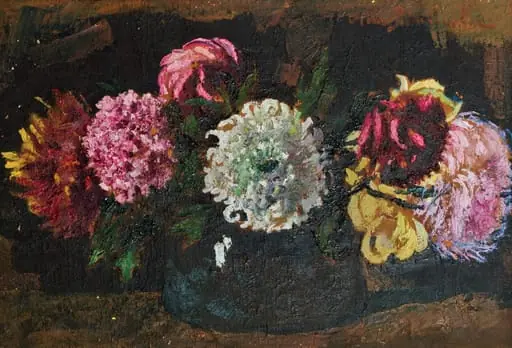
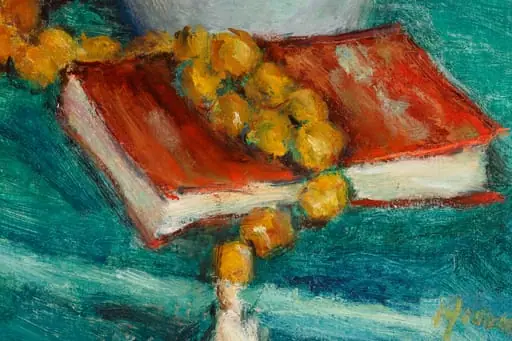
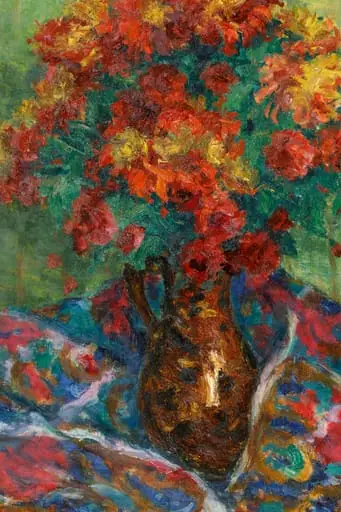
These two prints show Eugen Rascenco’s work from 1987, painted in the late-Social-Realist style.