Artwork
Interior (Colț de atelier)
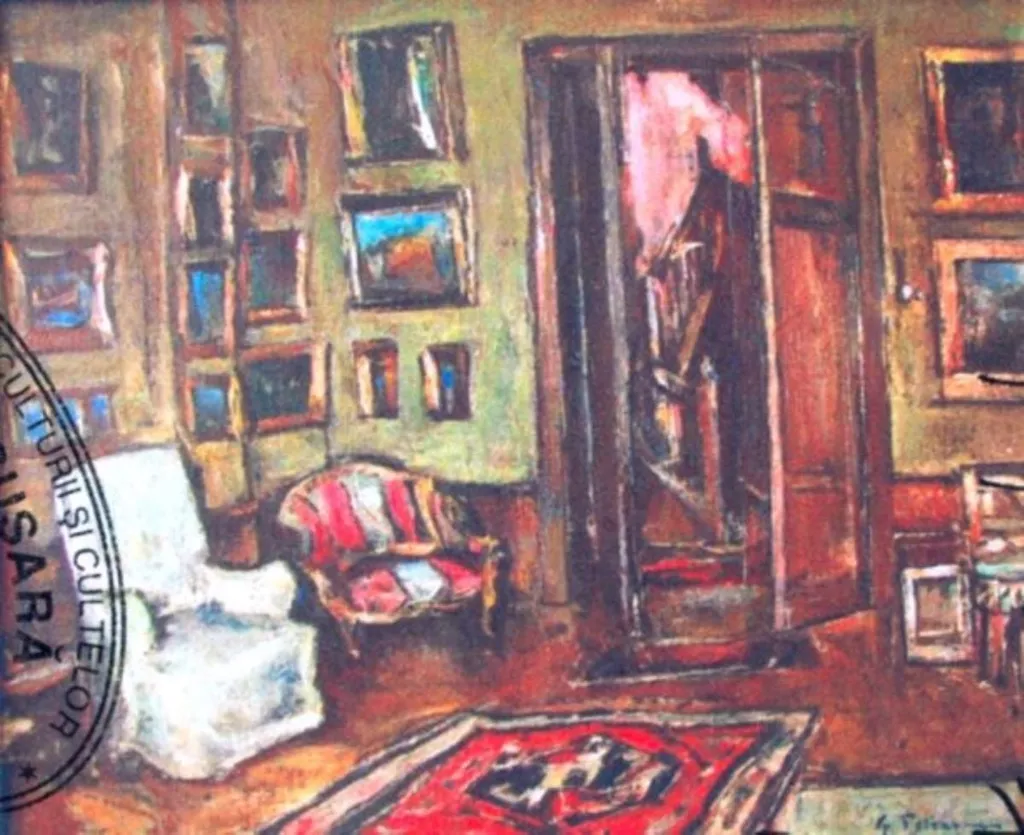
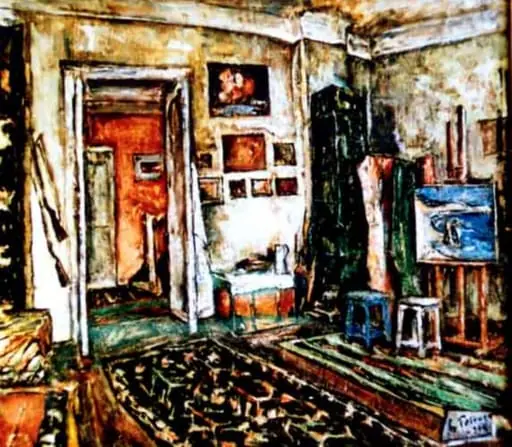
Interior (Colț de atelier) is an unspecified painting by Gheorghe Petrașcu. It dates from 1931 and is held in the collection of the Ion Ionescu-Quintus Prahova County Art Museum.
About this work
Overview
Painted in 1931 by Gheorghe Petrașcu, Interior (Colț de atelier) captures a corner of an artist’s studio in quiet, unidealized detail.
Painted in 1931 by Gheorghe Petrașcu, Interior (Colț de atelier) captures a corner of an artist’s studio in quiet, unidealized detail. The work belongs to the Museum of Ethnography’s collection and reflects a deliberate focus on the physical presence of ordinary objects rather than narrative or symbolism. Its composition is grounded in observation, emphasizing texture, light, and spatial arrangement over dramatic effect.
Subject & Meaning
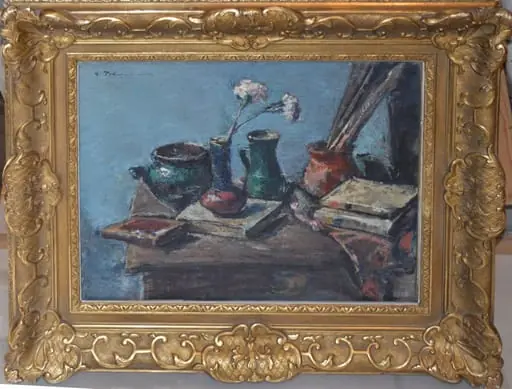
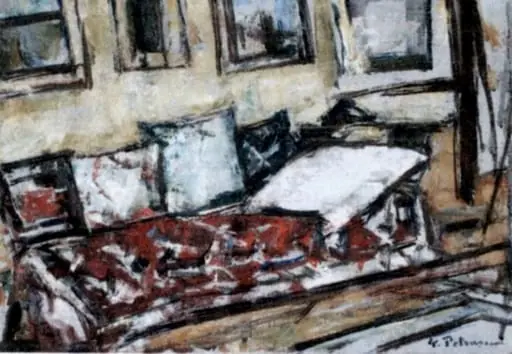
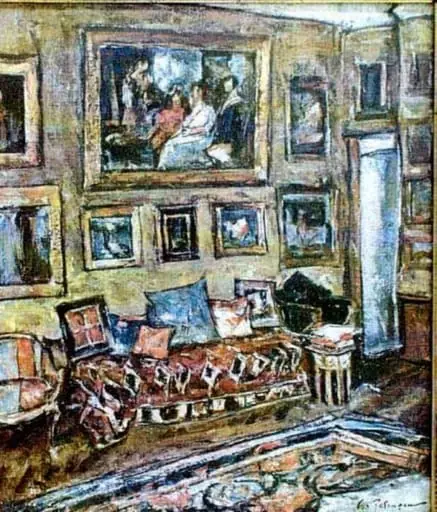
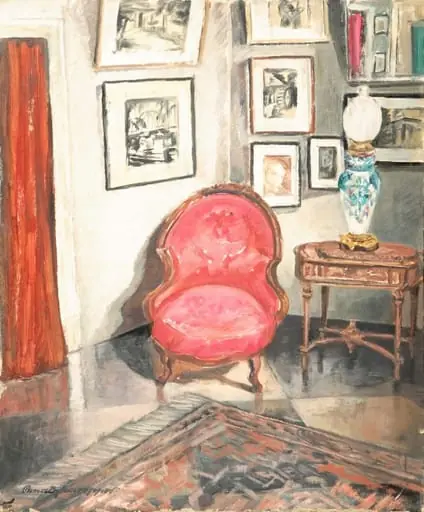
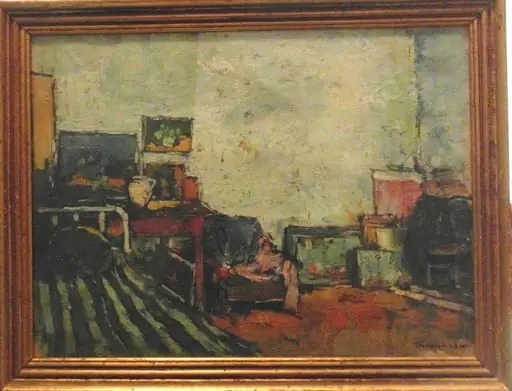
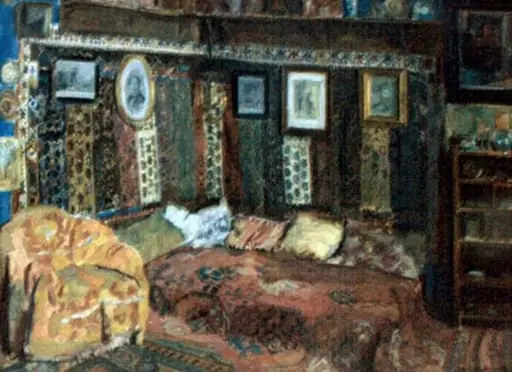
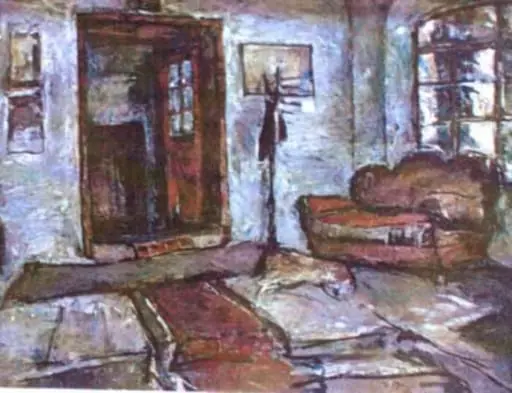
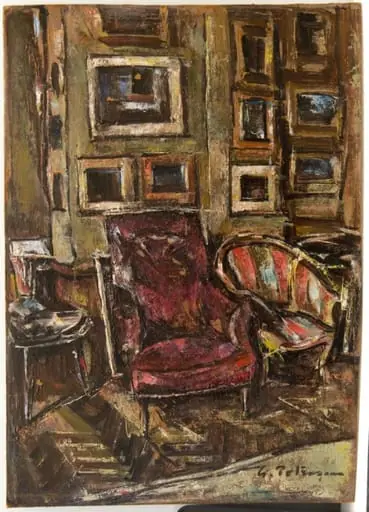
The scene presents a studio corner filled with personal artifacts: framed paintings line the walls, a striped chair stands vacant, and a rug anchors the floor. The mirror’s blurred reflection suggests the artist’s presence without depicting it directly. The arrangement implies a space shaped by use and time, where creativity unfolds amid clutter. The absence of human figures heightens the sense of quiet solitude and habitual routine.
Technique & Style
Petrașcu employed thick, tactile brushwork to build surface texture, particularly in the walls, rug, and furniture. The impasto technique gives form to shadows and highlights with physical depth, enhancing the sense of materiality. Colors are muted and earthy—ochres, browns, and deep reds—creating a cohesive, warm atmosphere. Light falls unevenly, casting soft contrasts that define space without artificial drama.
History & Provenance
Created in 1931, the painting remained within Romanian artistic circles before entering the Museum of Ethnography’s holdings. Its acquisition reflects institutional interest in documenting domestic and creative environments of the period. No record of prior ownership or exhibition history is widely documented, suggesting it was retained by the artist or close associates before institutional transfer.
Context
In early 20th-century Romania, artists increasingly turned to intimate interiors as subjects, moving away from grand historical themes. Petrașcu’s focus on his own studio aligns with broader European trends of introspective realism. The work resonates with contemporaries like Vuillard or Bonnard, though rooted in local material culture and the quiet rhythms of Romanian artistic life.
Legacy
Interior (Colț de atelier) stands as a quiet testament to the artist’s engagement with his environment. It influenced later Romanian painters interested in domestic realism and the emotional weight of ordinary spaces. While not widely reproduced, its presence in the Museum of Ethnography underscores its value as a document of creative life in interwar Romania.
Artist & collection
Artist
Gheorghe Petrașcu painted quiet scenes of buildings, streets, and still lifes in the 1920s and ’30s Romania.
Museum
Ion Ionescu-Quintus Prahova County Art Museum
Continue through works from the same source collection.