Artwork
Cervantes en sus últimos días escribe la dedicatoria del Quijote al conde de Lemos
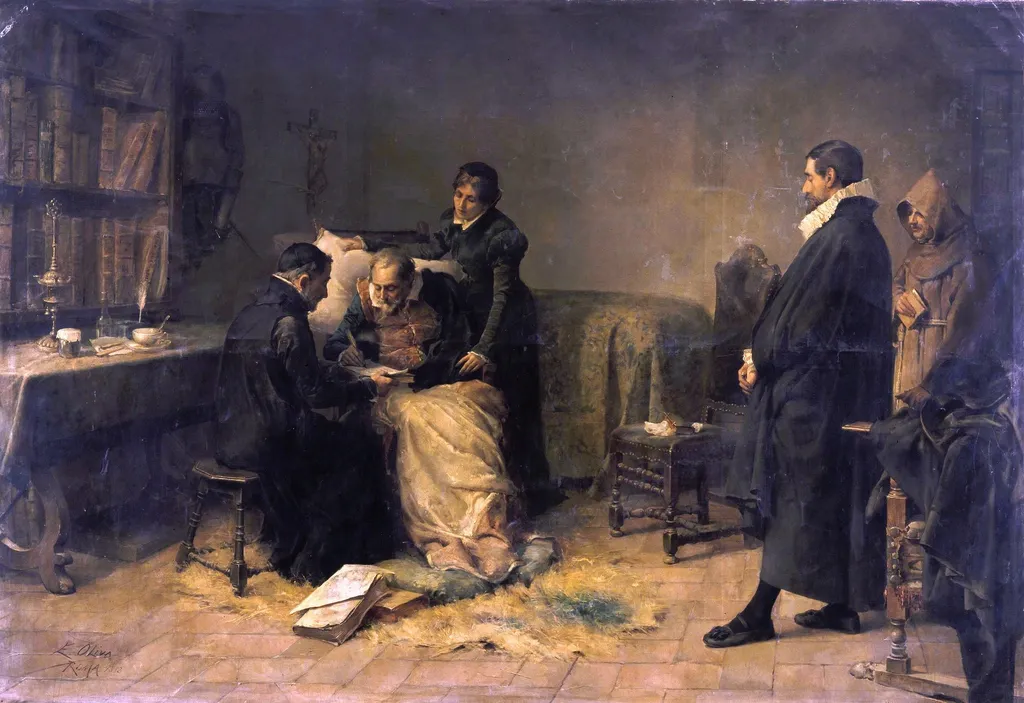
Cervantes en sus últimos días escribe la dedicatoria del Quijote al conde de Lemos is an oil painting by the Post-Impressionist artist Eugenio Oliva Rodrigo. It dates from 1892 and is held in the collection of the Museo del Prado.
About this work
Overview
Eugenio Oliva Rodrigo’s 1892 oil canvas, titled *Cervantes en sus últimos días escribe la dedicatoria del Quijote al conde de Lemos*, is part of the Prado Museum’s collection. The work portrays the final moments of Miguel de Cervantes, the author of *Don Quixote*, as he prepares a dedication to the Count of Lemos.
Subject & Meaning
The central figure lies on a modest bed, dressed in a white robe that suggests frailty or imminent death. A kneeling priest holds a book, his gaze fixed on Cervantes, while several attendants surround the scene, offering quiet consolation. The composition emphasizes the writer’s devotion to his literary legacy even as his health wanes.
Technique & Style
Oliva employs a restrained chiaroscuro, allowing a single candle’s glow to illuminate the faces and objects while the surrounding space recedes into shadow. This contrast creates a focused intimacy, directing attention to the interaction between Cervantes and the priest and underscoring the solemn atmosphere.
History & Provenance
Completed in 1892, the painting entered the Museo del Prado’s holdings, where it remains on display. Its provenance traces directly from the artist’s studio to the national collection, reflecting the Spanish institution’s interest in visualizing key moments from its literary heritage.
Context
The work situates Cervantes’s final act of dedication within the broader 19th‑century revival of historic and literary subjects in Spanish art. By depicting the author at the brink of death, Oliva aligns with contemporary interests in moral reflection and the romanticized portrayal of cultural icons.
Own this work as a print
Artist & collection

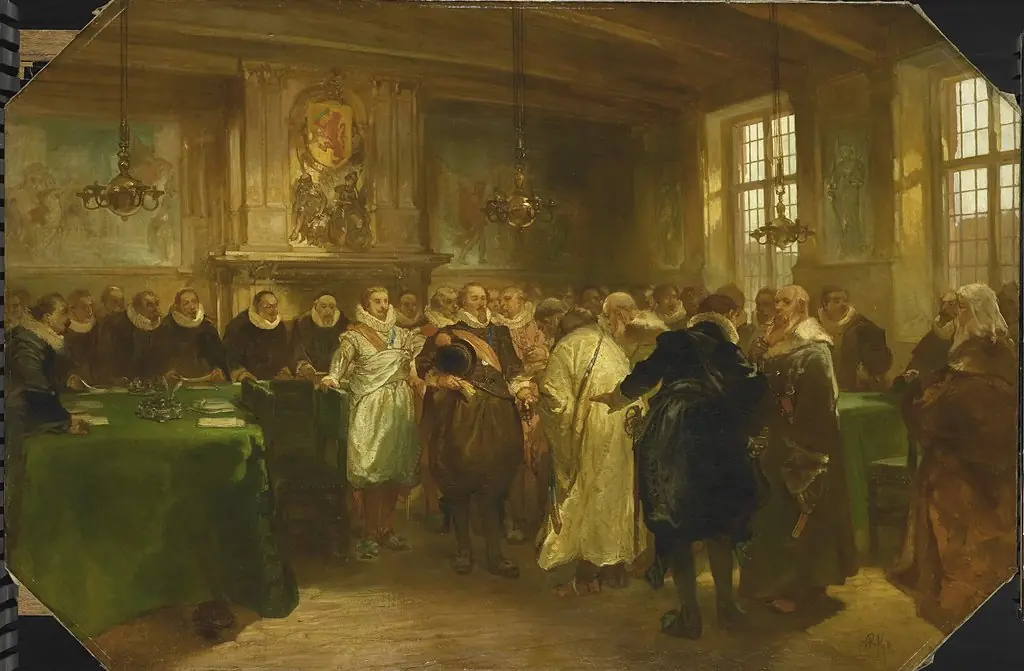 Prince Maurits Receiving a Russian Delegation in 1614
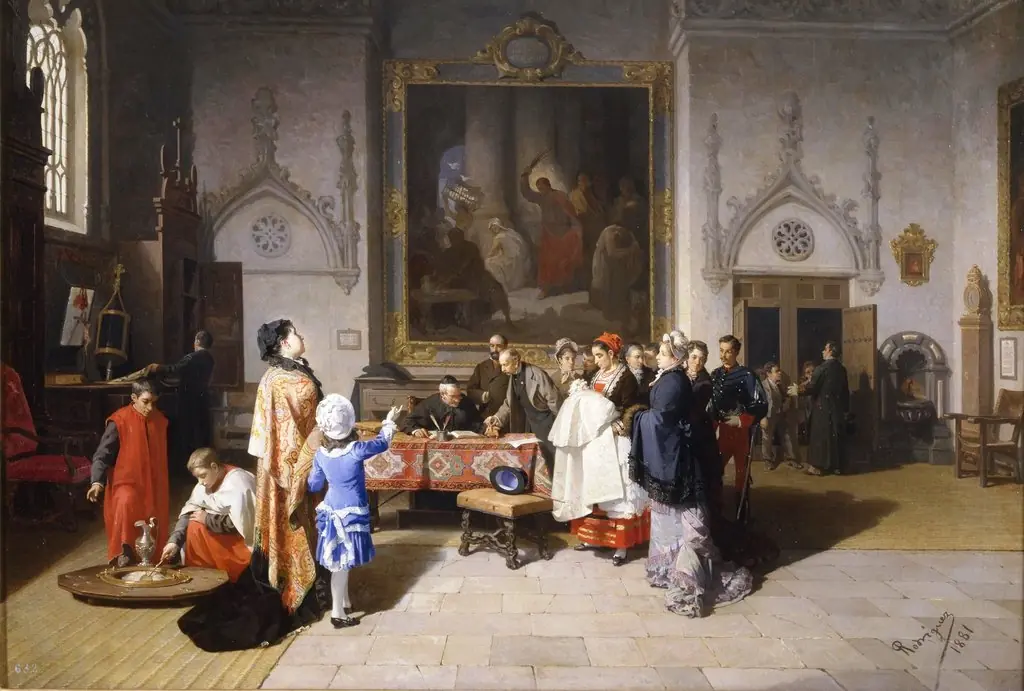 En la sacristía. ¿Mamá por qué pega Jesús a ese hombre?
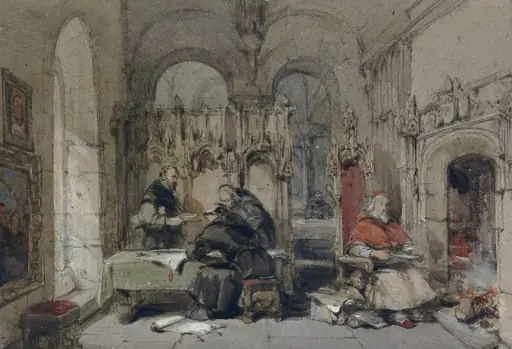 The Monk's Library
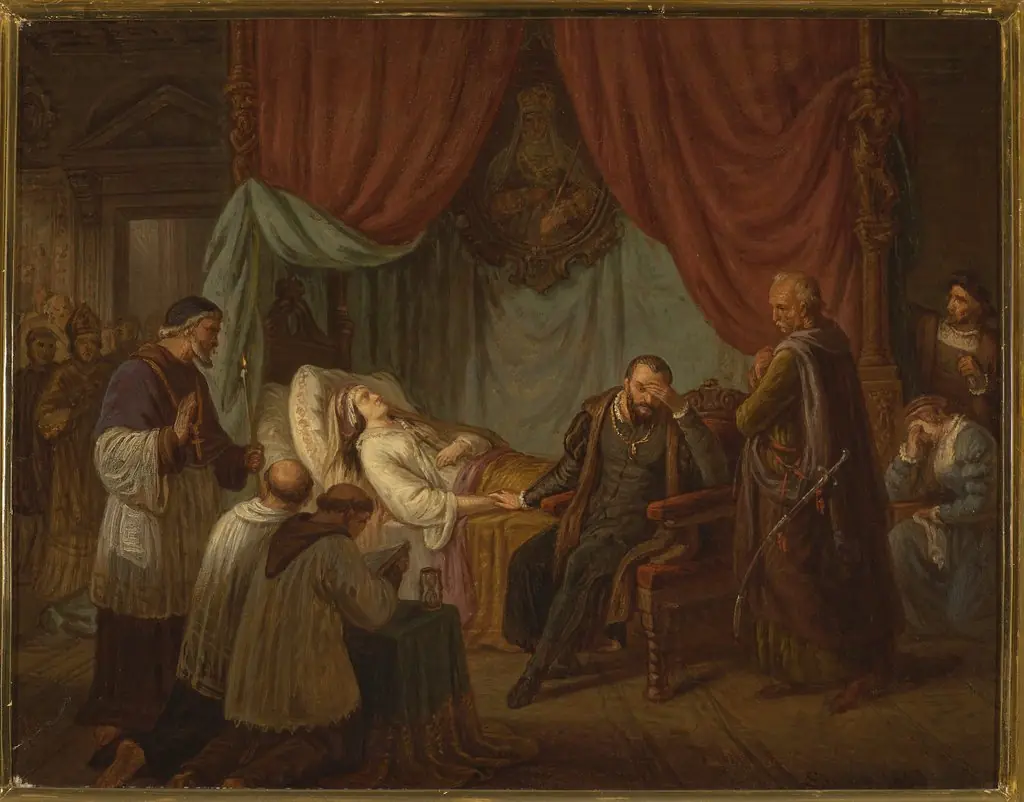 Death of Barbara Radziwiłł
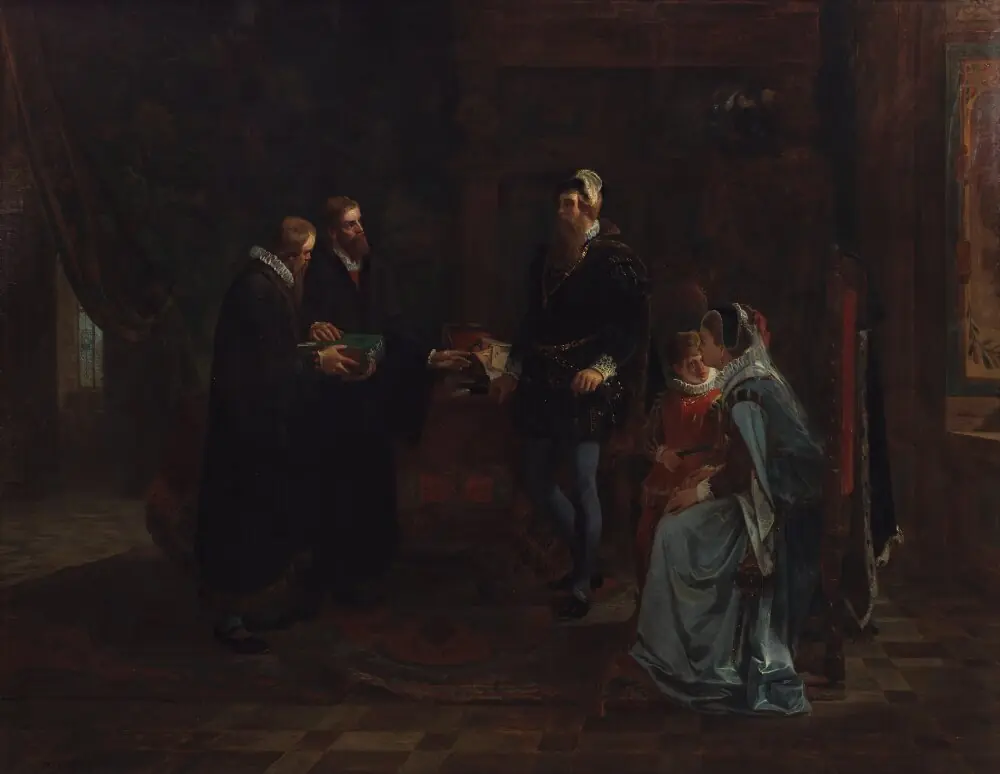 King Gustav Vasa of Sweden Receiving the Swedish Translation of the Bible
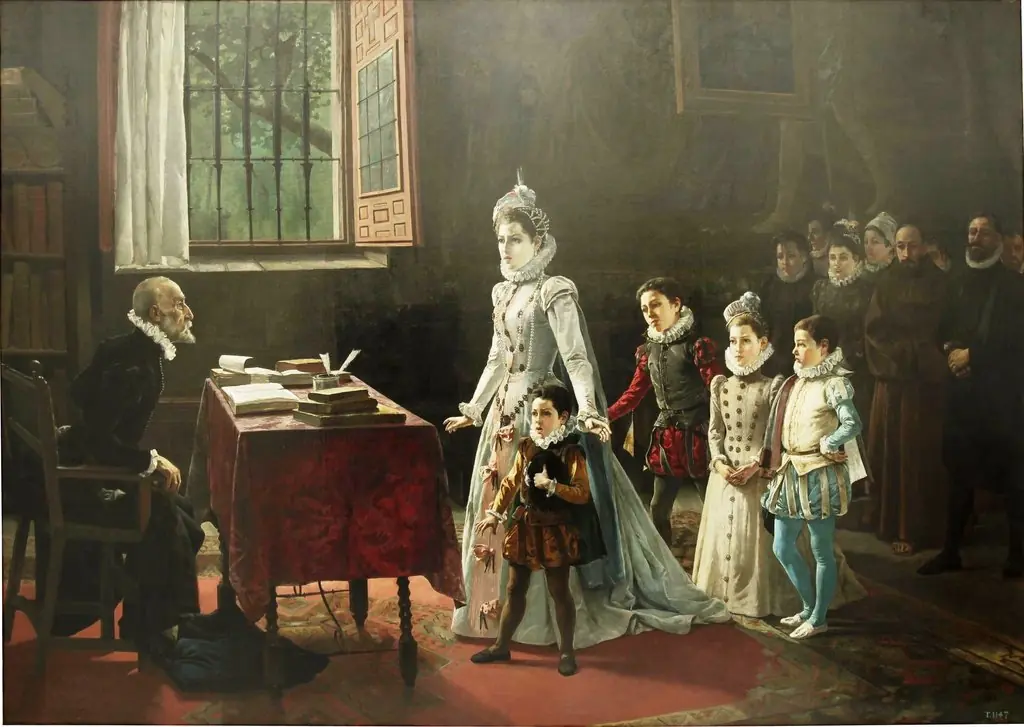 Los hijos de Antonio Pérez ante Rodrigo Vázquez
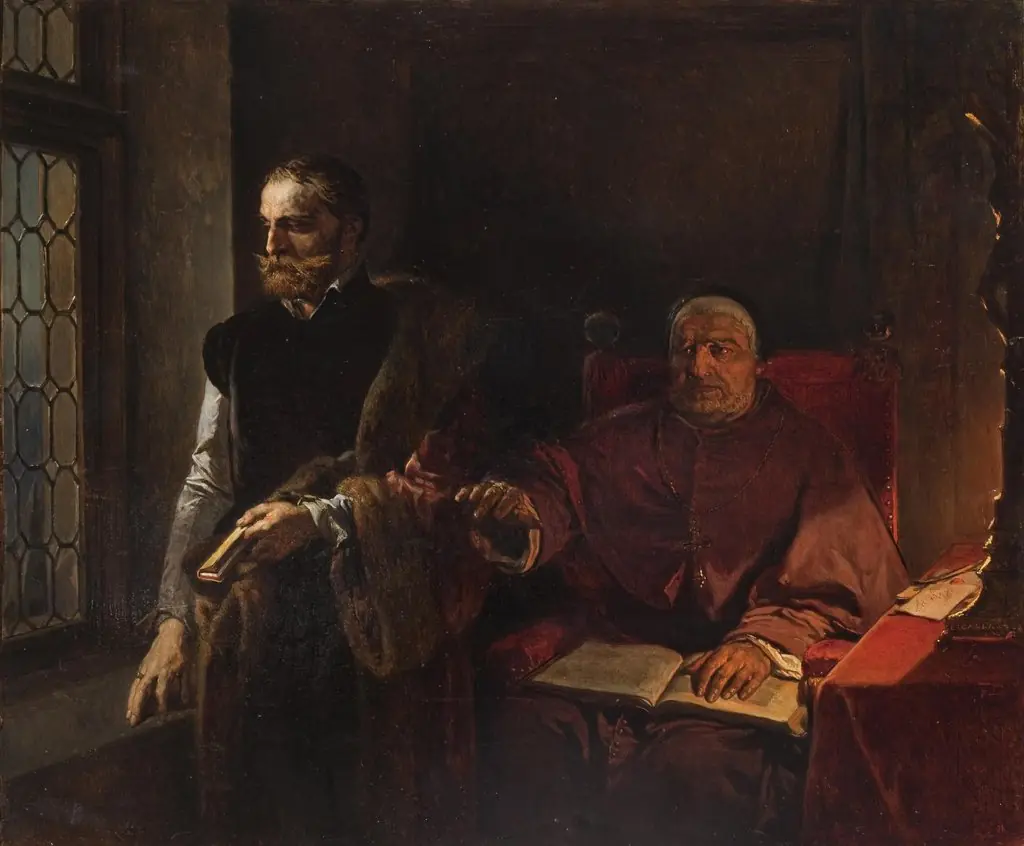 The Last Moments of Count Egmont (Count Egmont Before His Death)
 Tratado de Cambray
 The Geographer