Artwork
Meekness
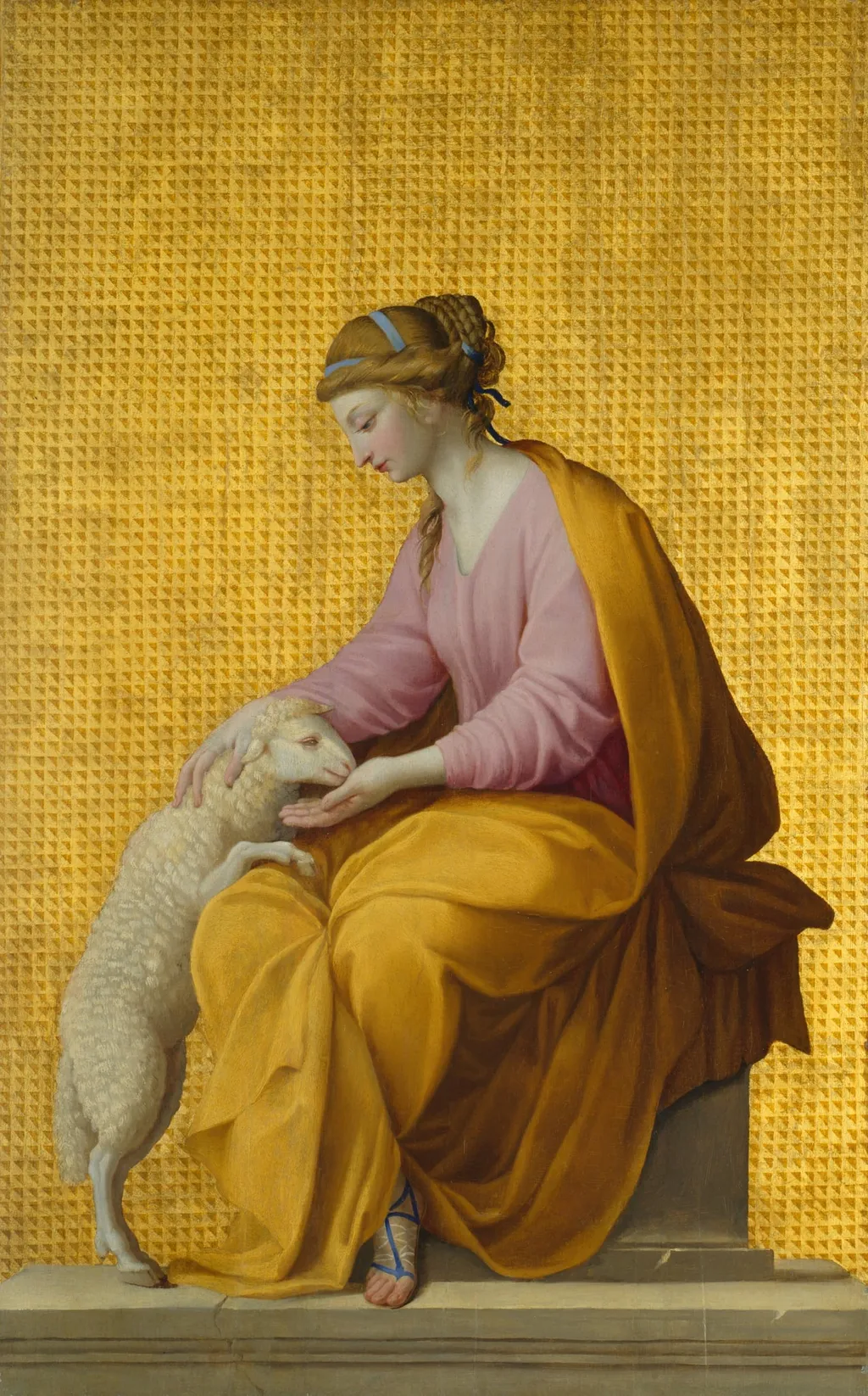
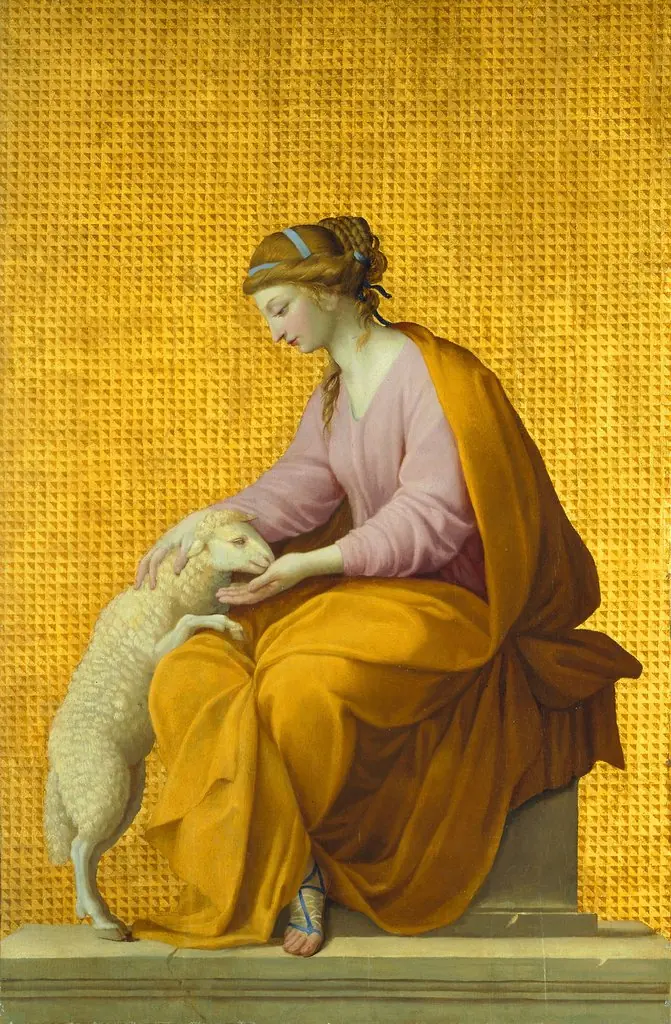
Meekness is an oil painting by the Baroque artist Eustache Le Sueur. It dates from 1650 and is held in the collection of the Art Institute of Chicago.
About this work
Overview
Eustache Le Sueur created a series of eight oil-on-panel paintings illustrating the Beatitudes for a private chapel in Paris, commissioned by Guillaume Birssonnet. These works formed part of a devotional ensemble that included an Annunciation altarpiece, monochrome Virgin Mary scenes, and a ceiling depicting her Assumption. Only three pieces from the original scheme survive, including this depiction of Meekness, which once lined the chapel’s lower walls with its luminous gold ground.
Subject & Meaning
The composition avoids drama, focusing instead on serene presence, aligning with the spiritual ideal of meekness as strength rooted in restraint.
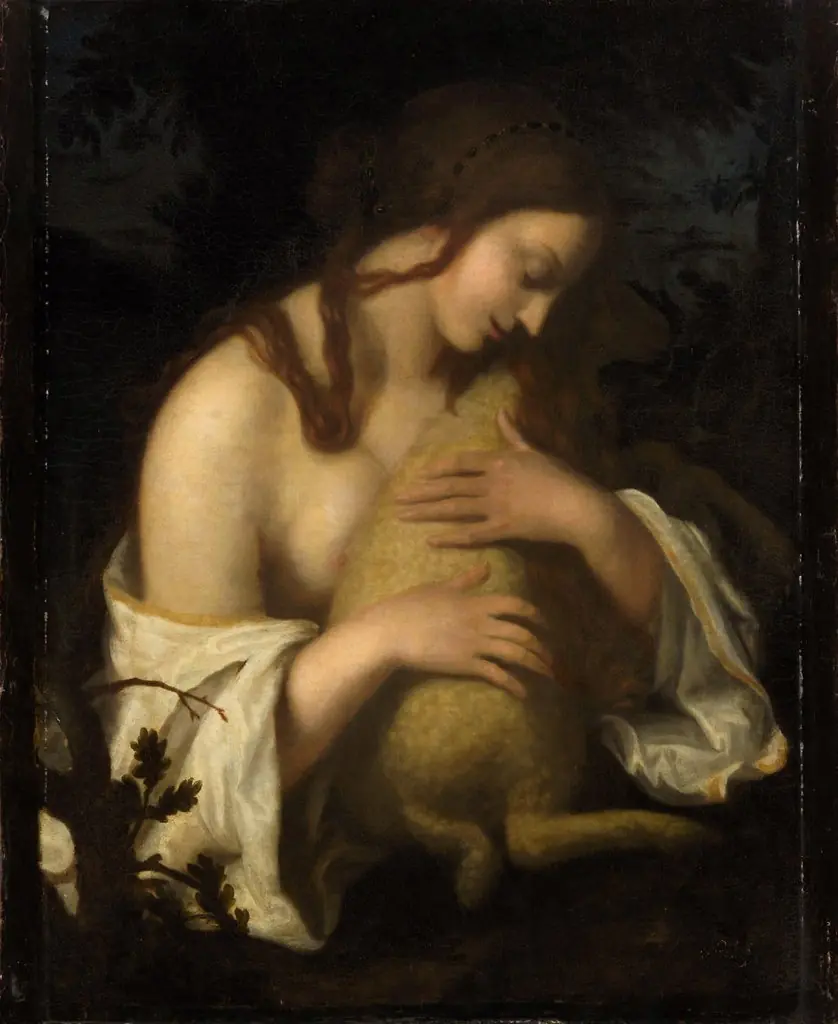
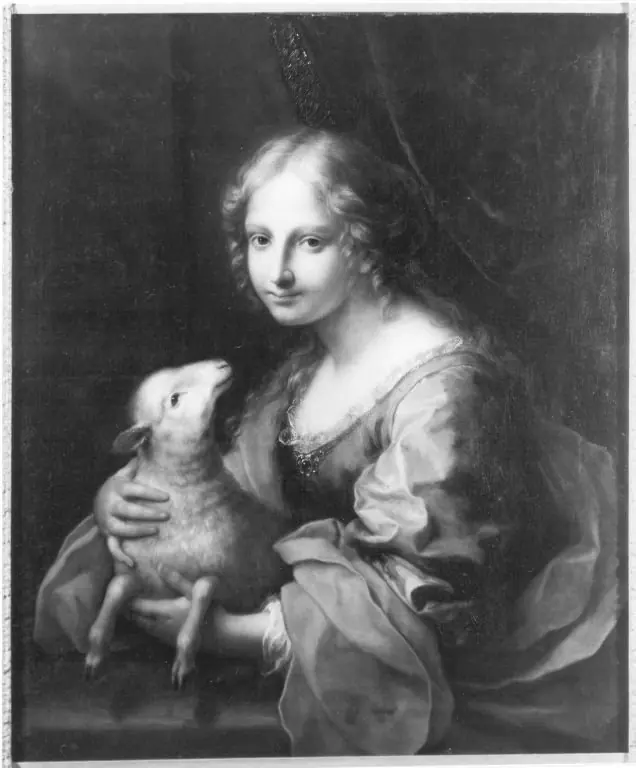
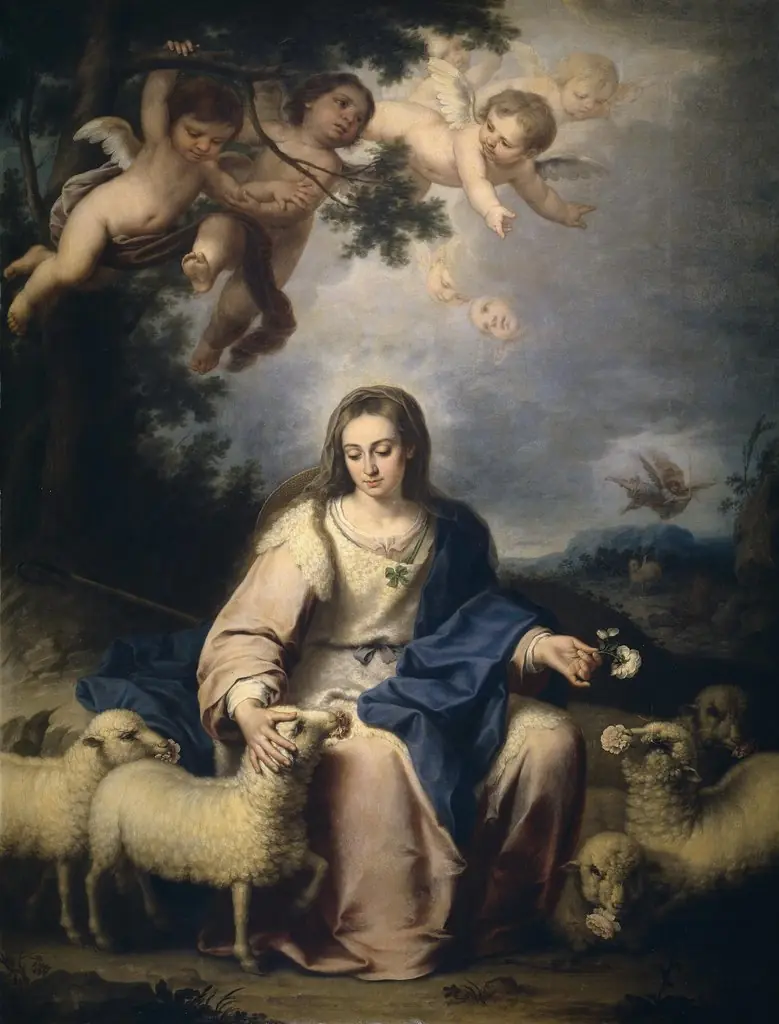
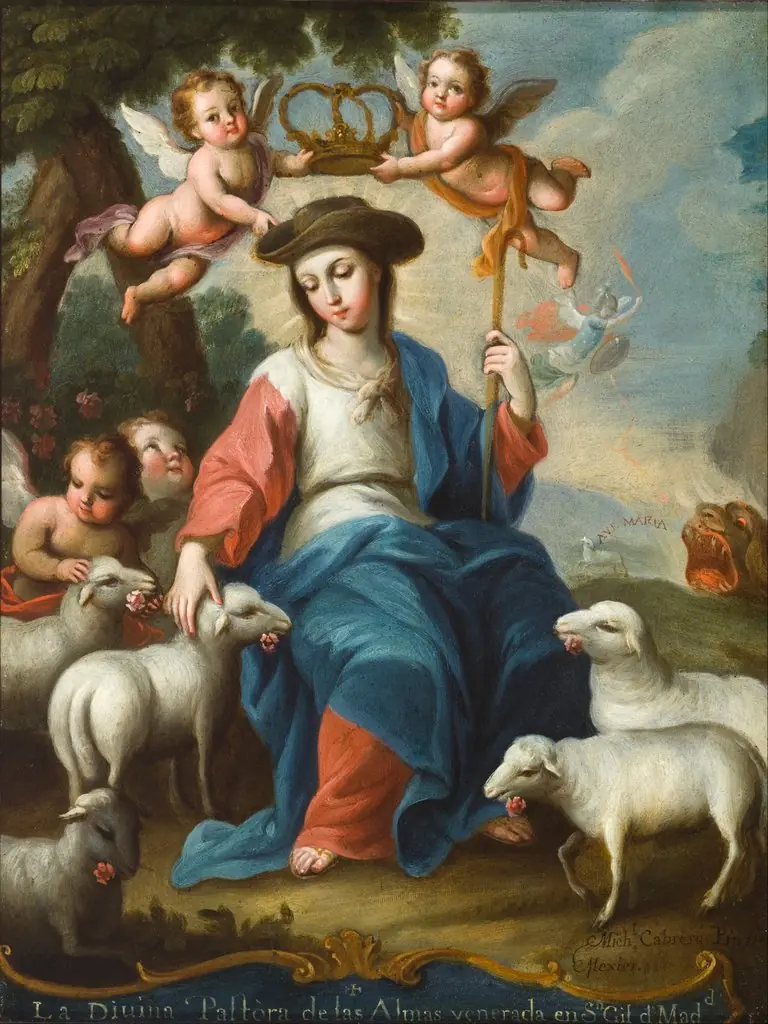
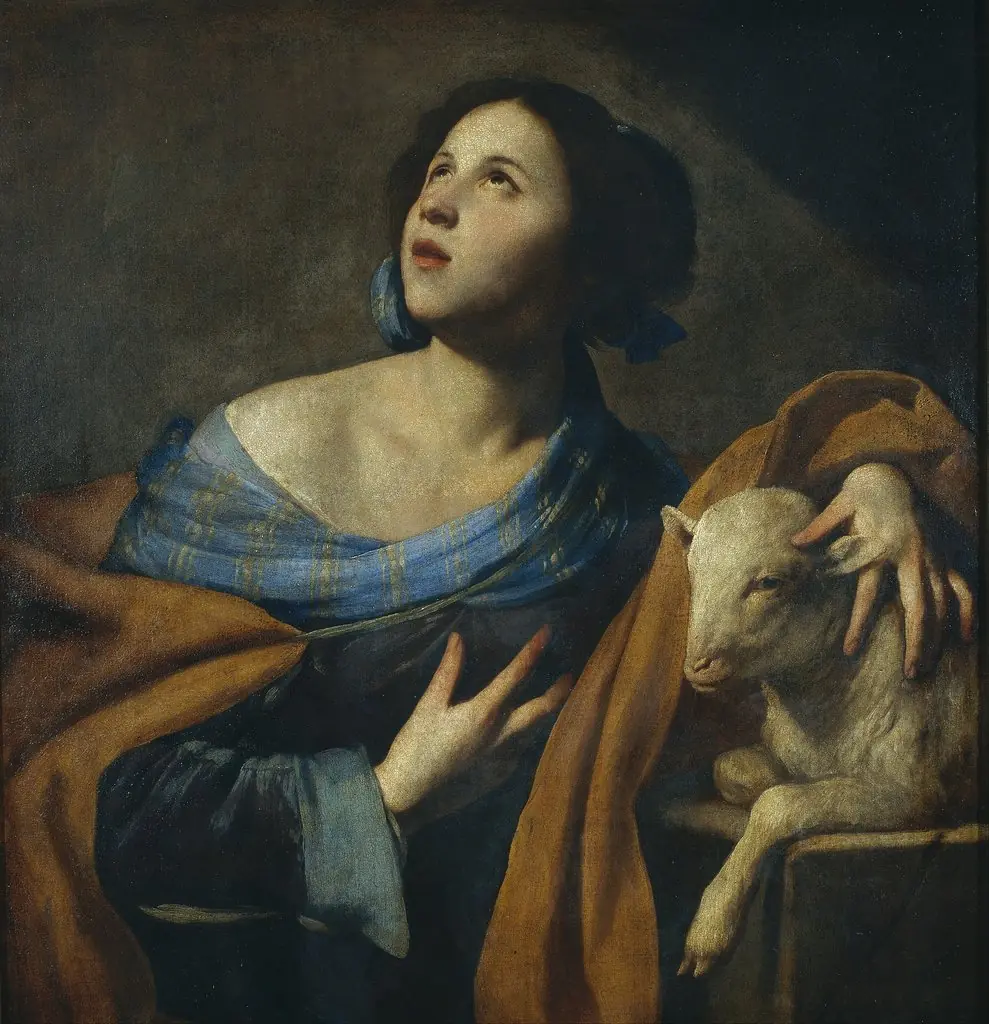
The figure represents meekness, one of the virtues Jesus extolled in the Sermon on the Mount. A woman, dressed in soft, pale robes, sits in quiet contemplation with her hands folded, embodying humility and inner stillness. A lamb rests at her feet, a traditional symbol of gentleness and sacrifice. The composition avoids drama, focusing instead on serene presence, aligning with the spiritual ideal of meekness as strength rooted in restraint.
Technique & Style
Le Sueur employed glazing techniques to build subtle, translucent layers of color, achieving a luminous, even tone across the figure’s robes. The gold background, applied in fine, uniform strokes, was designed to reflect candlelight, enhancing the sacred atmosphere. The figures are rendered with restrained modeling and minimal gesture, emphasizing clarity and calm over movement, reflecting the influence of French classicism and early Baroque restraint.
History & Provenance
The panels were originally installed in the private chapel of Guillaume Birssonnet’s Paris residence, likely in the 1640s. They were part of a cohesive decorative program meant to guide private devotion. Over time, most of the series was lost or dispersed; only the Annunciation altarpiece and two Beatitudes, including this one, remain. The survival of these fragments offers rare insight into intimate 17th-century French domestic spirituality.
Context
In mid-17th-century Paris, private chapels reflected the piety of the urban elite, blending personal devotion with artistic patronage. Le Sueur’s Beatitudes aligned with Counter-Reformation ideals that emphasized inner virtue and quiet faith. Their placement alongside Marian imagery reinforced themes of purity and obedience, while the gold ground echoed medieval altarpieces, bridging sacred tradition with contemporary aesthetic sensibilities.
Legacy
Though largely forgotten outside scholarly circles, Le Sueur’s Beatitudes represent a distinctive moment in French painting where spiritual themes were rendered with quiet precision. Their survival underscores the value placed on intimate devotional art in early modern France. The series influenced later artists seeking to convey moral virtue through restraint, offering a counterpoint to the theatricality of much Baroque religious art.
Own this work as a print
Artist & collection

Artist
Eustache Le Sueur or Lesueur was a French artist and one of the founders of the French Academy of Painting.