Artwork
The Virgin as a Shepherdess
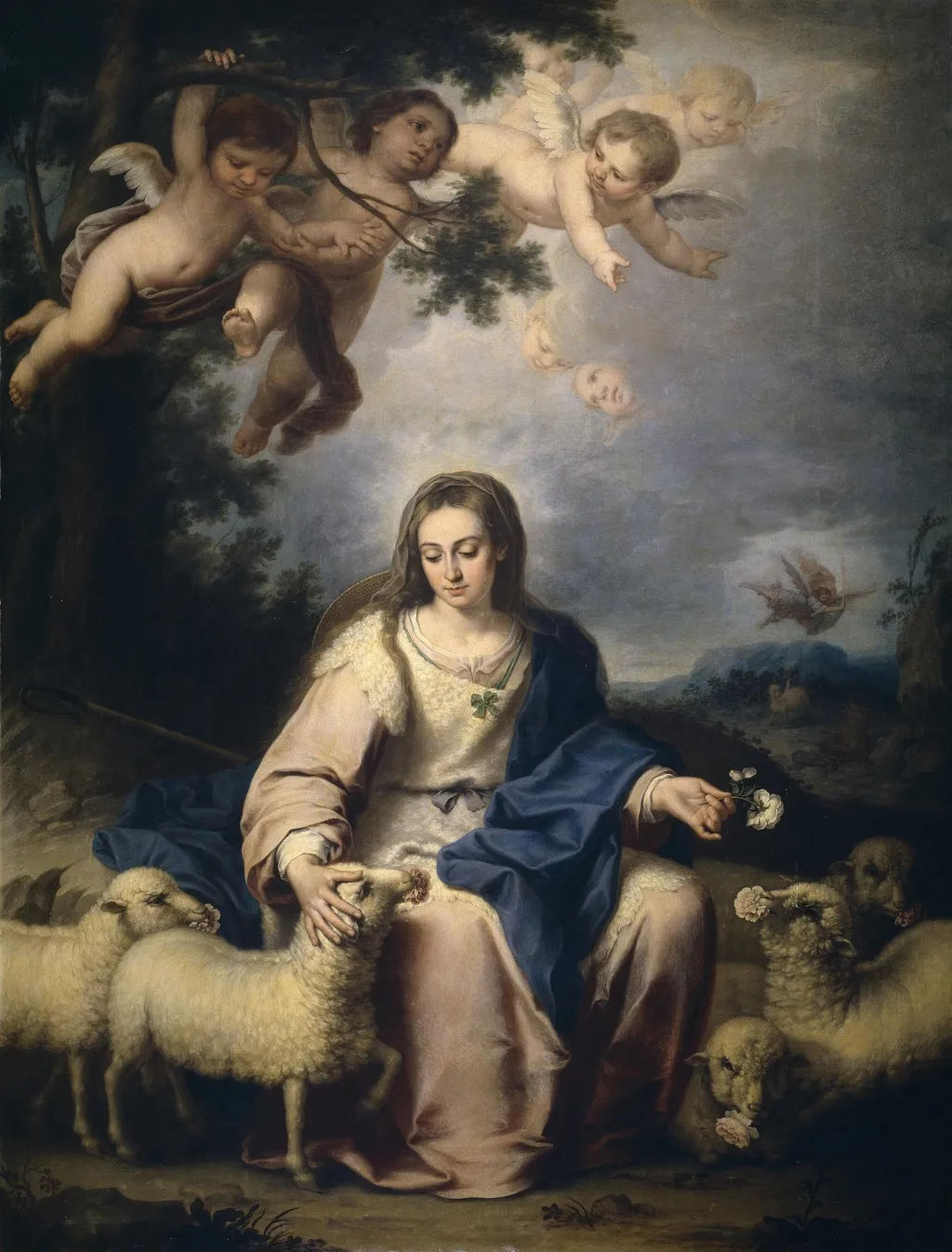
The Virgin as a Shepherdess is an oil painting by the Rococo painting artist Bernardo Germán de Llórente. It dates from 1732 and is held in the collection of the Museo del Prado.
About this work
Overview
The Virgin as a Shepherdess is a 1732 oil painting by Spanish late-Baroque artist Bernardo Germán de Llórente. Characteristic of the Rococo movement, the work depicts a serene, pastoral scene featuring the Virgin Mary.
Subject & Meaning
The painting portrays the Virgin Mary in an unconventional role as a shepherdess, emphasizing her nurturing aspect. She is shown holding a lamb, surrounded by scattered sheep, conveying a peaceful and protective presence. The inclusion of a sword in her hand introduces a symbol of suffering or protection, adding depth to the otherwise serene scene.
Technique & Style
Llórente employed soft, contrasting light to make the central figures stand out against the hazy, distant landscape and sky, where four cherubs play musical instruments. This lighting technique, reminiscent of chiaroscuro, enhances the calm, devotional atmosphere of the piece, reflecting the artist's training under influences like Murillo.
History & Provenance
Created in 1732, The Virgin as a Shepherdess is part of the Museo del Prado's collection. Llórente, active in Seville, was known for devotional Virgin Mary paintings, as well as portraiture and still life, blending Rococo sensibilities with late-Baroque traditions.
Context
The work reflects Llórente's adherence to the Rococo movement's emphasis on intimate, pastoral themes, while his style betrays a late-Baroque heritage, characteristic of 18th-century Spanish art. The blend of religious subject matter with idyllic, everyday scenes was popular among his contemporaries.
Legacy
As a piece by a lesser-studied artist of the late-Baroque and Rococo periods, The Virgin as a Shepherdess contributes to the broader understanding of Spanish art's evolution during this transitional time, particularly in how religious themes were reinterpreted through softer, more intimate aesthetics.
Own this work as a print
Artist & collection
Artist
Bernardo Germán de Llórente (1685 – 1757) was a Spanish painter of the late-Baroque period.

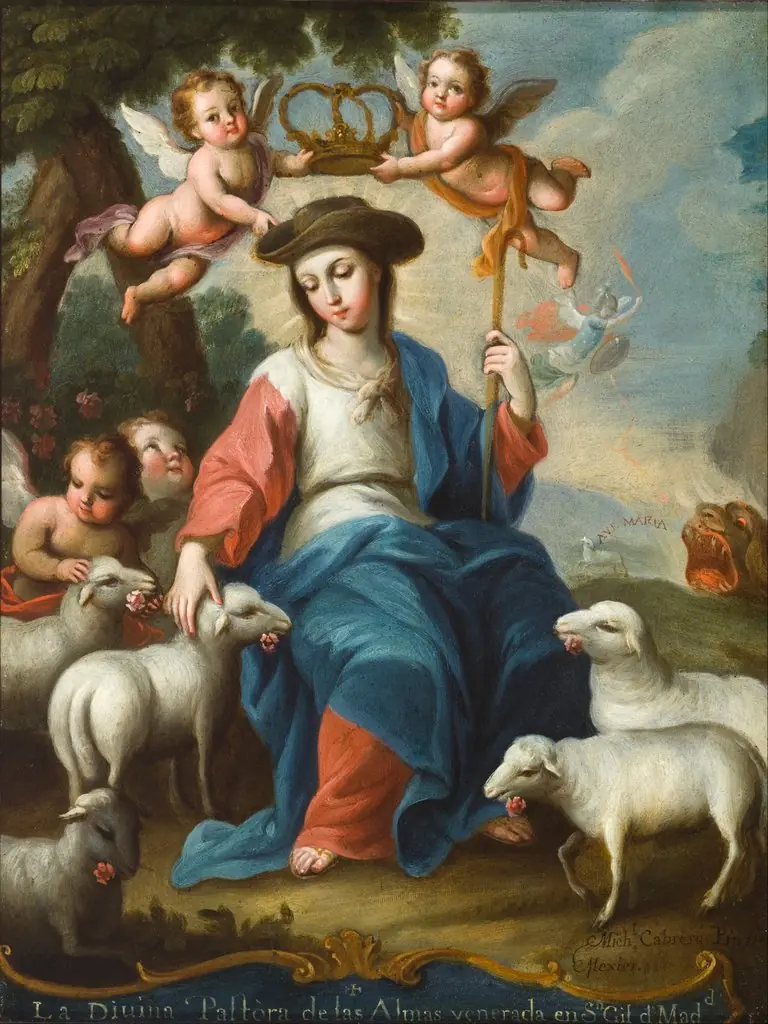 The Divine Shepherdess (La divina pastora)
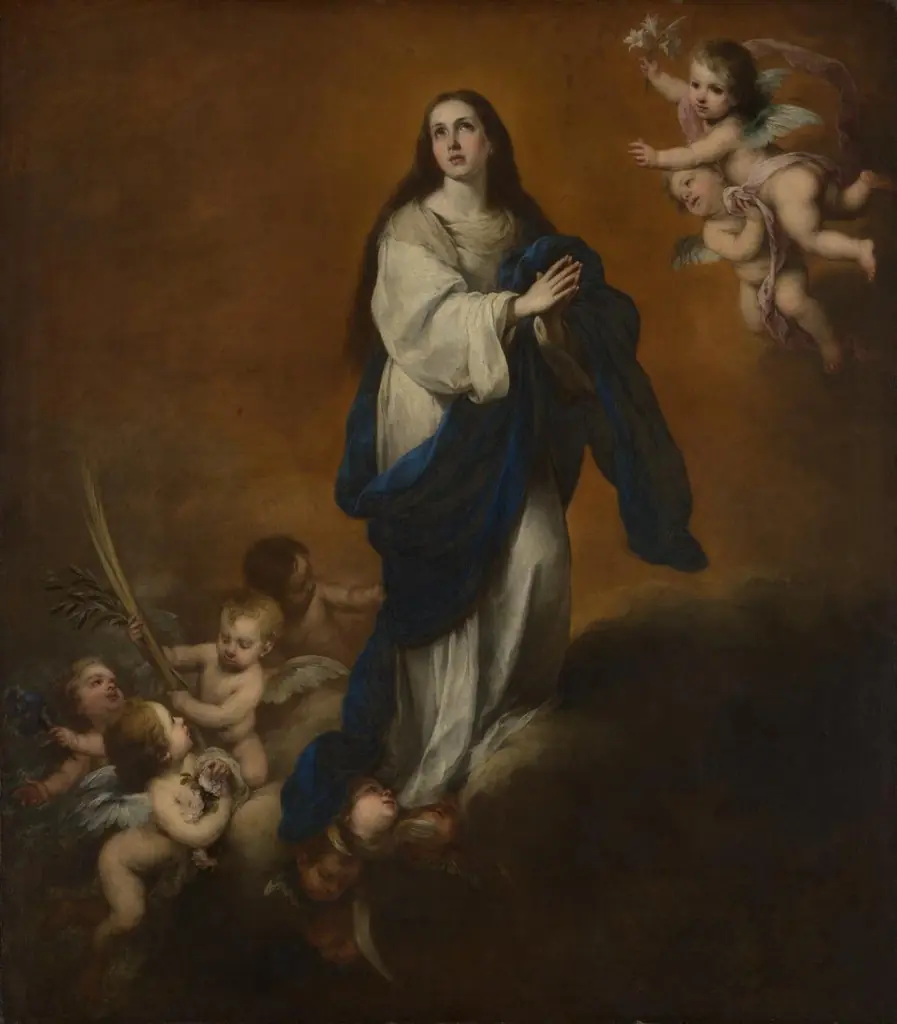 The Immaculate Conception
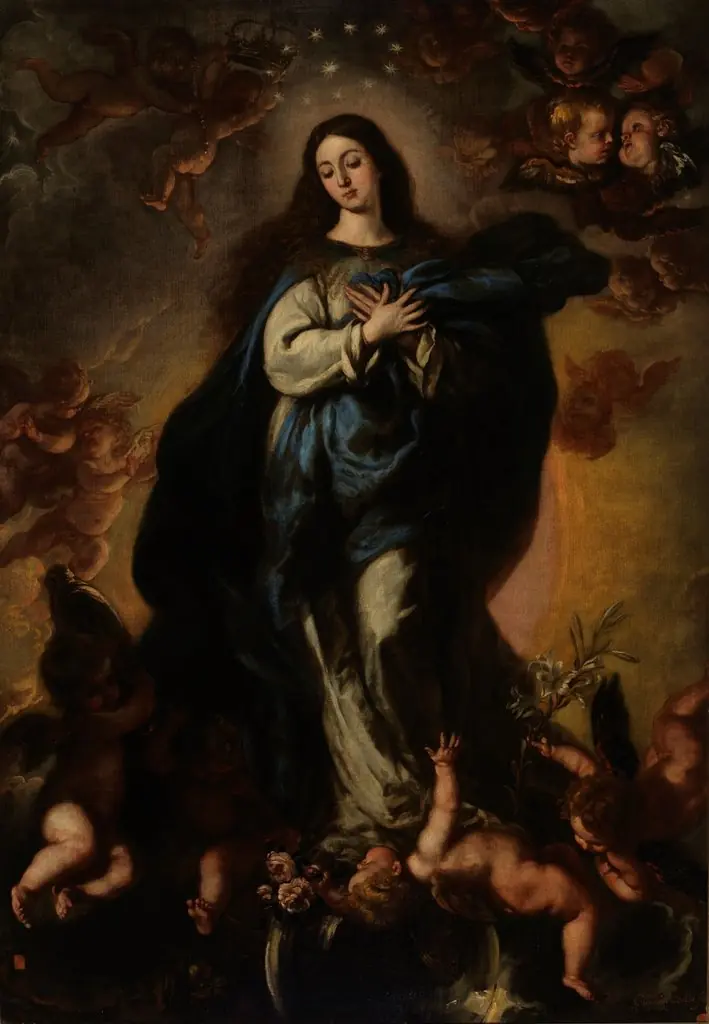 The Immaculate Conception
 Esquilache Immaculate Conception
 The Immaculate Conception
 The Virgin Dolorosa
 Madonna with the Infant Christ and the Infant Saint John
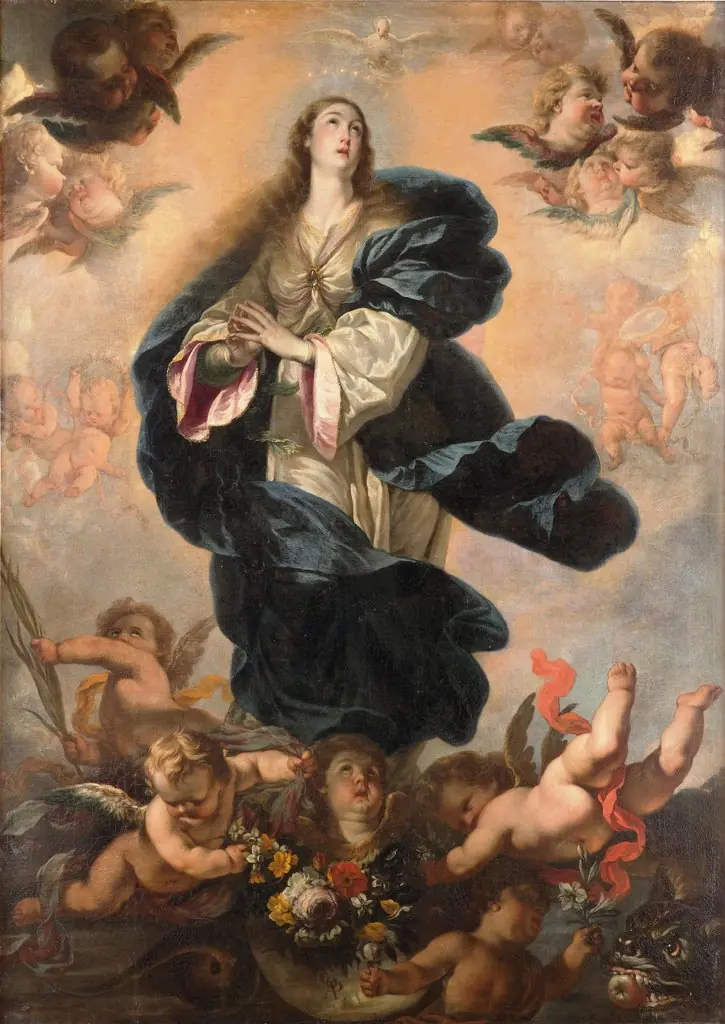 The Immaculate Conception
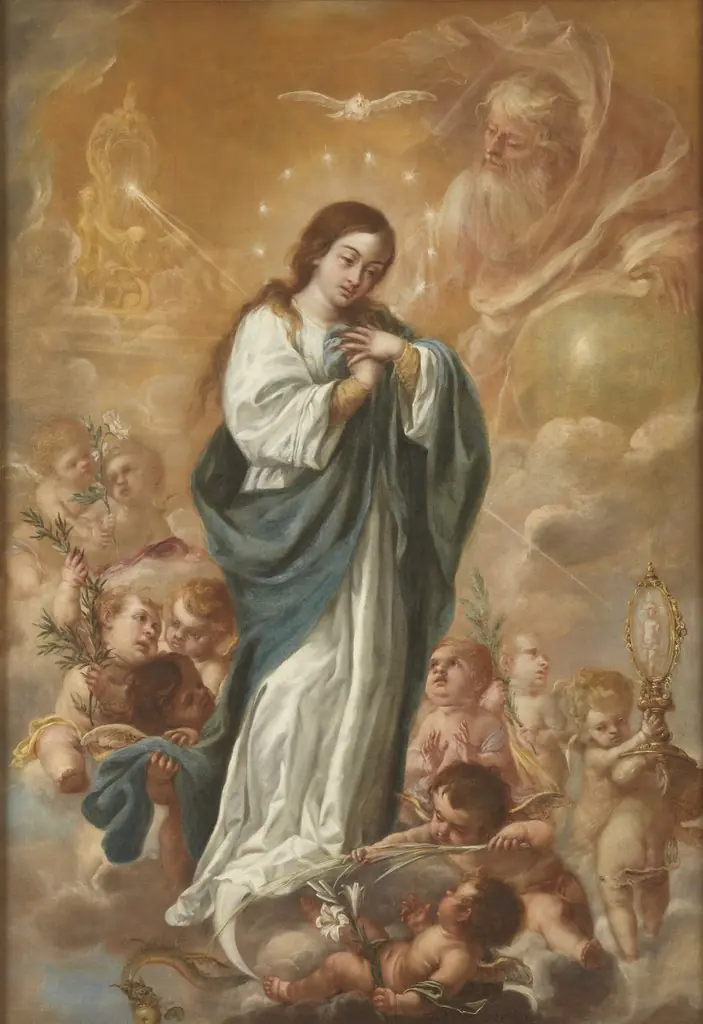 Immaculate Conception
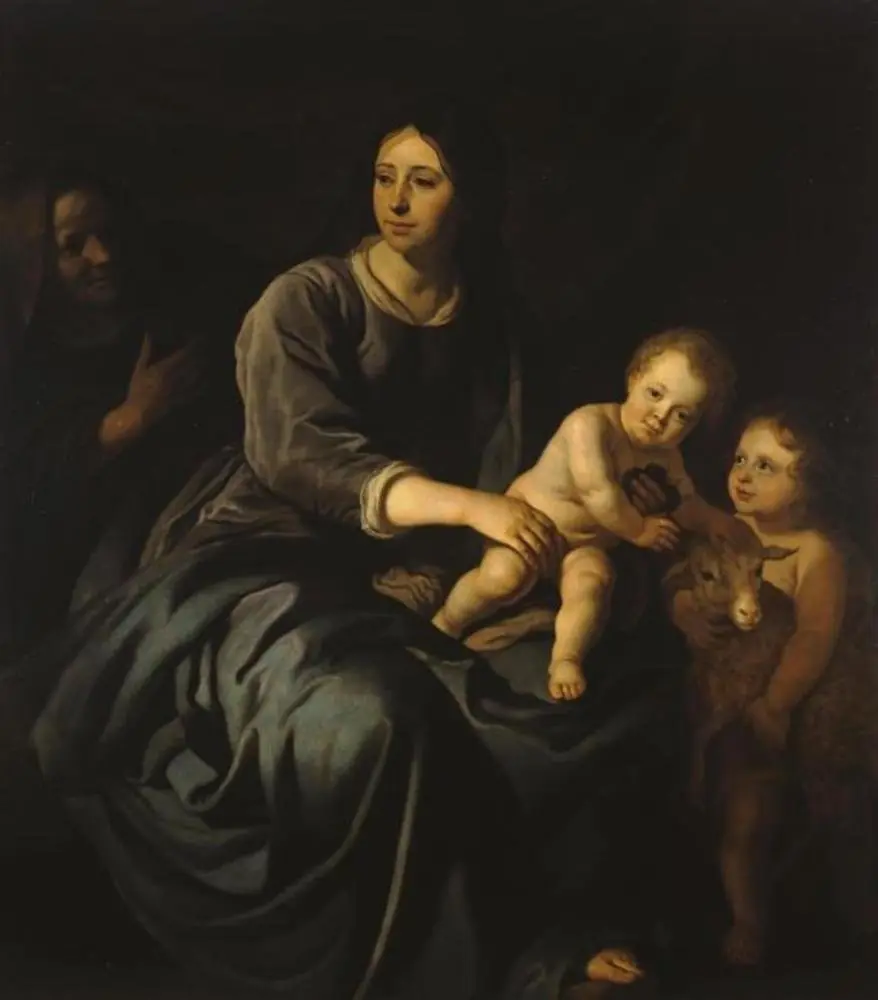 The Virgin Mary with the Infant Christ, St Elizabeth and St John the Baptist
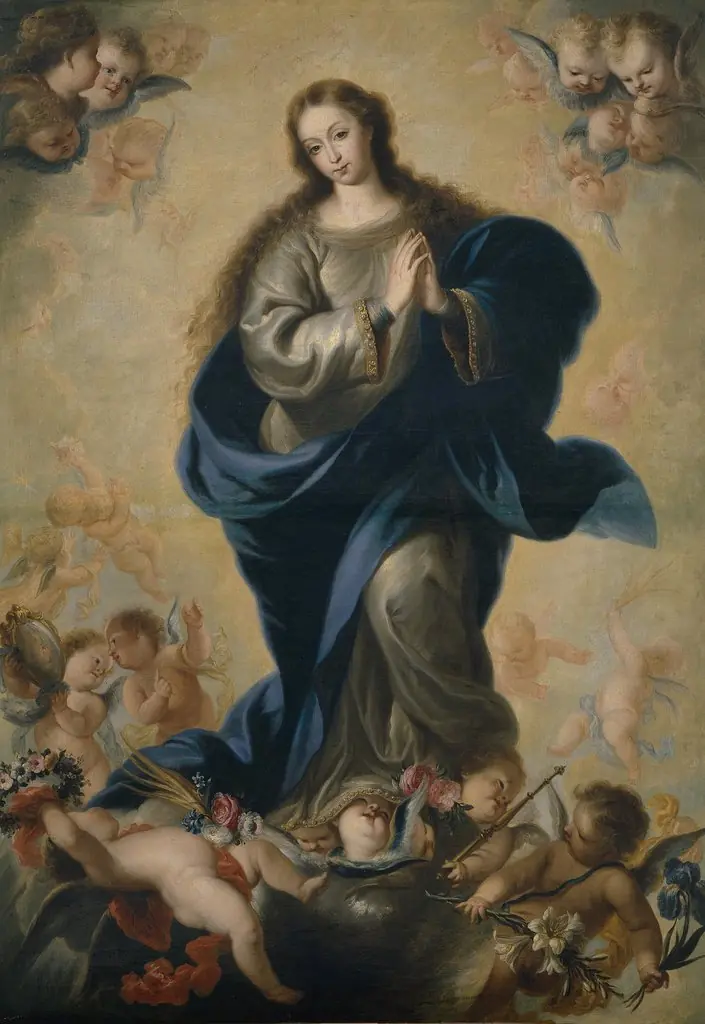 The Immaculate Conception
 Saint Anne teaching the Virgin to read