Artwork
The Divine Shepherdess (La divina pastora)
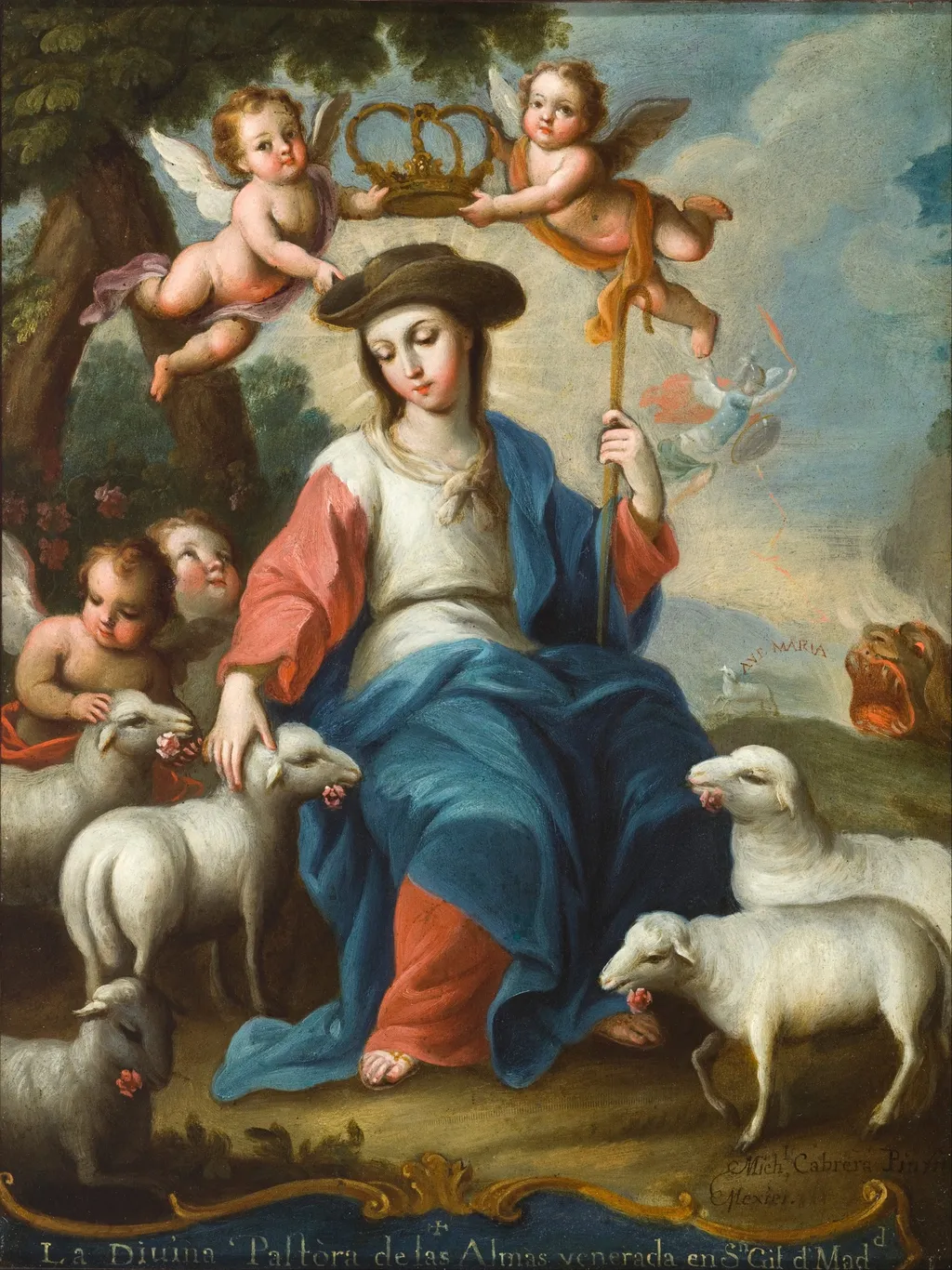
The Divine Shepherdess (La divina pastora) is an unspecified painting by the Rococo painting artist Miguel Cabrera. It dates from 1760 and is held in the collection of the Los Angeles County Museum of Art.
About this work
Overview
Created in 1760, *The Divine Shepherdess* (La divina pastora) is an oil painting by Miguel Cabrera, a foremost artist of late‑Baroque New Spain. Executed within the Rococo aesthetic, the work combines a decorative visual language with a devotional theme, typical of Cabrera’s extensive production for ecclesiastical and elite patrons.
Subject & Meaning
The composition centers on a young woman in a blue robe and white shirt, seated on the ground and holding a staff.
The composition centers on a young woman in a blue robe and white shirt, seated on the ground and holding a staff. She gently touches a lamb while surrounded by a flock of sheep and several cherubic figures. One angel lifts a crown above her head, suggesting a symbolic identification of the woman as a divine shepherdess, a metaphor for the Virgin’s pastoral role and the protective care of the faithful.
Technique & Style
Cabrera employs a warm palette of soft, blended tones that lend the scene a calm, luminous quality. The brushwork is delicate, creating a sense of atmospheric depth in the cloudy sky and distant landscape. The arrangement of figures and ornamental details reflects Rococo’s preference for graceful movement and ornamental elegance, while the rendering of fabric and fur demonstrates the artist’s skill in rendering texture.
History & Provenance
The painting was produced during the height of Cabrera’s career, when he was the most sought‑after painter in the Viceroyalty of New Spain. It was likely commissioned by a religious institution or a wealthy patron for private devotion, consistent with his pattern of supplying both large altarpieces and smaller devotional canvases. Its later ownership records trace it to a private collection before entering a museum setting in the early twentieth century.
Context
*The Divine Shepherdess* exemplifies the fusion of European Rococo trends with the devotional iconography prevalent in colonial Mexico. By integrating pastoral symbolism with celestial motifs, Cabrera contributed to a visual language that reinforced Catholic teachings while appealing to the aesthetic tastes of his elite clientele. The work remains a representative example of late colonial religious art and of Cabrera’s role in shaping New Spanish visual culture.
Own this work as a print
Artist & collection
Artist
Miguel Mateo Maldonado y Cabrera (1695 – May 16, 1768) was a Mexican painter of the late Baroque in New Spain.

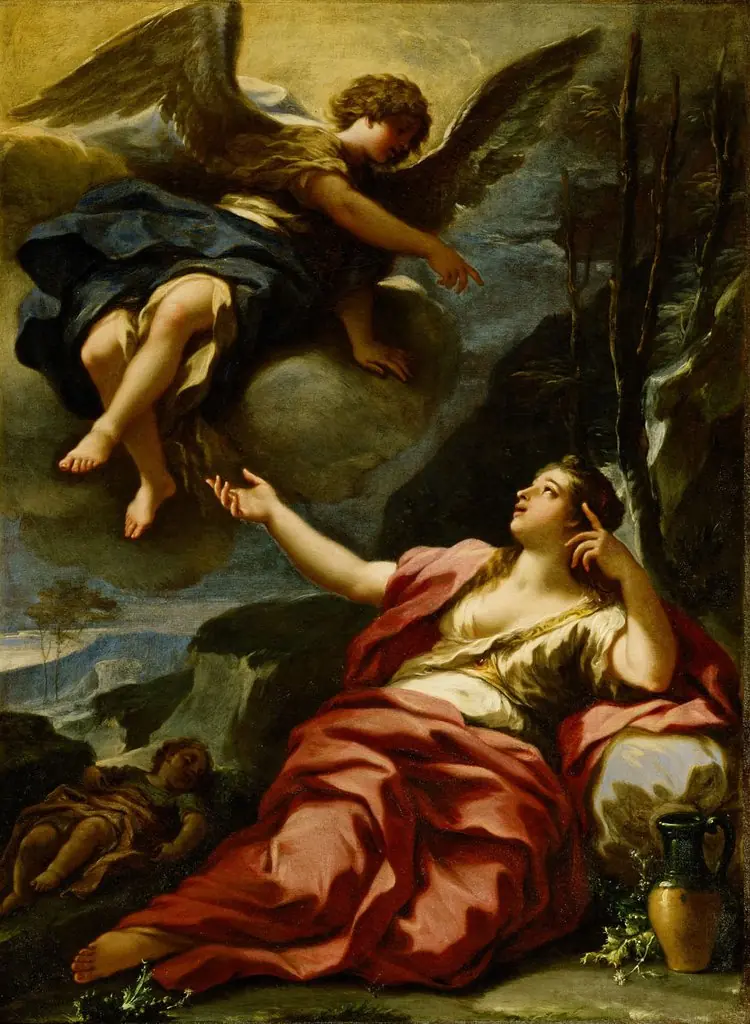 The angel appears to Hagar in the desert
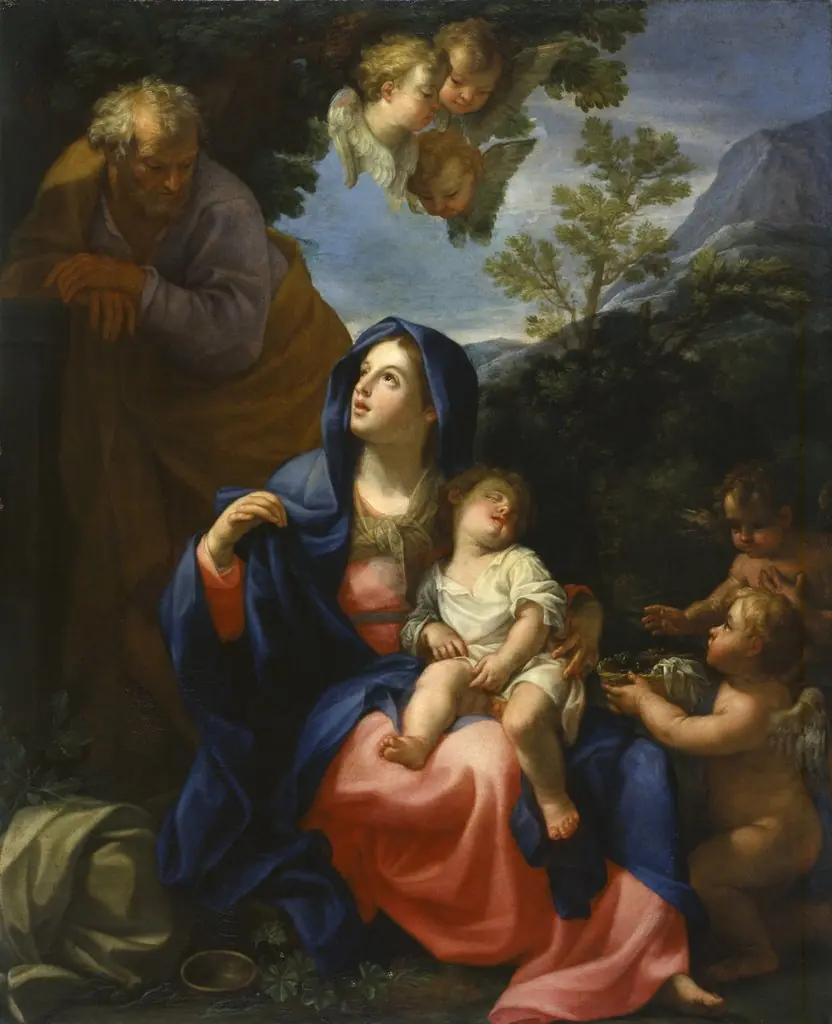 The Rest on The Flight into Egypt
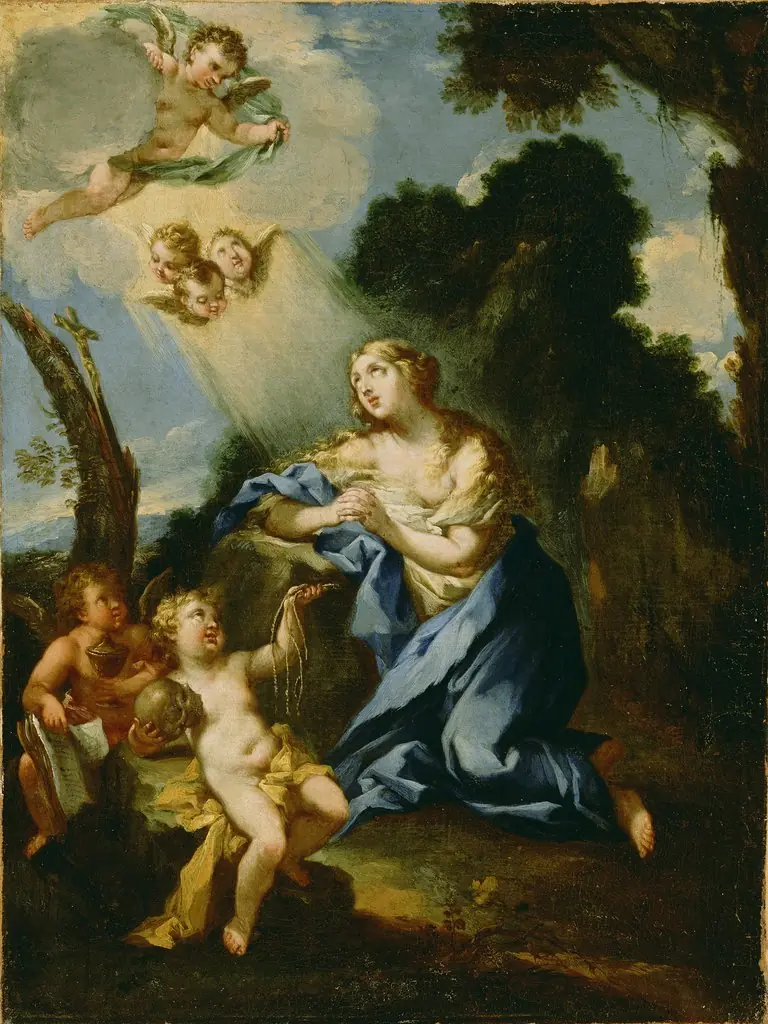 Penitent Magdalene
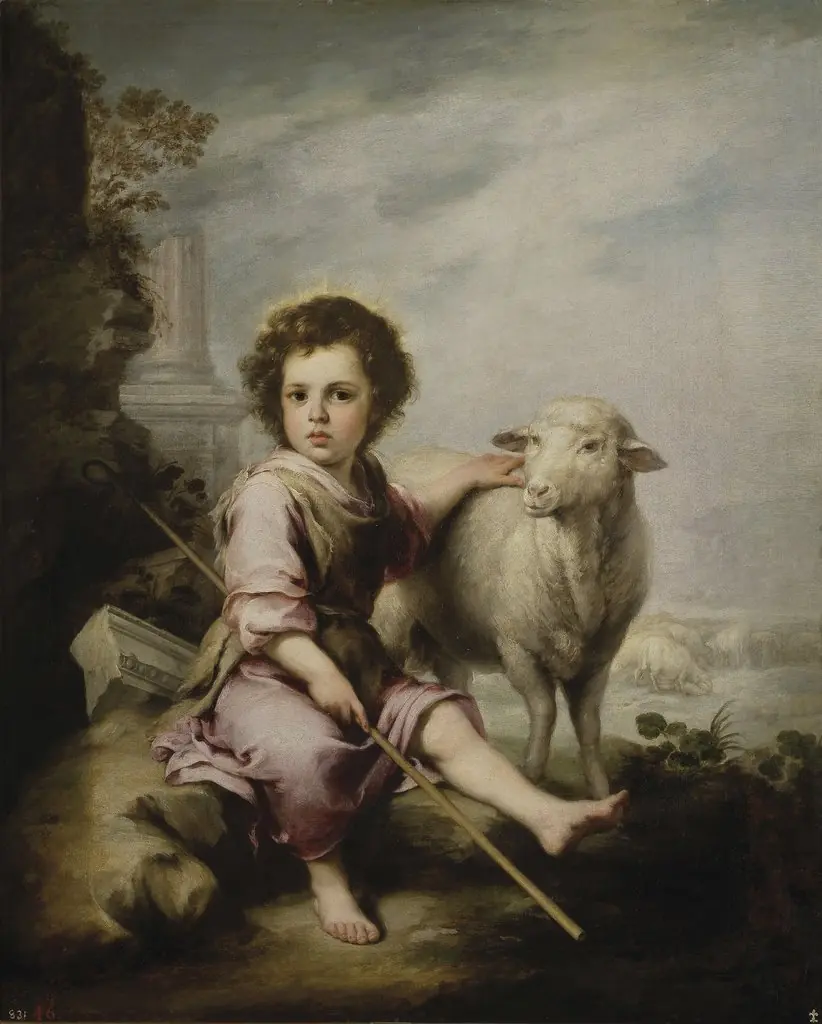 The Good Shepherd
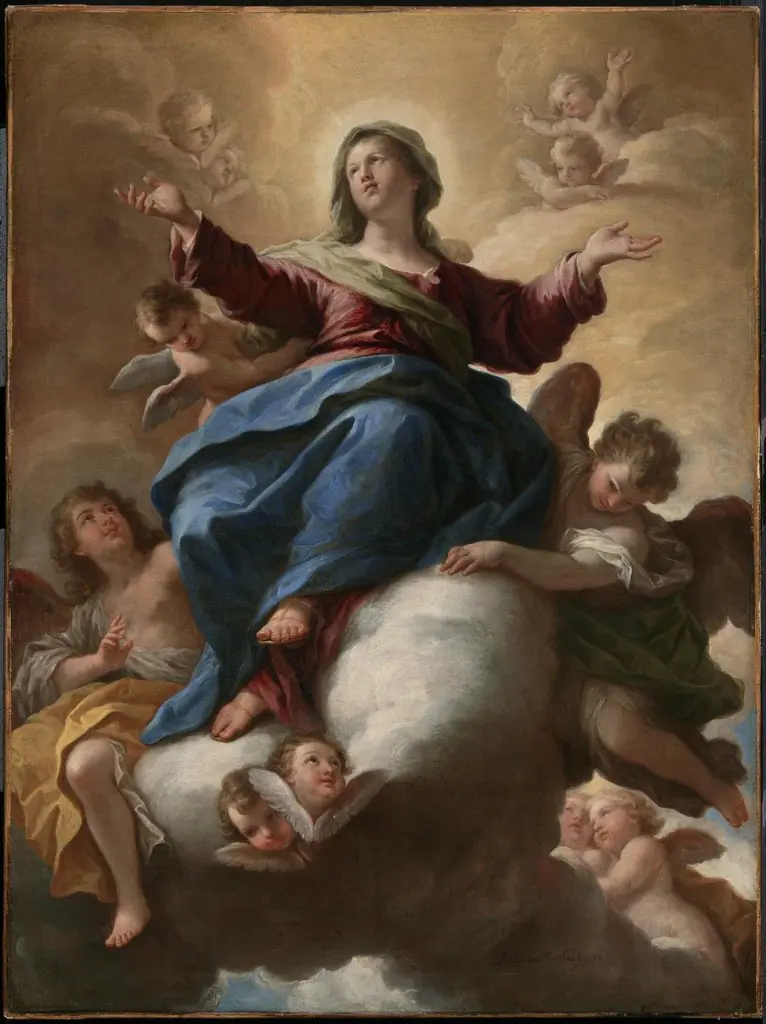 Assumption of the Virgin
 Assumption of the Virgin Mary
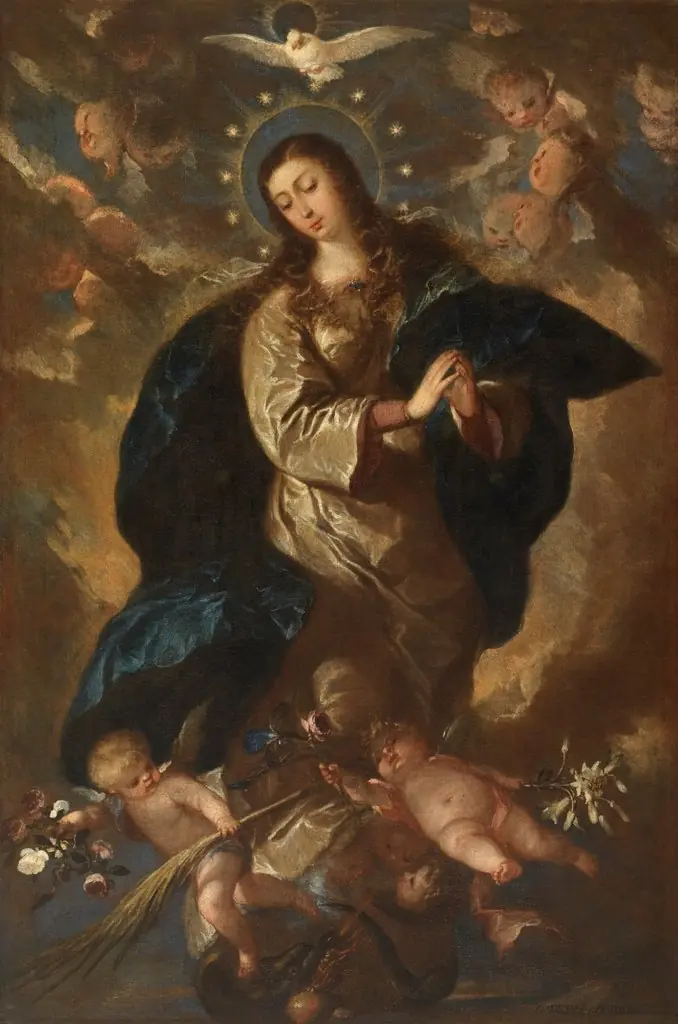 The Immaculate Conception
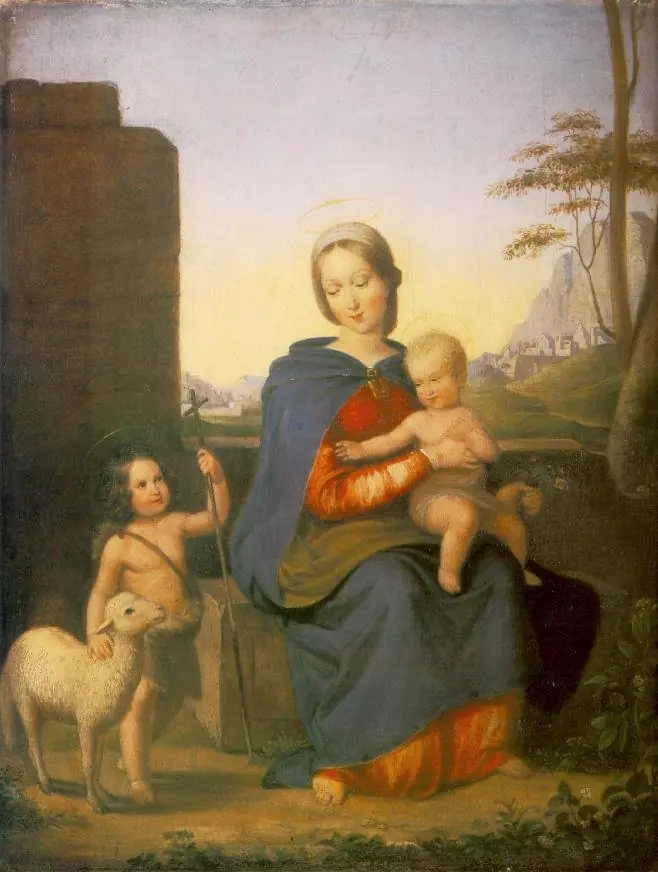 Madonna with the Infant Christ and the Infant Saint John
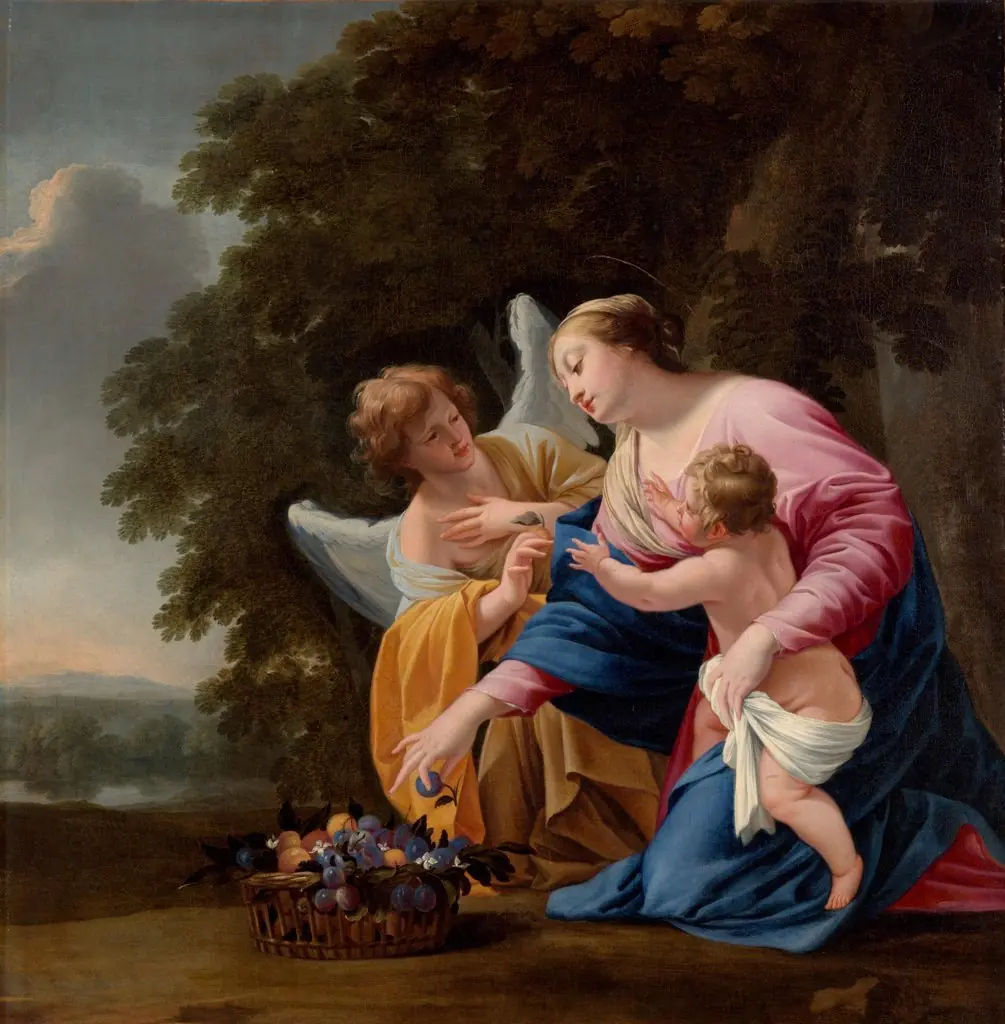 Virgin and Child, with an Angel
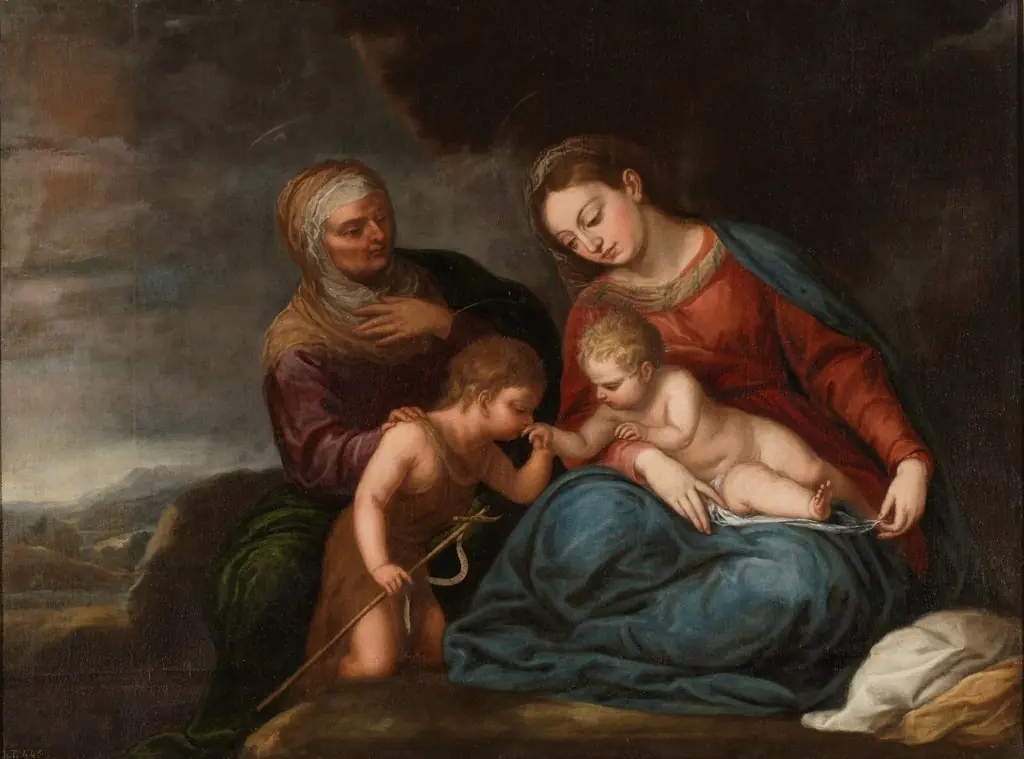 The Virgin and Child with Saints Elizabeth and John
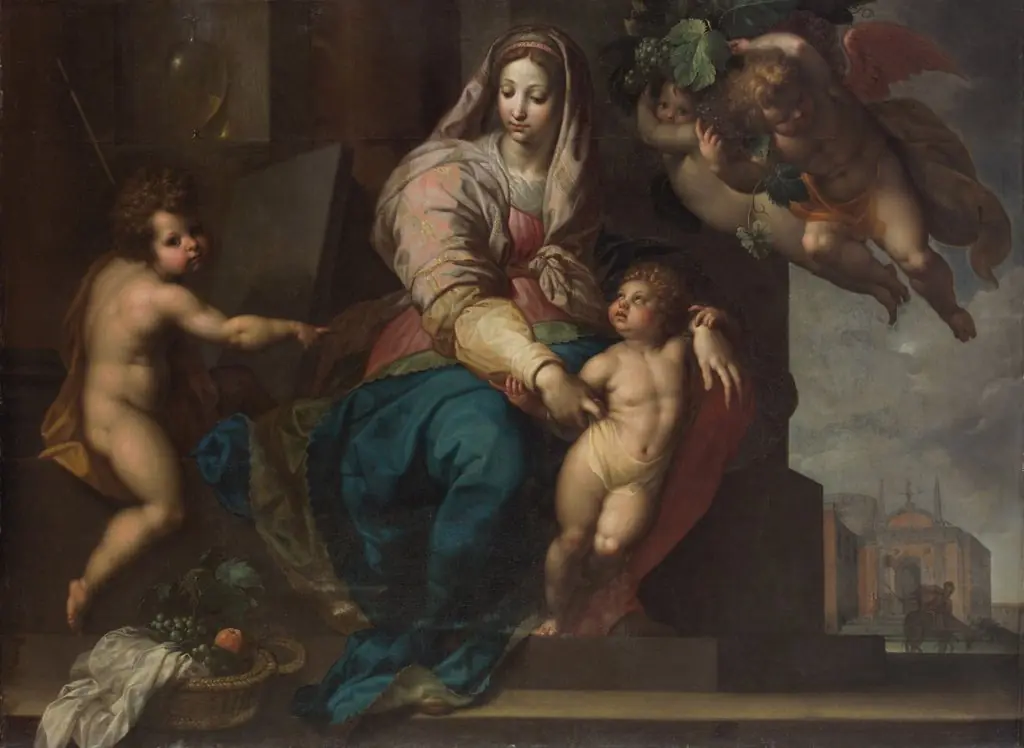 Maria mit Kind, Johannesknaben und Engeln
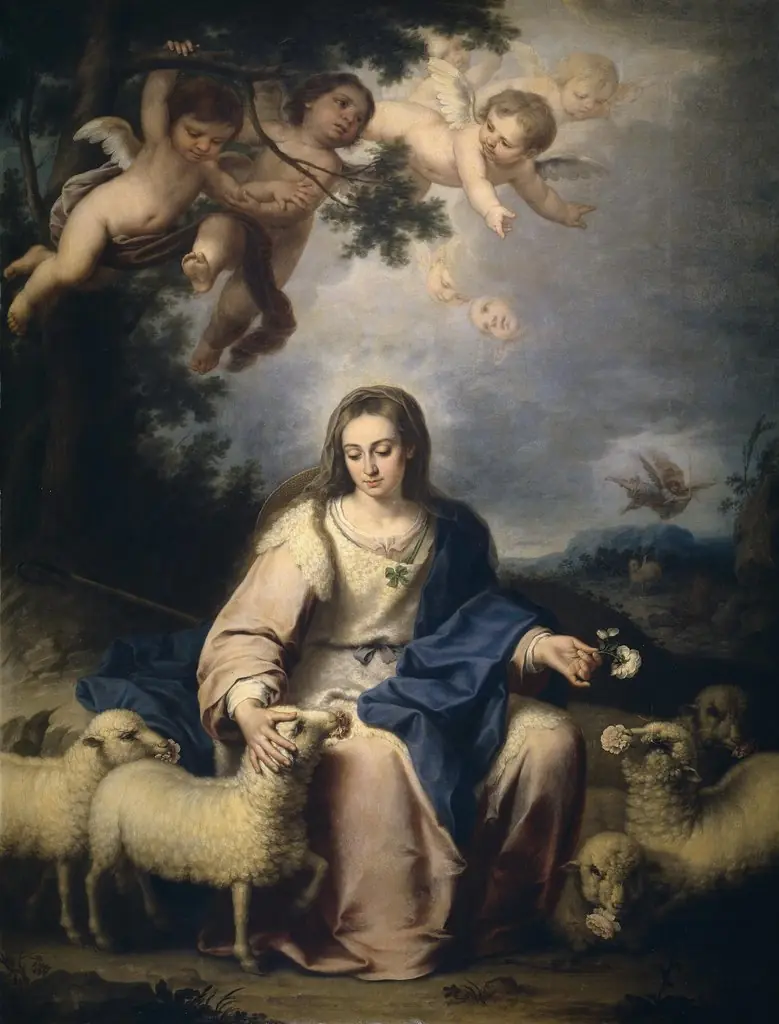 The Virgin as a Shepherdess