Artwork
Figures in Rowing Boats in a Rocky Cove, Sailing Ships Beyond
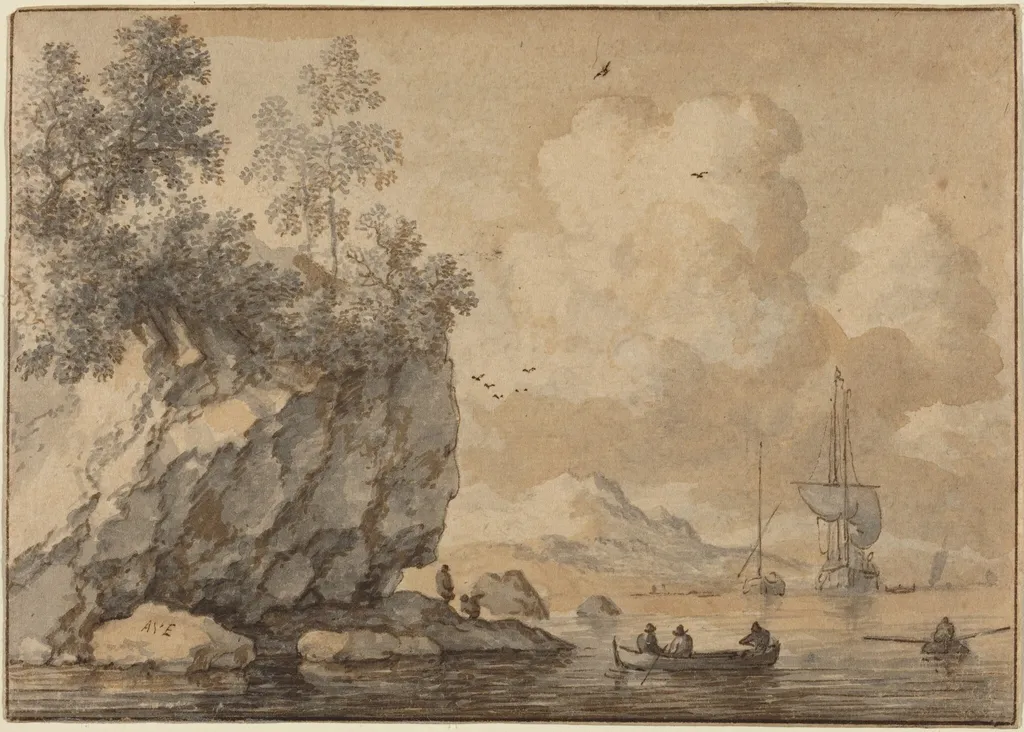
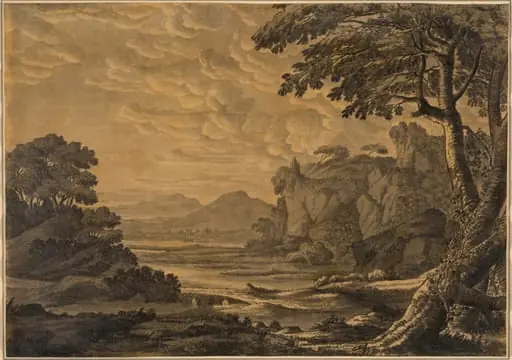
Figures in Rowing Boats in a Rocky Cove, Sailing Ships Beyond is an ink drawing by the Baroque artist Allart van Everdingen. It dates from 1648 and is held in the collection of the National Gallery of Art.
About this work
Overview
Executed on laid paper with brown and gray washes over pen lines, it reflects the artist’s practice of rapid observational studies.
This ink drawing by Allart van Everdingen, dated 1648, captures a coastal scene in loose, expressive brushwork. Executed on laid paper with brown and gray washes over pen lines, it reflects the artist’s practice of rapid observational studies. The composition balances intimate foreground activity with distant maritime elements, characteristic of Dutch Golden Age landscape sketches intended as preparatory work or personal records.
Subject & Meaning
The scene portrays three figures in a small rowboat near a rocky shoreline, with two larger sailing ships visible on the open sea. The figures are rendered minimally, emphasizing their role as elements within a broader natural setting rather than as individual subjects. The juxtaposition of human activity and vast seascape suggests a quiet contemplation of man’s place within nature, a recurring theme in Dutch marine studies of the period.
Technique & Style
Everdingen employed quick, fluid pen strokes and layered washes to suggest texture and depth. The rocky cliffs are defined by irregular, dry brush marks, while the water is rendered with soft, horizontal gradients. Light is implied through subtle tonal shifts rather than sharp contrasts, reflecting a preference for atmospheric effect over detailed precision. This method aligns with contemporary Dutch practices of sketching en plein air or from memory.
History & Provenance
Created in 1648, the drawing belongs to a series of maritime studies Everdingen produced during his travels along the Scandinavian coast, which influenced his later works. It remained in private collections in the Netherlands before entering a public collection in the 20th century. Its modest scale and medium indicate it was not intended for sale but rather as a study or personal record of coastal forms and lighting.
Context
Everdingen’s work emerged during a period when Dutch artists increasingly turned to natural landscapes and seascapes as subjects worthy of careful observation. His sketches, including this one, reflect a broader cultural interest in geography, navigation, and the Dutch relationship with the sea. The use of wash and ink was practical for fieldwork, allowing artists to capture fleeting effects of light and weather without the constraints of oil painting.
Legacy
Though not widely exhibited during his lifetime, Everdingen’s drawings contributed to the development of Dutch marine drawing as a distinct genre. His emphasis on atmospheric tone and simplified forms influenced later landscape artists who prioritized mood over narrative. This piece exemplifies how observational sketches from the 17th century helped shape the visual language of naturalism in Northern European art.
Own this work as a print
Artist & collection
Artist
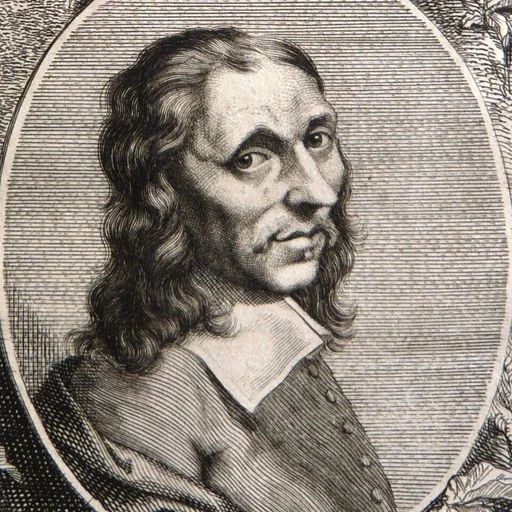
Allaert van Everdingen (Dutch pronunciation: ; bapt. 18 June 1621 – 8 November 1675 (buried)), was a Dutch Golden Age painter and printmaker in etching and mezzotint.


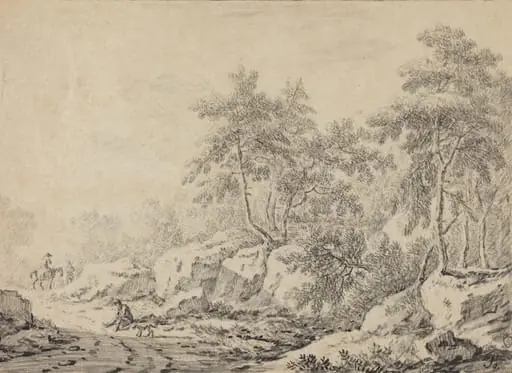 Travelers in a Rocky Wood
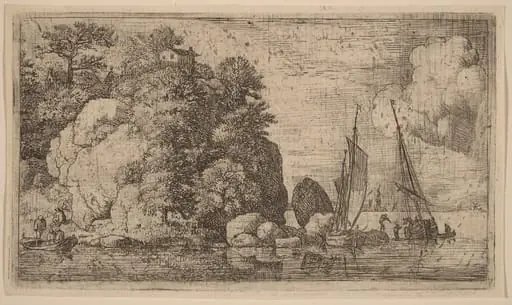 Two Boats on a Wide River
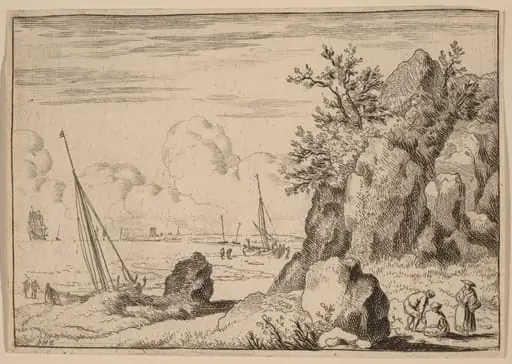 Seascape with Three Figures to the Right
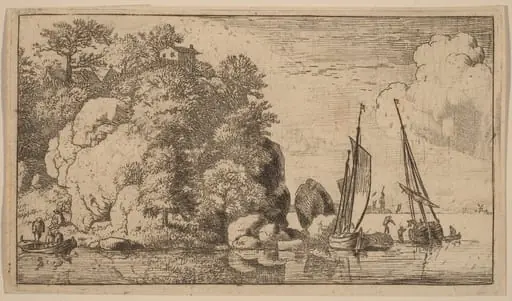 Two Boats on a Wide River
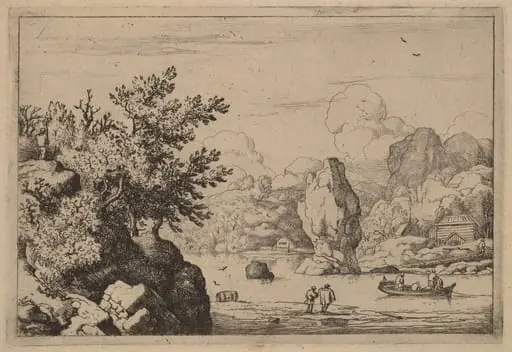 Rock in the Middle of a River
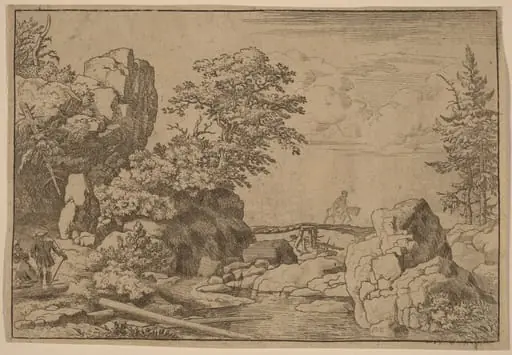 Horseman on a Bridge
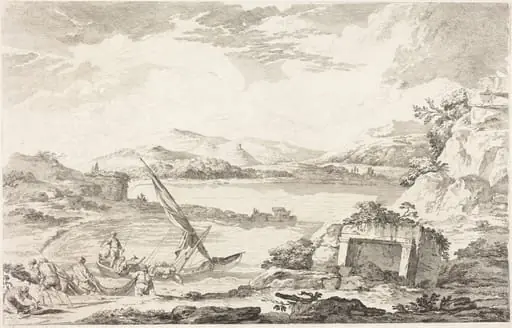 View of the Ancient Port of Phaleron, Athens
 View of the River Rhine
 The Large Rock
 View of the River Rhine
 A Rocky Cove with Fishing Boats
 An Extensive River Landscape