Artwork
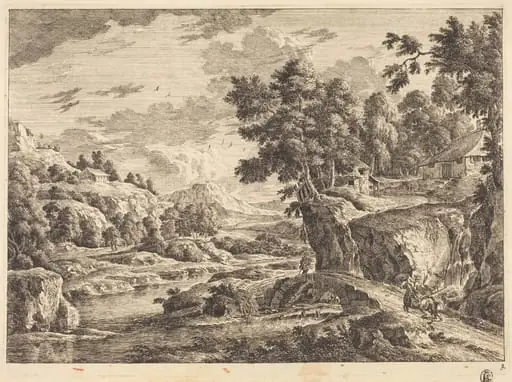
View of the Ancient Port of Phaleron, Athens
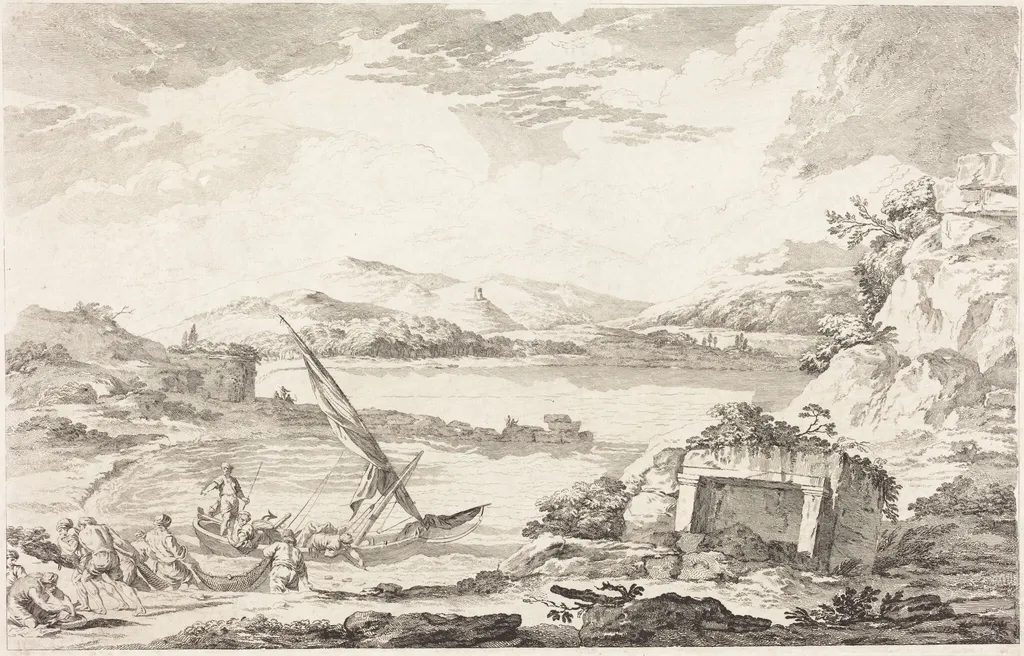
View of the Ancient Port of Phaleron, Athens is an ink print by the Romanticist artist Jacques Philippe LeBas. It dates from 1758 and is held in the collection of the National Gallery of Art.
About this work
Overview
This 1758 etching by Jacques Philippe LeBas depicts the ancient harbor of Phaleron near Athens. Executed on laid paper, the work presents a tranquil riverscape as a proof impression. The composition balances human activity with natural elements, offering a measured glimpse into an 18th-century interpretation of classical antiquity.
Subject & Meaning
The scene captures a moment of everyday life along Phaleron’s shores, once Athens’ primary port. Three figures occupy a small boat, while others rest near a modest stone wall and pavilion. The distant bridge and rolling hills frame the waterway, suggesting both movement and stillness. The print reflects Enlightenment-era interest in reconciling idealized antiquity with observed reality.
Technique & Style
LeBas employed fine, controlled lines characteristic of etching to render light, shadow, and texture. The method allowed for precise detail, from the ripples on the water to the folds of clothing. This approach aligns with 18th-century reproductive printmaking, where clarity and tonal subtlety were prized. The style conveys a quiet harmony between human presence and the landscape.
History & Provenance
Created in 1758, the print exists as a proof impression, an early state in the printmaking process. Its production coincides with a period of renewed European fascination with Greek antiquity, spurred by travel and scholarship. The work’s survival as a singular sheet reflects its role in the dissemination of classical imagery during the Enlightenment.
Context
During the mid-18th century, artists and scholars increasingly documented ancient sites, often blending topographical accuracy with romanticized views. LeBas’s etching participates in this trend, offering a picturesque yet understated portrayal of Phaleron. Such prints served both as artistic records and as vehicles for cultivating public interest in classical history.
Artist & collection


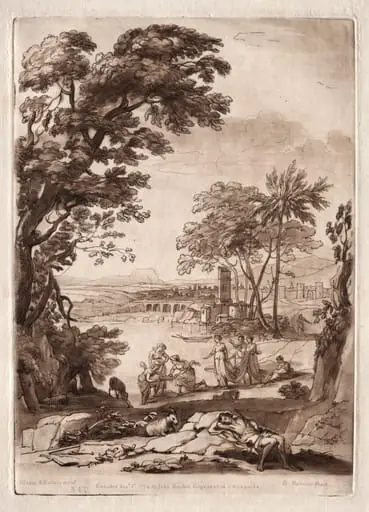 Liber Veritatis: No. 47, A River Scene with the Finding of Moses
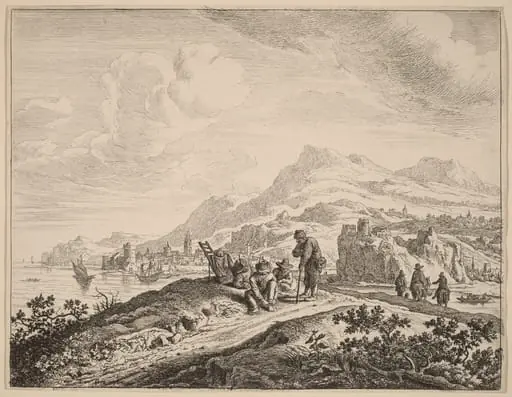 View of the River Rhine
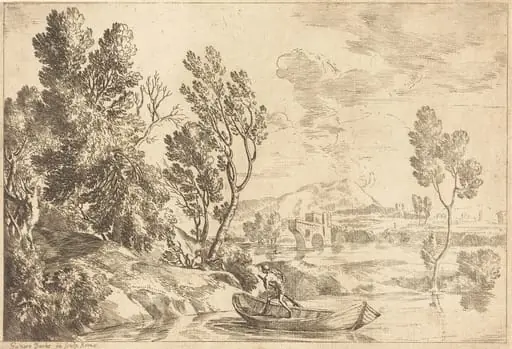 Roman Landscape
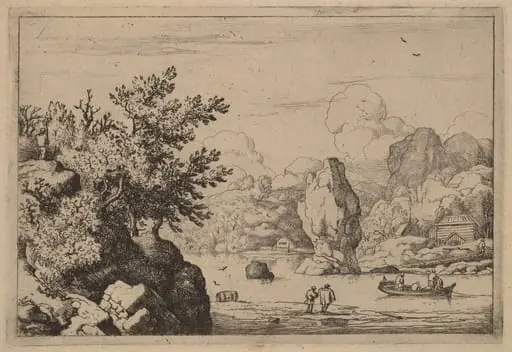 Rock in the Middle of a River
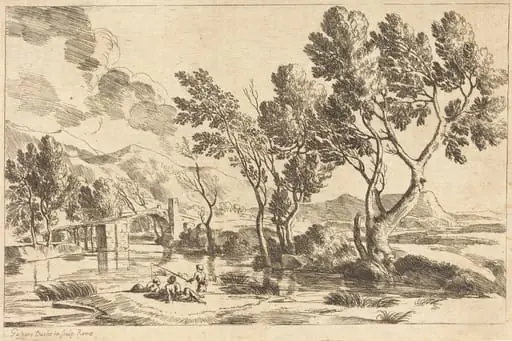 Roman Landscape
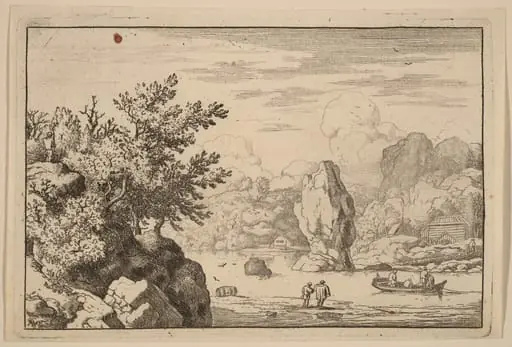 Rock in the Middle of a River
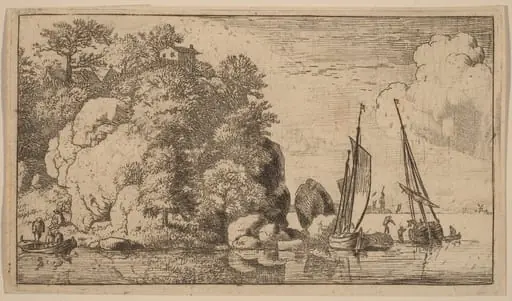 Two Boats on a Wide River
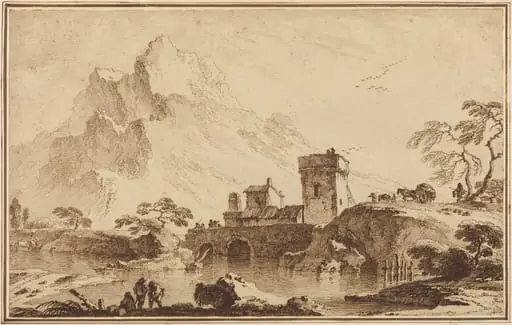 Fortified Bridge against Distant Mountains
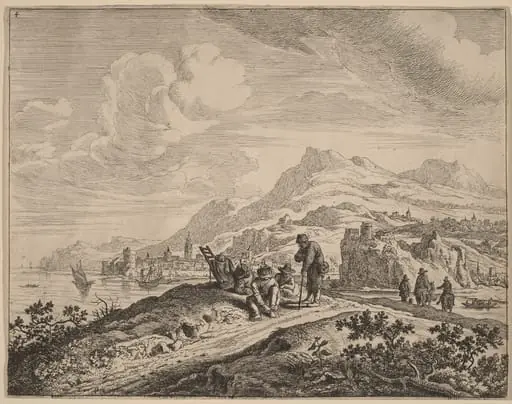 View of the River Rhine
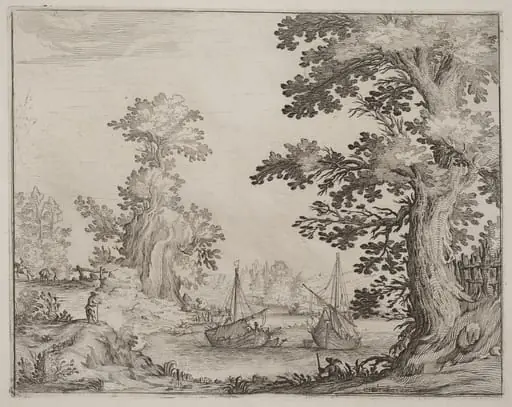 Landscape and River with Anchored Vessels
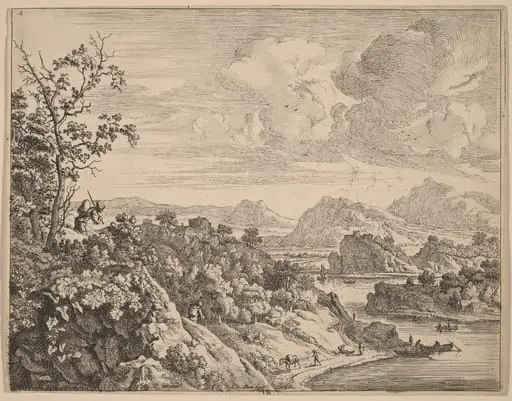 View of the River Rhine
 Landscape with a Bridge and Three Farm Buildings