Artwork
Cottage on a Hill
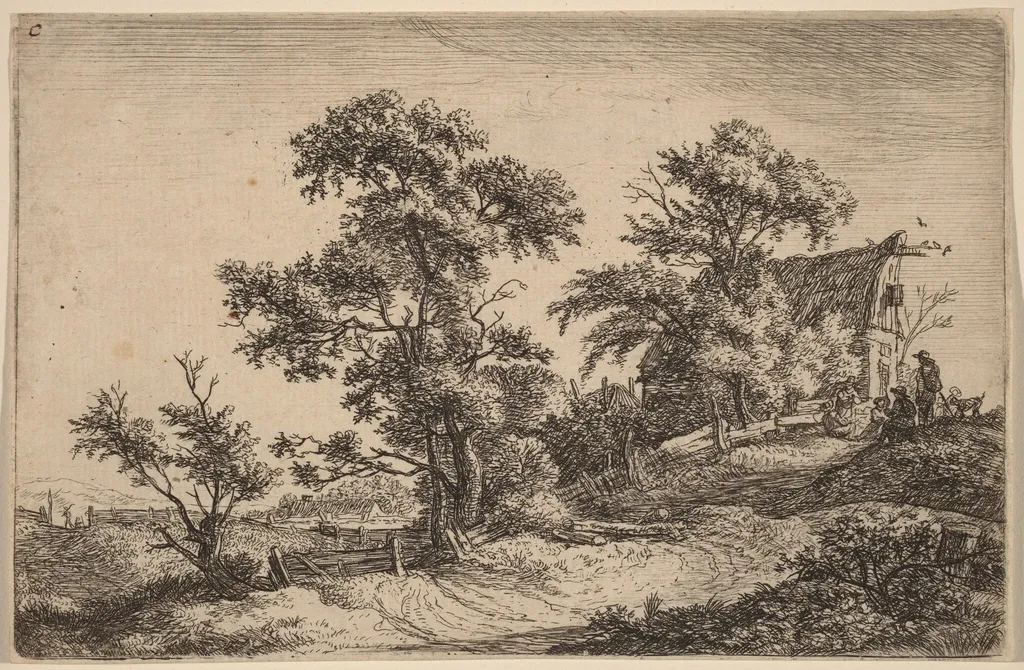
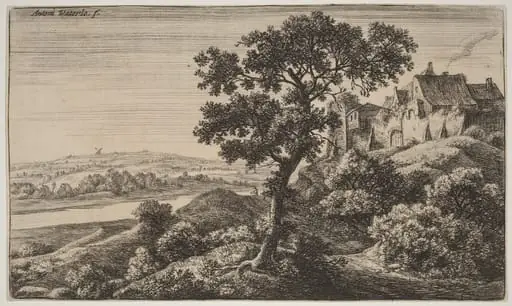
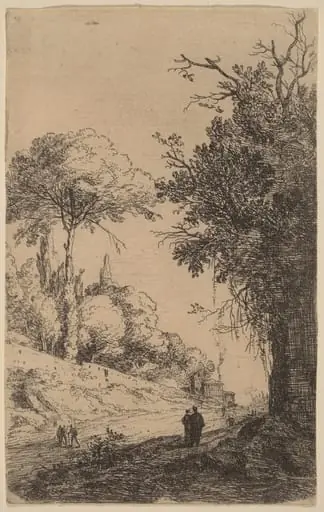
Cottage on a Hill is an ink print by the Baroque artist Antonie Waterloo. It dates from 1650 and is held in the collection of the National Gallery of Art.
About this work
Overview
Cottage on a Hill is an etching by Anthonie Waterloo, dated around 1650. Executed in ink on paper, it depicts a quiet rural scene with modest architecture nestled among natural forms. The composition balances foreground elements—trees, a fence—with a receding landscape of rolling hills and distant structures, all rendered with fine, controlled lines characteristic of etching technique.
Subject & Meaning
The scene presents an unidealized view of rural life: a single cottage, surrounded by vegetation and a small fence, with figures and animals moving near it. No grand narrative is implied; instead, the work conveys stillness and solitude. The presence of distant buildings suggests a modest settlement, reinforcing a sense of everyday existence rather than heroic or divine themes.
Technique & Style
The sky is lightly textured, allowing airiness to emerge through sparse hatching, while the foliage and terrain are built with fine, varied strokes.
Waterloo employed etching to achieve delicate tonal gradations and precise linear detail. The sky is lightly textured, allowing airiness to emerge through sparse hatching, while the foliage and terrain are built with fine, varied strokes. His approach reflects Northern European print traditions, favoring observational clarity over dramatic contrast, aligning with the quieter end of Baroque landscape practice.
History & Provenance
Anthonie Waterloo, a Dutch artist active in the mid-17th century, produced this work during his time in the Netherlands, likely after returning from travels in Germany and Italy. The etching circulated among collectors of landscape prints, though its early ownership records remain sparse. It survives today as part of institutional collections, valued for its technical restraint and atmospheric precision.
Context
Created during the Dutch Golden Age, the image reflects a broader cultural interest in humble rural life, distinct from Italianate grandeur. While contemporaries like Rembrandt explored emotional intensity, Waterloo’s work aligns with the quiet realism of Dutch printmakers who documented the land as it was—unadorned, tranquil, and subtly inhabited.
Legacy
Waterloo’s etchings, including Cottage on a Hill, contributed to the development of landscape as an independent genre in Northern printmaking. His restrained style influenced later generations of topographical artists, particularly those interested in naturalism over theatricality. Though less celebrated than his peers, his work endures as a quiet testament to 17th-century observational practice.
Own this work as a print
Artist & collection

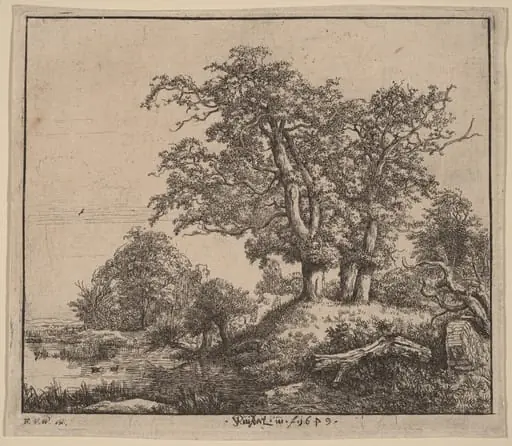 The Three Oaks
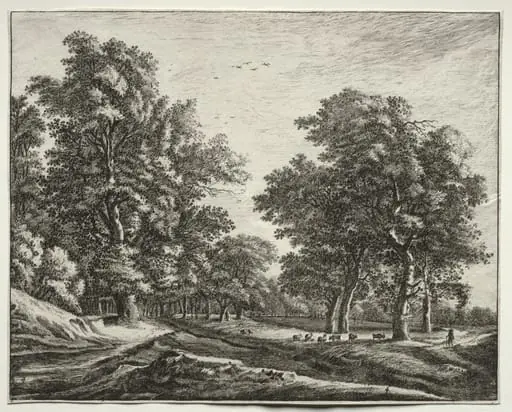 Six views in the Wood of the Hague: Plate 4, Goats Under the Trees
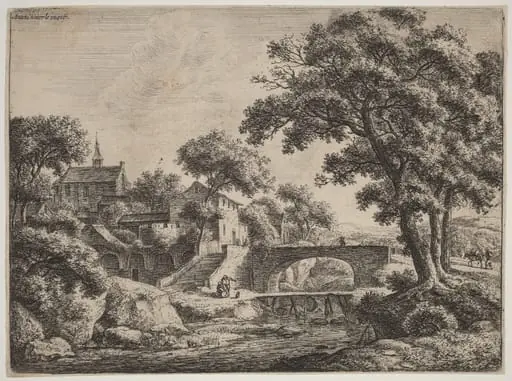 A Wooden and a Stone Bridge
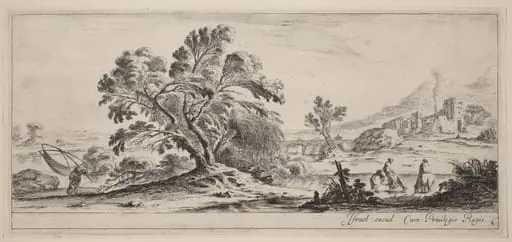 Landscape with Fisherman Carrying his Net
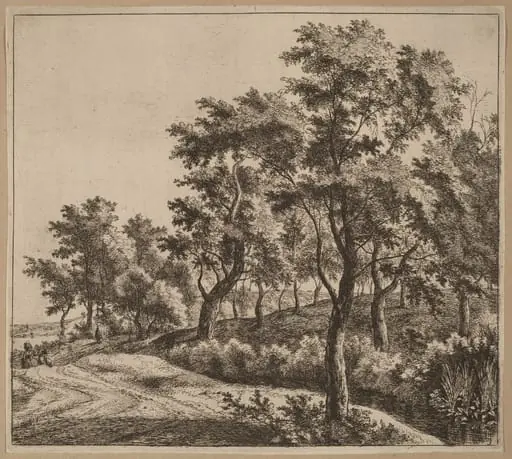 Landscape with a Stream
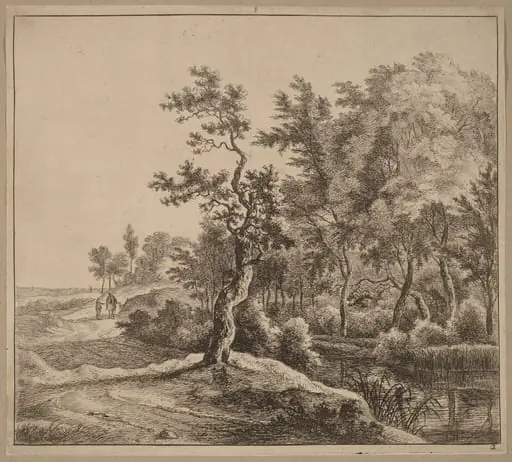 Landscape with a Winding Road
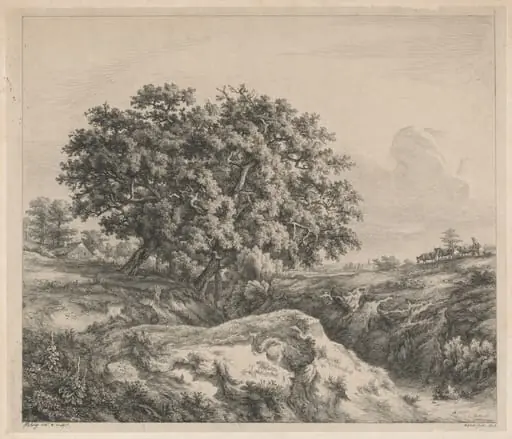 Le chêne au ravin (Oak Tree by a Ravine)
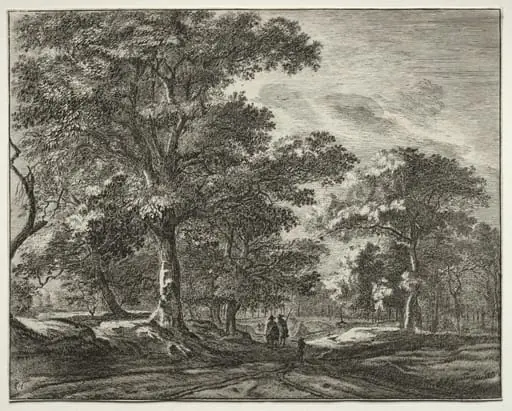 Six views in the Wood of the Hague (series)
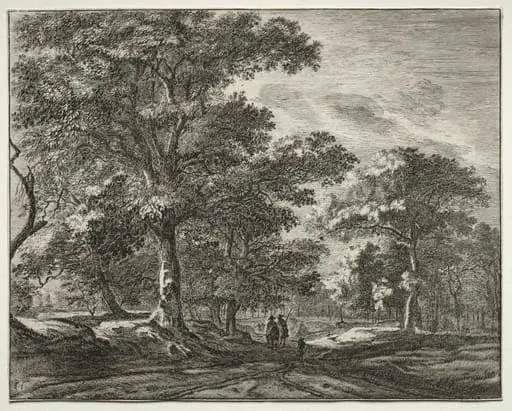 Six views in the Wood of the Hague: Plate 1, Two Men Preceded by a Hunter
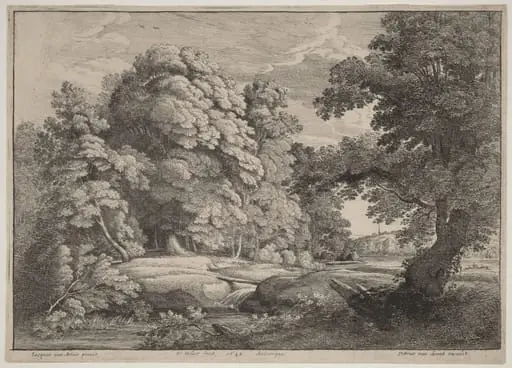 The Bridge over the Waterfall
 Part of the Via Flaminia