Artwork
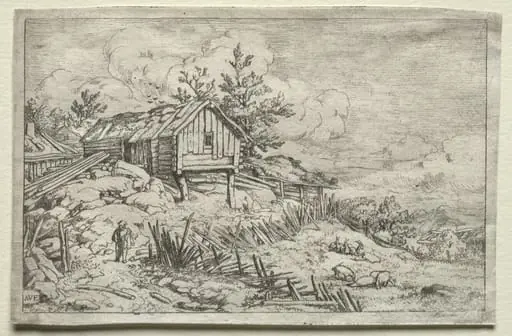
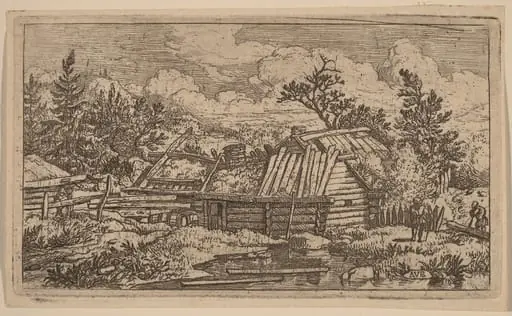
Man near Entry of a Ruinous Hedge
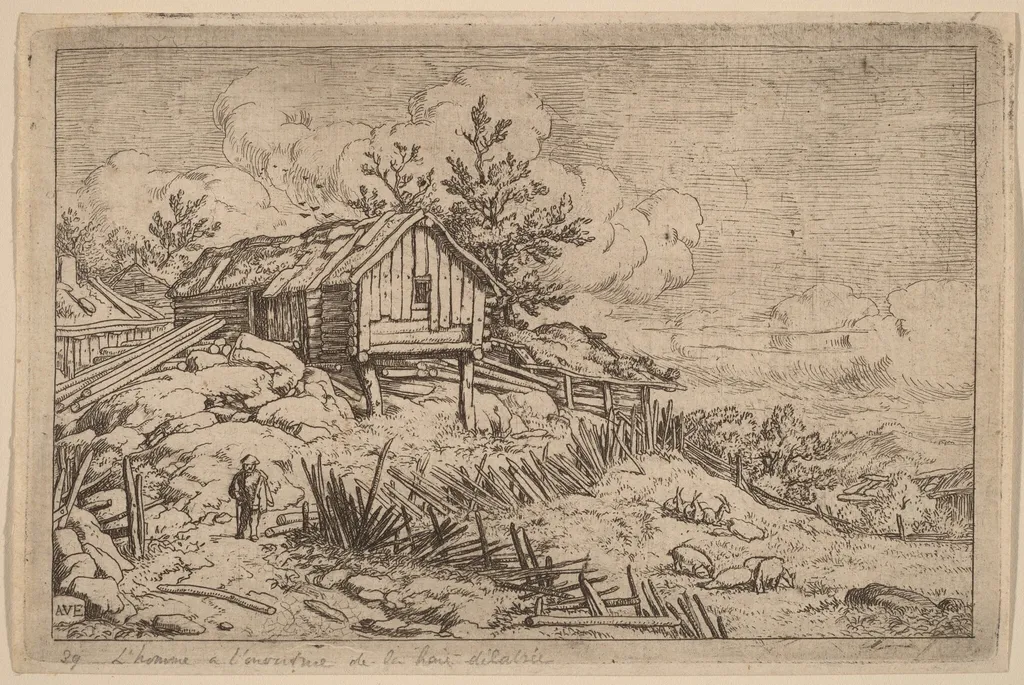
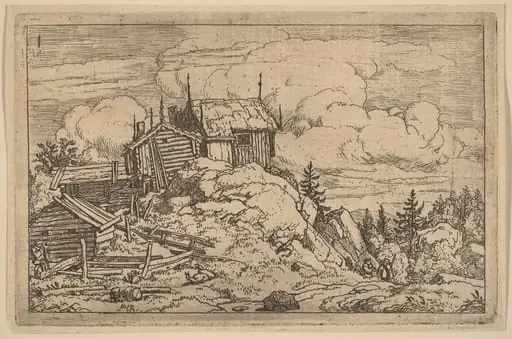
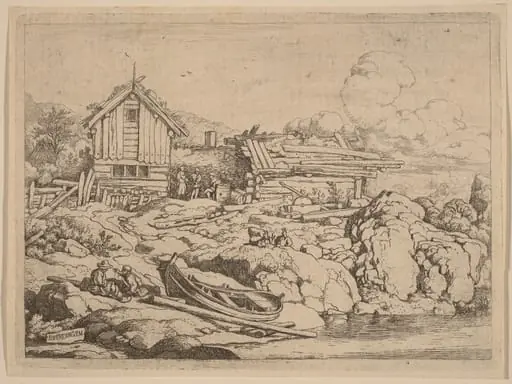
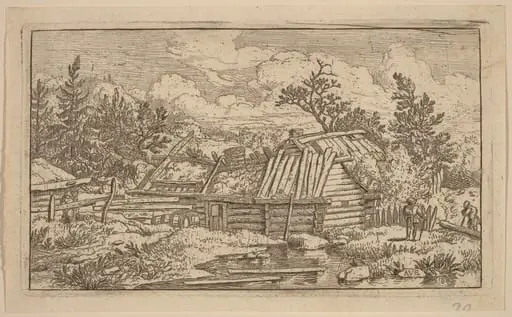
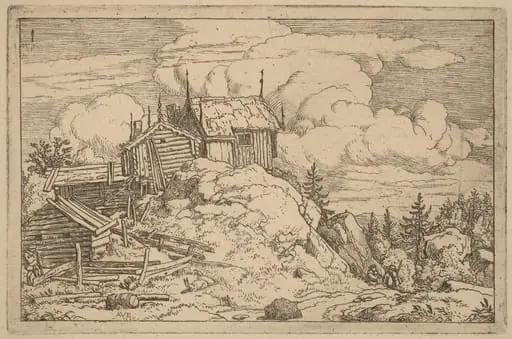
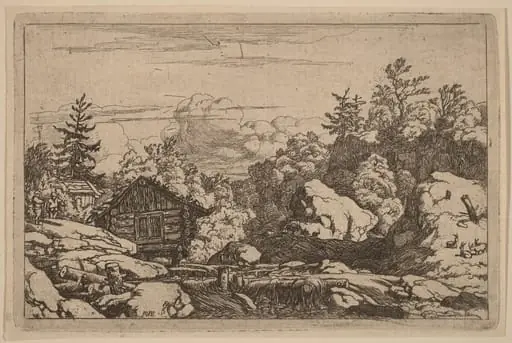
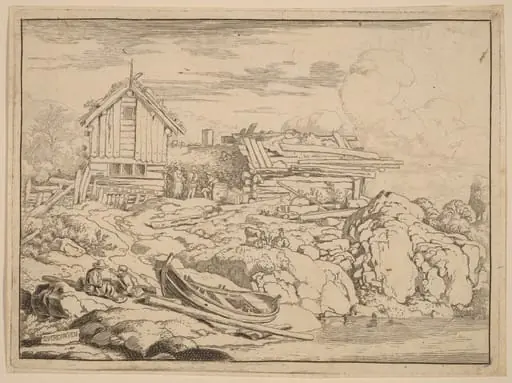
Man near Entry of a Ruinous Hedge is an ink print by the Baroque artist Allart van Everdingen. It dates from 1650 and is held in the collection of the National Gallery of Art.
About this work
Overview
Created circa 1650 by the Dutch Golden Age artist Jan Everdingen, this small print is an etching titled *Man near Entry of a Ruinous Hedge*. The work presents a solitary figure standing beside the mouth of a dilapidated, hedge‑enclosed structure, rendered in the characteristic dark, linear quality of early modern printmaking.
Subject & Meaning
The composition centers on a lone individual holding a tool, positioned at the threshold of a crumbling hut made of sticks and timber, half concealed by tangled branches. Scattered fence remnants and broken sticks litter the ground, suggesting neglect and decay, while the faint, swirling sky above conveys a sense of wind or unsettled atmosphere.
Technique & Style
Everdingen employed traditional copper‑plate etching, allowing ink to remain in incised lines that produce a dense, scratchy texture. The artist’s handling of line creates stark contrasts between the dark foreground and the lighter, atmospheric sky, emphasizing the ruinous state of the hedge and the isolation of the figure.
History & Provenance
The print belongs to Everdingen’s body of work in which he explored both etching and mezzotint. Though specific ownership records are scarce, the piece is documented among his mid‑17th‑century productions and appears in catalogues of Dutch print collections, reflecting the artist’s reputation for detailed, genre‑type scenes.
Own this work as a print
Artist & collection
Artist
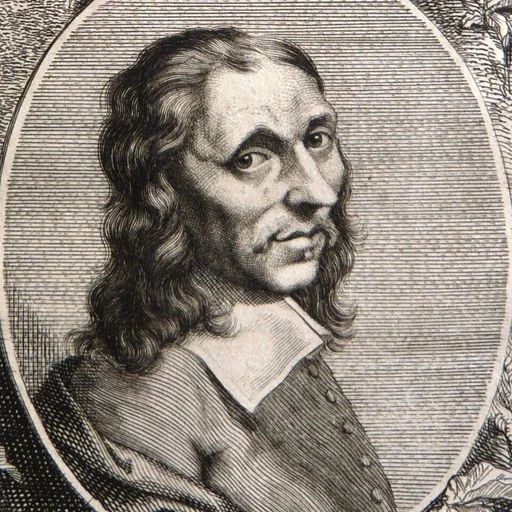
Allaert van Everdingen (Dutch pronunciation: ; bapt. 18 June 1621 – 8 November 1675 (buried)), was a Dutch Golden Age painter and printmaker in etching and mezzotint.