Artwork
Man on a Small Wooden Bridge
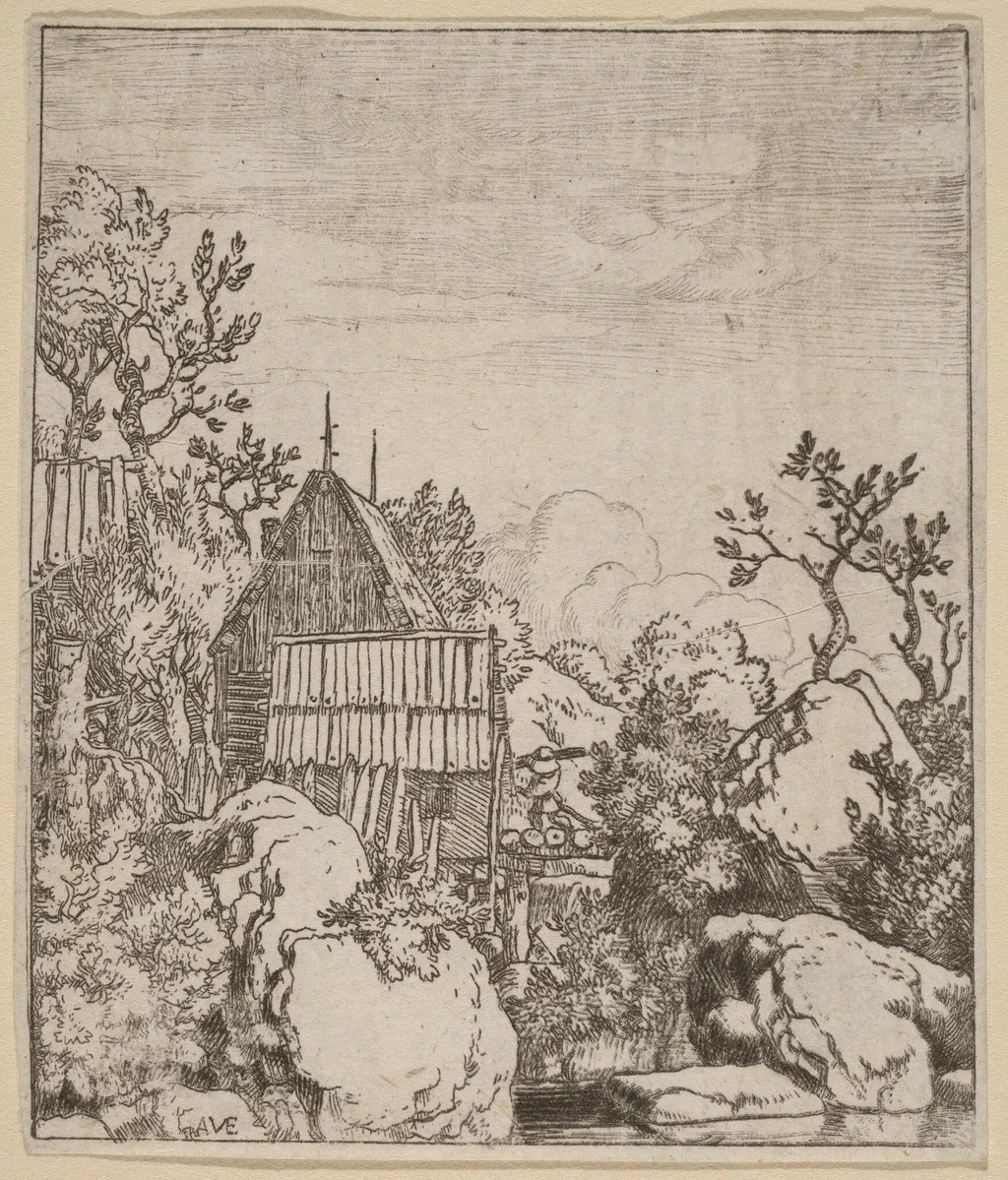
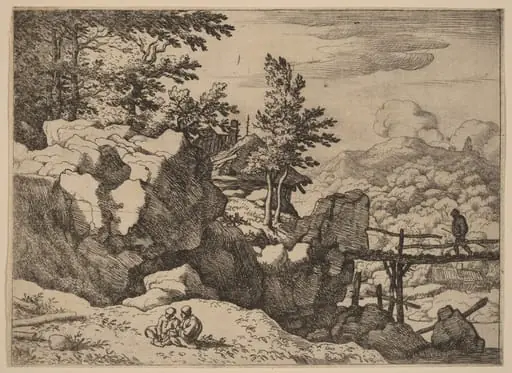
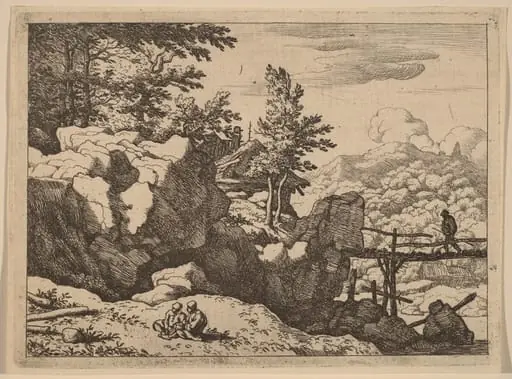
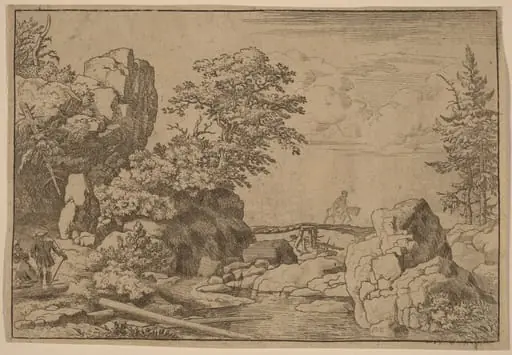
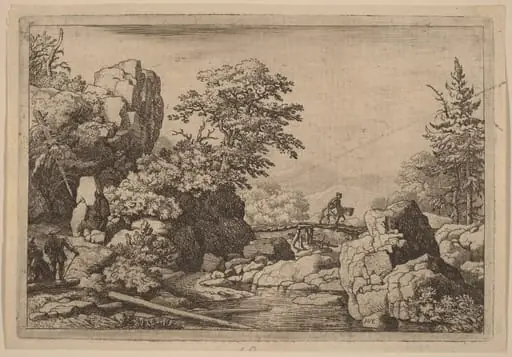
Man on a Small Wooden Bridge is an ink print by the Baroque artist Allart van Everdingen. It dates from 1650 and is held in the collection of the National Gallery of Art.
About this work
Overview
Created around 1650 by Allart van Everdingen, this etching captures a solitary figure on a modest wooden bridge, set within a quiet, unpopulated landscape.
Created around 1650 by Allart van Everdingen, this etching captures a solitary figure on a modest wooden bridge, set within a quiet, unpopulated landscape. As a Dutch Golden Age printmaker, Everdingen frequently explored natural scenes with minimal human presence. The composition emphasizes stillness and restraint, aligning with his broader interest in atmospheric landscapes rendered through delicate linear detail.
Subject & Meaning
The lone figure, small in scale against the environment, suggests contemplation or transit rather than narrative action. The sparse surroundings—bare trees, a distant cottage, and rocky ground—convey isolation without overt symbolism. The absence of movement or interaction invites quiet reflection, characteristic of Everdingen’s tendency to evoke mood through understated naturalism rather than dramatic storytelling.
Technique & Style
Executed in etching, the work relies on fine, controlled lines to render foliage, bark, and terrain with precision. The artist used acid to bite into a metal plate, creating intricate textures that mimic the fragility of winter vegetation. The sky is reduced to a thin horizon line, enhancing the verticality of the scene and focusing attention on the bridge and its solitary occupant.
History & Provenance
The print originates from Everdingen’s active period in the mid-17th century, when he produced numerous etchings alongside his paintings. While specific early ownership records are sparse, the work aligns with prints circulated among collectors of Dutch landscape art. Its survival in multiple institutional collections indicates its recognition within early modern print circles.
Context
In the Dutch Golden Age, landscape prints gained popularity as affordable, portable images of nature, often reflecting ideals of harmony and solitude. Everdingen’s work, influenced by his travels to Scandinavia, introduced northern European terrain into Dutch printmaking. This piece exemplifies how artists translated personal observation into restrained, poetic compositions for domestic audiences.
Legacy
Everdingen’s etchings, including this one, contributed to the development of landscape as a subject worthy of independent artistic attention. His meticulous line work influenced later printmakers who sought to capture natural detail without embellishment. Though less widely known than contemporaries like Rembrandt, his prints remain valued for their quiet intensity and technical discipline.
Artist & collection
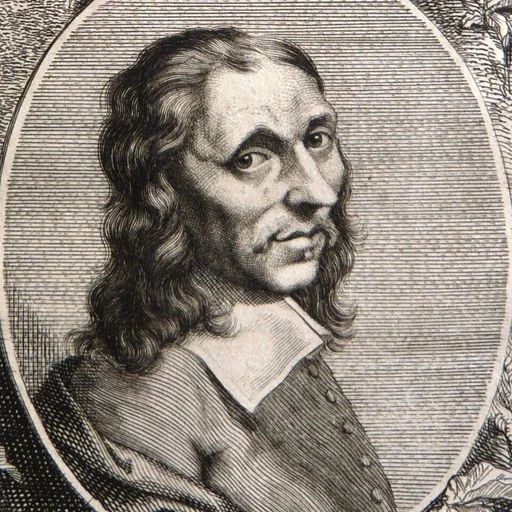
Artist
Allaert van Everdingen (Dutch pronunciation: ; bapt. 18 June 1621 – 8 November 1675 (buried)), was a Dutch Golden Age painter and printmaker in etching and mezzotint.