Artwork
Reynard the Fox: The Freeing of the Wolf and the Bear
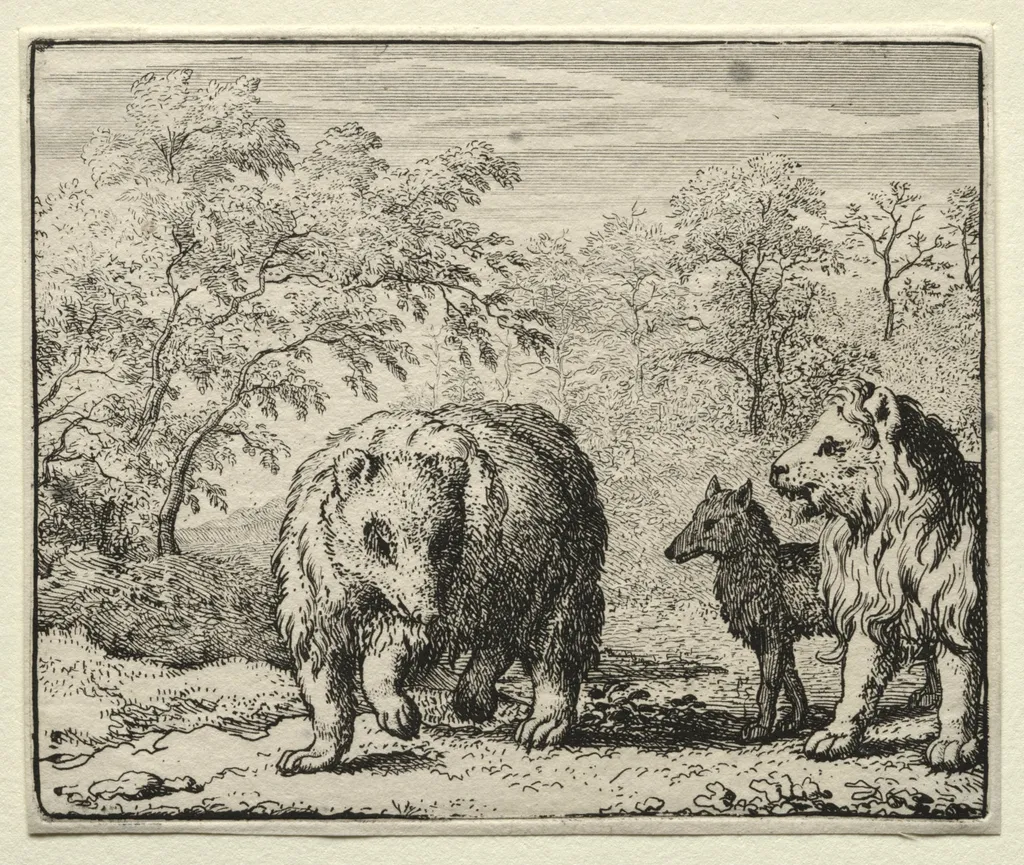
Reynard the Fox: The Freeing of the Wolf and the Bear is a print by the Baroque artist Allart van Everdingen. It dates from 1662 and is held in the collection of the Cleveland Museum of Art.
About this work
Overview
Created in 1662 by Dutch artist Allart van Everdingen, this etching is one of several prints illustrating the medieval Reynard the Fox tales.
Created in 1662 by Dutch artist Allart van Everdingen, this etching is one of several prints illustrating the medieval Reynard the Fox tales. Van Everdingen, active during the Dutch Golden Age, used printmaking to explore folk narratives with subtle irony. The work belongs to a series that reimagines animal fables as social commentary, blending naturalistic detail with symbolic storytelling. His technical precision in ink lines captures both movement and character without color.
Subject & Meaning
The scene depicts Reynard, the fox, orchestrating the release of a wolf and a bear, likely from captivity. Though physically smaller than the two beasts, the fox dominates the composition through posture and gesture, suggesting cunning over strength. The animals’ attentive gazes imply submission to his authority, reflecting the trickster’s traditional role as a subverter of hierarchy. The setting, sparse yet textured, reinforces the fable’s allegorical tone without overt moralizing.
Technique & Style
Van Everdingen employed fine-line etching to render texture and depth, using cross-hatching to suggest foliage, rock, and fur. The contrast between the fox’s delicate form and the bulkier, loosely defined bodies of the wolf and bear enhances narrative tension. Background elements are minimized but carefully placed to ground the scene in a naturalistic woodland. The monochrome palette focuses attention on gesture and composition, characteristic of 17th-century Dutch illustrative prints.
History & Provenance
The print was produced during the height of van Everdingen’s career, shortly before his death in 1675. It was likely part of a privately circulated series, intended for collectors interested in literary and moral allegories. The Cleveland Museum of Art acquired the work as part of its broader collection of Northern European prints, preserving an example of how fable traditions were adapted into early modern visual culture.
Context
Van Everdingen’s Reynard series emerged amid a revival of medieval animal tales in the Low Countries, where such stories were used to critique social and political structures. While Baroque art often emphasized grandeur, his approach was restrained, favoring intimate, narrative-driven scenes. His prints resonated with literate urban audiences familiar with the Reynard cycle through printed chapbooks and theater.
Legacy
Though less celebrated than his landscape etchings, van Everdingen’s Reynard prints contributed to the persistence of folk narratives in visual art. His ability to convey complex social dynamics through animal figures influenced later illustrators of fables. The work remains a quiet testament to how traditional stories were reinterpreted in early modern Europe, using the tools of print to reach a broad, thoughtful audience.
Own this work as a print
Artist & collection
Artist
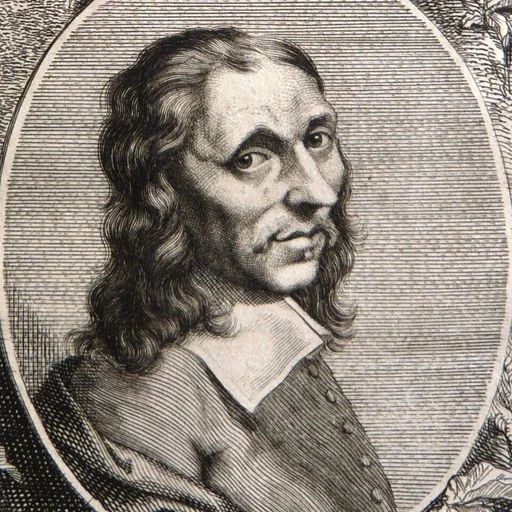
Allaert van Everdingen (Dutch pronunciation: ; bapt. 18 June 1621 – 8 November 1675 (buried)), was a Dutch Golden Age painter and printmaker in etching and mezzotint.

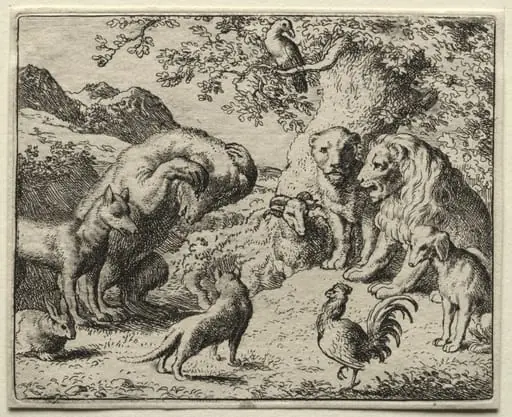 Reynard the Fox: The Complaint of the Bear
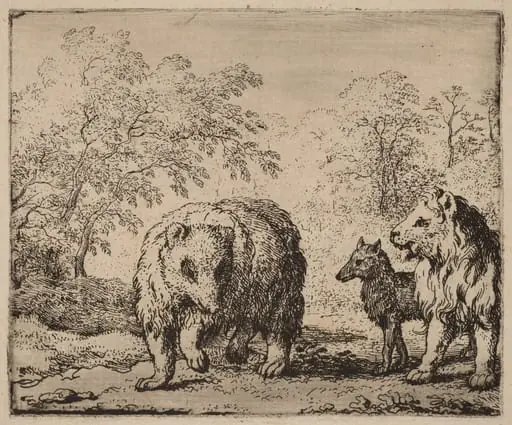 The Lion Frees the Bear and the Wolf
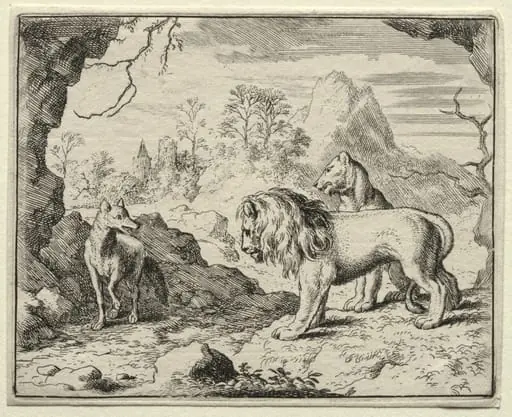 Reynard the Fox: Reynard Tells of Hidden Treasure
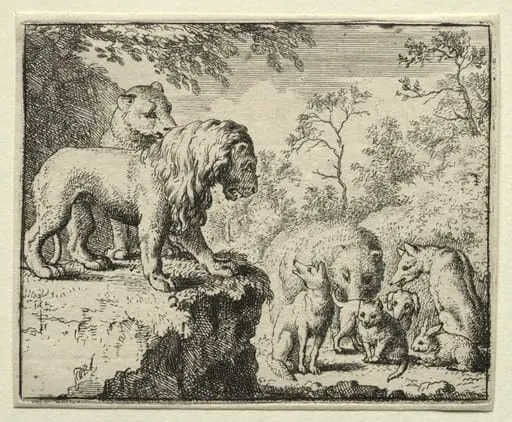 Reynard the Fox: The Pardon of Reynard
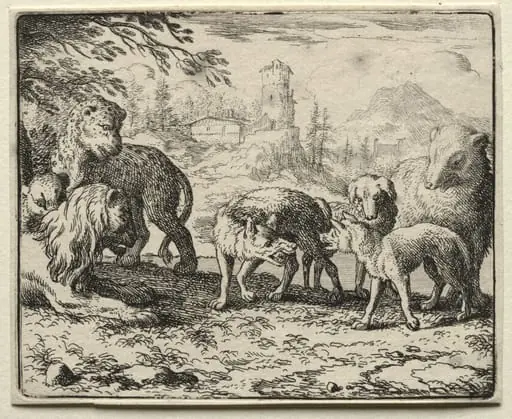 Reynard the Fox: The Condemnation of Reynard
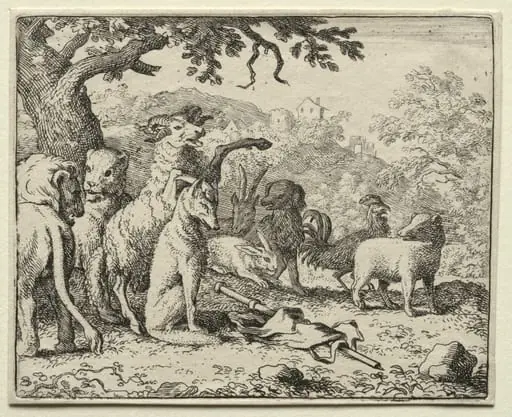 Reynard the Fox: The Benediction Given to Reynard
 Reynard the Fox: The Badger's Defense of Reynard
 Reynard the Fox: Reynard Promises Honey to the Bear
 Reynard the Fox: The Combat Between Reynard and the Wolf
 Reynard the Fox: Reynard Describes a False Plot Against the Lion