Artwork
Seascape with Three Figures to the Right
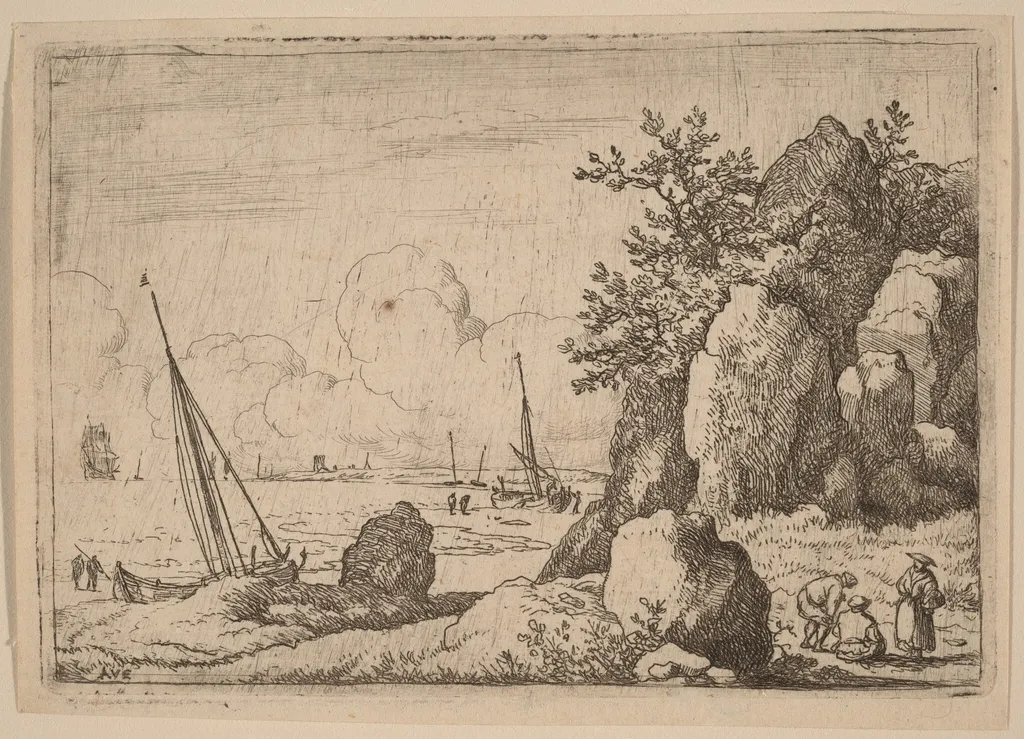
Seascape with Three Figures to the Right is an ink print by the Baroque artist Allart van Everdingen. It dates from 1650 and is held in the collection of the National Gallery of Art.
About this work
Overview
Created around 1650 by Allart van Everdingen, this etching belongs to a series of maritime works produced during the Dutch Golden Age.
Created around 1650 by Allart van Everdingen, this etching belongs to a series of maritime works produced during the Dutch Golden Age. It captures a tranquil coastal moment with minimal figures and restrained composition. The artist employed the etching technique, incising lines into a metal plate to hold ink, resulting in fine, precise marks that define the scene’s subtle textures and atmospheric depth.
Subject & Meaning
The scene presents a quiet shoreline with three small figures standing near rocks on the right, one holding a staff. Their presence suggests daily coastal life—fishing, waiting, or observing—but without narrative drama. The focus remains on the environment: still water, distant boats, and a horizon softened by clouds. The figures serve as scale markers, emphasizing nature’s quiet dominance over human activity.
Technique & Style
Van Everdingen used etching to achieve delicate, linear detail, scratching through a wax resist on a copper plate before acid biting the exposed lines. The resulting print reveals fine gradations of tone, especially in the water’s surface and cloud formations. His controlled hand conveys movement through subtle hatching and sparse, intentional strokes, avoiding heavy shading in favor of atmospheric suggestion.
History & Provenance
The work dates from the height of van Everdingen’s printmaking career, following his travels to Scandinavia, which influenced his treatment of rugged coastlines. While specific early ownership records are sparse, the print aligns with a broader 17th-century Dutch market for landscape and marine prints, collected by both private patrons and institutions for their topographical and aesthetic qualities.
Context
In mid-17th-century Holland, maritime themes flourished due to the nation’s naval power and commercial reliance on the sea. Artists like van Everdingen contributed to a genre that celebrated natural landscapes without idealization. This etching reflects a shift toward intimate, observational scenes rather than grand narratives, mirroring the Dutch preference for realism and quiet contemplation in art.
Legacy
Van Everdingen’s etchings, including this one, helped define a distinctly Dutch approach to marine subjects—emphasizing mood over spectacle. His technical precision influenced later printmakers and contributed to the genre’s evolution. Though less celebrated than his painting contemporaries, his prints remain valued for their quiet observation and mastery of light on water.
Artist & collection
Artist
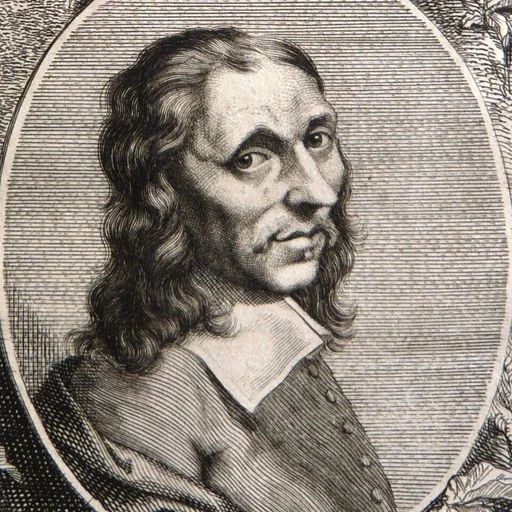
Allaert van Everdingen (Dutch pronunciation: ; bapt. 18 June 1621 – 8 November 1675 (buried)), was a Dutch Golden Age painter and printmaker in etching and mezzotint.

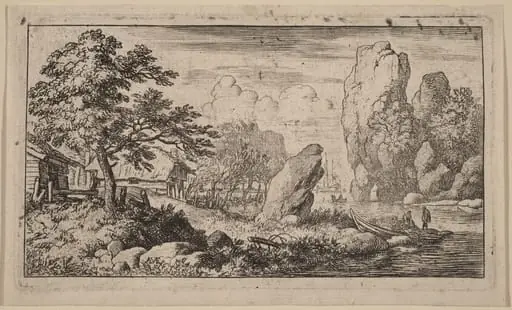 Pointed Boulder at the Bank of a River
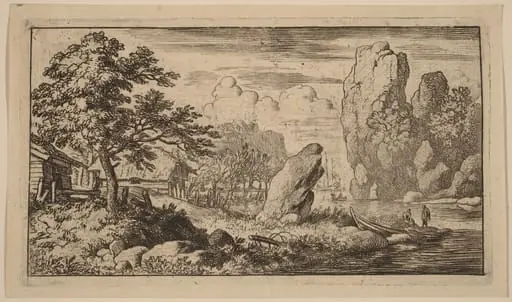 Pointed Boulder at the Bank of a River
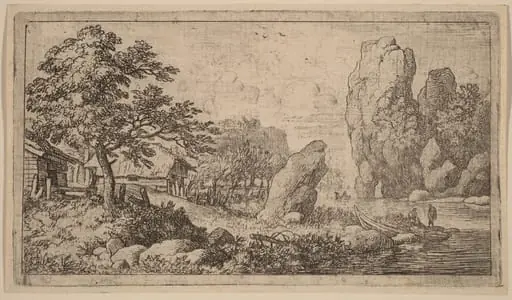 Pointed Boulder at the Bank of a River
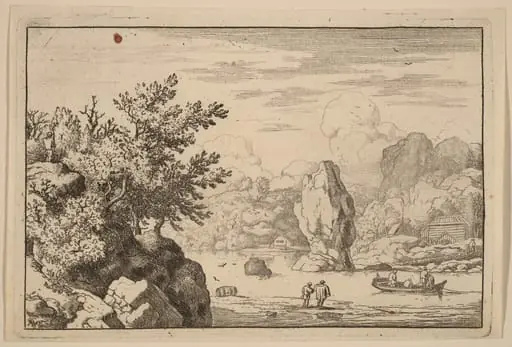 Rock in the Middle of a River
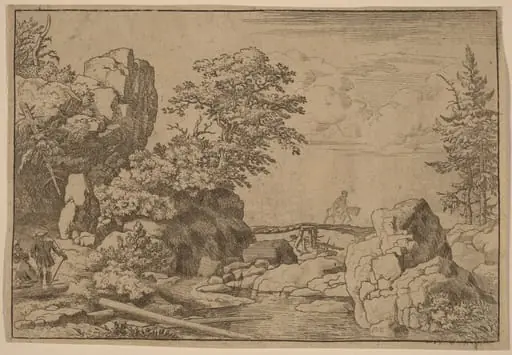 Horseman on a Bridge
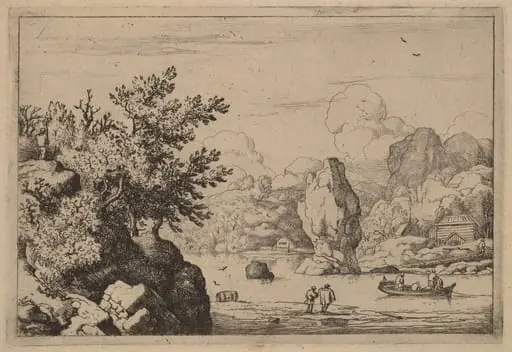 Rock in the Middle of a River
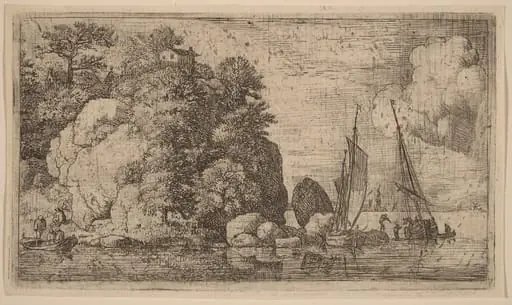 Two Boats on a Wide River
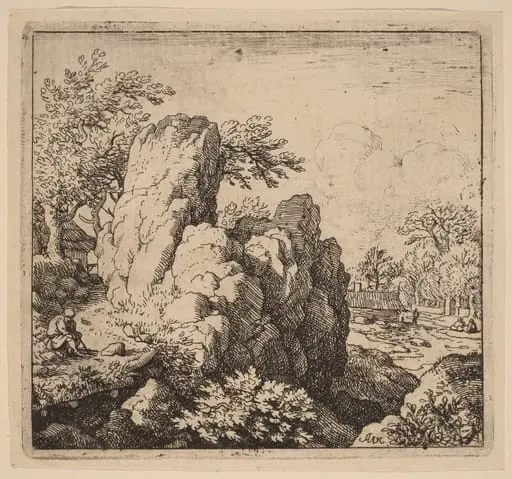 Large Rock
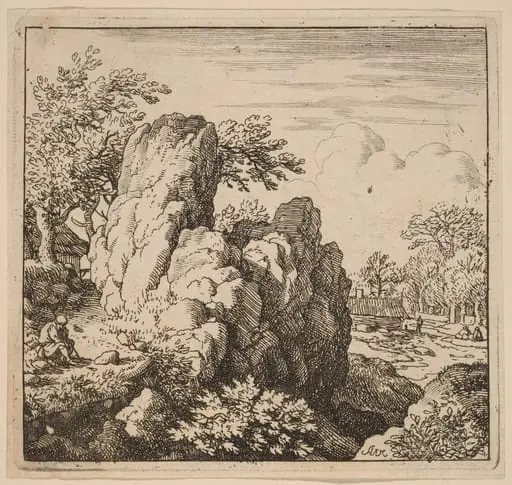 Large Rock
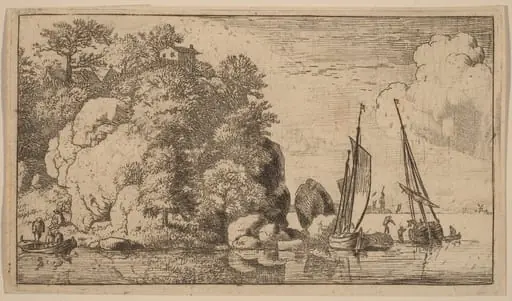 Two Boats on a Wide River
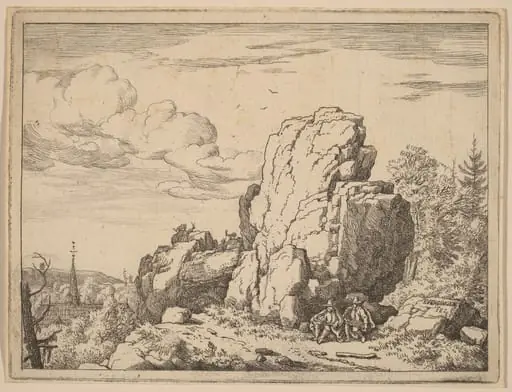 Two Men Seated at the Foot of a High Rock
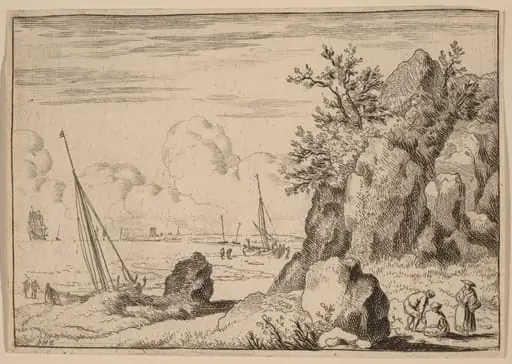 Seascape with Three Figures to the Right