Artwork
Swine Herd near a Chapel
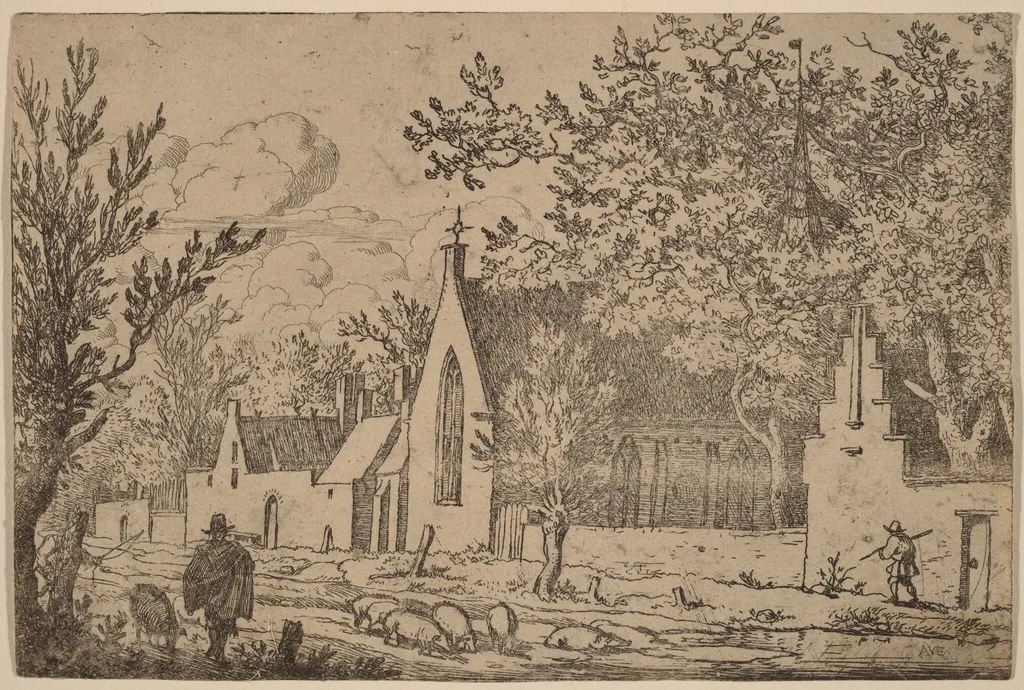
Swine Herd near a Chapel is an ink print by the Baroque artist Allart van Everdingen. It dates from 1650 and is held in the collection of the National Gallery of Art.
About this work
Overview
Swine Herd near a Chapel is an etching created by Dutch Golden Age artist Allart van Everdingen around 1650, capturing a serene rural scene with a distinctive twist.
Subject & Meaning
The etching portrays a man leading a herd of pigs past a small stone chapel, where the ordinary scene is rendered unusual by the disproportionate size of the pigs relative to the chapel, introducing a sense of subtle tension.
Technique & Style
Executed as an etching, the work showcases Van Everdingen's skill in the medium, characterized by precise lines that convey the quiet, everyday nature of the scene, contrasted with the eerie juxtaposition of elements.
History & Provenance
Created during the 17th century's Dutch artistic flourishing, the etching reflects the era's printmaking advancements. Van Everdingen, active from his 1621 baptism until his 1675 burial, was a notable figure in this period.
Context
The piece's unusual composition—a tiny chapel overshadowed by large pigs—may suggest commentary on the relationship between nature, human activity, and religious presence in everyday life, though the exact intent remains interpretative.
Legacy
While specific lasting impacts of *Swine Herd near a Chapel* on subsequent art movements are not well-documented, it remains a characteristic example of Van Everdingen's etching work and the Dutch Golden Age's attention to detail in printmaking.
Artist & collection
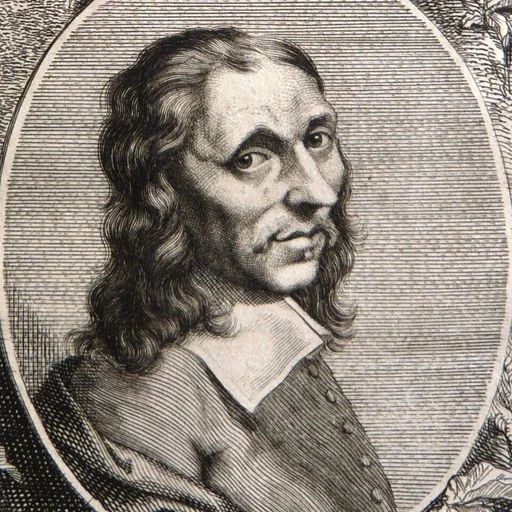
Artist
Allaert van Everdingen (Dutch pronunciation: ; bapt. 18 June 1621 – 8 November 1675 (buried)), was a Dutch Golden Age painter and printmaker in etching and mezzotint.





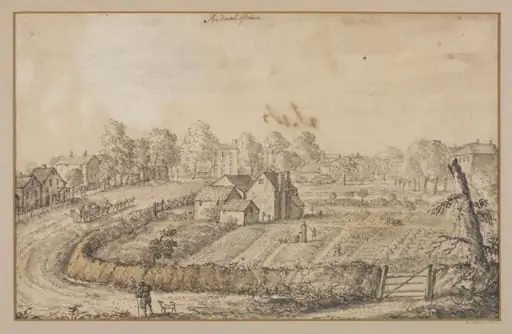 Coates' Farm, Bethnal Green
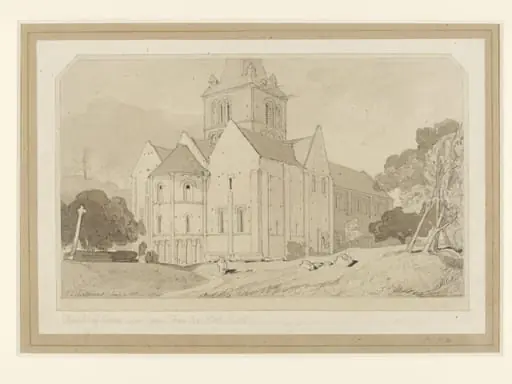 Church of Cheux, near Caen
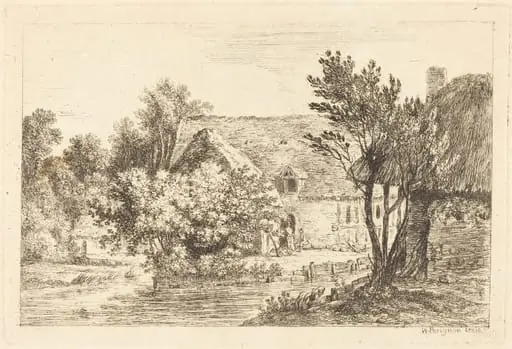 A House and a Shaded Cottage on the Banks of a River
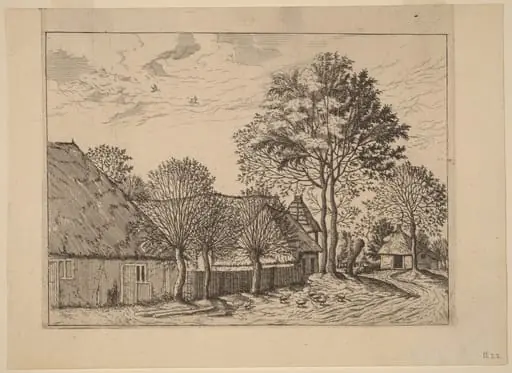 Farms
Farms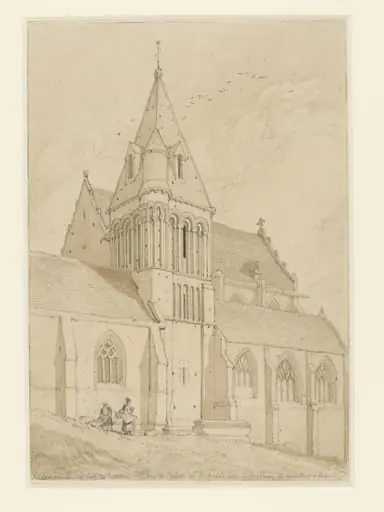 Church of St Michel, Vaucelles, near Bayeux
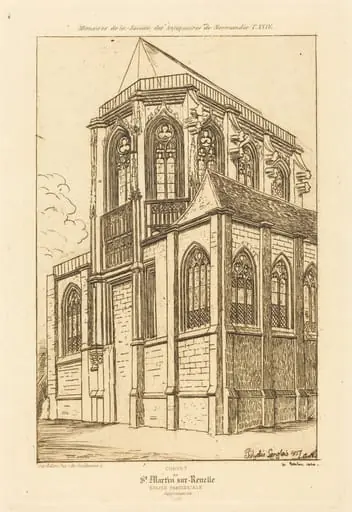 Chevet de St. Martin-sur-Renelle (The Apsis of the Church of St. Martin-sur-Renelle)
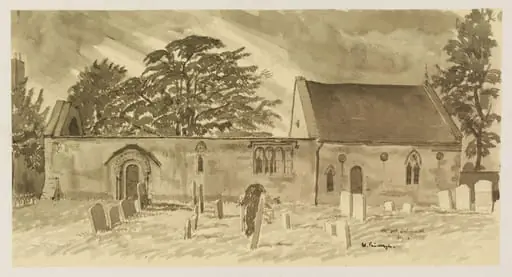 St.George's Church, Hatford
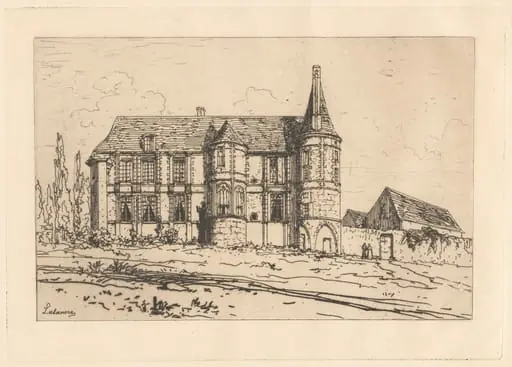 Castle with Two Towers
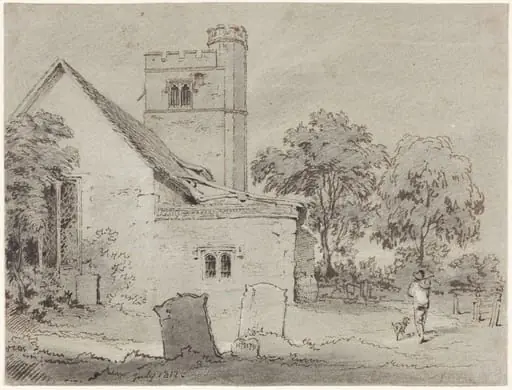 Aldenham Church, Hertfordshire