Artwork
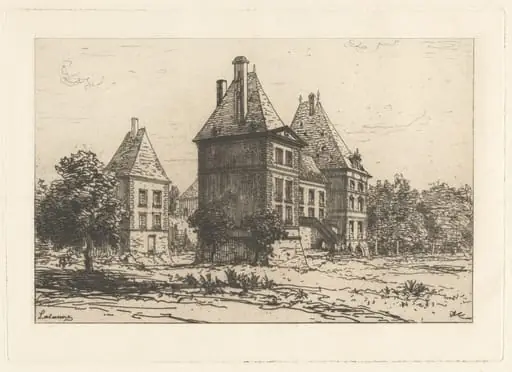
Castle with Two Towers
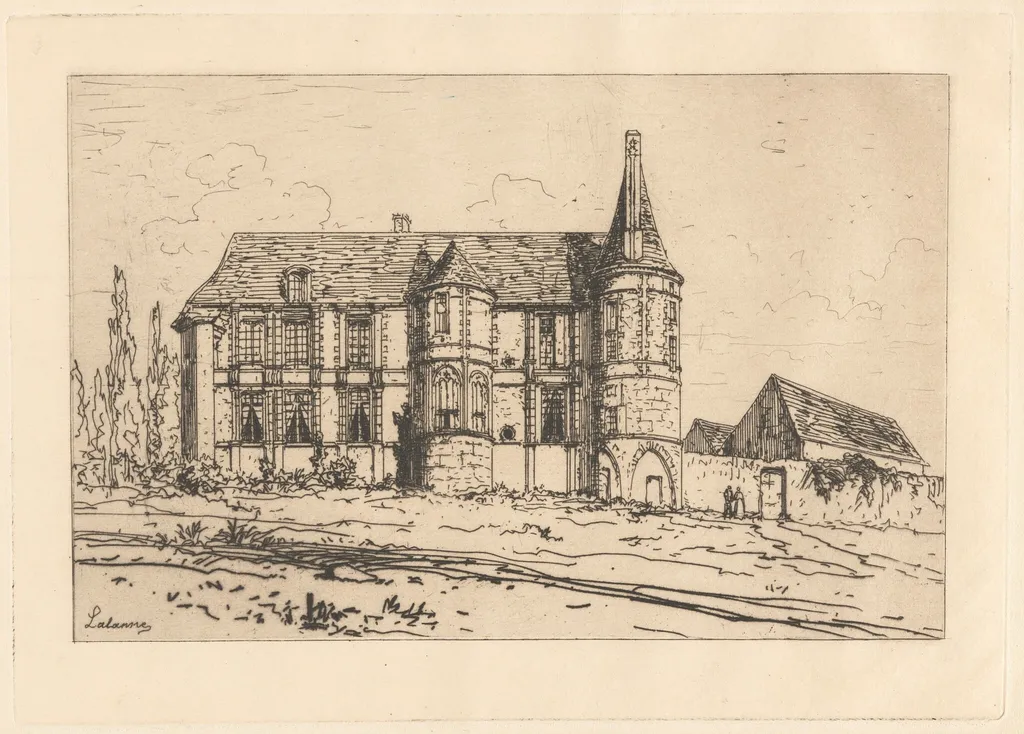
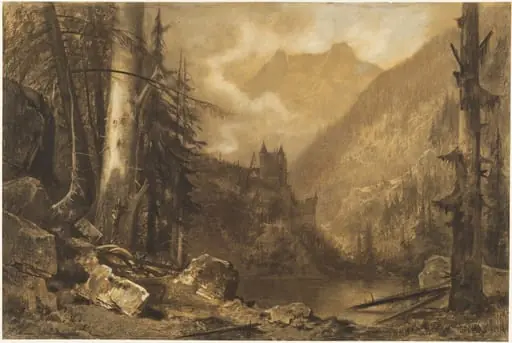
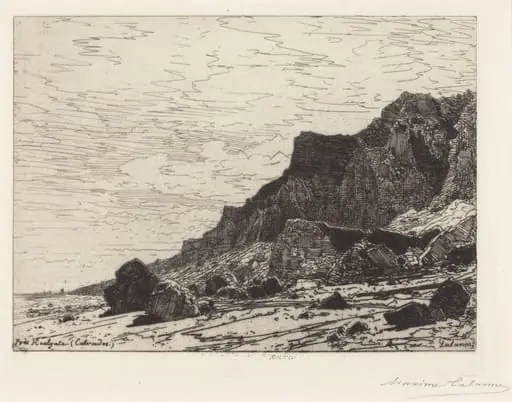
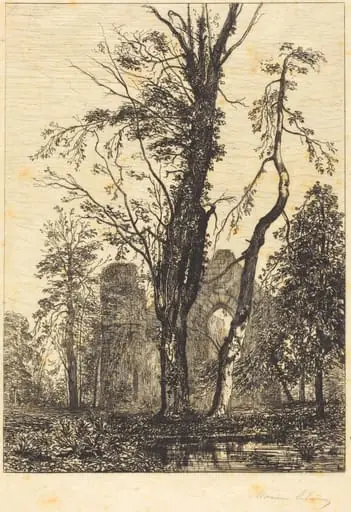
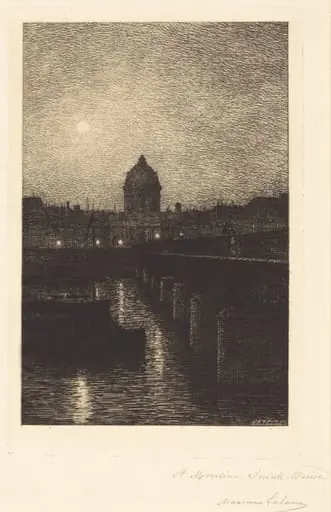
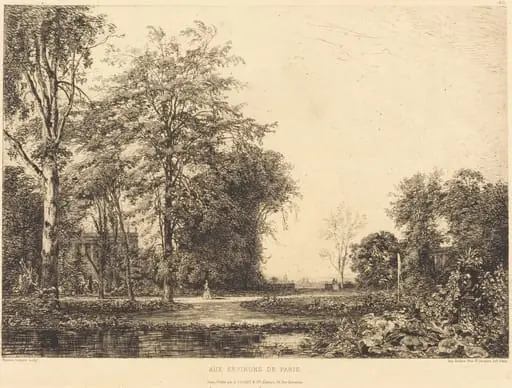
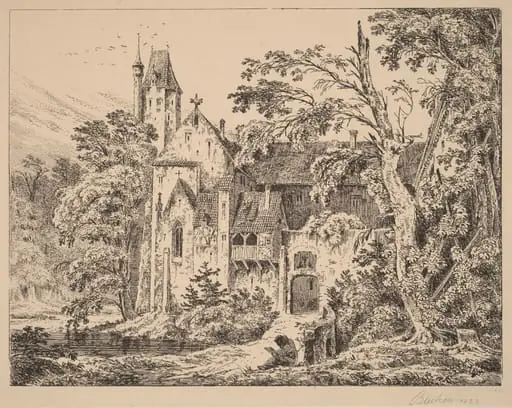
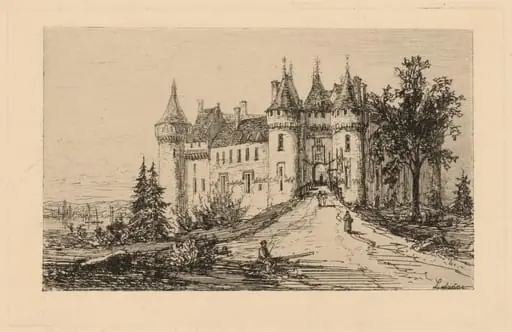
Castle with Two Towers is an ink print by the Impressionist artist Maxime Lalanne. It dates from 1885 and is held in the collection of the National Gallery of Art.
About this work
Overview
Lalanne, known for his detailed graphic work, employed the etching technique to render architectural forms with fine linear control.
Created around 1885 by French artist François Antoine Maxime Lalanne, *Castle with Two Towers* is an etching on laid paper that captures a rural architectural scene with quiet precision. Lalanne, known for his detailed graphic work, employed the etching technique to render architectural forms with fine linear control. The print is part of the National Gallery of Art’s collection in Washington, D.C., reflecting its significance in late 19th-century printmaking.
Subject & Meaning
The composition centers on a stone castle with two tall, narrow towers, a steeply pitched roof, and numerous window openings framed in dark lines. Adjacent to the main structure is a modest wooden shed, while two small figures near the entrance suggest human presence without narrative emphasis. Muddy ground and faint tracks imply movement or daily activity, grounding the scene in a quiet, everyday reality rather than romanticized grandeur.
Technique & Style
Lalanne used etching to achieve fine, controlled lines and subtle tonal gradations. The metal plate was incised with acid-resistant wax, then submerged in acid to bite the exposed lines, allowing for intricate detail in stone textures, window frames, and shadowed recesses. The laid paper’s texture enhances the print’s tactile quality, reinforcing the rustic atmosphere through its natural grain and slight irregularity.
History & Provenance
The work was produced during the latter part of Lalanne’s career, a period when he focused on architectural subjects and rural scenes. It entered the National Gallery of Art’s collection through established acquisition channels, likely as part of a broader effort to document European printmaking traditions of the 19th century. Its preservation reflects its value as a representative example of Lalanne’s graphic output.
Context
In the 1880s, French artists increasingly turned to intimate, unidealized views of architecture and landscape, moving away from grand historical themes. Lalanne’s etchings aligned with this trend, emphasizing structure and atmosphere over drama. His work resonated with contemporaries interested in the quiet dignity of vernacular buildings, capturing a moment when industrialization was reshaping the rural environment.
Legacy
Though not widely exhibited, *Castle with Two Towers* remains a quiet testament to Lalanne’s skill in translating architectural form into delicate linear language. It contributes to the understanding of late 19th-century printmaking as a medium for observational realism, influencing later artists who valued precision and restraint over expressive flourish.
Artist & collection
Artist
François Antoine Maxime Lalanne (November 27, 1827 – July 29, 1886) was a French artist known for his etchings and charcoal drawings (fusain).