Artwork
Swineherd
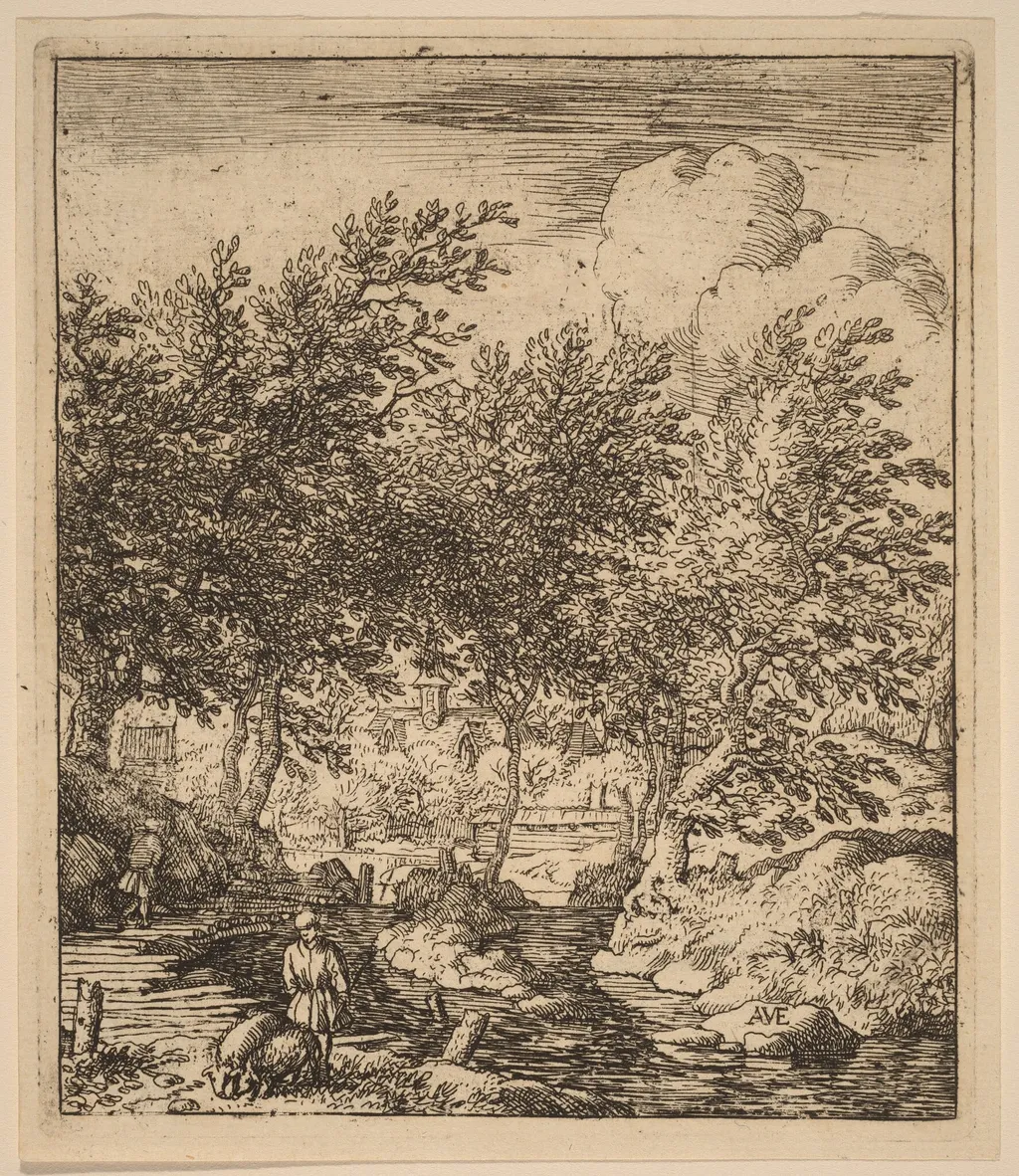
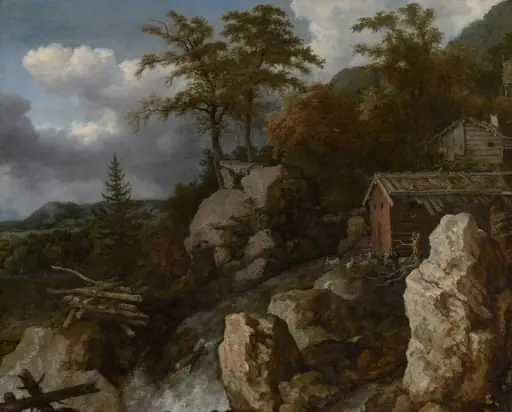
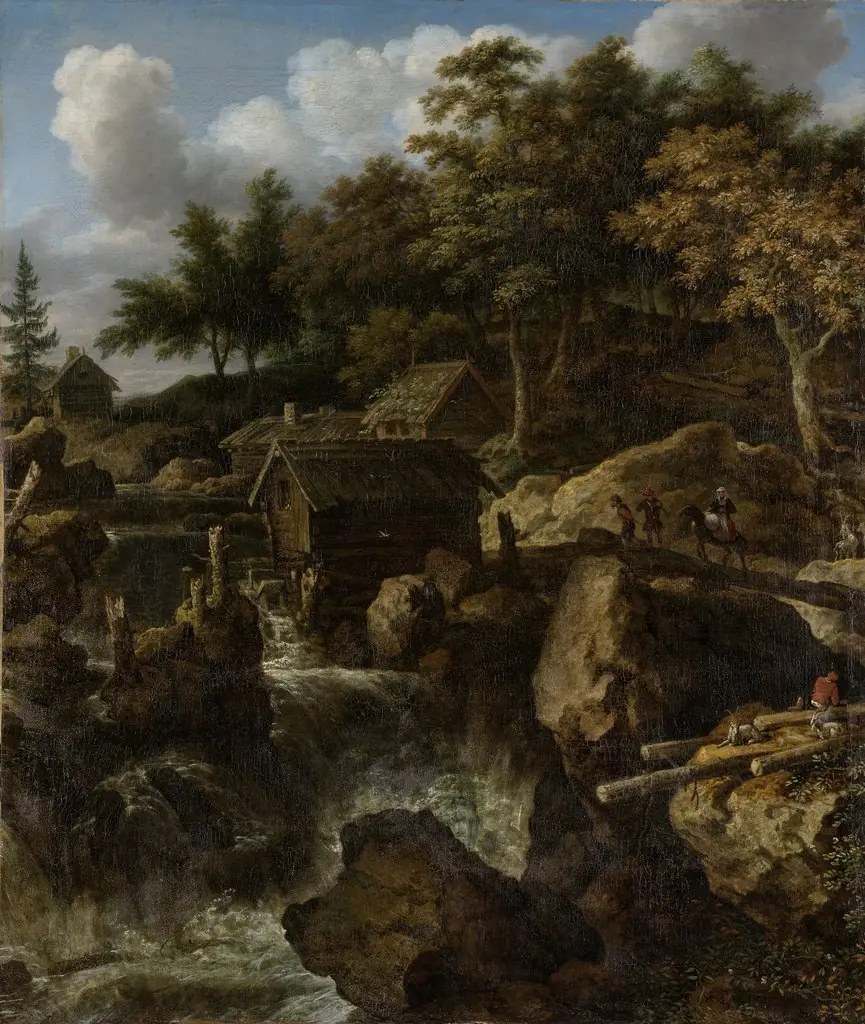
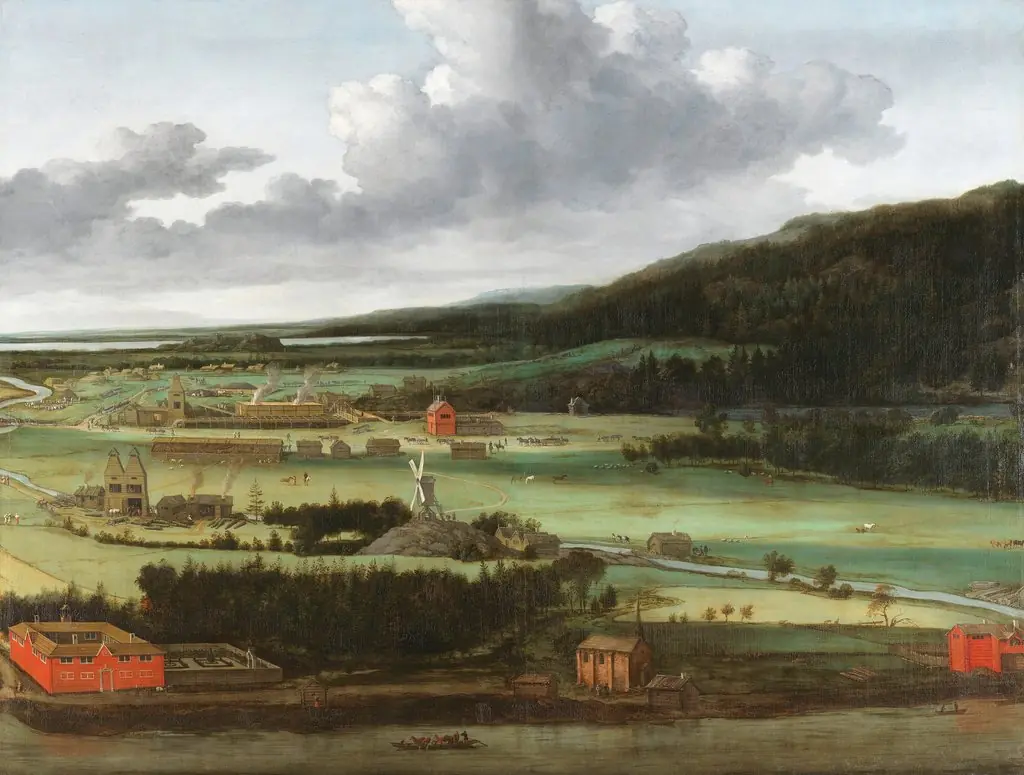
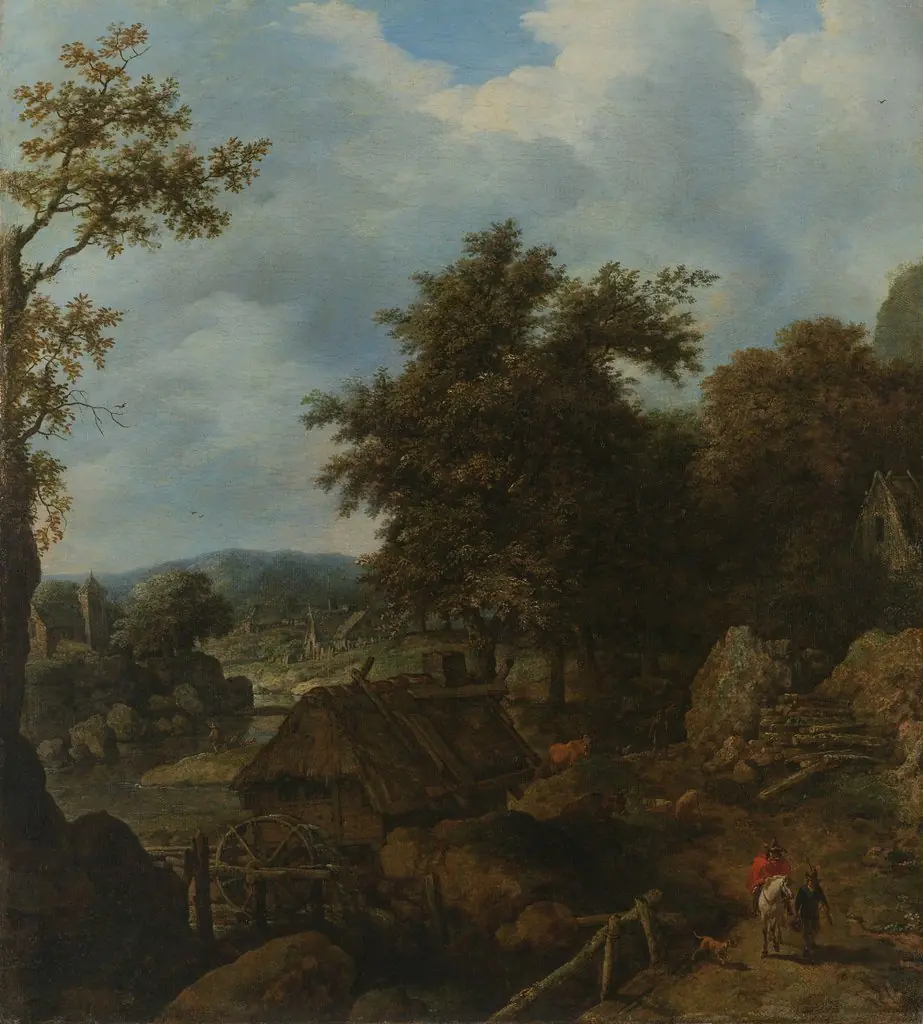
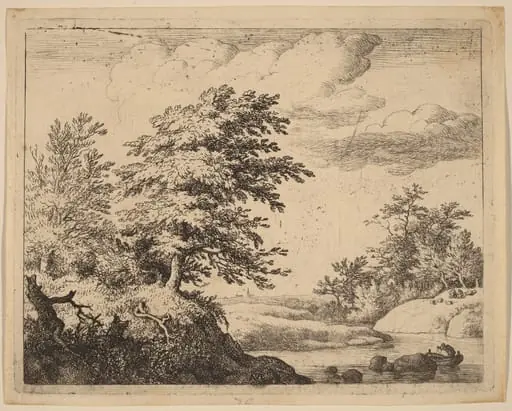
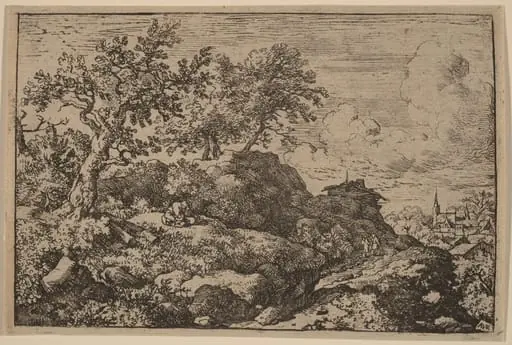
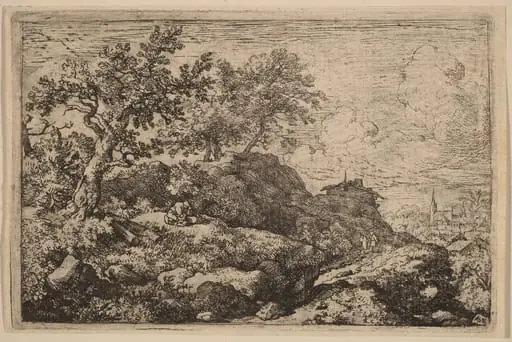
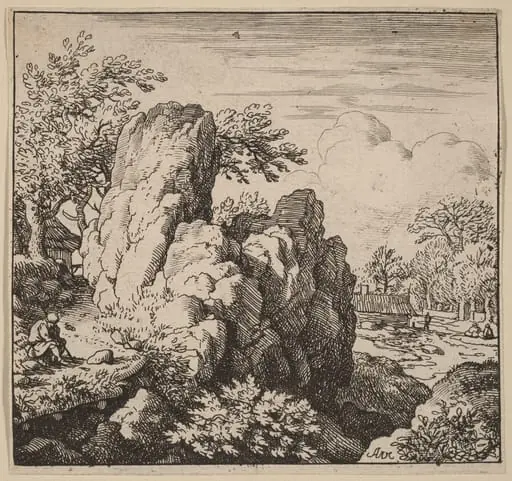
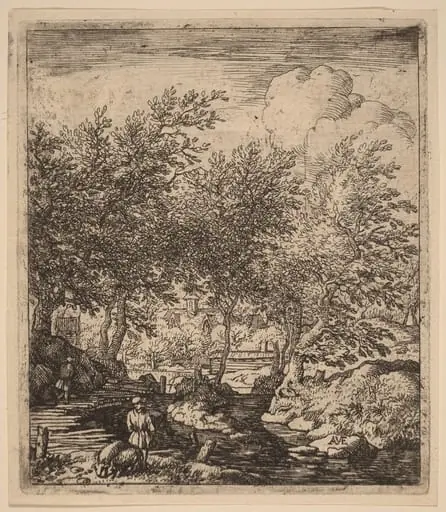
Swineherd is an ink print by the Baroque artist Allart van Everdingen. It dates from 1650 and is held in the collection of the National Gallery of Art.
About this work
Overview
Created around 1650 by Allart van Everdingen, *Swineherd* is an etching that exemplifies his dual practice as both painter and printmaker.
Created around 1650 by Allart van Everdingen, *Swineherd* is an etching that exemplifies his dual practice as both painter and printmaker. The work belongs to a body of rural scenes he produced during the Dutch Golden Age, capturing everyday life with quiet precision. Unlike grand historical or mythological subjects favored by contemporaries, van Everdingen focused on modest, observational moments in the countryside, using the etching medium to achieve subtle tonal variation and fine linear detail.
Subject & Meaning
The scene portrays a solitary swineherd guiding a small group of pigs along the edge of a stream, a common yet unglamorous rural occupation. The absence of dramatic action or human interaction emphasizes the quiet rhythm of daily labor. The inclusion of distant architecture suggests a settled, inhabited landscape, reinforcing themes of domestic harmony between people, animals, and nature. The subject reflects a broader Dutch interest in the dignity of ordinary life, devoid of idealization.
Technique & Style
Van Everdingen employed fine, controlled etching lines to render texture with remarkable delicacy: the water’s surface is suggested by delicate undulating strokes, while the foliage appears softly dense through layered hatching. The grasses and tree bark are rendered with a tactile, almost fuzzy quality, achieved through meticulous burin work. The composition is deliberately sparse, with a high horizon and open sky, allowing the natural elements to dominate and the figure to blend into the landscape rather than command it.
History & Provenance
The etching was produced during a period when van Everdingen was actively refining his printmaking skills, likely after travels through Scandinavia that influenced his landscape sensibilities. While no specific early ownership records are widely documented, the work aligns with prints circulated among Dutch collectors who favored intimate, topographically grounded scenes. It was likely part of a series of rural studies, reproduced and traded through print dealers in Amsterdam and beyond.
Context
In mid-17th-century Holland, landscape and genre scenes gained prominence as symbols of civic pride and natural order. Van Everdingen’s focus on pastoral labor contrasted with the more theatrical landscapes of his peers, offering instead a restrained, observational approach. His etchings resonated with a growing urban middle class seeking visual connections to the countryside, even as urbanization accelerated. The swineherd, though humble, represents a valued, if uncelebrated, pillar of rural economy.
Legacy
Van Everdingen’s etchings, including *Swineherd*, contributed to the elevation of printmaking as a serious artistic medium in the Netherlands. His attention to atmospheric detail and quiet composition influenced later generations of landscape etchers, particularly those interested in naturalism over narrative. Though less celebrated than Rembrandt or Ruisdael, his work remains a quiet testament to the artistic potential of everyday observation in the Dutch Golden Age.
Own this work as a print
Artist & collection
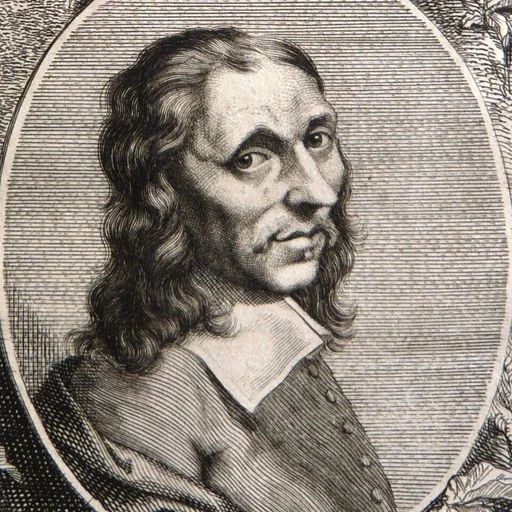
Artist
Allaert van Everdingen (Dutch pronunciation: ; bapt. 18 June 1621 – 8 November 1675 (buried)), was a Dutch Golden Age painter and printmaker in etching and mezzotint.