Artwork
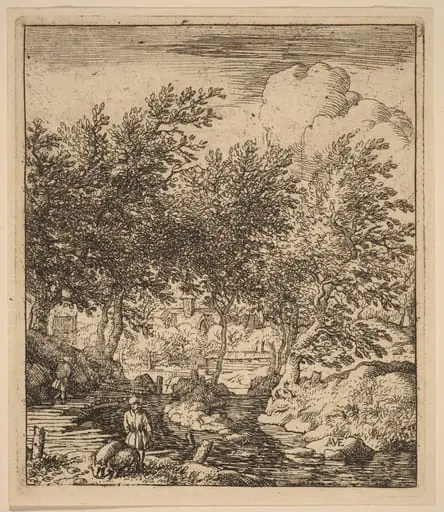
Swineherd
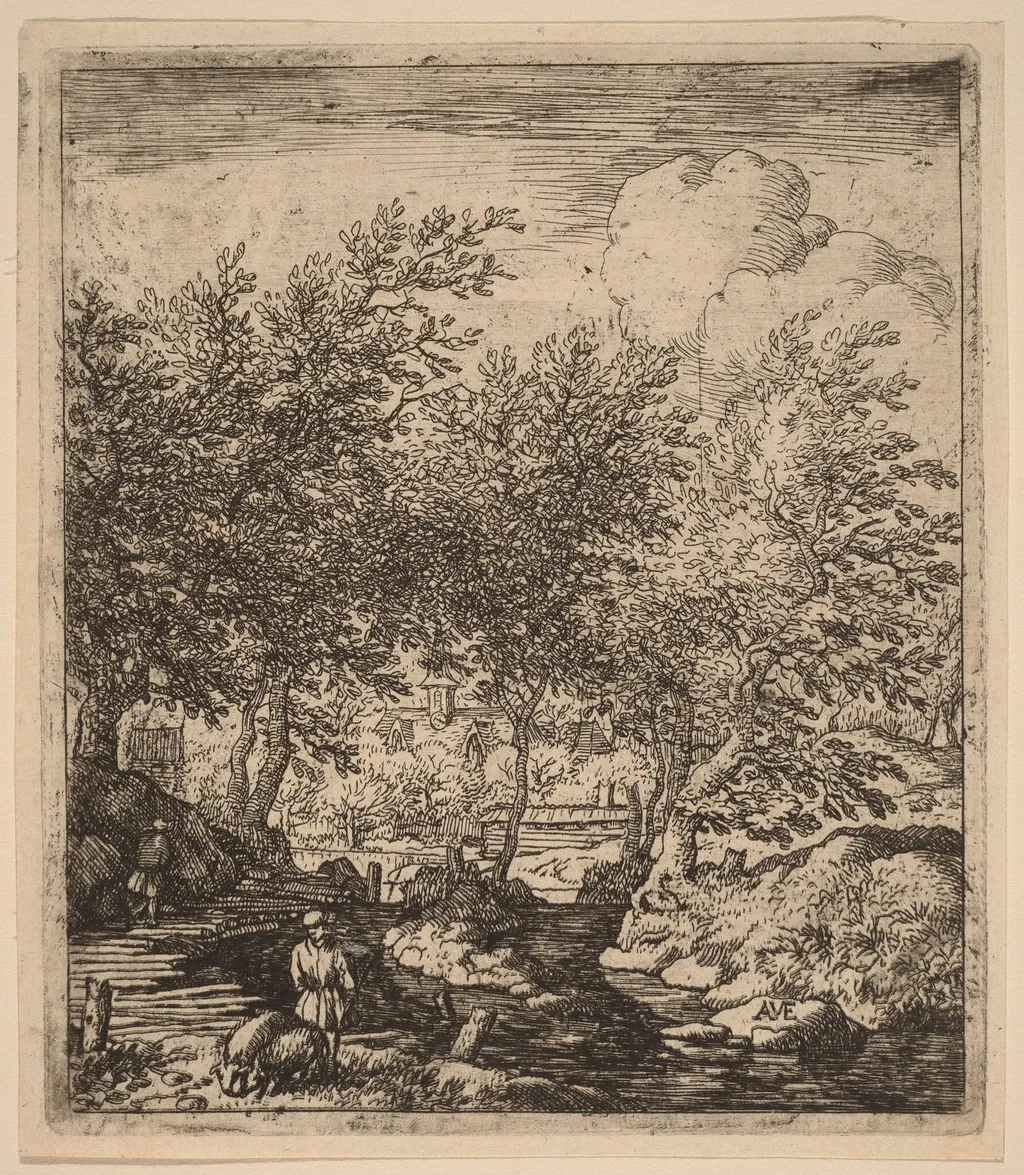
Swineherd is an ink print by the Baroque artist Allart van Everdingen. It dates from 1650 and is held in the collection of the National Gallery of Art.
About this work
Overview
Created circa 1650, *Swineherd* is an etching by Dutch artist Allart van Everdingen, who worked during the Golden Age. The print portrays a quiet countryside tableau, focusing on a man attending to a herd of pigs. The composition balances foreground activity with a distant landscape, offering a glimpse into everyday rural life of the period.
Subject & Meaning
The central figure is a swineherd, shown caring for his animals amid a tranquil setting. The inclusion of trees, water, and modest buildings suggests a harmonious relationship between human labor and nature. The work emphasizes the simplicity and steadiness of agrarian work, inviting contemplation of the modest yet essential rhythms of 17th‑century Dutch life.
Technique & Style
Executed in etching, Everdingen employs fine lines to render textures of foliage, water, and architecture. Subtle gradations of tone are achieved through careful manipulation of light and shadow, giving depth to the trees and structures. The overall visual language reflects the Baroque sensibility for atmospheric effects while maintaining the restrained clarity typical of Dutch printmaking.
History & Provenance
Allart van Everdingen, known for both paintings and prints, produced *Swineherd* during a prolific period of his career. The print was likely circulated among collectors of Dutch prints in the mid‑17th century. It has since entered museum and private collections, documented in catalogues of Everdingen’s oeuvre as an example of his skill in landscape etching.
Own this work as a print
Artist & collection
Artist
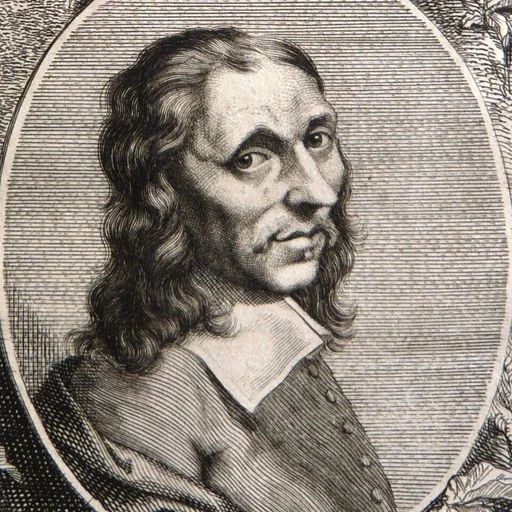
Allaert van Everdingen (Dutch pronunciation: ; bapt. 18 June 1621 – 8 November 1675 (buried)), was a Dutch Golden Age painter and printmaker in etching and mezzotint.

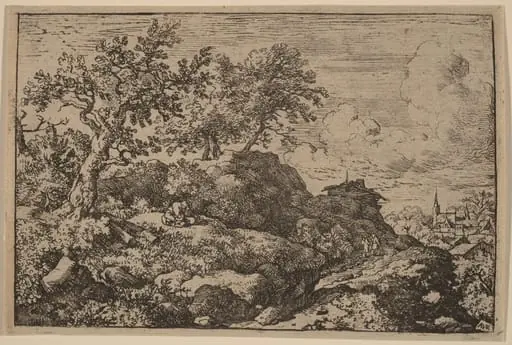 Two Peasants Seated on a Hill
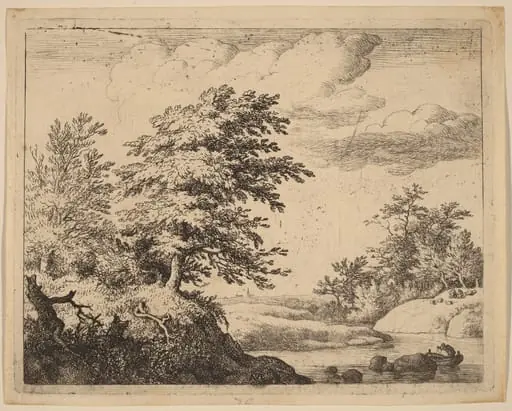 Winding River
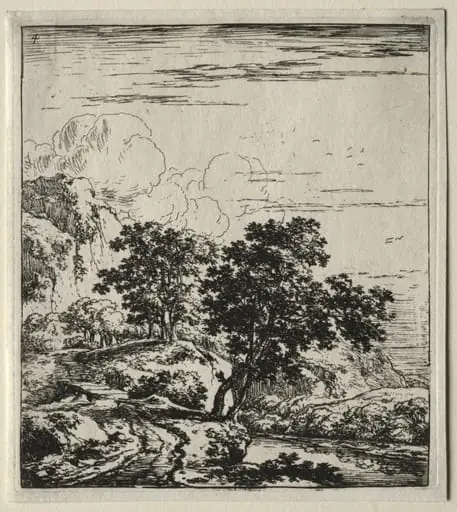 Le sentier au bord de la rivière et le petit pont du bois
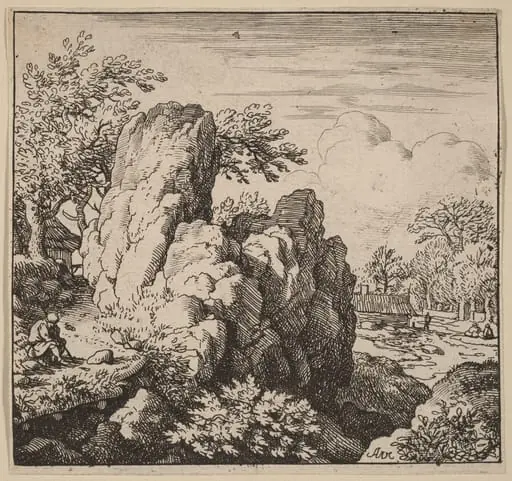 Large Rock
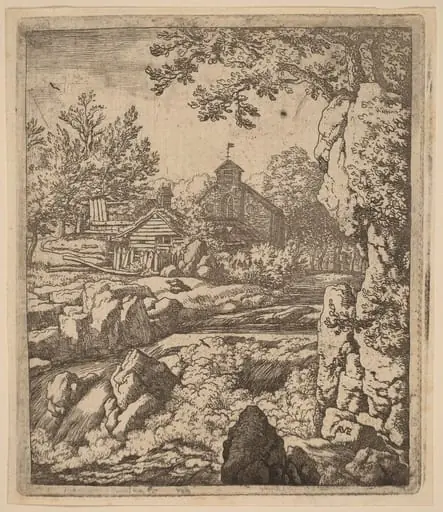 Waterfall
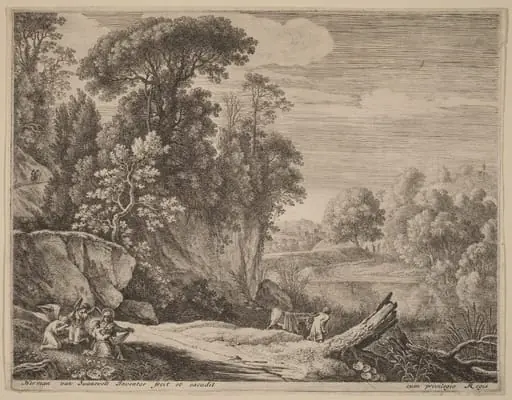 The Donkey Led to the River
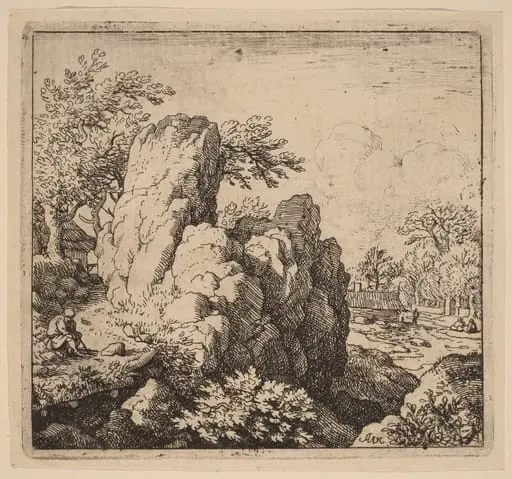 Large Rock
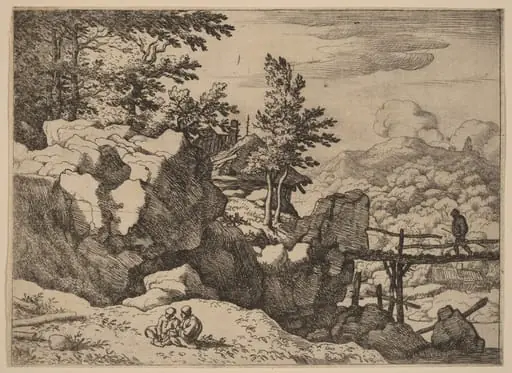 Man on a Small Wooden Bridge
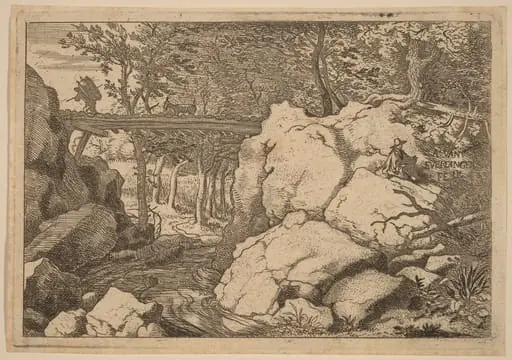 Goat on a small Bridge
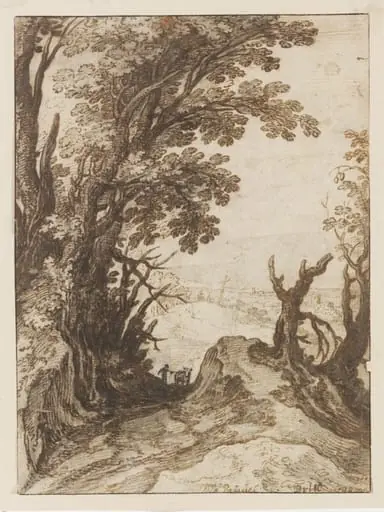 Landscape with a Sunken Road Between Trees Leading Over a Hill
 Swineherd
 Two Peasants Seated on a Hill