Artwork
The Wolf and the Crane
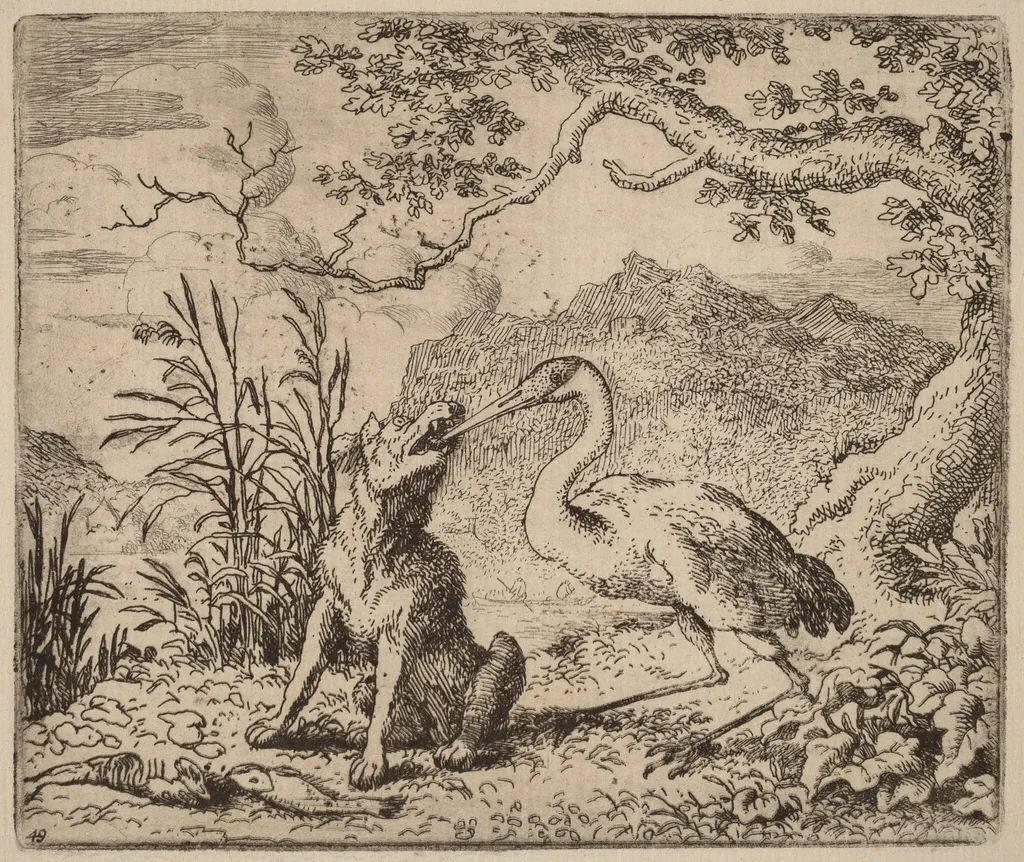
The Wolf and the Crane is an ink print by the Baroque artist Allart van Everdingen. It dates from 1650 and is held in the collection of the National Gallery of Art.
About this work
Overview
Van Everdingen, recognized for his landscape prints and mastery of etching, used the medium to capture a moment of tension between predator and helper.
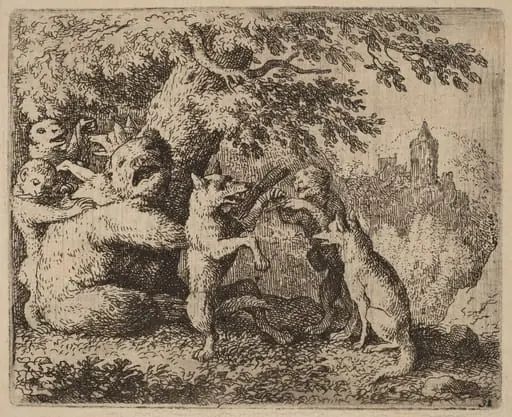
Created around 1650 by Dutch artist Allart van Everdingen, *The Wolf and the Crane* is an etching that illustrates a scene from Aesop’s fable. Van Everdingen, recognized for his landscape prints and mastery of etching, used the medium to capture a moment of tension between predator and helper. The composition centers on a wolf and a crane in a natural setting, rendered with precise line work that defines both form and mood.
Subject & Meaning
The scene depicts the crane attempting to remove a bone from the wolf’s throat, only to be met with ingratitude. The crane, suspended upside down by a stick held in the wolf’s paw, appears vulnerable and trapped. The wolf, standing upright, conveys dominance and menace. The image transforms the fable into a visual allegory of betrayal, emphasizing the peril of aiding those without gratitude.
Technique & Style
Van Everdingen employed fine, controlled etching lines to render textures: the wolf’s coarse fur, the crane’s delicate feathers, and the roughness of rocks and foliage. The background features softly etched hills and distant buildings, creating depth without distraction. The composition’s tight focus on the two figures heightens the narrative tension, while the linear precision reflects the artist’s technical command of the medium.
History & Provenance
The print was produced during the height of the Dutch Golden Age, a period rich in printmaking and moral allegory. Though specific early ownership records are sparse, the work aligns with the era’s interest in fables as didactic subjects. Van Everdingen’s etchings circulated among collectors and artists, contributing to the broader dissemination of narrative imagery in Northern European print culture.
Context
In 17th-century Netherlands, fables were popular subjects in visual art, valued for their moral clarity and accessibility. Van Everdingen’s choice to depict this particular tale reflects a cultural appetite for stories that exposed human failings through animal characters. His landscape sensibility, honed in travels to Scandinavia, informs the atmospheric background, grounding the fable in a recognizable natural world.
Legacy
Though not widely reproduced in modern times, *The Wolf and the Crane* remains a representative example of Dutch narrative printmaking. It demonstrates how traditional fables were adapted into visual form with psychological nuance. Van Everdingen’s approach influenced later artists who sought to merge moral storytelling with detailed naturalism in etched compositions.
Own this work as a print
Artist & collection
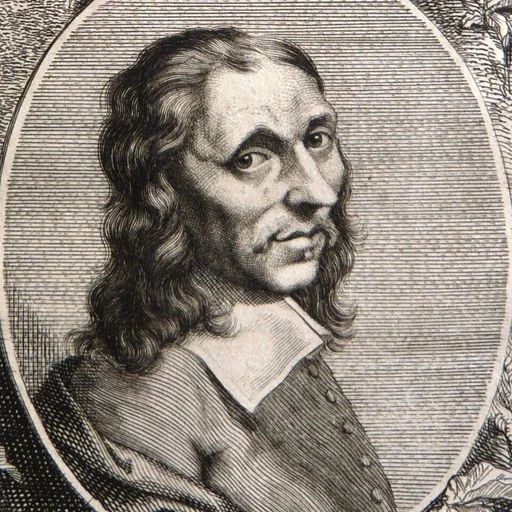
Artist
Allaert van Everdingen (Dutch pronunciation: ; bapt. 18 June 1621 – 8 November 1675 (buried)), was a Dutch Golden Age painter and printmaker in etching and mezzotint.