Artwork
Untitled
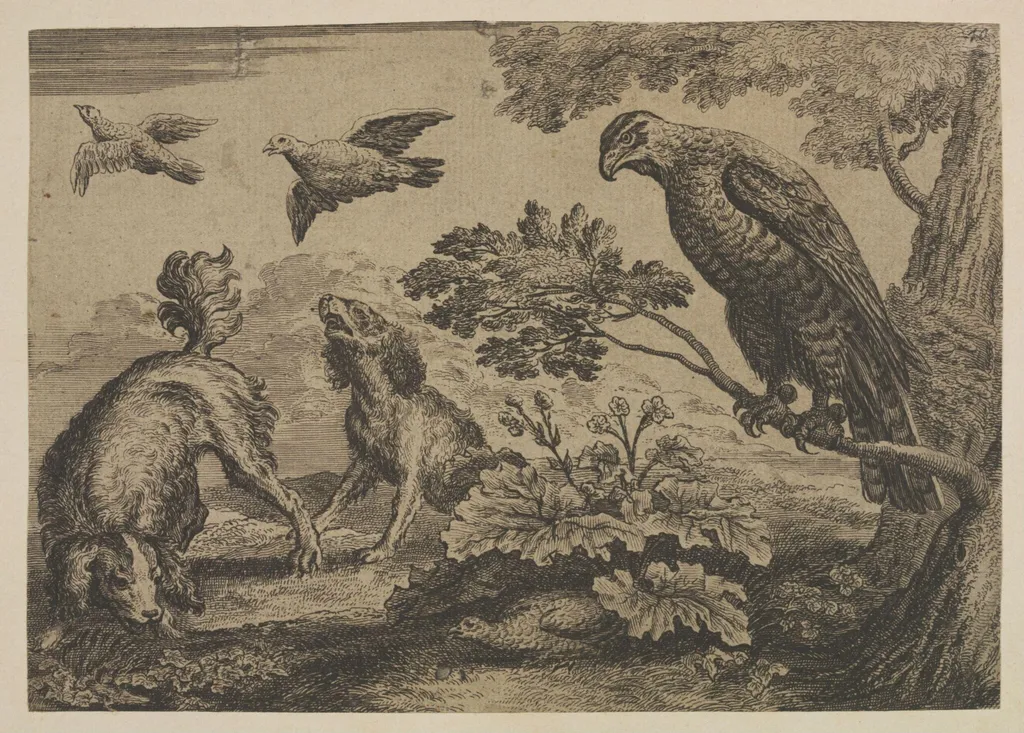
Untitled is a print by Pierce Tempest. It dates from 1650 and is held in the collection of the Victoria and Albert Museum.
About this work
Overview
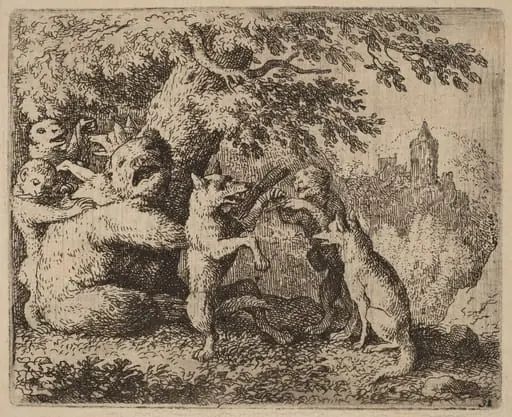
Rendered in monochrome, the scene captures a moment of tension in the natural world: two dogs chase fleeing grouse while a hawk observes from a tree.
This 1650 etching by Pierce Tempest is one of forty plates in Francis Barlow’s *Various Birds and Beasts Drawn from Life*, published by T. Bowles in London. Rendered in monochrome, the scene captures a moment of tension in the natural world: two dogs chase fleeing grouse while a hawk observes from a tree. The composition balances movement and stillness, with subtle gradations of gray defining form and space without color.
Subject & Meaning
The image portrays a hunt in progress, with two grouse in flight, one partially hidden in brush, and a hawk perched above as a silent predator. The dogs, mid-pursuit, convey urgency, while the hawk’s stillness suggests dominance over the scene. The work reflects 17th-century interest in natural behavior, not as allegory but as observed reality, aligning with contemporary scientific curiosity about wildlife.
Technique & Style
Tempest employed fine etching lines to render texture and depth, using cross-hatching and varying line density to model fur, feathers, and foliage. The contrast between light and dark areas enhances spatial depth and dramatic tension. The absence of color focuses attention on form and movement, characteristic of scientific illustration of the period, where precision and clarity took precedence over ornamentation.
History & Provenance
The print was issued as plate 40 in Barlow’s 1650 collection, printed at multiple London sites including St. Paul’s Church Yard and Cornhill. Though attributed to Tempest, the plates were based on Barlow’s original drawings. The work circulated widely as part of a popular natural history series, reflecting the growing market for illustrated natural science among London’s educated classes in the mid-17th century.
Context
Produced during a period of rising interest in empirical observation, the print aligns with the scientific revolution’s emphasis on direct study of nature. Barlow’s series, though commercially published, drew from firsthand sketches and contributed to the visual documentation of British wildlife. Such images bridged art and natural philosophy, serving both aesthetic and educational purposes in an era before photography.
Legacy
Tempest’s etching, though unsigned in the plate, remains a representative example of mid-17th-century English printmaking for natural history. It influenced later illustrators of fauna and helped establish a visual vocabulary for wildlife depiction in printed books. Its survival in institutional collections attests to its role in the transmission of observational knowledge during the early modern period.
Artist & collection

Artist
Pierce Tempest (1653–1717) was an English printseller, best known for the series Cryes of the City of London.

 The Bear Beseeches the Lion for Justice
 The Wolf and the Crane
 Reynard the Fox: The Complaint of the Bear
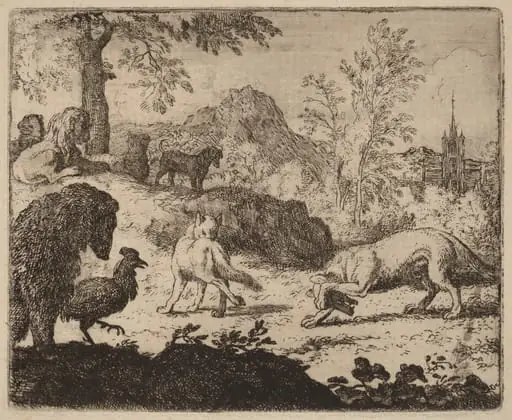 Reynard Blinds the Wolf in One Eye
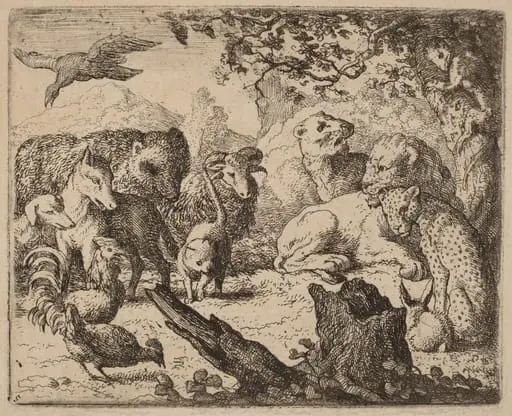 The Lion Announces a Peace
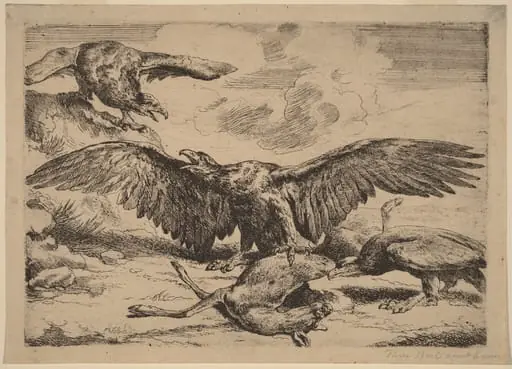 Eagles
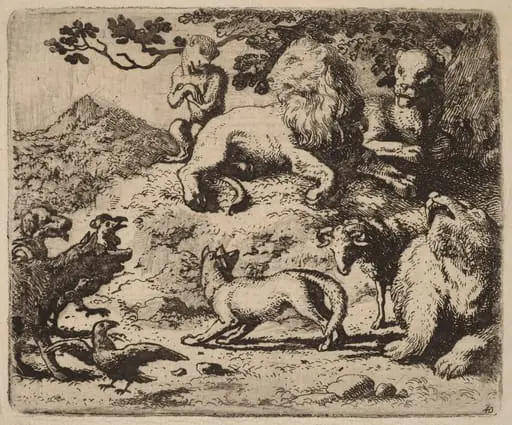 Reynard's Enemies are Dismayed
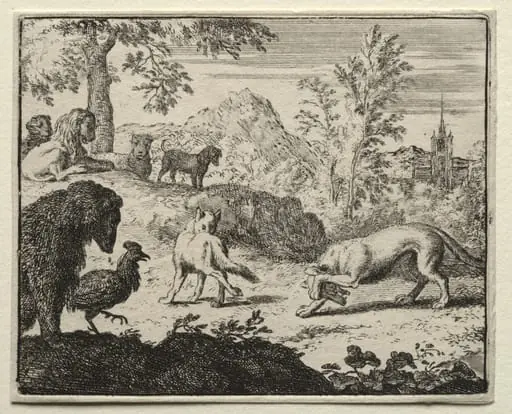 Reynard the Fox: The Combat Between Reynard and the Wolf
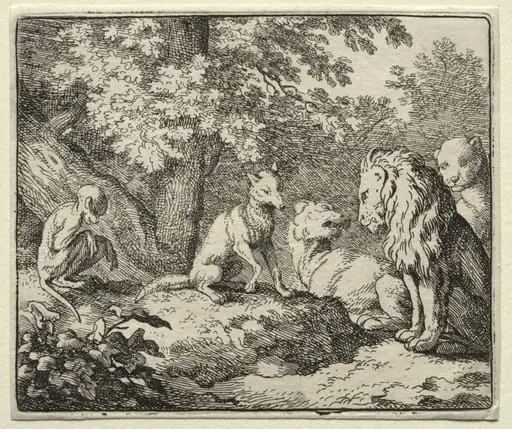 Reynard the Fox: Further False Testimony from Reynard
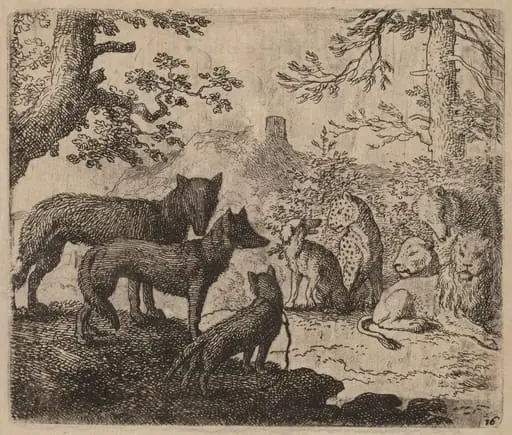 Reynard's Relatives Plead for Him
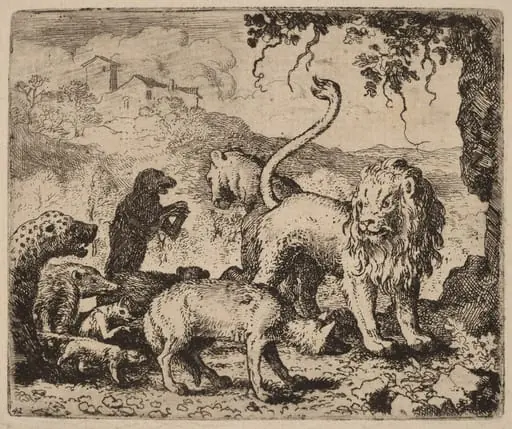 Reynard Accused
 The Bear and the Wolf are Persecuted