Artwork
Three Cottages
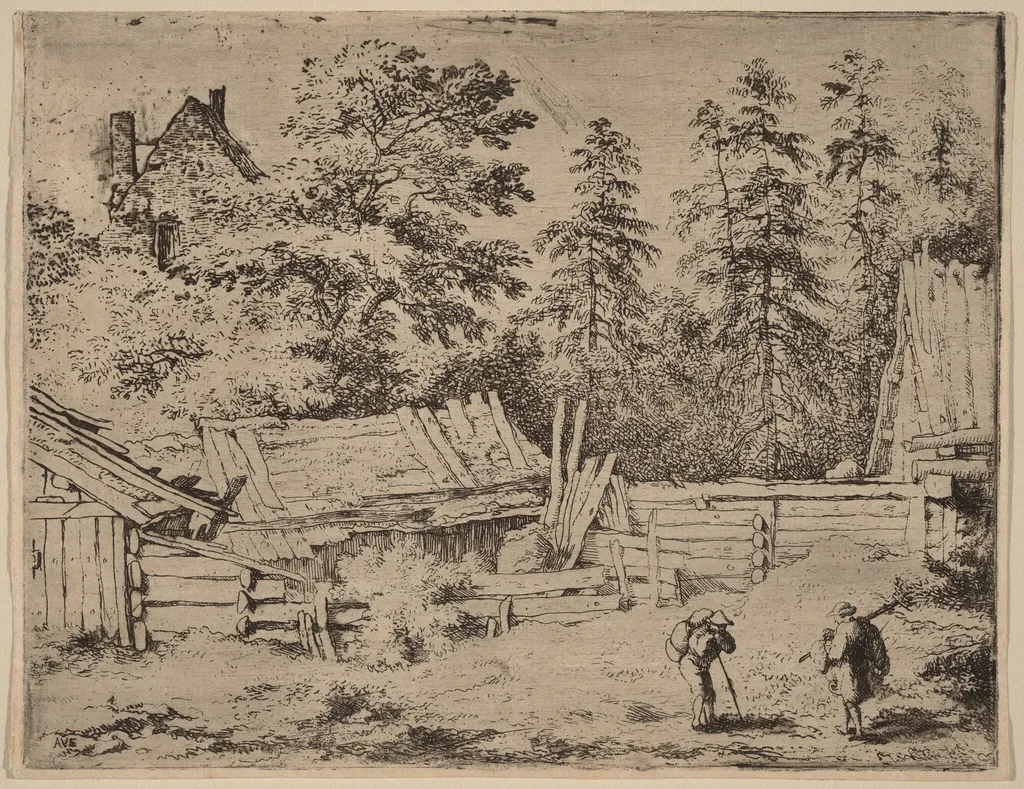
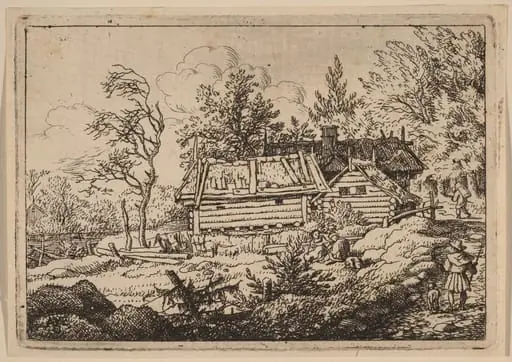
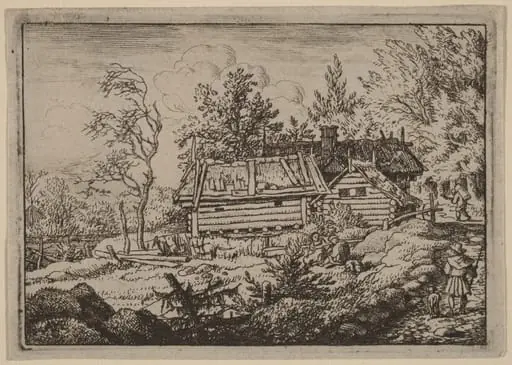
Three Cottages is an ink print by the Baroque artist Allart van Everdingen. It dates from 1650 and is held in the collection of the National Gallery of Art.
About this work
Overview
Created around 1650 by Allart van Everdingen, *Three Cottages* is an etching that captures a quiet rural scene in the Dutch Golden Age.
Created around 1650 by Allart van Everdingen, *Three Cottages* is an etching that captures a quiet rural scene in the Dutch Golden Age. The work belongs to a broader tradition of landscape printmaking, where natural and built environments were rendered with precision and sensitivity to atmosphere. Van Everdingen’s focus on modest architecture and rural life reflects the period’s interest in everyday Dutch scenery.
Subject & Meaning
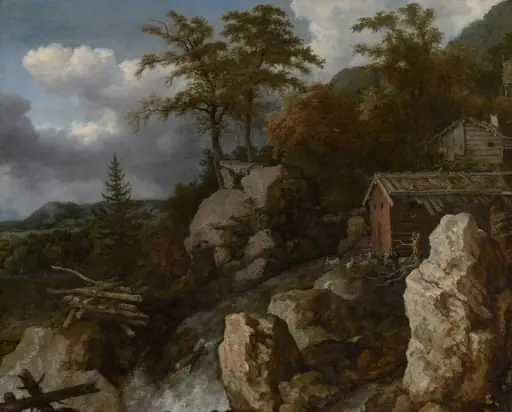
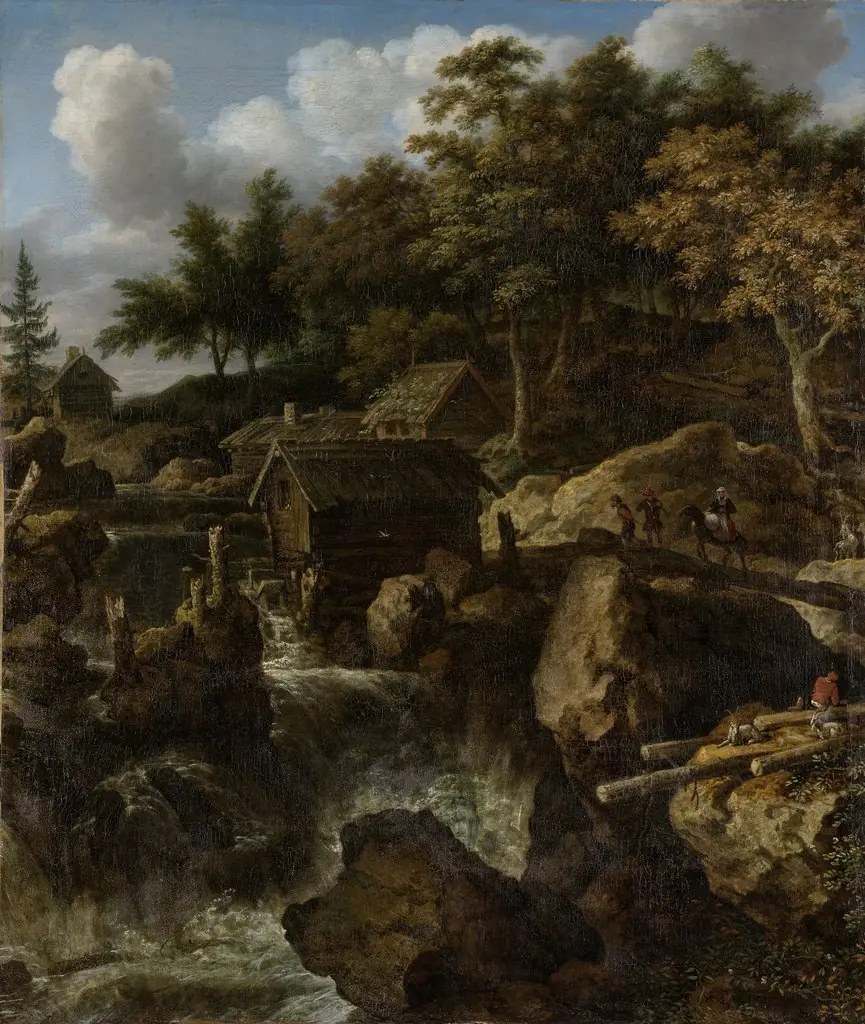
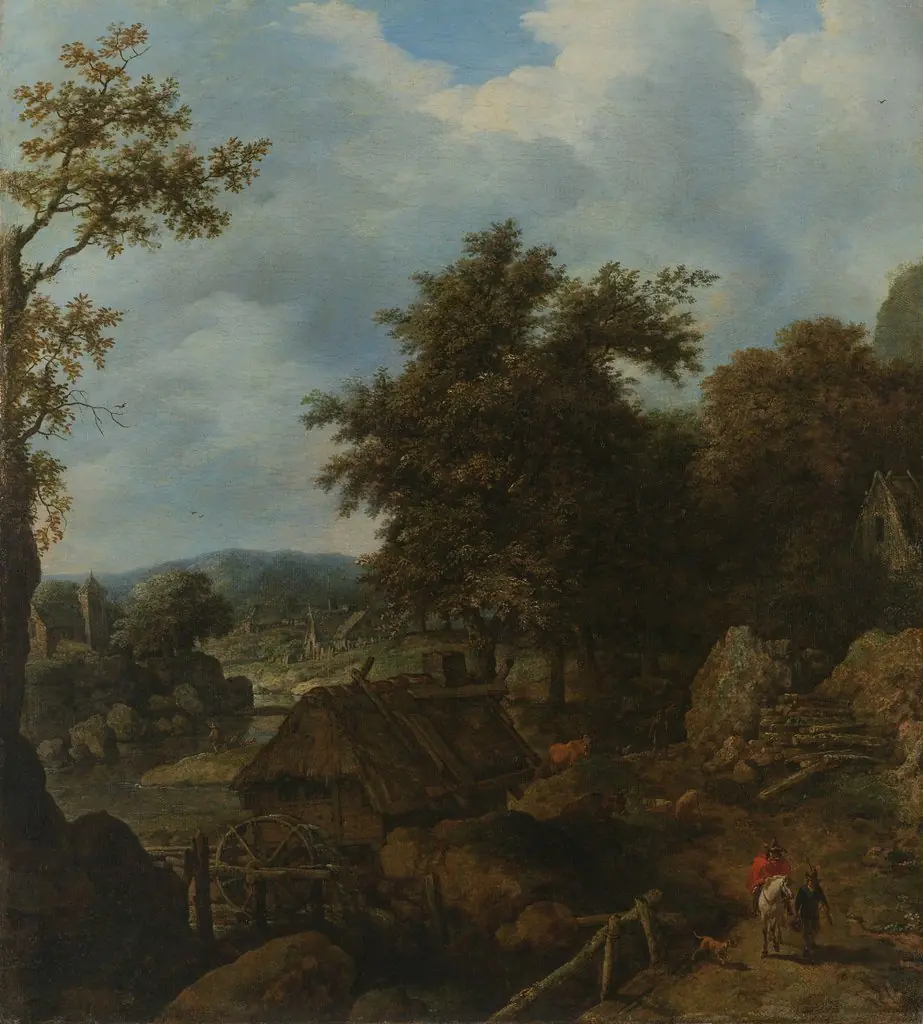
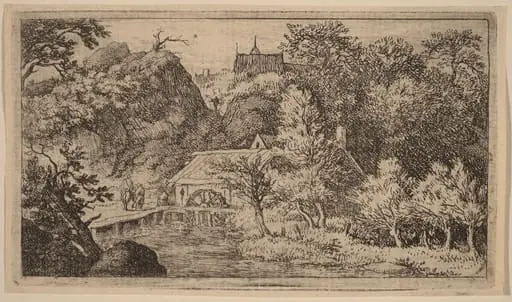
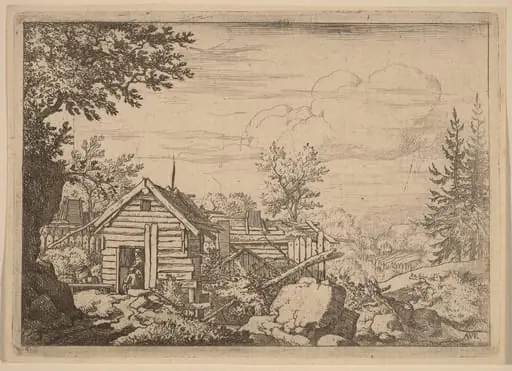
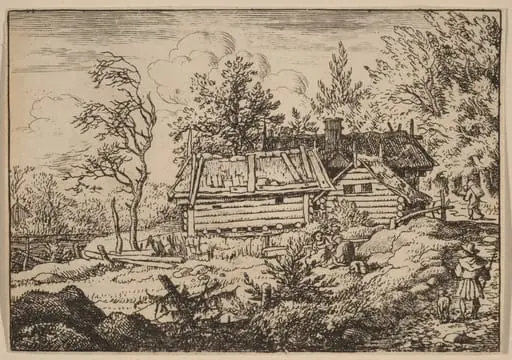
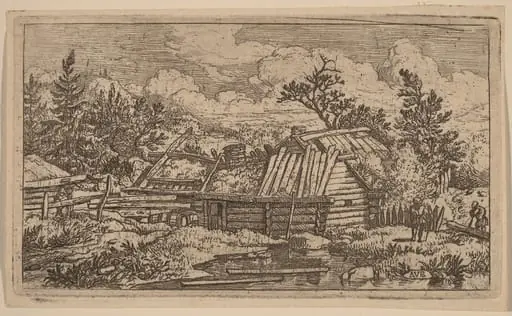
The scene depicts three modest wooden cottages with sloping roofs, nestled against a dense woodland. Two figures, likely laborers, approach carrying tools, suggesting quiet daily routines. The absence of grandeur or narrative drama emphasizes tranquility and the dignity of rural existence. The composition invites contemplation rather than spectacle, aligning with the Dutch preference for understated, truthful depictions of the natural world.
Technique & Style
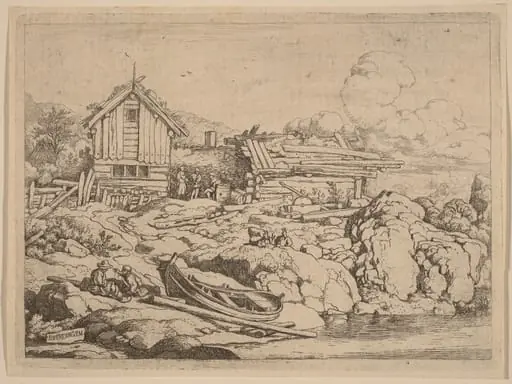
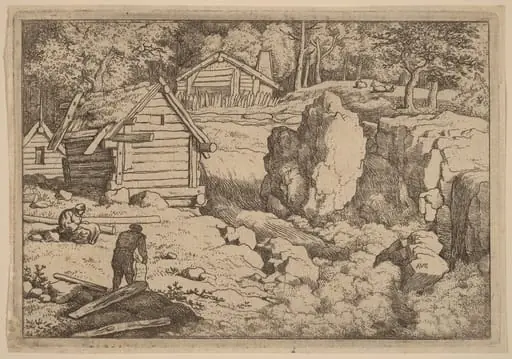
Van Everdingen employed etching to achieve fine linear detail and subtle tonal gradations. The textures of bark, thatch, and earth are rendered with delicate hatching and cross-contour lines, while the forest background recedes through varying ink densities. Light is suggested rather than modeled, enhancing the atmospheric depth. The style is precise yet restrained, avoiding theatricality in favor of observational clarity.
History & Provenance
The print was made during the height of Dutch print culture, when etchings were widely circulated among collectors and artists. Van Everdingen, known for his travels and landscape studies, produced numerous prints that documented rural and wilderness scenes. While the specific early ownership of *Three Cottages* is unrecorded, it aligns with the broader dissemination of Dutch prints in domestic and international collections by the late 17th century.
Context
This work emerged within a flourishing Dutch print market that valued intimate, topographically grounded scenes over mythological or religious themes. Artists like Van Everdingen contributed to a visual culture that celebrated local environments, often influenced by the country’s economic prosperity and rising middle-class taste for domesticated nature. The etching reflects a broader shift toward secular, observational art in the 17th-century Netherlands.
Legacy
Van Everdingen’s etchings, including *Three Cottages*, helped define a genre of landscape printmaking that prioritized quiet realism. His technical approach influenced later generations of printmakers interested in atmospheric depth and naturalistic detail. Though less celebrated than his contemporaries, his work remains a quiet testament to the Dutch Golden Age’s commitment to observing the ordinary with care and precision.
Artist & collection
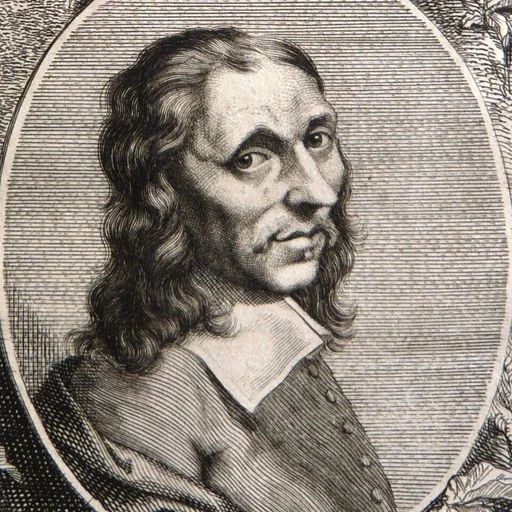
Artist
Allaert van Everdingen (Dutch pronunciation: ; bapt. 18 June 1621 – 8 November 1675 (buried)), was a Dutch Golden Age painter and printmaker in etching and mezzotint.