Artwork
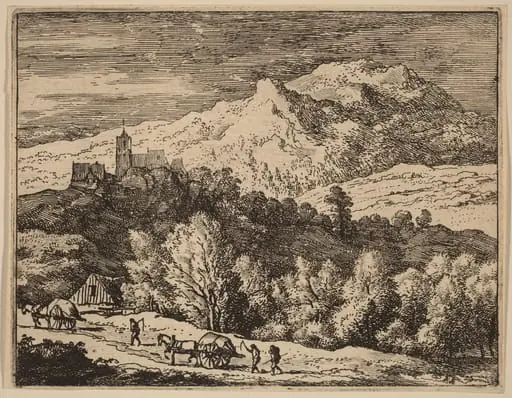
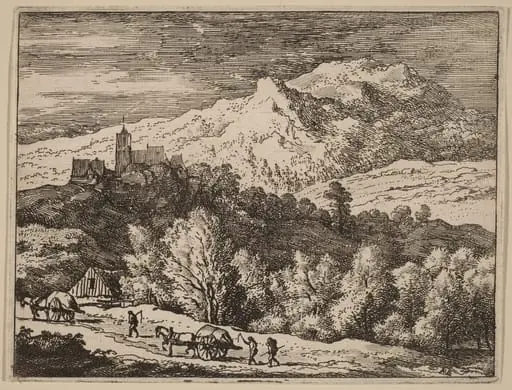
Two Carts
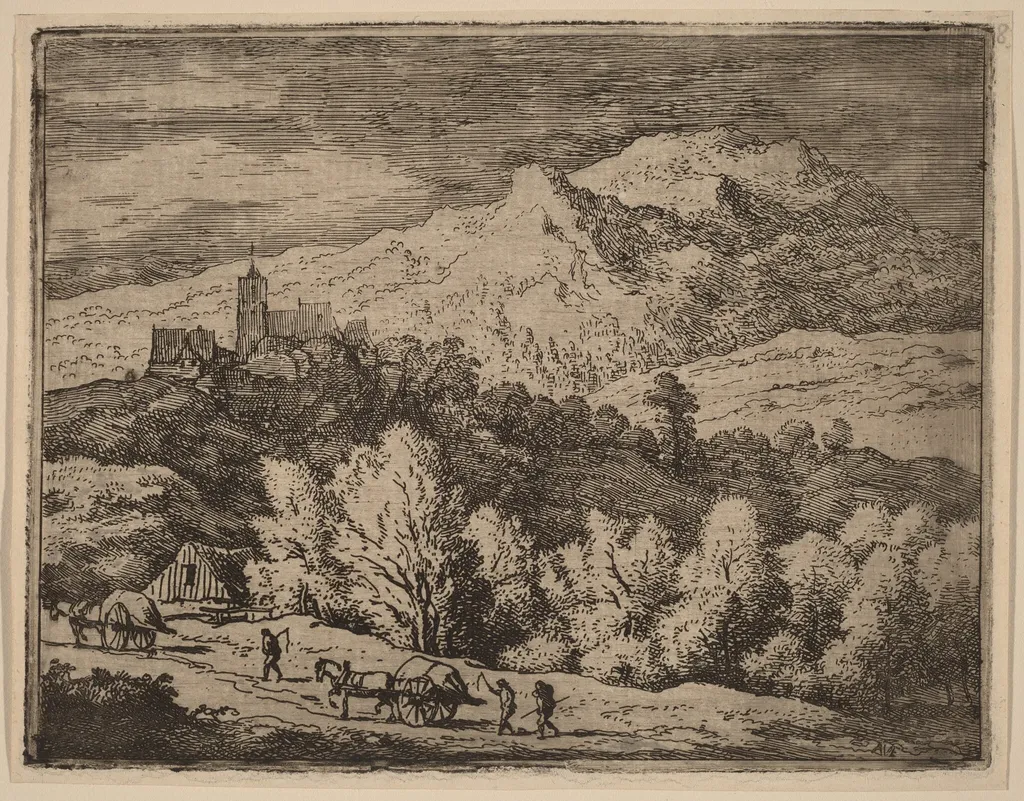
Two Carts is an ink print by the Baroque artist Allart van Everdingen. It dates from 1650 and is held in the collection of the National Gallery of Art.
About this work
Overview
Two Carts is a mid-17th-century etching by Dutch Golden Age artist Everdingen, capturing a serene rural landscape with two horse-drawn carts in the foreground.
Subject & Meaning
The print portrays a tranquil countryside scene with rolling hills, a distant village, and a winding path where two carts, one loaded and one empty, are accompanied by pedestrians. The contrast between the loaded and empty cart may imply a narrative of labor or journey.
Technique & Style
Everdingen utilized etching techniques to achieve detailed textures, rendering trees and grass with a near three-dimensional quality through fine lines. The distant village, featuring a prominent church spire, is subtly integrated into the hilly landscape.
History & Provenance
Created around 1650, the artwork's provenance and specific historical context are not detailed here, though it reflects Everdingen's known expertise in etchings and mezzotints during the Dutch Golden Age.
Context
Within the Dutch Golden Age, *Two Carts* aligns with the period's fascination with everyday life and landscapes. The etching technique, popular during this time, allowed for detailed, mass-producible works like this.
Legacy
While specific influence or legacy of *Two Carts* is not outlined, Everdingen's body of work, including this piece, contributes to the broader appreciation of Dutch Golden Age printmaking and its attention to quotidian rural life.
Own this work as a print
Artist & collection
Artist
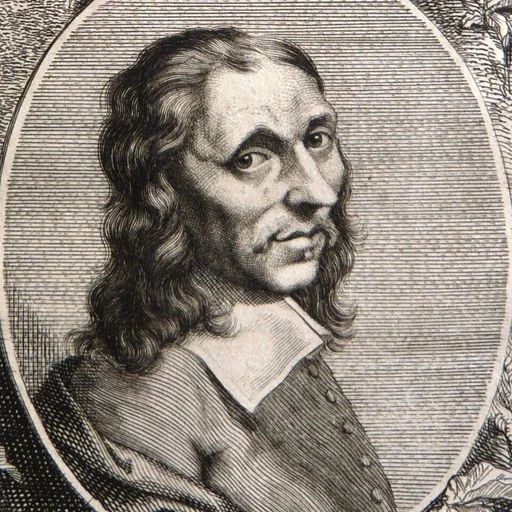
Allaert van Everdingen (Dutch pronunciation: ; bapt. 18 June 1621 – 8 November 1675 (buried)), was a Dutch Golden Age painter and printmaker in etching and mezzotint.