Artwork
Two Carts
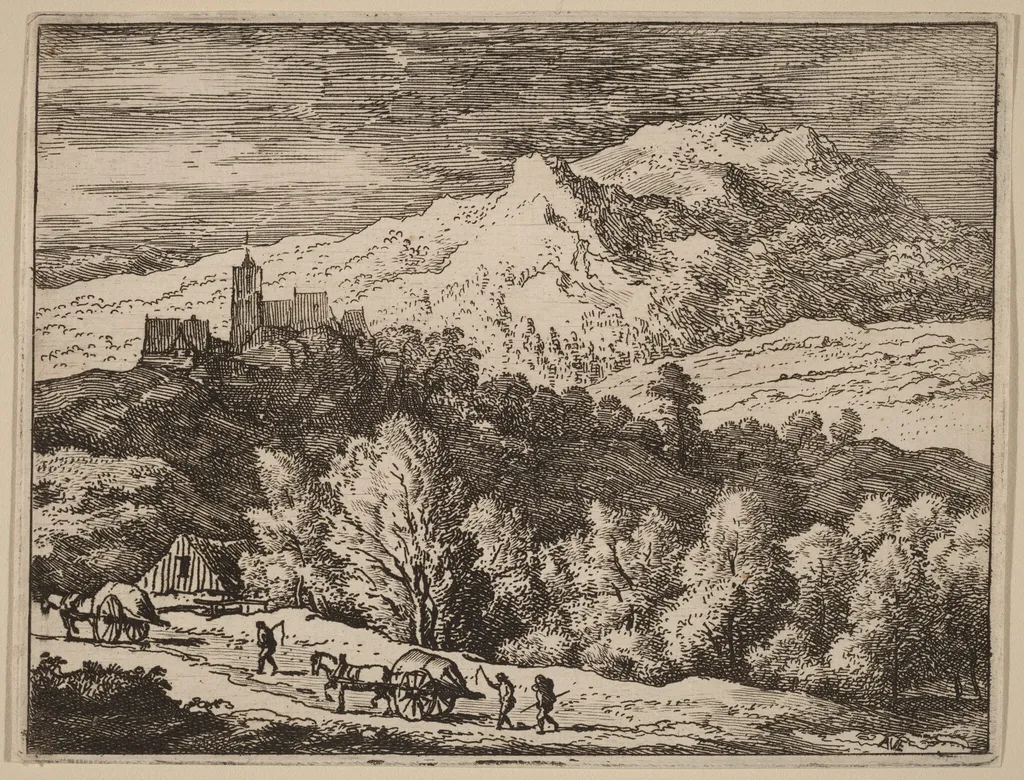
Two Carts is an ink print by the Baroque artist Allart van Everdingen. It dates from 1650 and is held in the collection of the National Gallery of Art.
About this work
Overview
The technique combines the fluidity of etching with the sharper definition of engraving, allowing for nuanced texture and depth.
Created around 1650, *Two Carts* is an etching with engraving by the Dutch artist Allart van Everdingen. It belongs to a body of work in which he refined his skill in printmaking during the Dutch Golden Age. The image captures a rural scene with quiet precision, emphasizing natural elements over human activity. The technique combines the fluidity of etching with the sharper definition of engraving, allowing for nuanced texture and depth.
Subject & Meaning
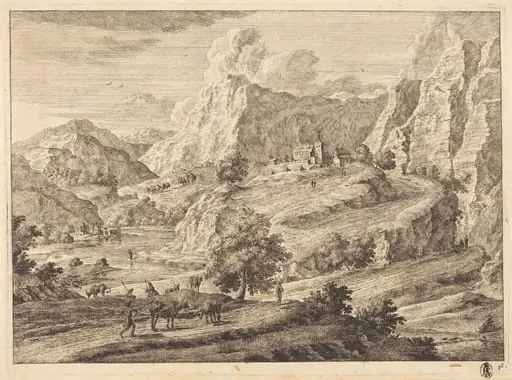
The scene depicts two carts on a country road: one laden with hay, drawn by a horse, and accompanied by a pedestrian; the other, led by a figure guiding a cow. Behind them, a church spire rises above a modest village, framed by trees and rolling hills. A winding river recedes into the distance. The composition suggests a moment of ordinary rural life, neither idealized nor dramatic, reflecting a quiet appreciation for the Dutch landscape and its rhythms.
Technique & Style
Everdingen employed etching to render soft, flowing lines in the sky and foliage, while engraving added sharper contours to figures and structural details. Fine cross-hatching defines the texture of tree bark and the granular quality of the earth. The delicate handling of atmospheric perspective, with lighter tones in the distance, enhances spatial depth. His technique prioritizes subtle tonal variation over bold contrast, characteristic of his mature printmaking style.
History & Provenance
The print was produced during Everdingen’s most active period in printmaking, following his travels through Scandinavia and the Rhineland, which influenced his landscape sensibility. While specific early ownership records are sparse, the work appears in several 17th- and 18th-century Dutch collections. It was widely circulated among collectors and artists, contributing to his reputation as a printmaker of refined topographical detail.
Context
In mid-17th-century Holland, landscape prints were popular among the urban middle class, who valued depictions of the countryside as symbols of stability and national identity. Everdingen’s work aligned with this trend, though his focus on quiet, unembellished scenes set him apart from more theatrical contemporaries. His prints were studied by other artists for their naturalistic treatment of light and terrain.
Legacy
Everdingen’s *Two Carts* exemplifies the quiet realism that defined his contribution to Dutch printmaking. Though less celebrated than some peers, his careful rendering of landscape and technique influenced later generations of printmakers interested in naturalism. The work remains in institutional collections as a representative example of mid-century Dutch etching, valued for its restraint and technical clarity.
Own this work as a print
Artist & collection
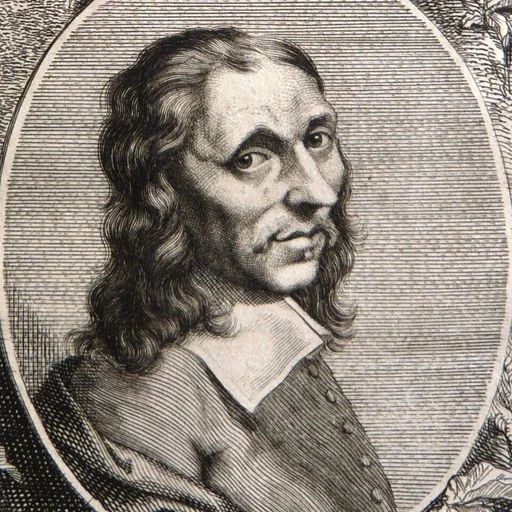
Artist
Allaert van Everdingen (Dutch pronunciation: ; bapt. 18 June 1621 – 8 November 1675 (buried)), was a Dutch Golden Age painter and printmaker in etching and mezzotint.