Artwork
Sir Frank Robert Benson
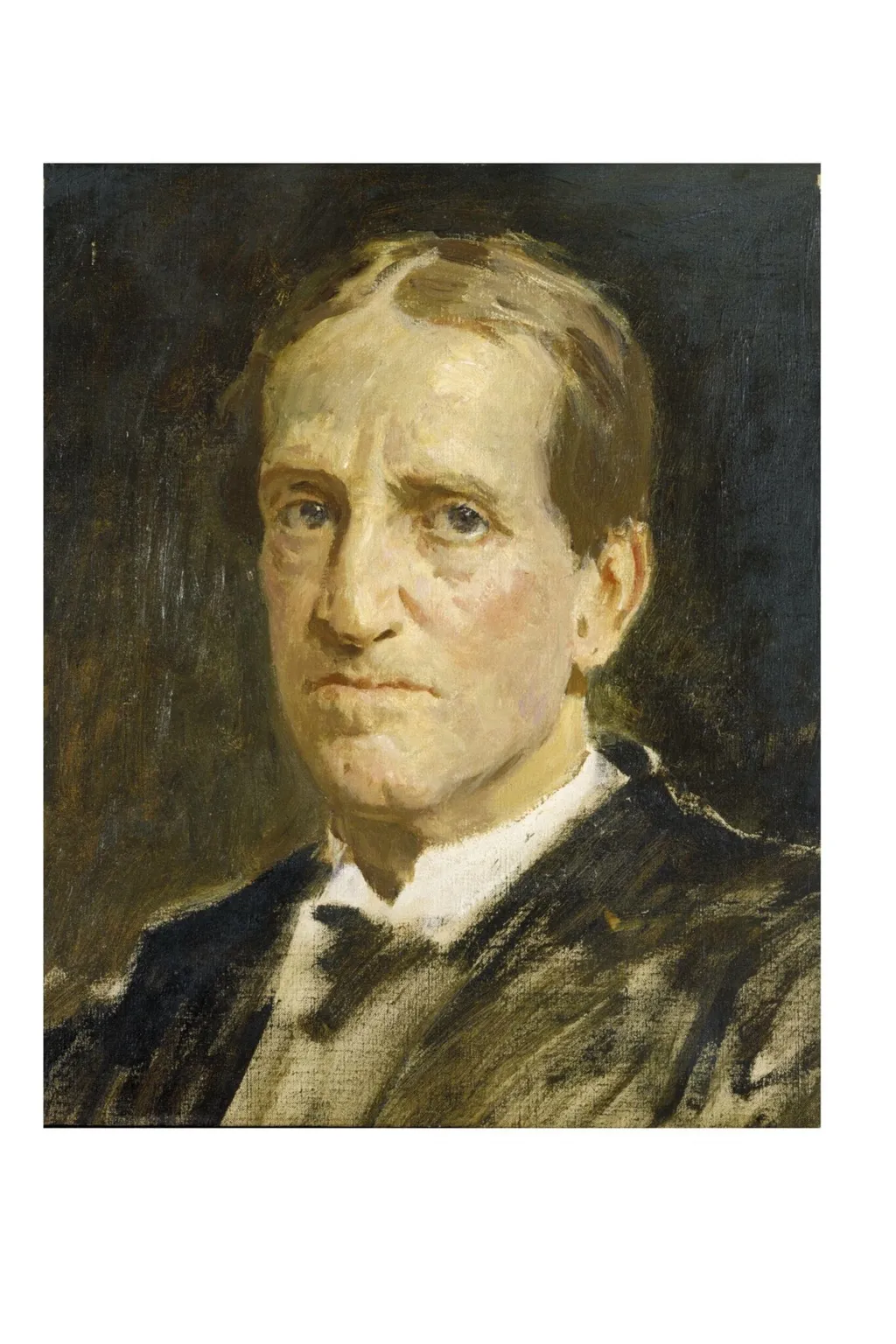
Sir Frank Robert Benson is a paint painting by the British Romanticist artist Reginald Grenville Eves. It dates from 1927 and is held in the collection of the Victoria and Albert Museum.
About this work
If you like this style, check out portraits by John Singer Sargent at the Victoria and Albert Museum.
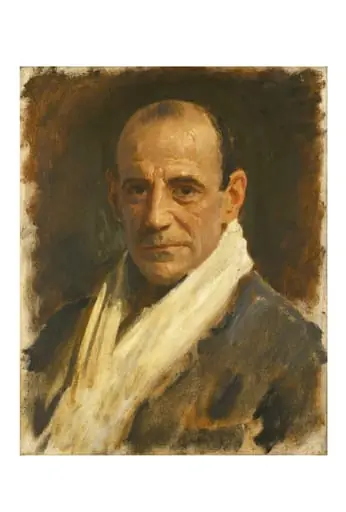
Frank Benson sits in a chair. He wears a velvet jacket and stares right at you. The light catches his face and hands. His suit looks soft and dark.
Reginald Grenville Eves painted this in 1927. Benson was a famous Shakespeare actor. The brushwork is loose but sharp. You can almost see the fabric’s weave.
If you like this style, check out portraits by John Singer Sargent at the Victoria and Albert Museum.
Overview
Painted in 1927 by Reginald Grenville Eves, this portrait captures Sir Frank Benson, a leading figure in late 19th- and early 20th-century British theatre. He is depicted seated, dressed in a dark velvet jacket, gazing directly at the viewer. The composition emphasizes his presence through controlled lighting and textured brushwork, reflecting both his stature and the quiet intensity of a man long associated with the stage.
Subject & Meaning
Frank Benson was renowned for his dedication to Shakespearean performance, leading a company that staged the complete canon over two decades. The portrait, made near the end of his life, conveys a sense of quiet authority rather than theatrical flourish. His direct gaze and still posture suggest a man reflecting on a career defined by textual fidelity and disciplined artistry, not spectacle.
Technique & Style
Eves employed loose yet precise brushwork to render the fabric of Benson’s jacket, allowing the weave to suggest texture without overt detail. Light falls deliberately across the face and hands, drawing attention to expression and gesture. The style echoes the tonal sensitivity of late Victorian portraiture, balancing realism with an impressionistic handling of surface and shadow.
History & Provenance
Commissioned in 1927, the portrait was created during Benson’s retirement, seven years after his knighthood following a performance of Julius Caesar at Drury Lane. It was painted by Reginald Grenville Eves, a respected portraitist known for his work with cultural figures. The painting remains in private hands, with no public record of institutional acquisition.
Context
Benson’s career coincided with a period when Shakespeare was central to British cultural identity. His annual seasons at Stratford-upon-Avon helped establish the town as a theatrical pilgrimage site. Unlike contemporaries who embraced modernist staging, Benson favored traditional interpretations, making him a bridge between 19th-century acting conventions and the evolving theatre of the 20th century.
Legacy
Though less remembered today than some of his peers, Benson’s influence endured through his company’s training practices and his role in institutionalizing Shakespeare performance in Britain. The portrait stands as a quiet testament to a life devoted to textual integrity and theatrical discipline, capturing a figure whose impact was felt more in practice than in public acclaim.
Artist & collection
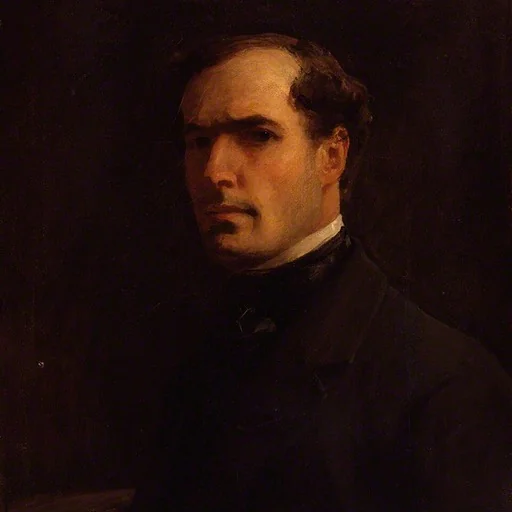
Artist
Reginald Grenville Eves (24 May 1876 – 13 June 1941) was a British painter who made portraits of many prominent military, political and cultural figures between the two world wars.

 Edward Guthrie Kennedy
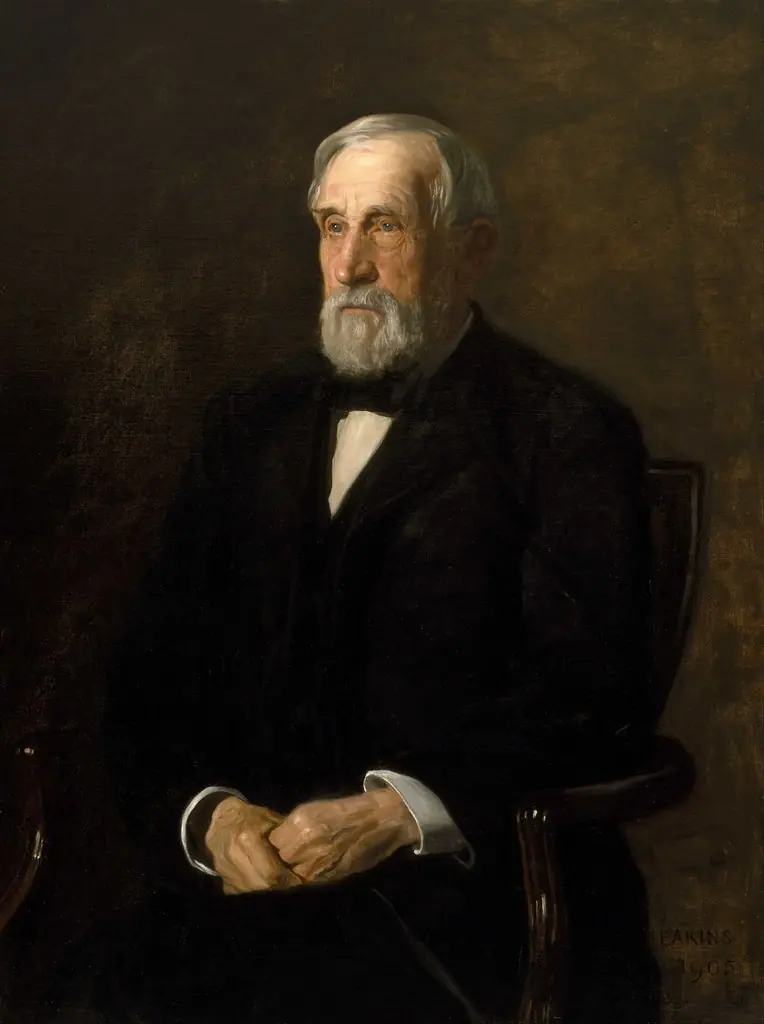 Portrait of John B. Gest
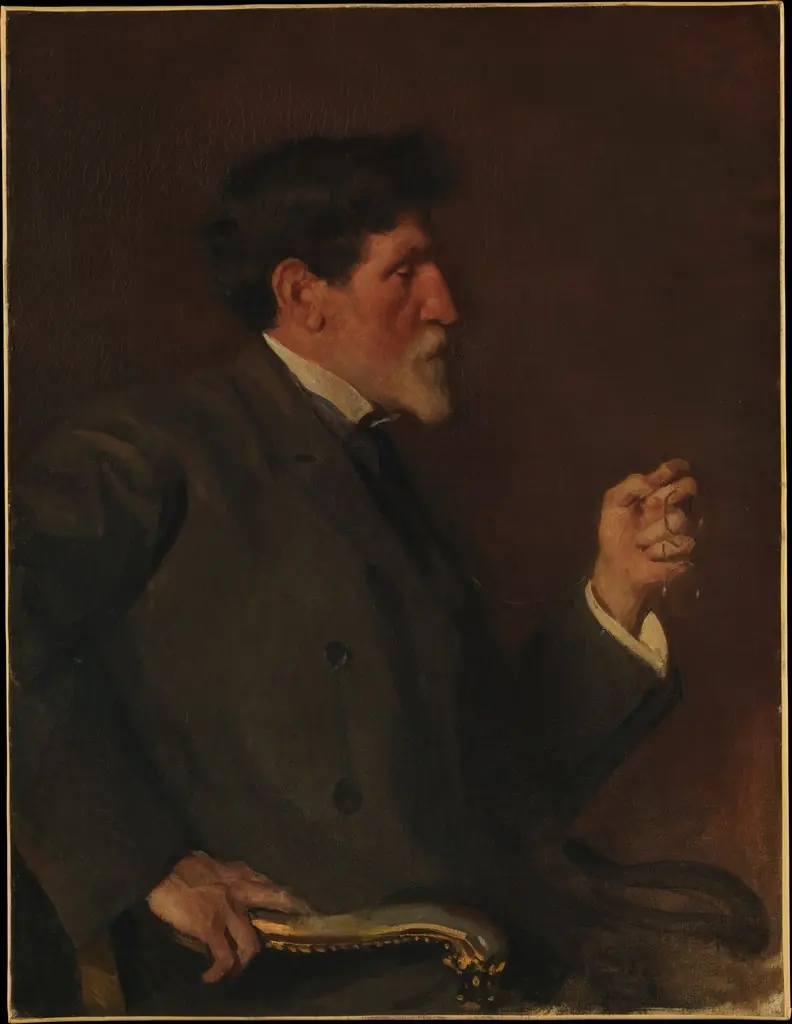 Portrait of Augustus Saint-Gaudens
 Dudley Williams
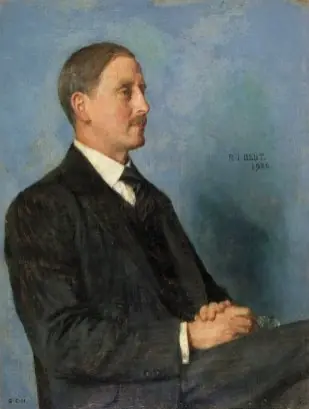 Portrait of Richard Irivine Best (1872-1959), Scholar
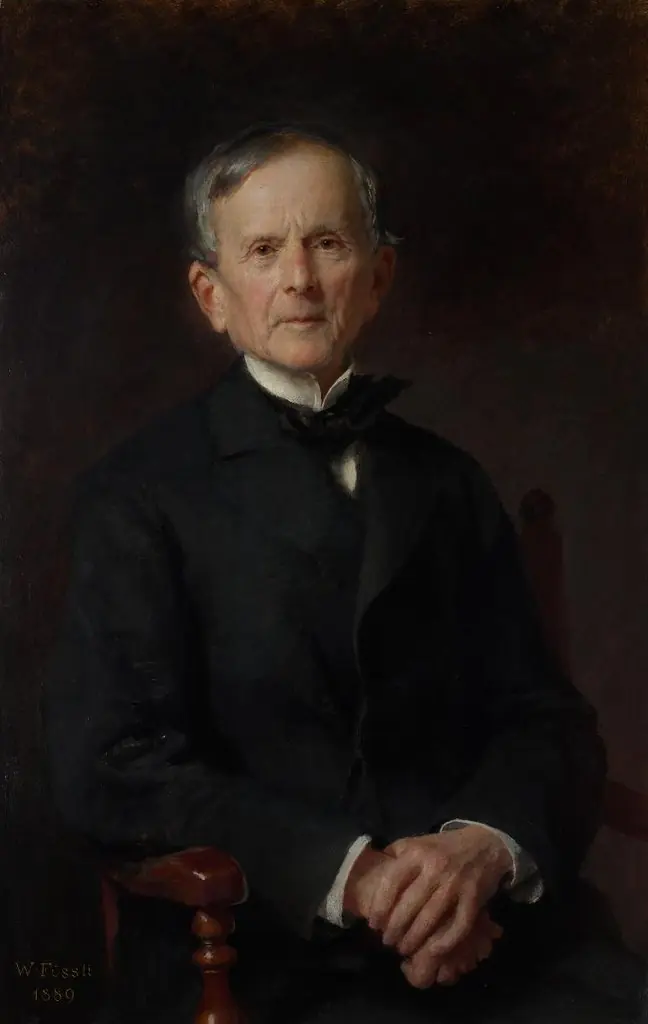 Bildnis Emil Tobler-Finsler
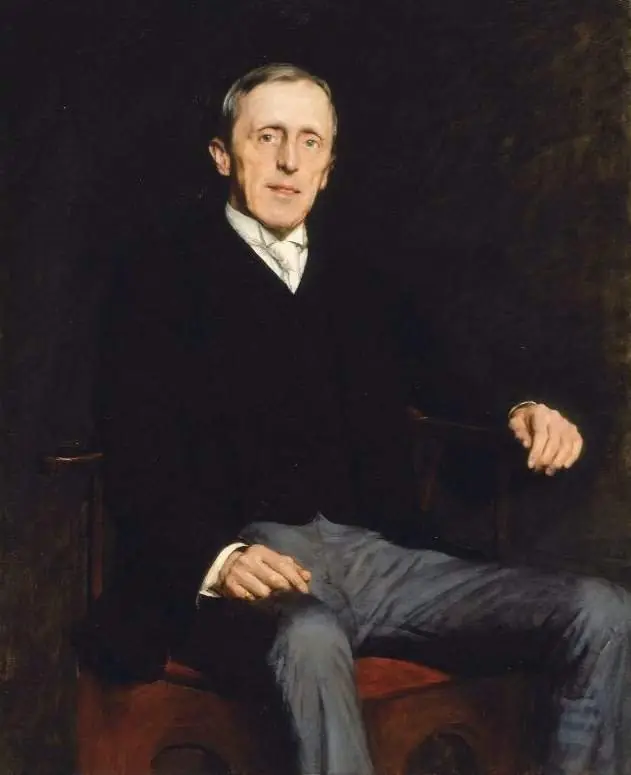 George Augustus Gardner
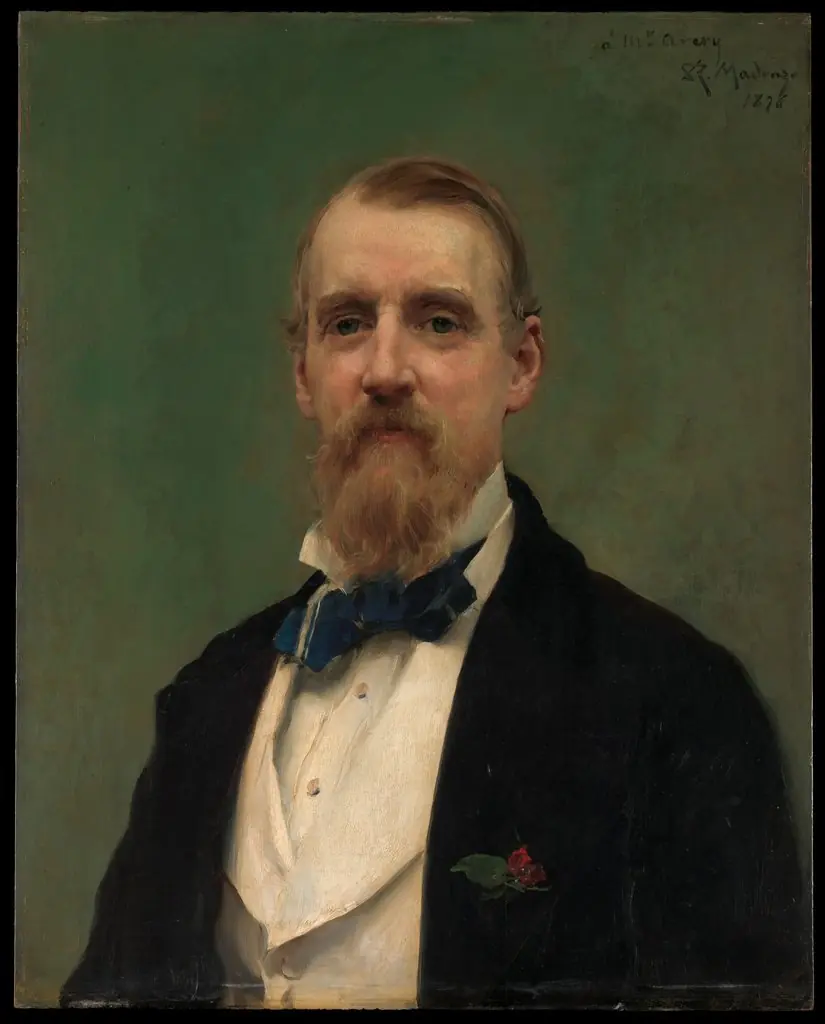 Samuel P. Avery (1822–1904)
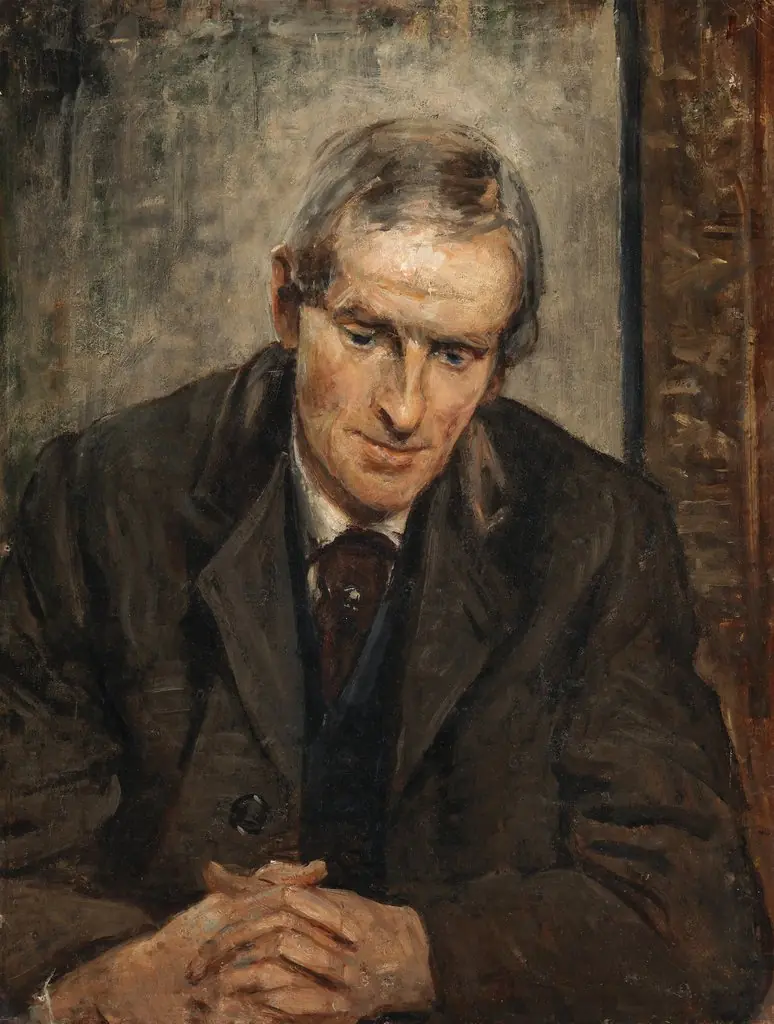 Portrait of Jack B. Yeats (1871-1957)
 Portrait of James Joyce (1882-1941), Author
 Portrait of William Rolleston
 Portrait of Sir Hugh Lane (1865-1915), Director of the National Gallery of Ireland 1914-1915