Artwork
Untitled
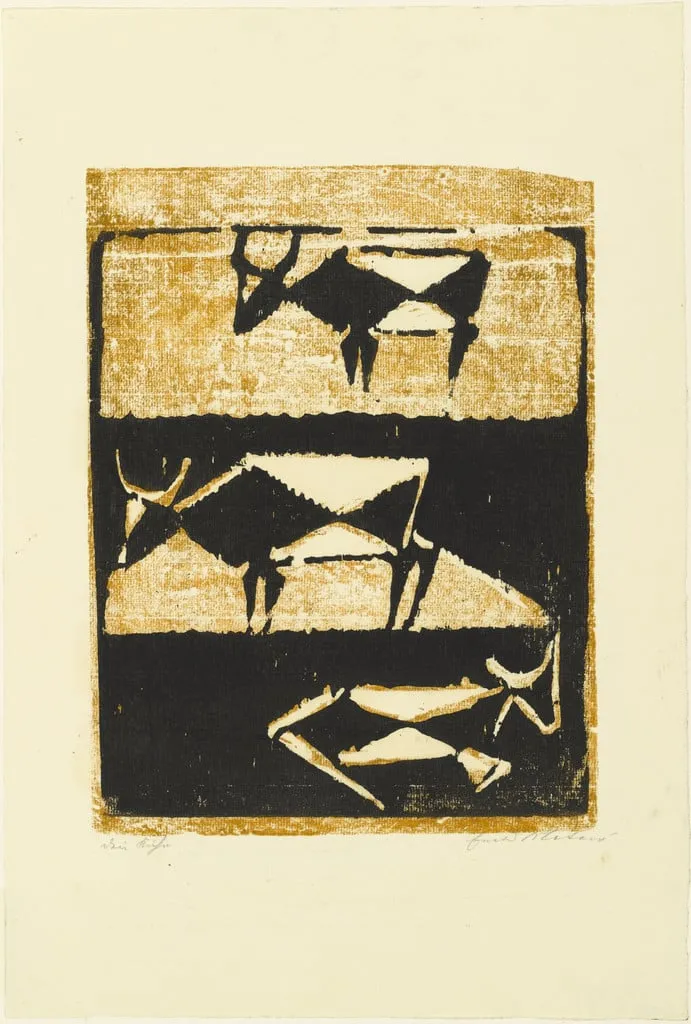
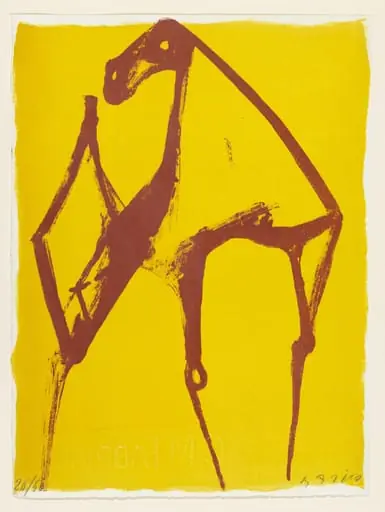
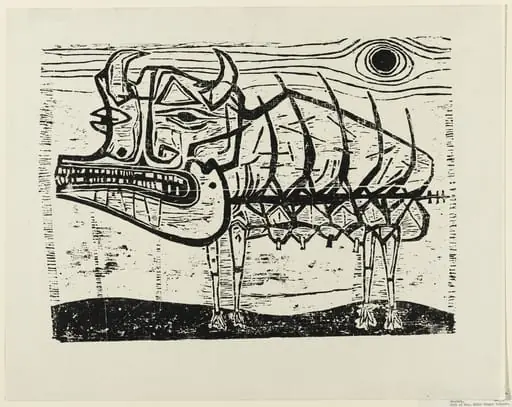
Untitled is an ink print by Ewald Mataré. It dates from 1947 and is held in the collection of the Museum of Modern Art.
About this work
Overview
The composition is stark, with minimal detail and no background elements beyond the contrast between dark ink and the paper’s natural tone.
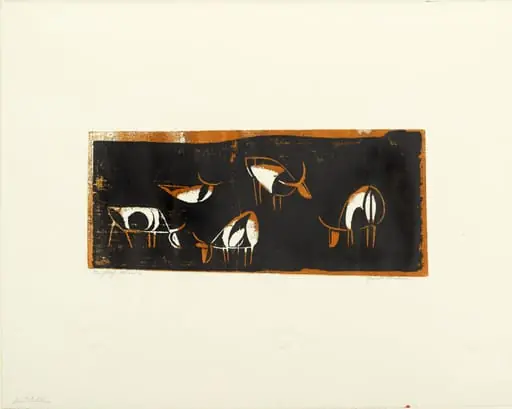
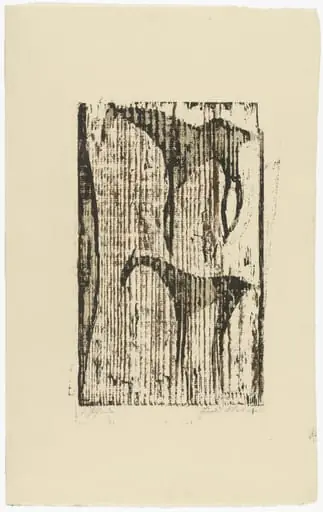
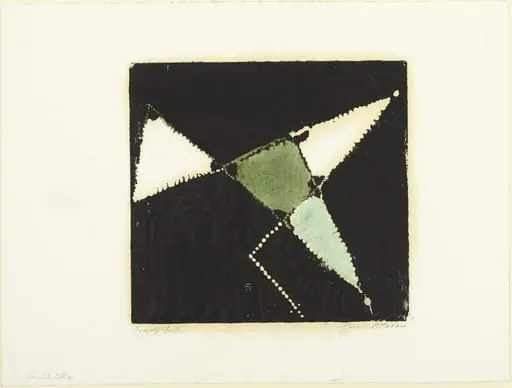
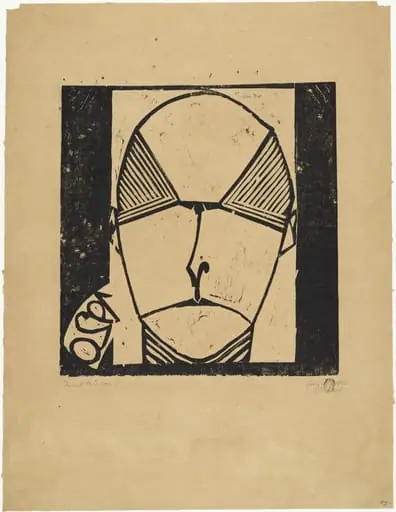
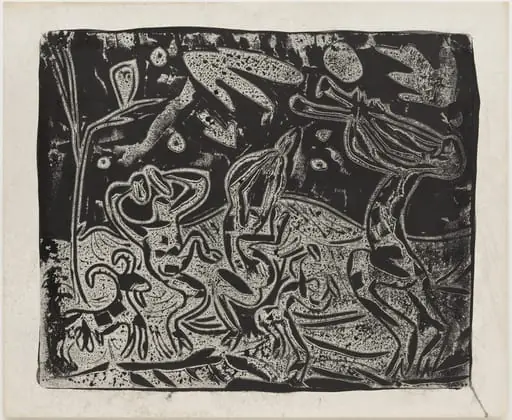
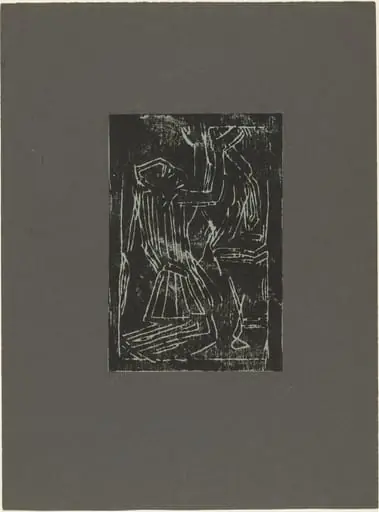
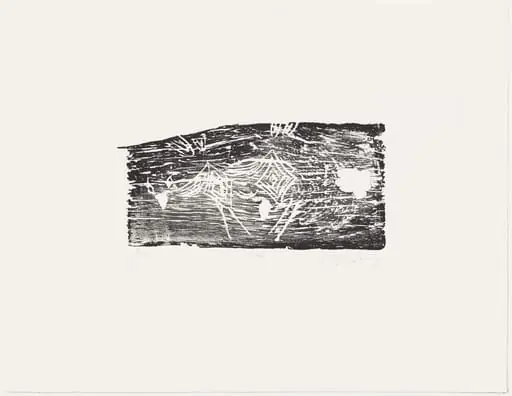
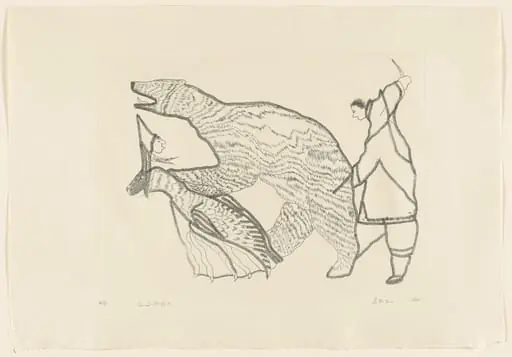
Created in 1947, this woodcut by Ewald Mataré is part of The Museum of Modern Art’s collection. The work is a black-and-white print characterized by its coarse, carved lines and simplified forms. It depicts four animals arranged vertically, rendered with a deliberate roughness that emphasizes the materiality of the woodcut process. The composition is stark, with minimal detail and no background elements beyond the contrast between dark ink and the paper’s natural tone.
Subject & Meaning
The image presents two deer at the top and bottom, distinguished by their antlers, and two cows in the center, identifiable by their horns and udders. The animals are arranged symmetrically, suggesting a ritualistic or symbolic grouping rather than a naturalistic scene. Their stylized forms evoke a sense of primal presence, possibly reflecting postwar German concerns with nature, memory, and renewal. The lack of context or environment isolates the figures, inviting contemplation of their symbolic weight.
Technique & Style
Mataré employed traditional woodcut methods, carving directly into the block to create bold, angular forms. The texture arises from the grain of the wood and the tool marks left visible in the print. Lines are thick and uneven, avoiding smooth contours in favor of fractured edges. The palette is restricted to monochrome, enhancing the graphic intensity. This approach aligns with Expressionist traditions, prioritizing emotional resonance over realism.
History & Provenance
The work was produced in 1947, during Mataré’s return to artistic practice after the Nazi regime’s suppression of modern art. It entered The Museum of Modern Art’s collection in the late 1940s, part of a broader effort to document European postwar expression. The print’s survival and acquisition reflect its significance as a quiet but forceful statement of artistic resilience in the aftermath of cultural censorship.
Context
Mataré’s work emerged in a Germany grappling with destruction and moral reckoning. His animal imagery drew from pre-Christian symbolism and folk traditions, offering a counterpoint to industrial modernity. Unlike many contemporaries who embraced abstraction, Mataré retained figuration but stripped it to essentials. This woodcut reflects a broader European trend of returning to primal forms as a means of cultural reorientation after war.
Legacy
Though less widely known than some of his peers, Mataré’s woodcuts influenced later generations of German printmakers who valued material honesty and symbolic restraint. His focus on animals as carriers of cultural memory resonated in postwar art that sought meaning beyond political rhetoric. This piece remains a quiet example of how traditional techniques could convey profound emotional and historical weight without overt narrative.
Artist & collection

Artist
Ewald Wilhelm Hubert Mataré was a German painter and sculptor, who dealt with, among other things, the figures of men and animals in a stylized form.