Artwork
Untitled
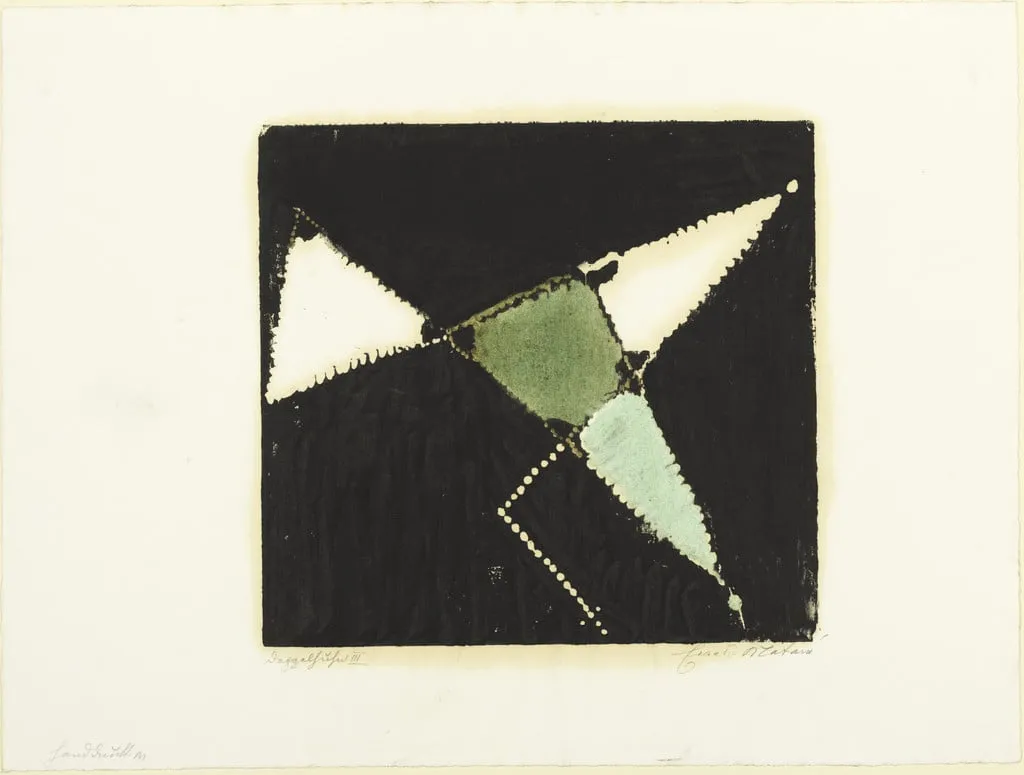
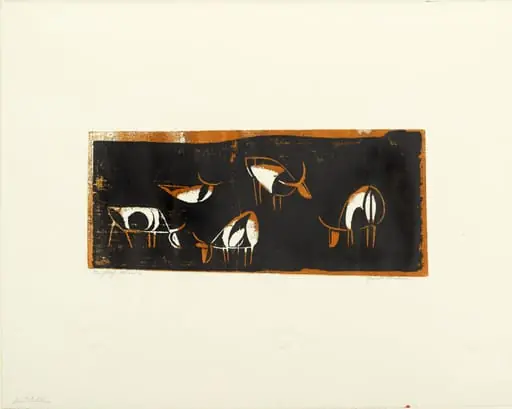
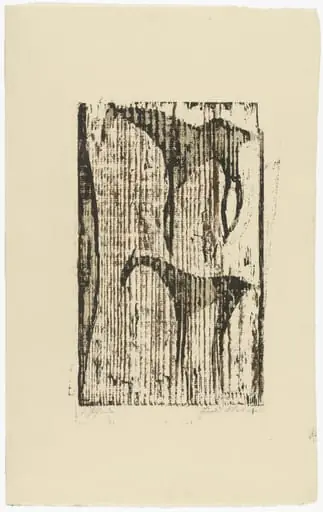
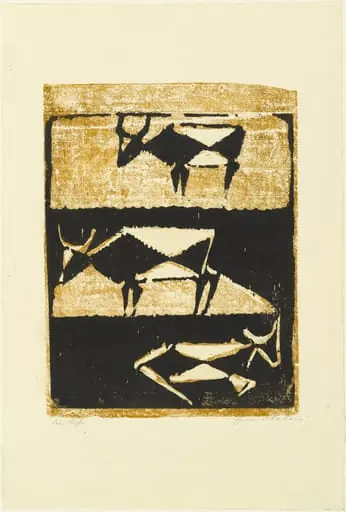
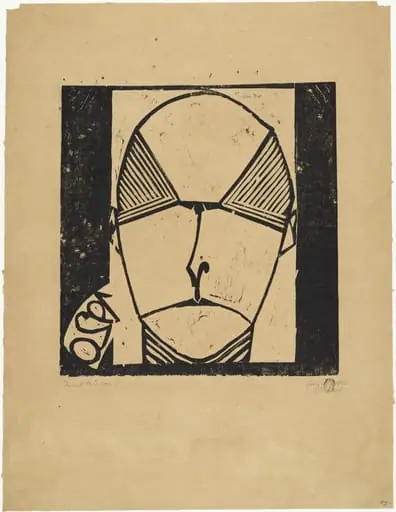
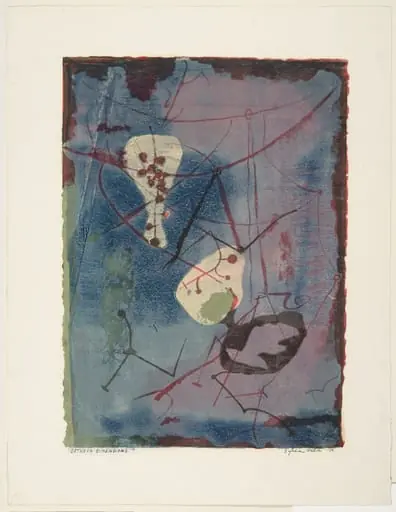
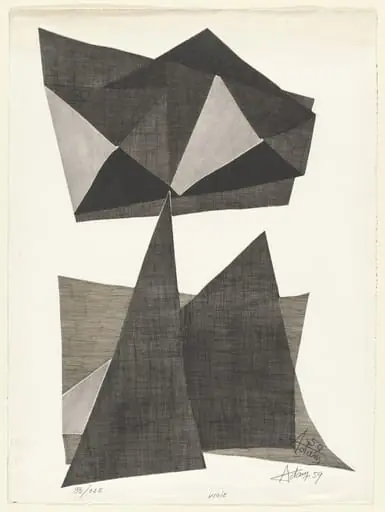
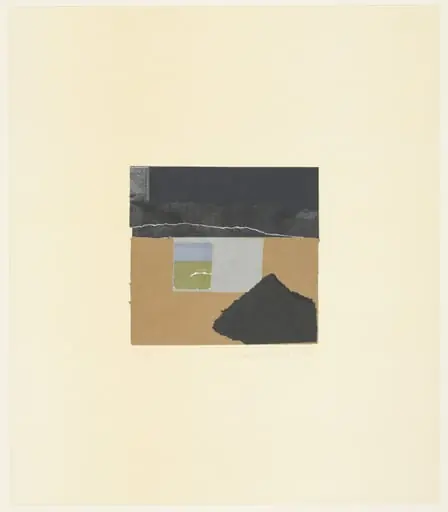
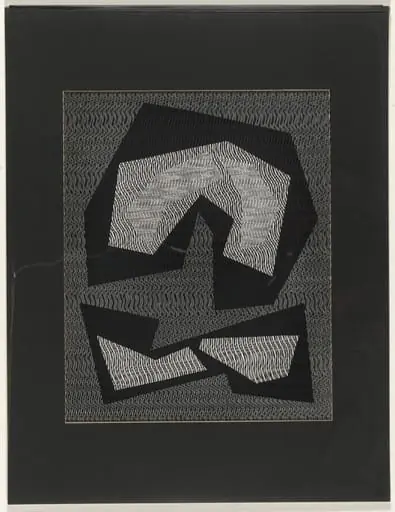
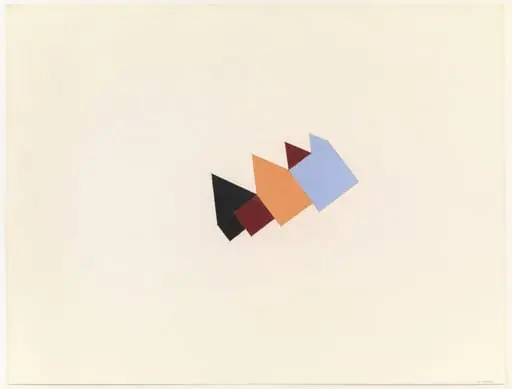
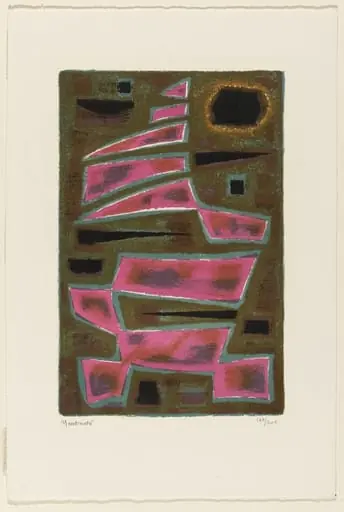
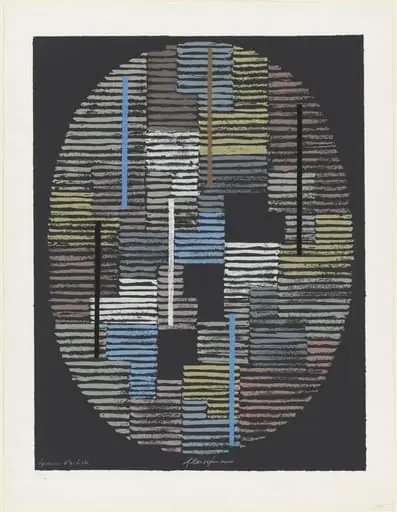
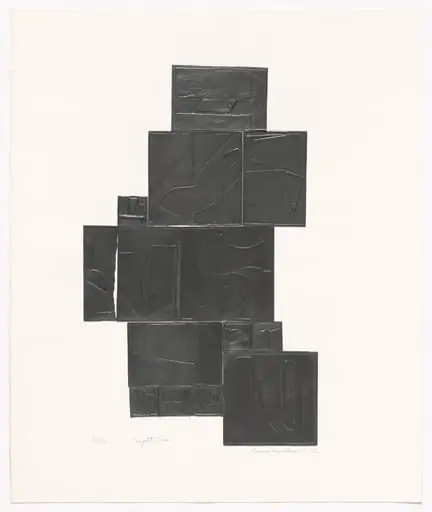
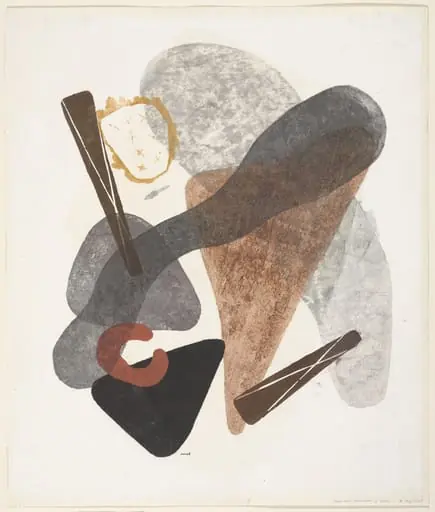
Untitled is an ink print by Ewald Mataré. It dates from 1951 and is held in the collection of the Museum of Modern Art.
About this work
Overview
Created in 1951, this woodcut by Ewald Mataré is part of The Museum of Modern Art’s collection. It is a monochromatic print composed of four triangular forms arranged in a radial pattern. The composition relies on stark contrasts between dark and light areas, with each shape defined by hand-carved lines and a textured background that retains the grain of the original woodblock.
Subject & Meaning
The work avoids literal representation, instead presenting abstract geometric forms that suggest movement or rotation. The arrangement of the triangles evokes a dynamic, spinning structure, though no narrative or symbolic reference is explicit. The composition invites contemplation of balance, tension, and rhythm through form alone, consistent with Mataré’s interest in elemental visual language.
Technique & Style
Mataré employed traditional woodcut methods, carving directly into a wooden block to create raised surfaces that would receive ink. The jagged edges and uneven outlines result from the tool’s interaction with the wood’s grain. The pale triangles are outlined with a dotted white line, achieved by leaving narrow uninked gaps between carved areas, enhancing the print’s tactile, handcrafted quality.
History & Provenance
The print was made in 1951 during a period when Mataré was refining his abstract style after World War II. It entered The Museum of Modern Art’s collection shortly thereafter, likely through acquisition or donation. Its preservation reflects the institution’s early interest in European postwar printmaking and its emphasis on material process over illusionistic representation.
Context
Mataré’s work emerged in the context of postwar German art, where many artists turned to abstraction as a means of renewal. Woodcut, with its associations to medieval and Expressionist traditions, offered a direct, physical alternative to more polished mediums. This piece aligns with broader European efforts to reconnect art with craft and raw materiality after the devastation of conflict.
Legacy
This print exemplifies Mataré’s contribution to mid-century printmaking, emphasizing process and material over narrative. While not widely reproduced, it remains a key example of how German artists used traditional techniques to explore abstraction. Its presence in MoMA’s collection underscores its role in documenting the evolution of modern print practices beyond the American mainstream.
Artist & collection

Artist
Ewald Wilhelm Hubert Mataré was a German painter and sculptor, who dealt with, among other things, the figures of men and animals in a stylized form.