Artwork
At Raglan Castle
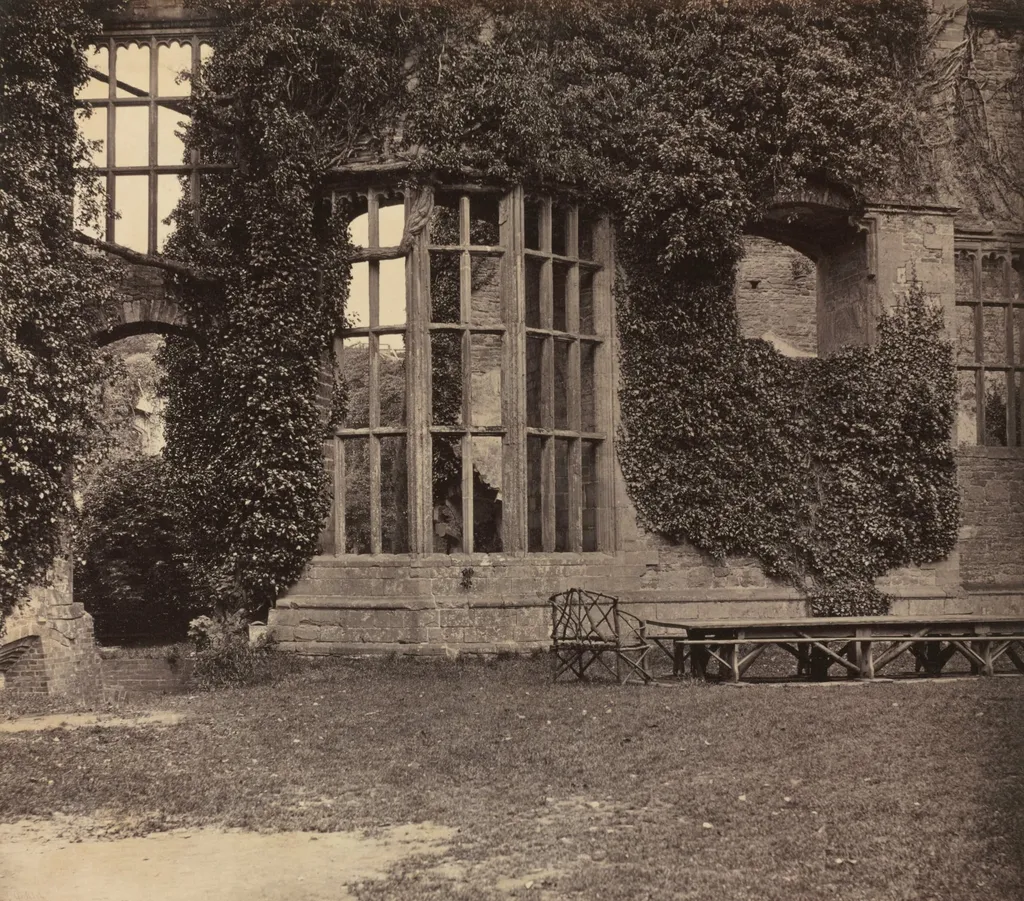
At Raglan Castle is a photography by the Impressionist artist Unknown. It dates from 1858 and is held in the collection of the Cleveland Museum of Art.
About this work
Overview
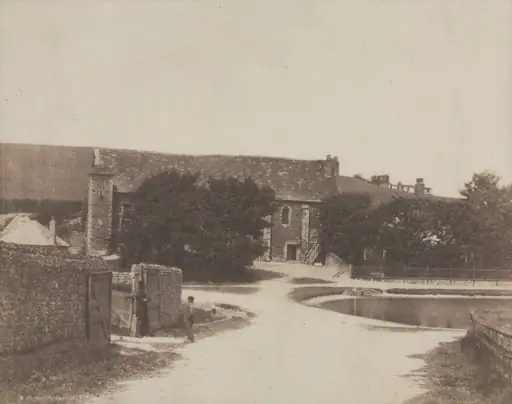
At Raglan Castle, a photograph attributed to F.D. and dated around 1858, is part of the Cleveland Museum of Art’s collection. The image captures the decaying remnants of a stone structure, its walls overtaken by ivy and the surrounding ground left dry and overgrown. Light filters through broken panes, highlighting the quiet surrender of the building to its natural surroundings.
Subject & Meaning
The composition centers on a deteriorating stone edifice with two slender, irregular windows, their glass shattered and frames uneven.
The composition centers on a deteriorating stone edifice with two slender, irregular windows, their glass shattered and frames uneven. A solitary wooden bench rests before the openings, suggesting human presence amid abandonment. The work conveys the passage of time, emphasizing how flora gradually reclaims architectural ruins, inviting contemplation of impermanence and the dialogue between built heritage and nature.
Technique & Style
F.D.’s photograph employs a careful balance of light and shadow, allowing sunlight to pierce the gaps in the windows and illuminate the ivy‑clad walls. The contrast between the dark, weathered stone and the bright, filtered illumination creates a mood of quiet decay. The image’s composition, with the bench foregrounded, guides the viewer’s eye toward the fractured openings.
History & Provenance
Created circa 1858, the photograph entered the Cleveland Museum of Art’s holdings through acquisition, though specific details of its purchase remain undocumented. Its attribution to F.D. reflects the artist’s interest in documenting historic sites during the mid‑nineteenth century, a period when photography began to serve both artistic and documentary purposes.
Context
Raglan Castle, a medieval fortress in Wales, fell into ruin after the English Civil War, becoming a popular subject for artists and photographers fascinated by romantic ruins. By the 1850s, interest in such sites grew alongside the development of photographic technology, allowing practitioners like F.D. to capture the atmospheric qualities of decay that earlier painters could only suggest.
Artist & collection

 Domestic Scene
 Giacomo and Cardinal Marco, investing Andrea, Abbot of San Zeno, with his Benefice
 The Nymph of Fontainebleau
 Portrait of a Woman
 Madonna and Child with Saints in the Enclosed Garden
 Venus and Minerva
 Family Group of Four on Sofa
 Wall painting from Room H of the Villa of P. Fannius Synistor at Boscoreale
 Calvert Jones Seated in the Sacristy of Lacock Abbey
 Orangery and Flower Garden at Singleton, Glamorganshire
 Ancient Door, Magdalen College, Oxford
 View of the grounds of the South Kensington Museum, 1891
 Mortmain
 Borwick Hall, Lancashire
 Rural Estate Seen Through Archway
 Woodcote
 View of Tullichewan Castle, Glasgow
 Scotney Castle
 The Maypole Inn
 A Priory, Lyminge