Artwork
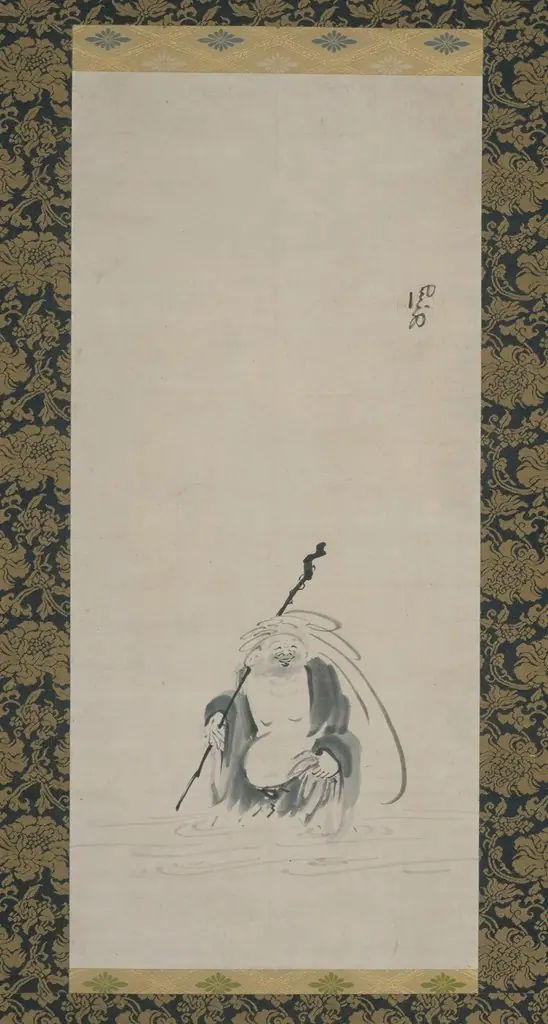
Hotei Pointing at the Moon
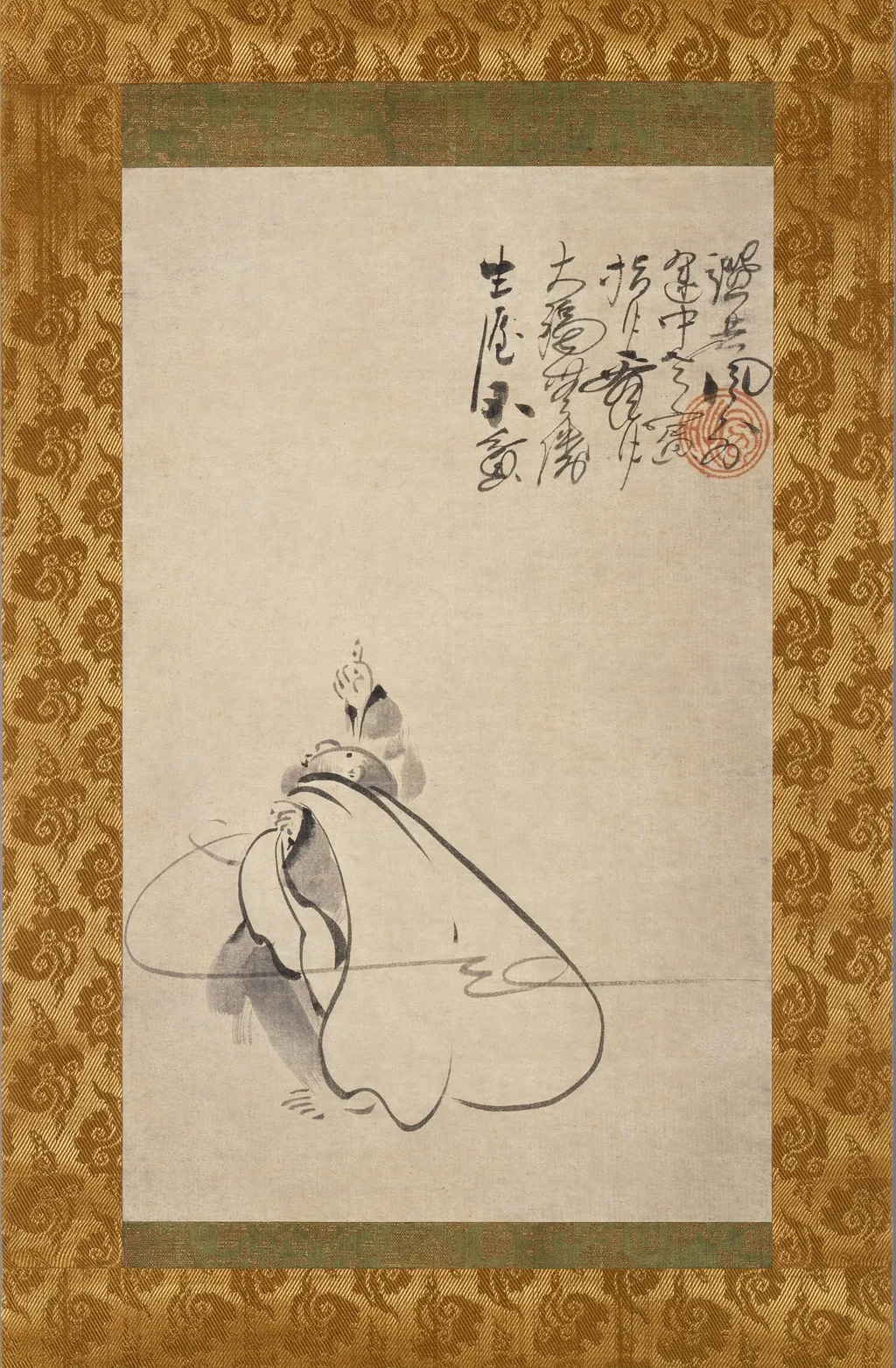
Hotei Pointing at the Moon is an unspecified painting by Fūgai Ekun. It dates from 1618 and is held in the collection of the Los Angeles County Museum of Art.
About this work
Overview
Painted around 1618 by Fūgai Ekun, this ink-on-paper work depicts a solitary figure gesturing toward the moon. Executed in monochrome ink on a pale ground, the composition is spare yet deliberate, emphasizing form and gesture over detail. The piece is part of the Los Angeles County Museum of Art’s collection, where it is preserved as an example of early 17th-century Japanese ink painting.
Subject & Meaning
The figure is Hotei, one of the Seven Lucky Gods in Japanese folklore, often portrayed as a jovial, rotund monk associated with contentment and abundance.
The figure is Hotei, one of the Seven Lucky Gods in Japanese folklore, often portrayed as a jovial, rotund monk associated with contentment and abundance. His upward-pointing hand and serene expression suggest contemplation or a moment of spiritual insight, possibly referencing the moon as a symbol of enlightenment in Zen Buddhism. The gesture invites quiet reflection rather than narrative action.
Technique & Style
Rendered in bold, fluid black ink, the figure’s form is simplified with economical brushwork, capturing volume and movement without fine detail. The beige paper serves as a neutral backdrop, enhancing the contrast of the ink and focusing attention on the figure’s posture. Calligraphic inscriptions and a red seal in the upper right confirm authorship and add traditional elements of Japanese ink painting.
History & Provenance
The painting was created during the early Edo period, a time when Zen-influenced ink painting flourished among Japanese artists. Fūgai Ekun, a lesser-known painter of the period, worked within a tradition that valued spontaneity and spiritual expression. The work entered LACMA’s collection through documented acquisitions, though its earlier ownership history remains largely unrecorded.
Context
This painting reflects the influence of Chinese Chan (Zen) Buddhist art on Japanese culture, particularly in its use of monochrome ink and minimalist composition. Hotei’s depiction aligns with popular iconography of the time, where religious figures were rendered with humor and humanity, bridging spiritual ideals with everyday familiarity.
Legacy
Though not widely exhibited, the painting contributes to the understanding of Edo-period ink painting beyond major artists. Its preservation allows study of how Zen aesthetics were adapted in secular and devotional contexts, offering insight into the visual language of spiritual expression in early modern Japan.
Artist & collection


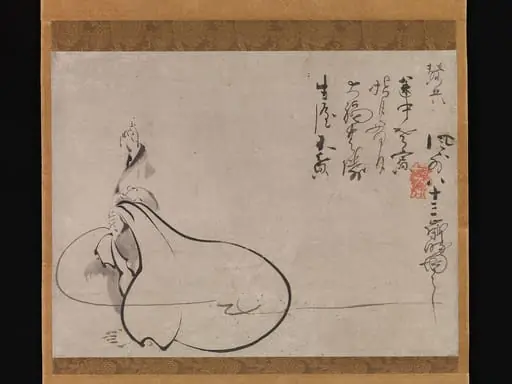
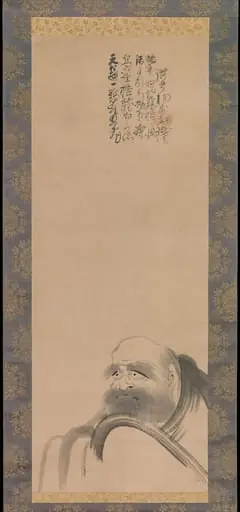
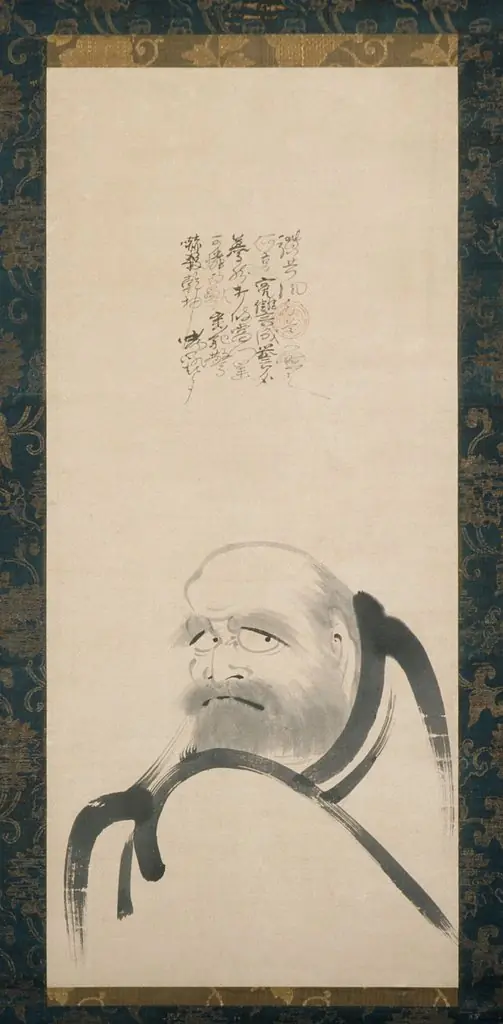
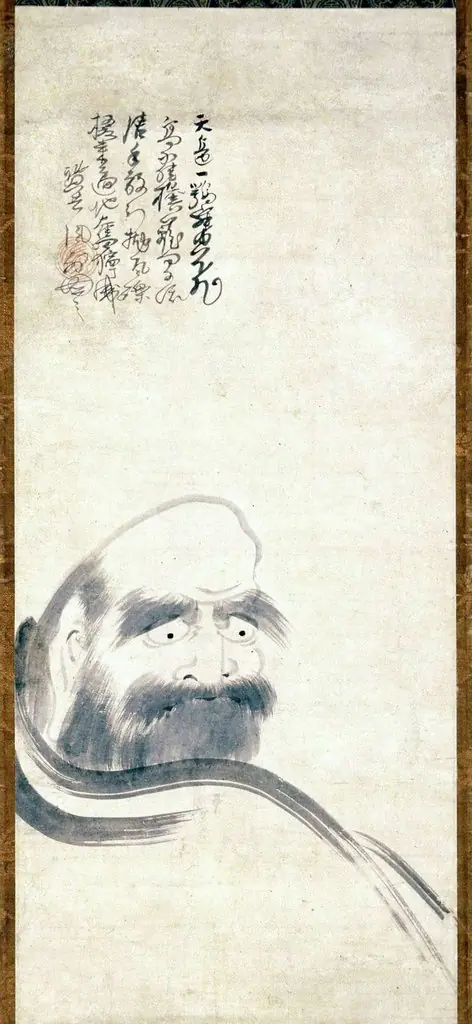
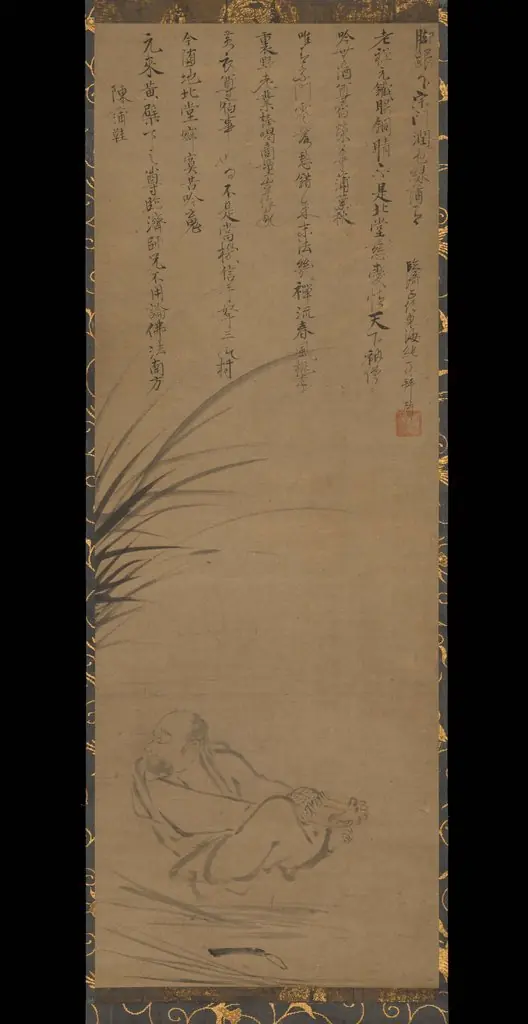 Inscription on the anonymous painting of Chen Puxie
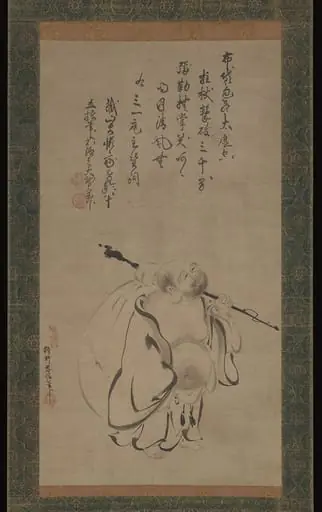 狩野孝信筆 布袋図「拄杖擊破三千界。彌勒撫掌笑呵呵,明月清風無。」|Hotei
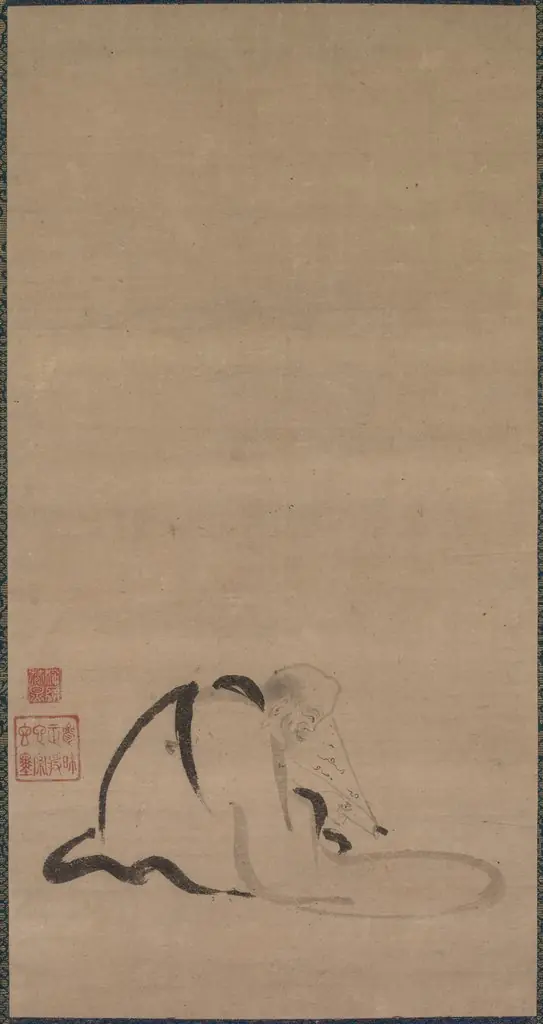 Seated Priest
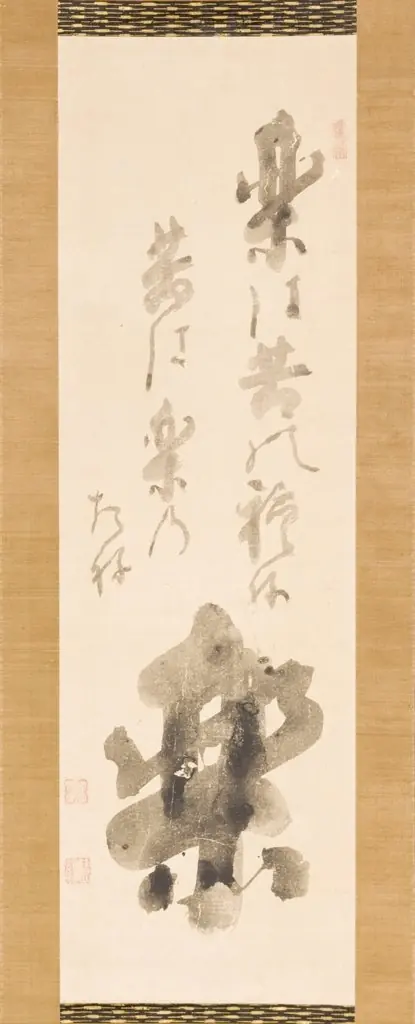 'JOY: In joy lie the seeds of sufferings; in sufferings lie the seeds of joy (RAKU: Raku wa kū no tane; Kū wa raku no tane)'
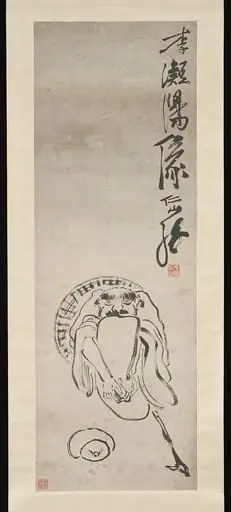 清 蘇仁山 李凝陽像 軸|The Immortal Li Tieguai
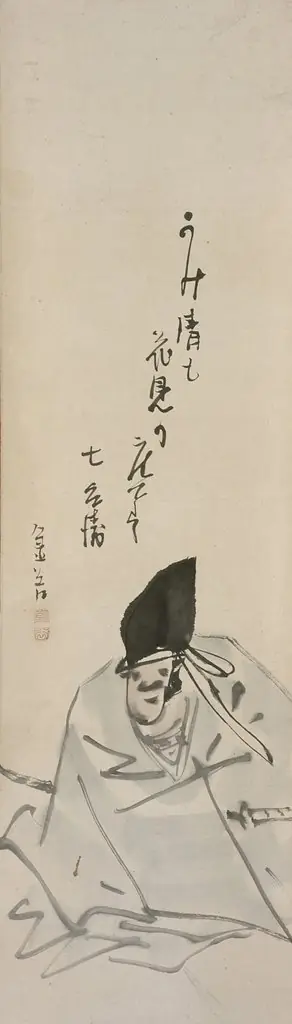 Warrior Kagekiyo
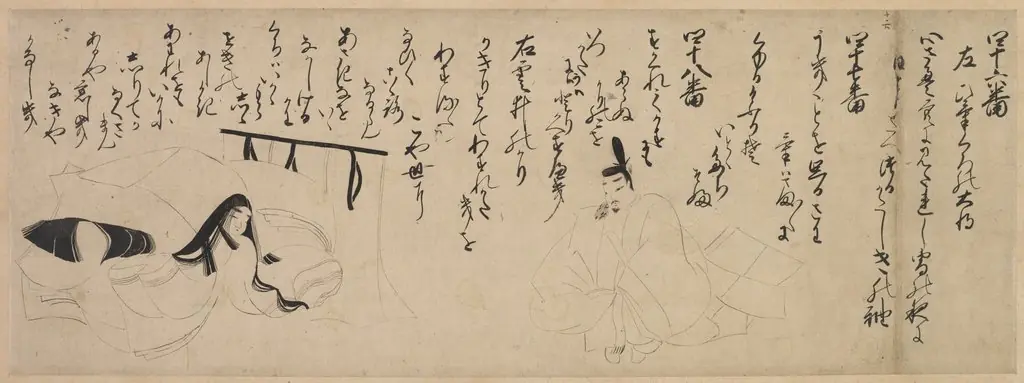 Section of an Illustrated Tale of Genji Poetry Contest
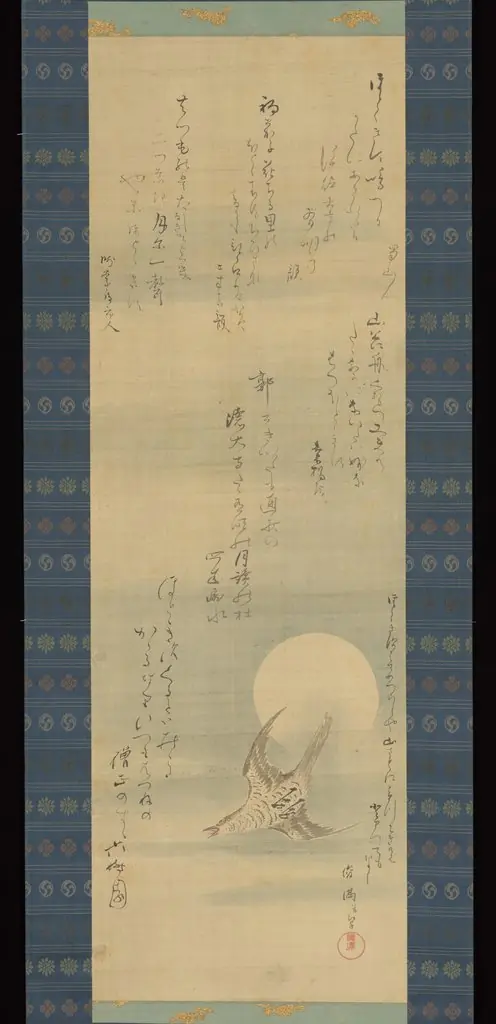 Hototogisu