Artwork
Dinner Service (Rousseau service): Large fish in a Japanese style (no. 19)
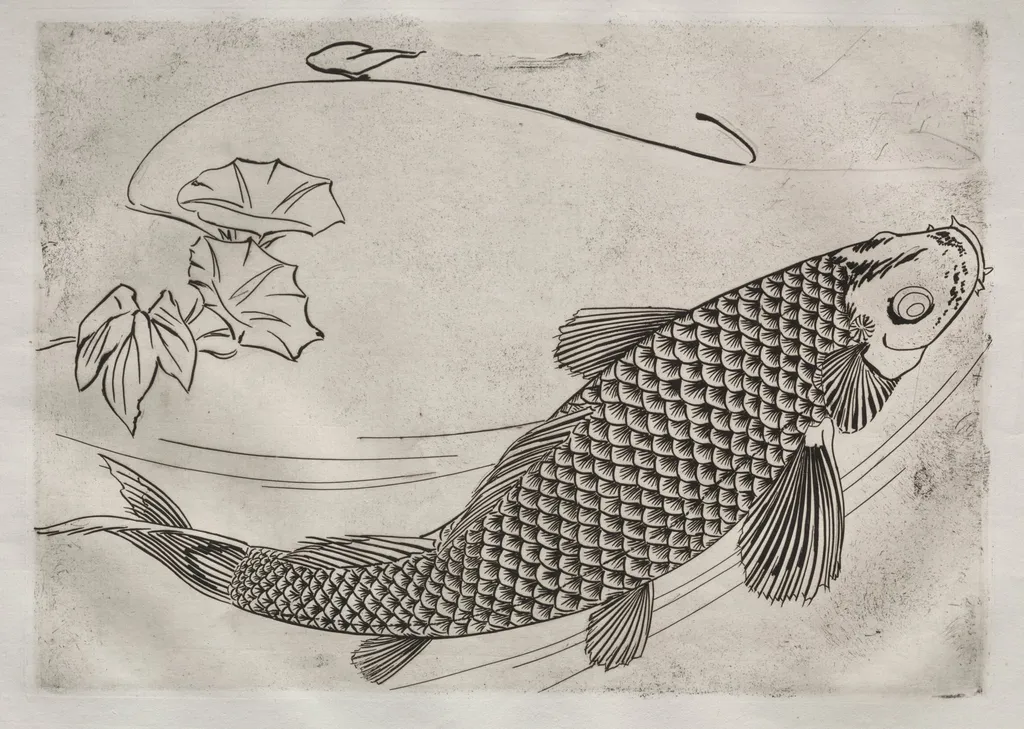
Dinner Service (Rousseau service): Large fish in a Japanese style (no. 19) is a print by the Impressionist artist Félix Bracquemond. It dates from 1866 and is held in the collection of the Cleveland Museum of Art.
About this work
Overview
It was produced as a preparatory study for ceramic decoration, reflecting Bracquemond’s interest in translating fine art into functional objects.
Created in 1866 by Félix Bracquemond, this ink drawing is part of a larger series of designs intended for a dinner service. It was produced as a preparatory study for ceramic decoration, reflecting Bracquemond’s interest in translating fine art into functional objects. Executed in black ink on a lightly textured surface, the piece combines precision with a sense of spontaneous movement, characteristic of his approach to decorative arts during the 1860s.
Subject & Meaning
The image depicts a single fish mid-leap, its body arched dynamically above a suggestion of water. A floating leaf and a curved spray of droplets frame the action, evoking natural motion without narrative detail. The subject draws from Japanese ukiyo-e aesthetics, which Bracquemond admired for their clarity and economy of form. The fish is rendered not as a symbol but as a formal element, emphasizing line, rhythm, and the beauty of organic shapes.
Technique & Style
Bracquemond used fine, controlled ink lines to build texture, particularly in the fish’s scales and fins, where dense, overlapping strokes mimic the precision of woodcut or engraving. The background remains largely untouched, enhancing the contrast and giving the image an etched quality. This method diverged from the loose brushwork common in contemporary drawing, instead aligning with the meticulous craftsmanship valued in decorative arts and Japanese printmaking.
History & Provenance
The drawing was made as part of the so-called Rousseau service, a set of ceramic designs commissioned for a private dinnerware collection. Though the full service was never fully realized in ceramic form, the preparatory drawings survived. This piece entered The Cleveland Museum of Art’s collection through documented acquisition, preserving its role as a key example of 19th-century French engagement with Japanese aesthetics in applied arts.
Context
In the 1860s, European artists increasingly looked to Japanese prints for inspiration, drawn to their flattened perspectives and emphasis on line. Bracquemond was among the earliest French artists to systematically study and adapt these principles. His work on the Rousseau service reflected a broader movement to elevate decorative arts by integrating fine art techniques, challenging the hierarchy between fine and applied media.
Legacy
Bracquemond’s drawings for the Rousseau service influenced later generations of designers seeking to merge artistic precision with functional form. His use of sharp, intricate linework in this piece helped redefine the visual language of ceramic decoration in France. Though the service itself remained incomplete, these studies became important references in the history of Japonisme and the Arts and Crafts movement.
Own this work as a print
Artist & collection

Artist
Félix Henri Bracquemond (French pronunciation: ; 22 May 1833 – 29 October 1914) was a French painter, etcher, and printmaker.

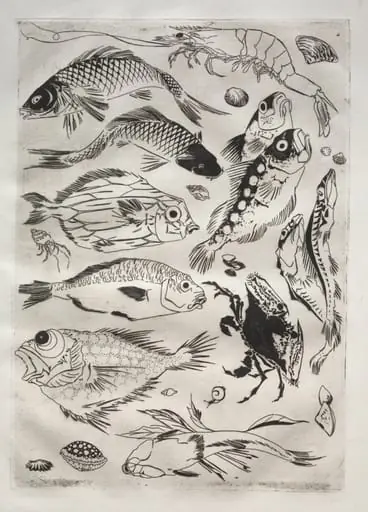 Dinner Service (Rousseau service): Fish (no. 24)
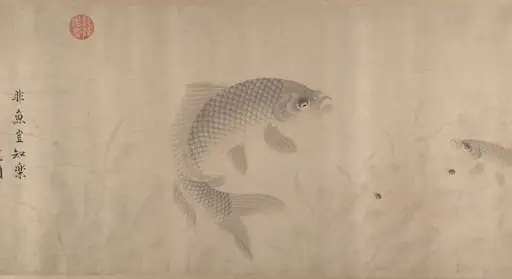 元 周東卿 魚樂圖 卷|The Pleasures of Fishes
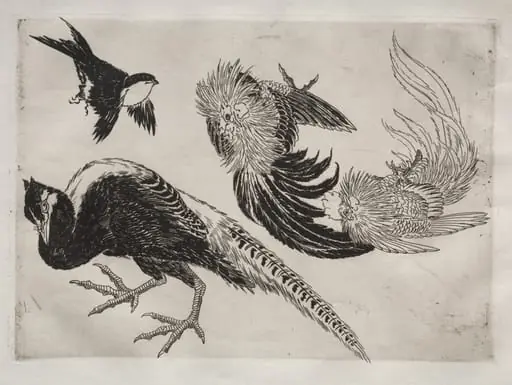 Dinner Service (Rousseau service): Pheasants and bird (no. 18)
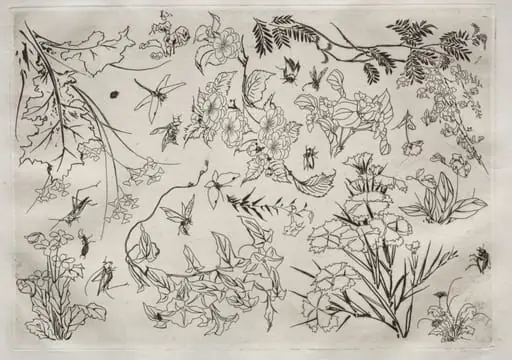 Dinner Service (Rousseau service): Flowers (no. 22)
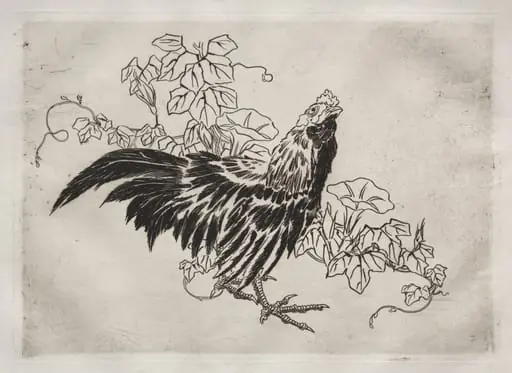 Dinner Service (Rousseau service): Rooster and morning glories (no. 25)
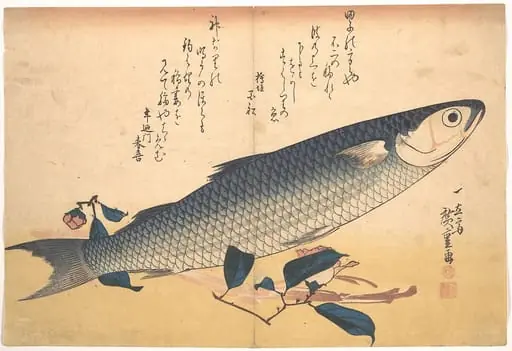 魚づくし ぼらにうど|Bora Fish with Camellia, from the series Uozukushi (Every Variety of Fish)
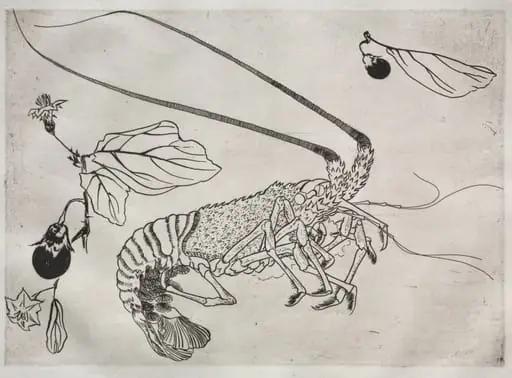 Dinner Service (Rousseau service): Large lobster with raised antenna (no. 21)
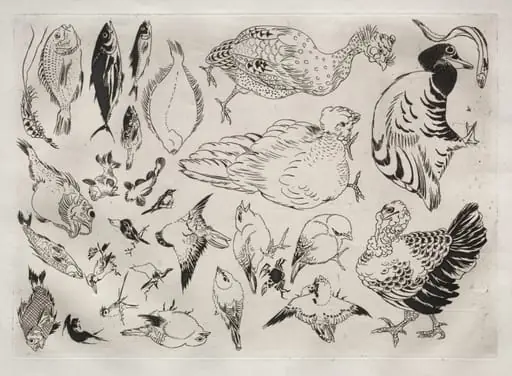 Dinner Service (Rousseau service): Ducks, fish, etc. (no. 12)
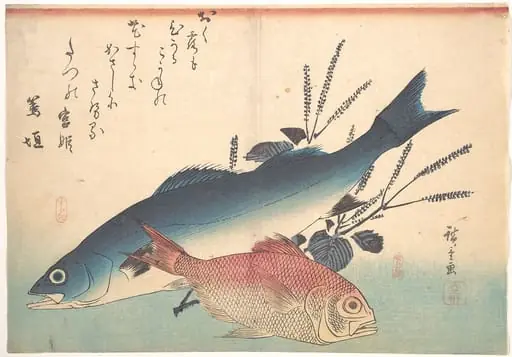 魚づくし いなだ ふぐに梅|Suzuki and Kinmedai Fish from the series Uozukushi (Every Variety of Fish)
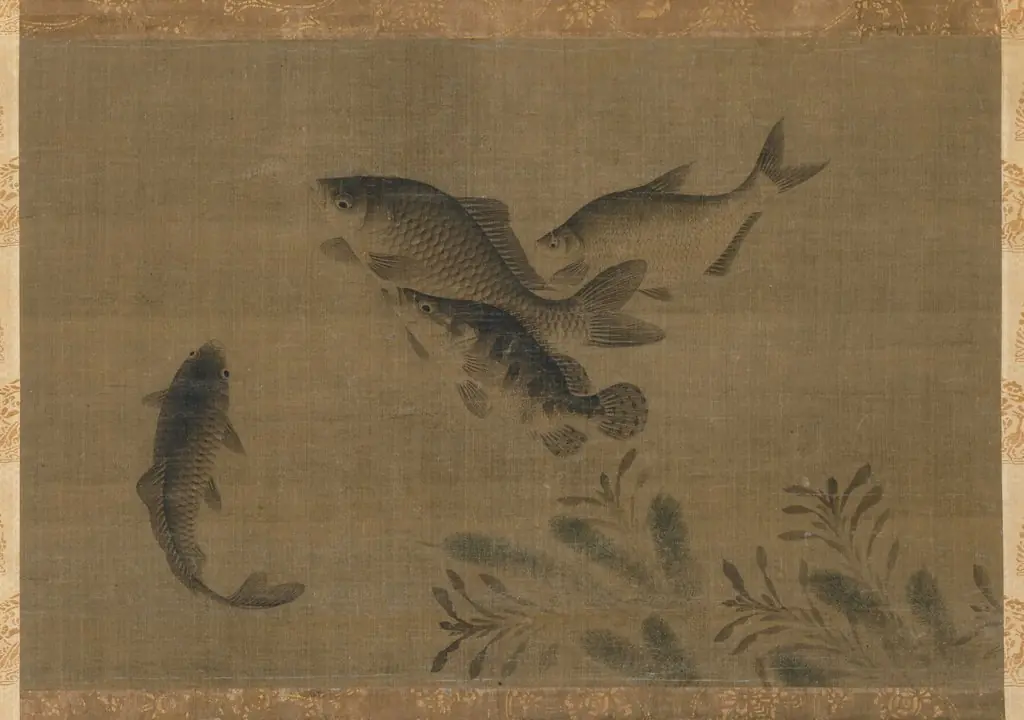 Fish
Fish