Artwork
Fisherman's thatched cottage
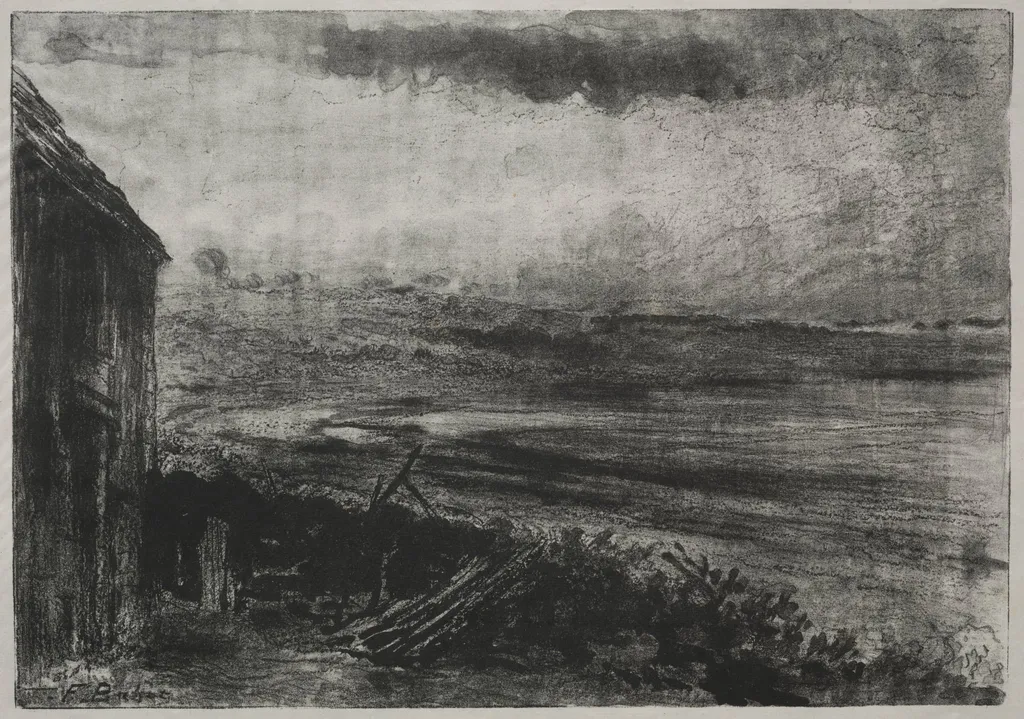
Fisherman's thatched cottage is a print by the Impressionist artist Félix-Hilaire Buhot. It dates from 1895 and is held in the collection of the Cleveland Museum of Art. Created in 1895 by Félix Hilaire Buhot, this print depicts a modest fisherman’s cottage nestled beside a sluggish river.
About this work
Overview
The piece resides in The Cleveland Museum of Art’s collection, part of a broader body of work documenting rural French life.
Created in 1895 by Félix Hilaire Buhot, this print depicts a modest fisherman’s cottage nestled beside a sluggish river. Executed in a loose, impressionistic style, the work captures a fleeting moment in a coastal landscape. Its muted tones and fragmented lines suggest spontaneity, as if drawn on-site in response to shifting light and weather. The piece resides in The Cleveland Museum of Art’s collection, part of a broader body of work documenting rural French life.
Subject & Meaning
The subject is a humble, weathered dwelling typical of coastal Normandy, its thatched roof and low structure reflecting the simplicity of fishing communities. The empty river and overcast sky emphasize isolation, suggesting the quiet rhythm of daily life far from urban centers. No figures appear, heightening the sense of solitude. The scene conveys neither grandeur nor drama, but an unembellished presence of place and time.
Technique & Style
Buhot employed drypoint and etching to achieve a sketch-like texture, using irregular, energetic lines to suggest wind, water, and crumbling earth. The dark cottage contrasts with the pale, rippled river, creating visual tension without sharp definition. Washes of ink and varied line weight evoke atmosphere rather than detail. The technique mirrors the immediacy of a field study, prioritizing mood over precision.
History & Provenance
The print was made during Buhot’s later years, when he focused on coastal and rural scenes around Normandy and Brittany. It entered The Cleveland Museum of Art’s collection in the 20th century, likely through a donation or acquisition of European prints. Its preservation reflects early 20th-century interest in French graphic art, particularly works that documented everyday life with emotional restraint.
Context
Buhot worked alongside other artists of the late 19th century who turned away from academic idealism toward observed reality. His prints align with Realist and Impressionist tendencies, capturing transient conditions of light and weather. Unlike urban scenes by contemporaries, this work focuses on the quiet endurance of rural laborers, reflecting a broader cultural interest in vanishing traditional ways of life.
Legacy
Though not widely exhibited, Buhot’s prints like this one contributed to the recognition of printmaking as a medium for personal expression. His emphasis on atmosphere over narrative influenced later generations of printmakers interested in mood and place. The work remains a quiet example of how everyday landscapes could be rendered with emotional depth through disciplined, unadorned technique.
Artist & collection
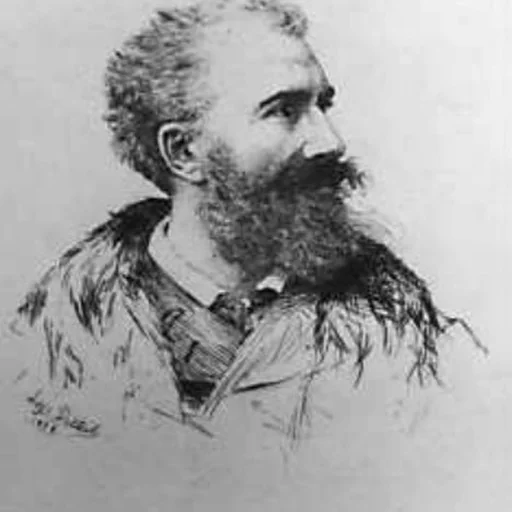

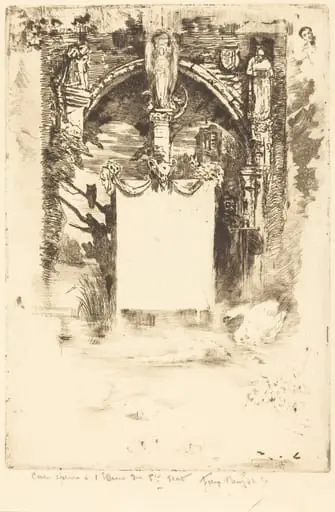 Ex-Libris pour "L'Ensorcelée" (Bookplate for "L'Ensorcelée")
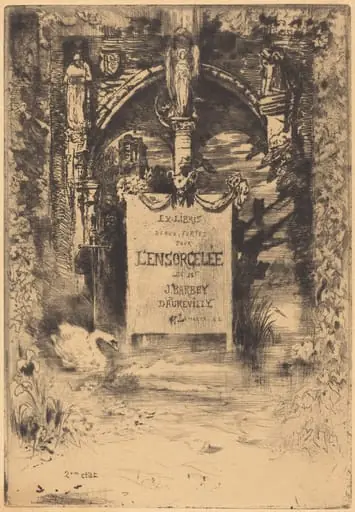 Ex-Libris pour "L'Ensorcelée" (Bookplate for "L'Ensorcelée")
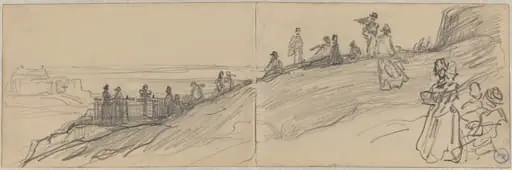 Figures on Top of a Hill, Overlooking the Sea
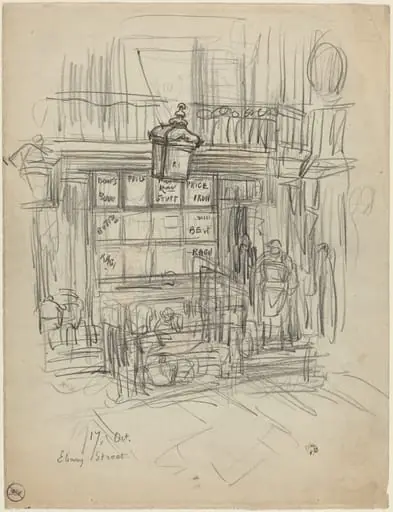 Ebury Street
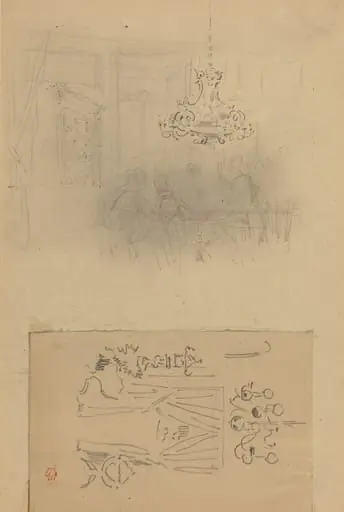 A Gathering in an Interior; A Curtained Doorway
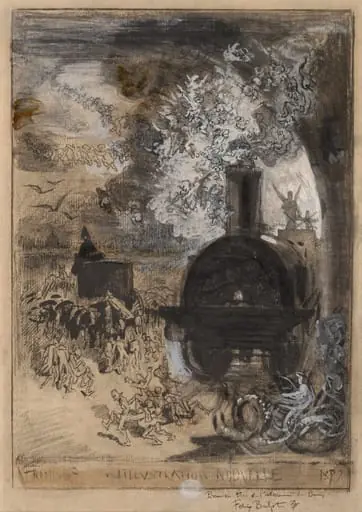 Frontispiece for L'Illustration Nouvelle: The Burial of the Burin
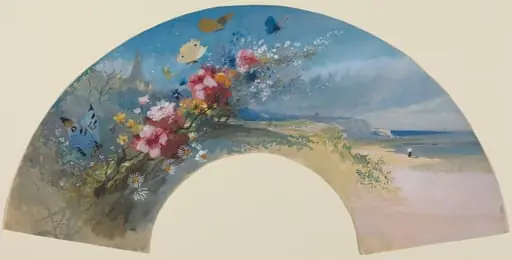 Fan with Wildflowers and Butterflies against the Norman Coast
![Gillingham Pier, London [verso], by Félix-Hilaire Buhot](https://artifactworldgallery.com/img/felix-hilaire-buhot--gillingham-pier-london-verso--641e03dd7de8217b-w320.webp) Gillingham Pier, London [verso]
Gillingham Pier, London [verso]
![Landscape [Paesaggio], by Carlo Paolo Agazzi](https://artifactworldgallery.com/img/carlo-paolo-agazzi--landscape-paesaggio--e606f4ada87d2052-w320.webp) Landscape [Paesaggio]
Landscape [Paesaggio]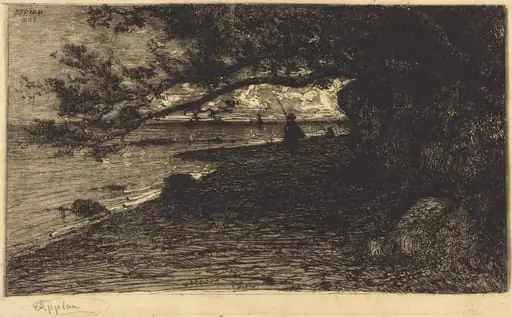 A Villefranche-sur-Mer
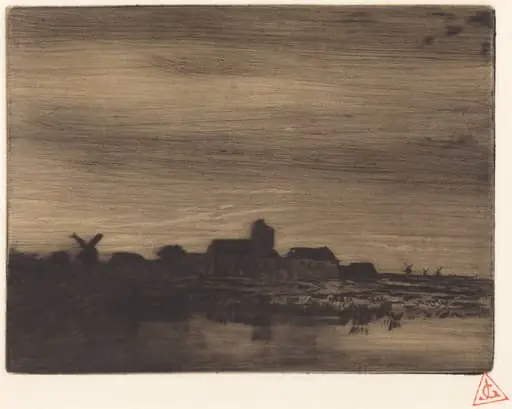 Waterside Village
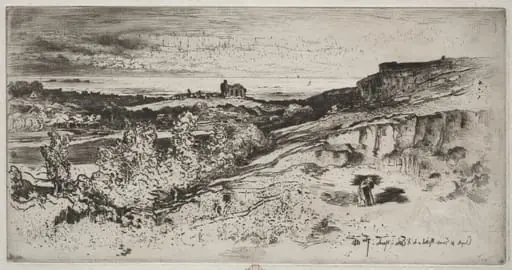 The Chapel Saint-Michel at l'Estre
 Spring at Cardross
 Sunrise—The Pond, Easthampton, Long Island
 On the Test
 Farm with a Large Tree (La Ferme au Grand Arbre)
 On the Test
 La Falaise: Baie de Saint-Malo (The Cliff: Saint-Malo Bay)
 Environs of Carqueronne (Environs de Carqueronne)
 L'Orage (The Storm)