Artwork
Westminster Place
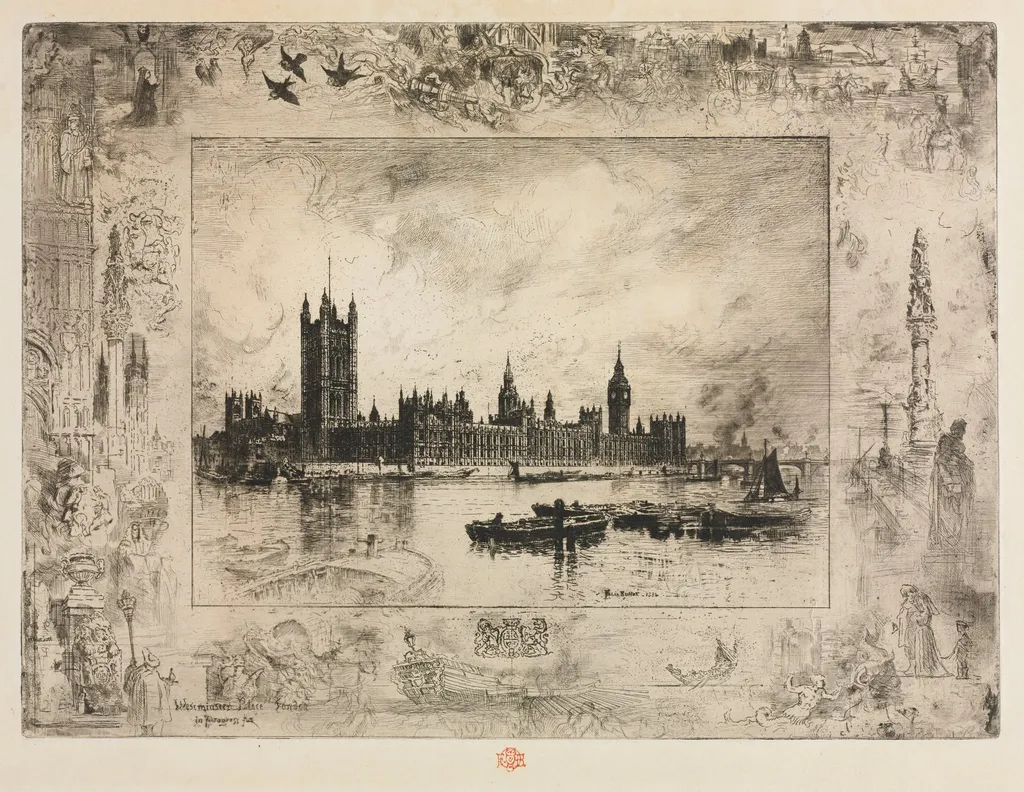
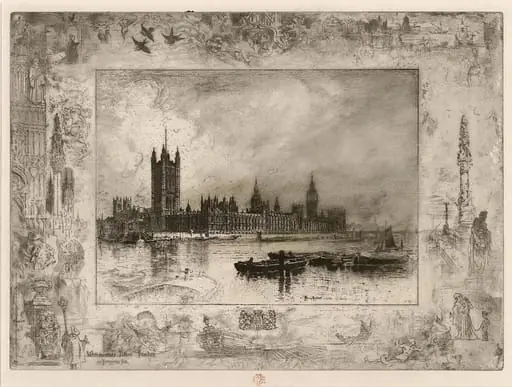
Westminster Place is a print by the Impressionist artist Félix-Hilaire Buhot. It dates from 1884 and is held in the collection of the Cleveland Museum of Art.
About this work
Overview
The composition balances architectural grandeur with fleeting human activity, reflecting Buhot’s interest in modern city life.
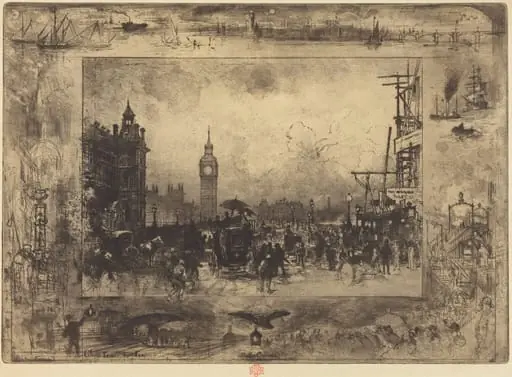
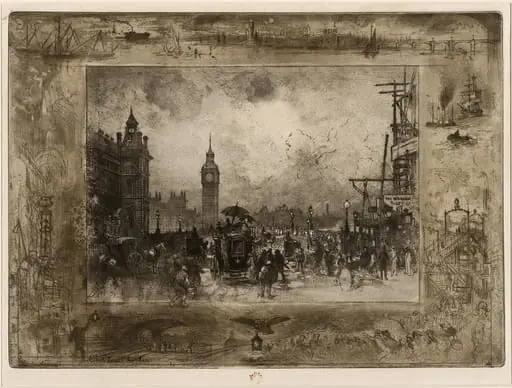
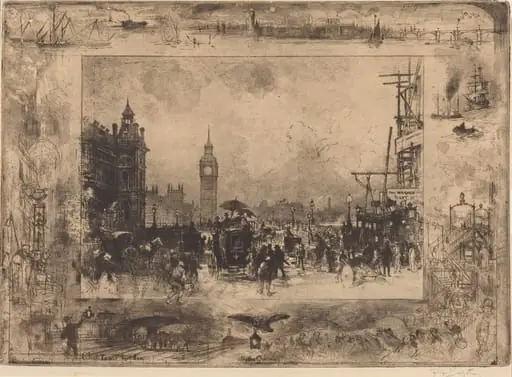
Félix Hilaire Buhot created Westminster Place in 1884 as a drypoint etching capturing a view of London along the Thames. The work is part of the collection at The Cleveland Museum of Art. It presents a bustling urban riverside scene rendered with fine, layered lines, emphasizing atmosphere over precision. The composition balances architectural grandeur with fleeting human activity, reflecting Buhot’s interest in modern city life.
Subject & Meaning
The scene depicts the skyline of Westminster, dominated by the Gothic spires of the Houses of Parliament and its central clock tower. The Thames flows through the center, dotted with small boats, while the smoky sky suggests industrial pollution or weather. Surrounding the main view are marginal sketches of pedestrians, animals, and abstract forms, suggesting the chaotic energy of the city and the artist’s spontaneous observation of everyday moments.
Technique & Style
Buhot employed drypoint etching with dense cross-hatching to build tone and texture, creating depth without heavy ink. The buildings are rendered with loose, rapid lines that suggest detail without polish, conveying immediacy. The sky and water are suggested through gradations of line rather than solid forms, emphasizing mood over realism. The marginal figures add a sense of narrative fragmentation, characteristic of Buhot’s sketch-like approach to urban subjects.
History & Provenance
Created in 1884, Westminster Place was produced during Buhot’s period of intense focus on London’s urban landscape. The print entered The Cleveland Museum of Art’s collection through established acquisition channels, likely as part of a broader interest in 19th-century European printmaking. Its preservation reflects its significance as an example of French artistic engagement with British industrial cities during the late Victorian era.
Context
In the 1880s, Buhot traveled extensively in Britain, documenting its cities with a keen eye for social and environmental change. Westminster Place reflects the growing fascination with urban decay and industrialization among European artists. The smoky atmosphere and hurried lines echo contemporary concerns about pollution and the pace of modern life, aligning the work with broader artistic movements that valued observation over idealization.
Legacy
Buhot’s Westminster Place exemplifies the shift in printmaking toward expressive, observational techniques over formal composition. Its influence can be seen in later artists who embraced the sketch as a legitimate artistic form. The work remains a quiet testament to the evolving relationship between artist and city, valued for its honesty and atmospheric nuance rather than technical perfection.
Artist & collection

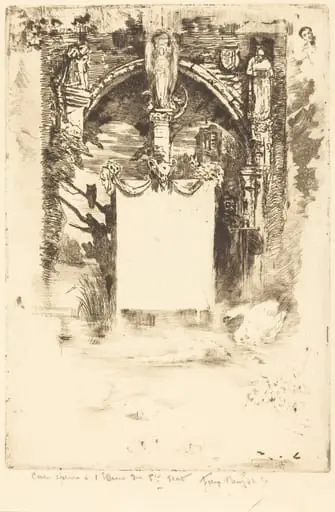 Ex-Libris pour "L'Ensorcelée" (Bookplate for "L'Ensorcelée")
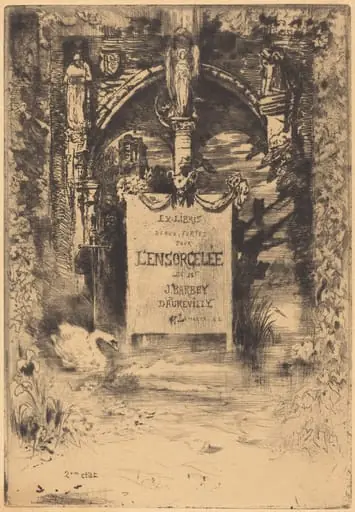 Ex-Libris pour "L'Ensorcelée" (Bookplate for "L'Ensorcelée")
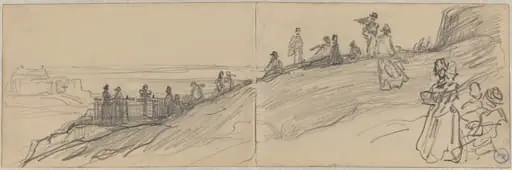 Figures on Top of a Hill, Overlooking the Sea
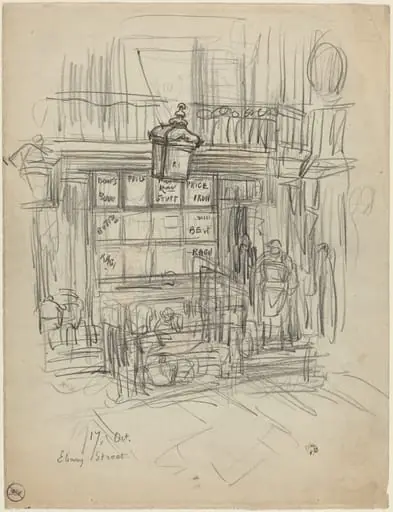 Ebury Street
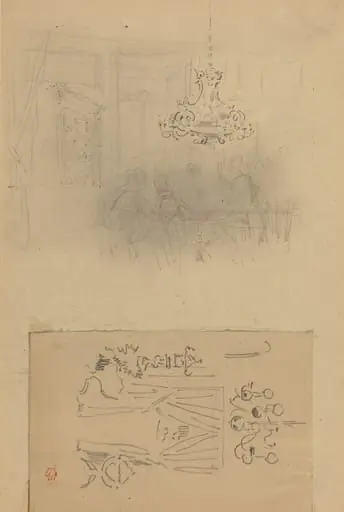 A Gathering in an Interior; A Curtained Doorway
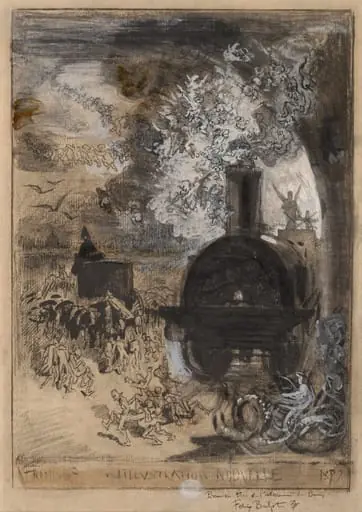 Frontispiece for L'Illustration Nouvelle: The Burial of the Burin
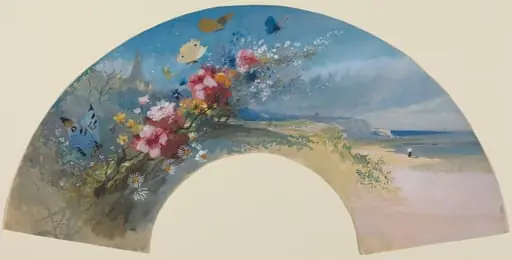 Fan with Wildflowers and Butterflies against the Norman Coast
![Gillingham Pier, London [verso], by Félix-Hilaire Buhot](https://artifactworldgallery.com/img/felix-hilaire-buhot--gillingham-pier-london-verso--641e03dd7de8217b-w320.webp) Gillingham Pier, London [verso]
Gillingham Pier, London [verso]