Artwork
Westminster Abbey
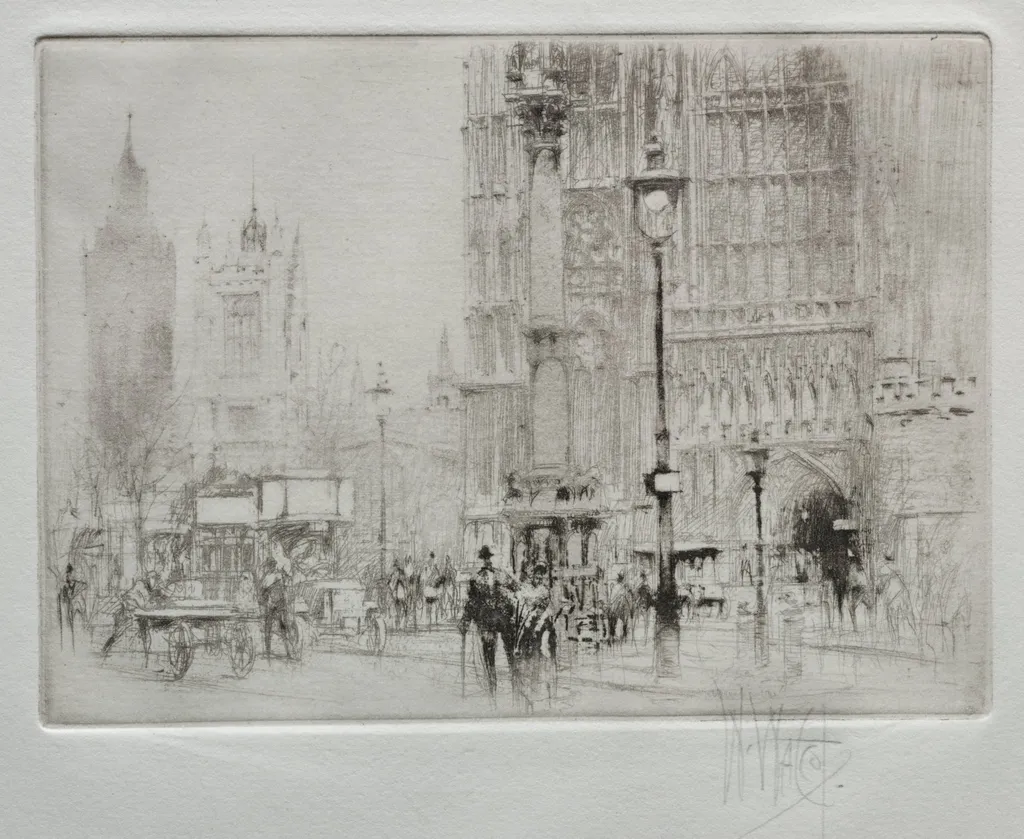
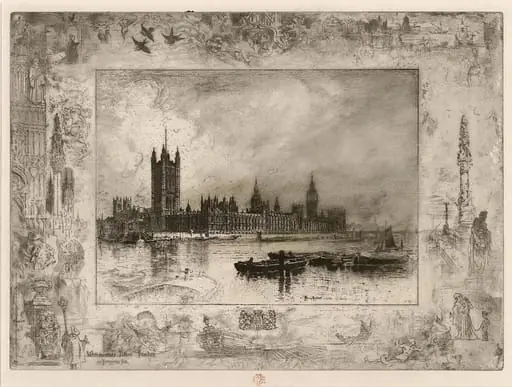
Westminster Abbey is a print by William Walcot. It dates from 1919 and is held in the collection of the Cleveland Museum of Art.
About this work
Overview
Executed as a detailed architectural etching, it reflects Walcot’s interest in capturing historic structures with precision and atmospheric depth.
Created in 1919 by the architect and printmaker William Walcot, this print depicts Westminster Abbey in London. Executed as a detailed architectural etching, it reflects Walcot’s interest in capturing historic structures with precision and atmospheric depth. The work is part of the collection at The Cleveland Museum of Art, acquired as an example of early 20th-century British architectural printmaking.
Subject & Meaning
The print focuses on the Gothic silhouette of Westminster Abbey, emphasizing its verticality and intricate stonework. Rather than portraying ceremonial activity, Walcot isolates the building as a symbol of enduring institutional presence. The absence of figures or context invites contemplation of the structure’s historical weight, aligning with post-war reflections on tradition and continuity.
Technique & Style
Walcot employed fine-line etching to render the abbey’s ornate façade, using controlled cross-hatching to suggest shadow and texture. The composition balances architectural detail with tonal subtlety, avoiding dramatic contrasts in favor of quiet realism. His approach reflects the influence of the Victorian topographical tradition, refined through early modernist sensibilities toward clarity and restraint.
History & Provenance
The print was produced shortly after World War I, during a period when Walcot was actively documenting British landmarks. It entered The Cleveland Museum of Art’s collection in the mid-20th century, likely through a donation or acquisition focused on European graphic arts. Its provenance remains tied to private collections before institutional acquisition, with no record of public exhibition prior to its museum placement.
Context
Walcot’s work emerged amid a broader revival of interest in British architectural heritage after the war. While many artists turned to abstraction or social themes, Walcot maintained a commitment to precise representation, aligning with a niche but persistent tradition of architectural etching. His prints were often circulated among collectors and institutions interested in historical preservation through art.
Legacy
Though not widely known outside specialist circles, Walcot’s prints, including this one, remain valued for their technical discipline and historical documentation. The Cleveland Museum’s holding preserves an example of early 20th-century architectural printmaking that bridges 19th-century topography and modernist minimalism, offering insight into how heritage was visually interpreted in the post-war era.
Artist & collection

Artist
William Walcot RE was a Russian-Scottish architect, graphic artist and etcher, notable as a architect of refined Art Nouveau in Moscow, Russia.

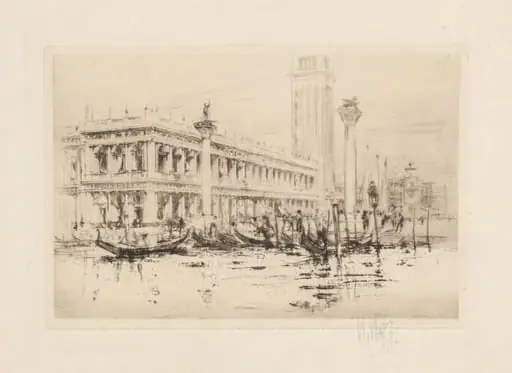 The Venice Set: The Library of St. Mark’s
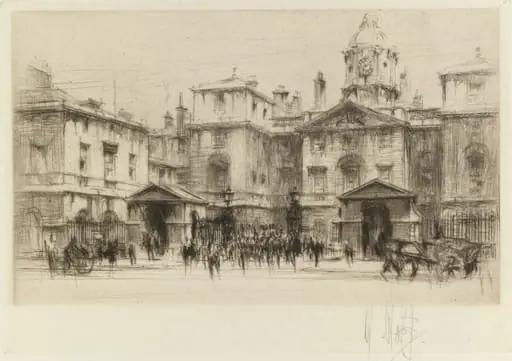 London Set: Horseguards
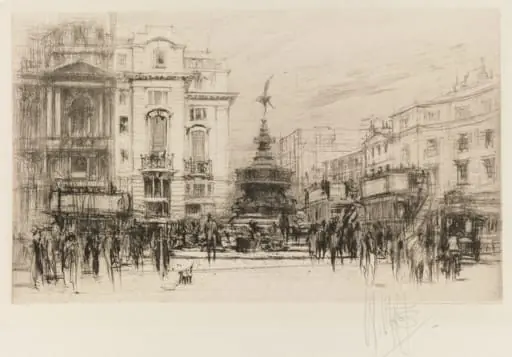 London Set: Piccadilly Circus (with Criterion Theatre)
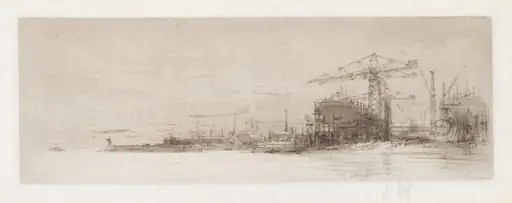 The Clyde from the series The Arteries of Great Britain
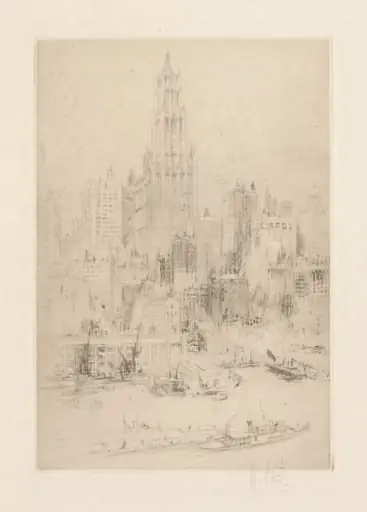 Downtown Manhattan from the East River, with the Woolworth Building
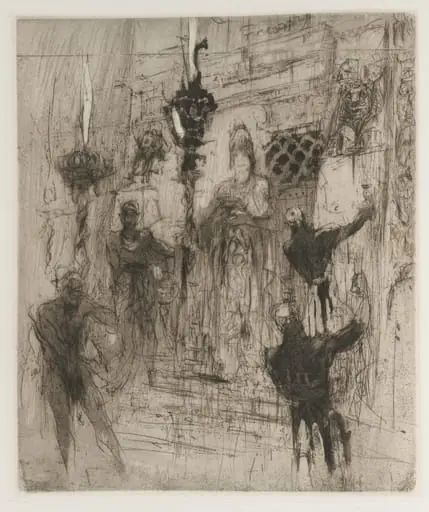 Herodias
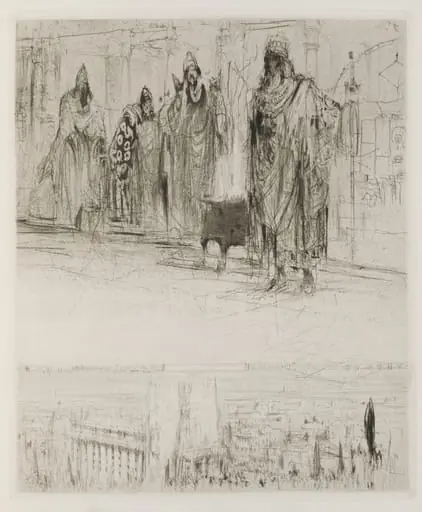 Herodias: Page 13, The tetrarch was awaited by several Galileans, the master of scribes, the chief of the land steward, the manager of the salt mines, and a Jew from Babylon commanding his troops on horse
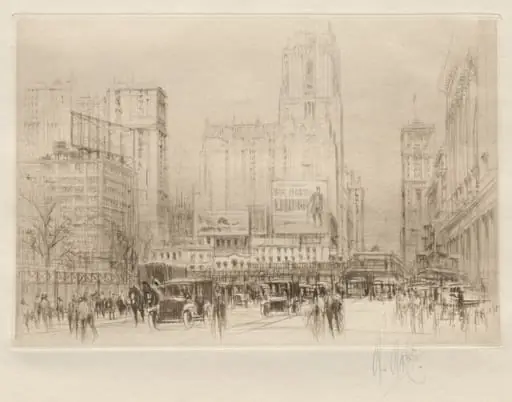 Forty-second Street NY