Artwork
Death of Chopin
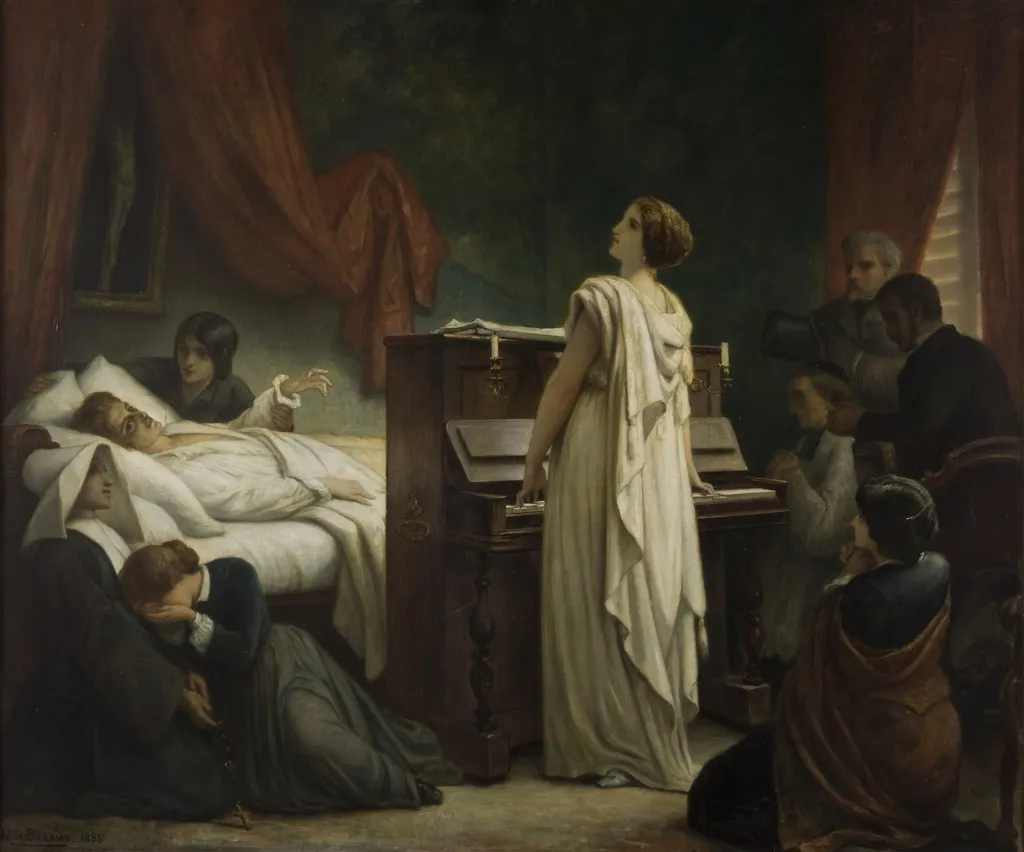
Death of Chopin is an oil painting by the Realist artist Félix-Joseph Barrias. It dates from 1893 and is held in the collection of the National Museum in Kraków.
About this work
Overview
Félix-Joseph Barrias painted *Death of Chopin* in 1893 using oil on canvas, capturing the final moments of the Polish composer Frédéric Chopin.
Félix-Joseph Barrias painted *Death of Chopin* in 1893 using oil on canvas, capturing the final moments of the Polish composer Frédéric Chopin. The work is classified within the realist tradition, emphasizing observed detail over idealization. It is currently held in the National Museum in Kraków, where it remains part of its permanent collection. Barrias, once recognized for his academic style, is now less widely known, though he taught several notable artists during his career.
Subject & Meaning
The painting portrays the deathbed scene of Frédéric Chopin, surrounded by mourners in dark clothing, conveying solemnity and grief. A woman in white stands near a piano, her gaze directed upward, possibly suggesting prayer or spiritual transcendence. The composition centers on quiet dignity rather than dramatic spectacle, reflecting the intimate, private nature of Chopin’s passing. The absence of overt emotion among the figures underscores a restrained, respectful mourning.
Technique & Style
Barrias employed oil paint with careful attention to tonal gradation and texture, particularly in the rendering of fabrics and light. The dim interior is illuminated by a soft, diffused glow, enhancing the somber mood. The white dress of the standing woman contrasts sharply with the dark garments of the mourners, drawing the eye without disrupting the scene’s gravity. Brushwork remains controlled, aligning with academic realism’s emphasis on clarity and detail.
History & Provenance
Completed in 1893, the painting was acquired by the National Museum in Kraków, where it has remained since. Barrias, a prominent figure in 19th-century French academic circles, created the work decades after Chopin’s death in 1849, likely drawing from published accounts and cultural memory rather than firsthand observation. Its placement in Poland reflects Chopin’s enduring significance to Polish national identity, even though the artist was French.
Context
In the late 19th century, Chopin’s legacy as a national symbol in Poland grew alongside Romantic ideals of artistic suffering and national melancholy. Barrias’s depiction aligns with a broader European trend of memorializing composers through visual art, often blending historical accuracy with emotional symbolism. The painting reflects the era’s reverence for artistic genius and the cultural weight assigned to deathbed scenes in both literature and painting.
Legacy
Though Barrias’s reputation faded after his death, *Death of Chopin* continues to serve as a visual reference for Chopin’s final days in popular imagination. It remains one of the few major 19th-century paintings dedicated to the composer’s death, offering insight into how his passing was interpreted beyond music. The work is studied for its composition and emotional restraint, rather than its artistic innovation.
Own this work as a print
Artist & collection
Artist
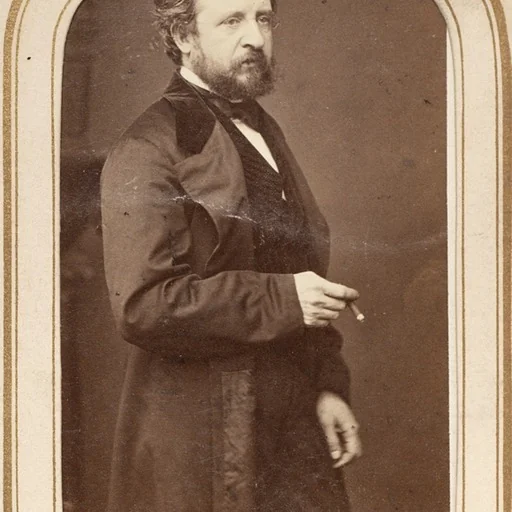
Félix-Joseph Barrias (13 September 1822 – 24 January 1907) was a French painter. He was well known in his day for his paintings of religious, historical or mythical subjects, but has now been largely forgotten. Artists…

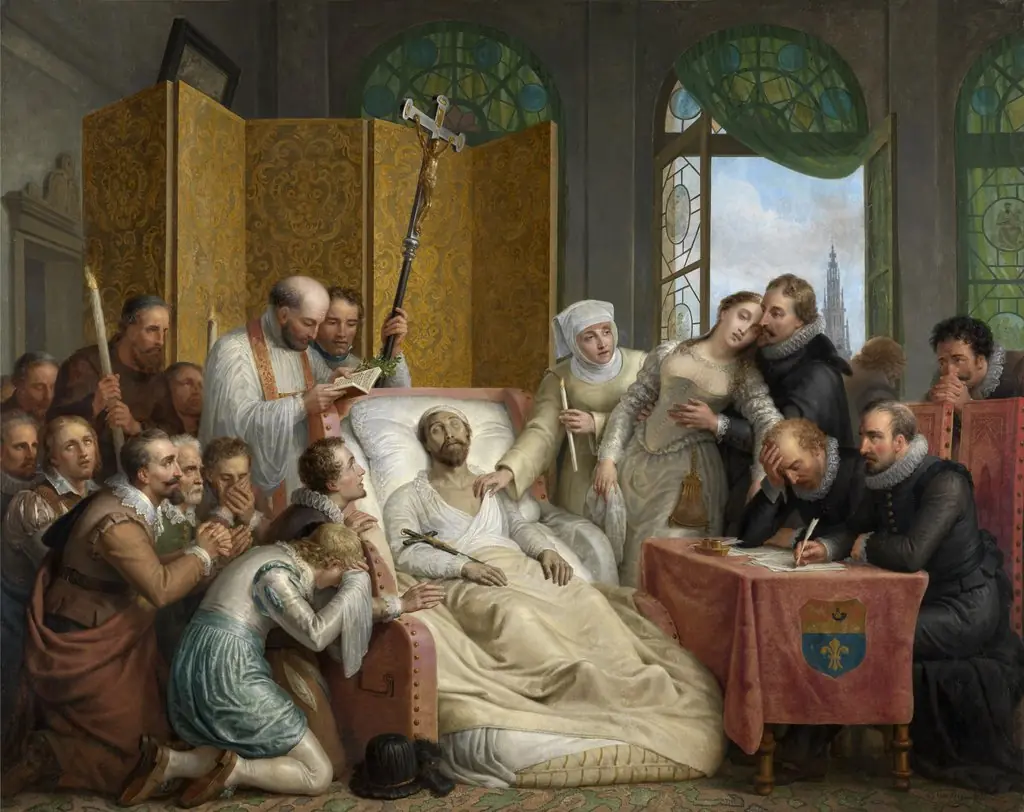 The Death of Peter Paul Rubens
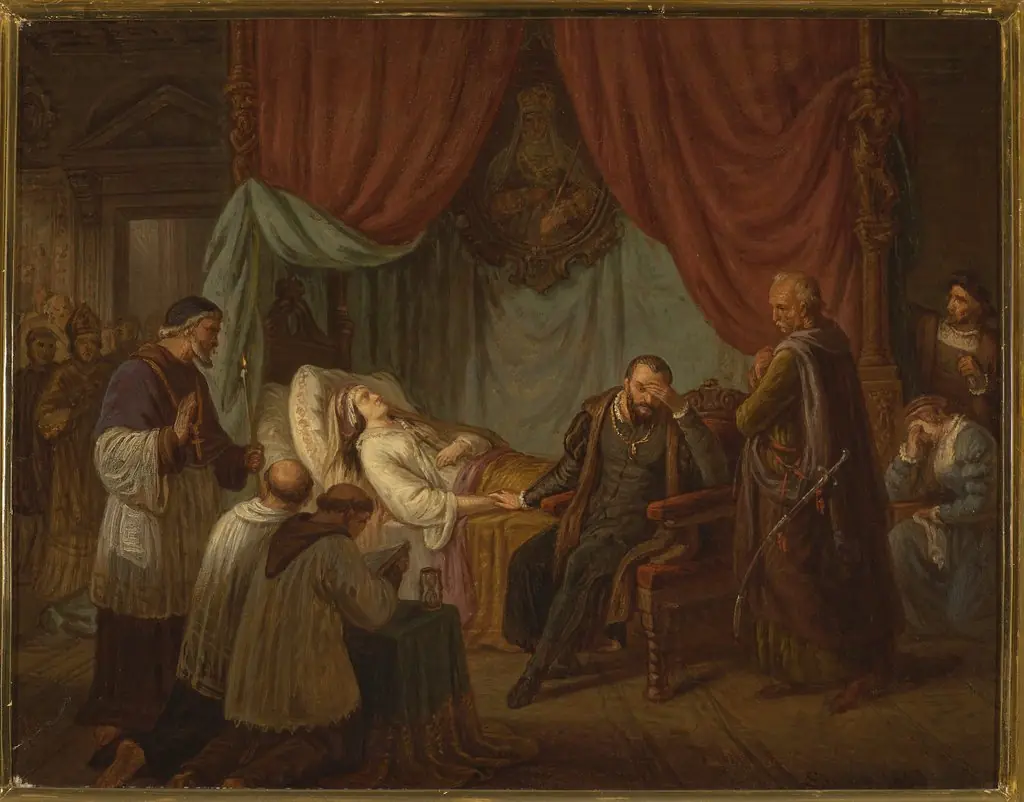 Death of Barbara Radziwiłł
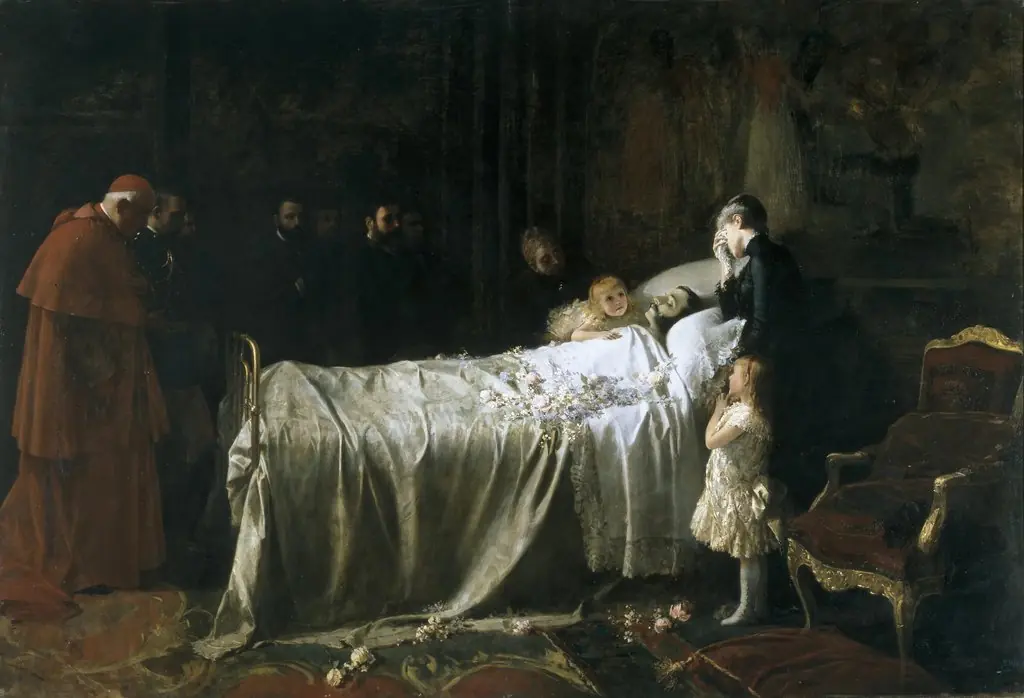 el Último Beso
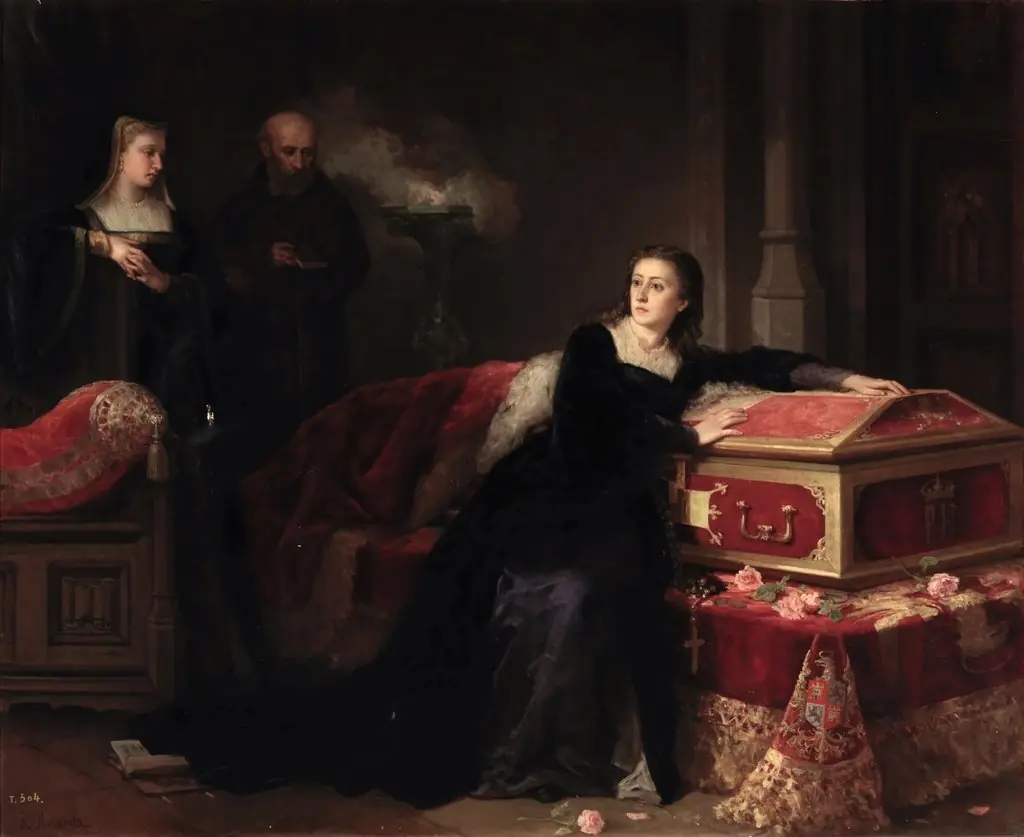 La reina doña Juana la Loca
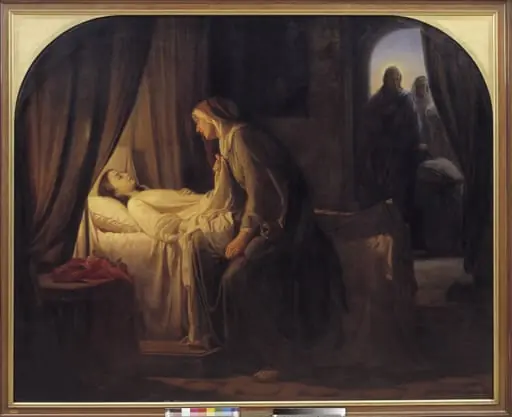 The Daughter of Jairius
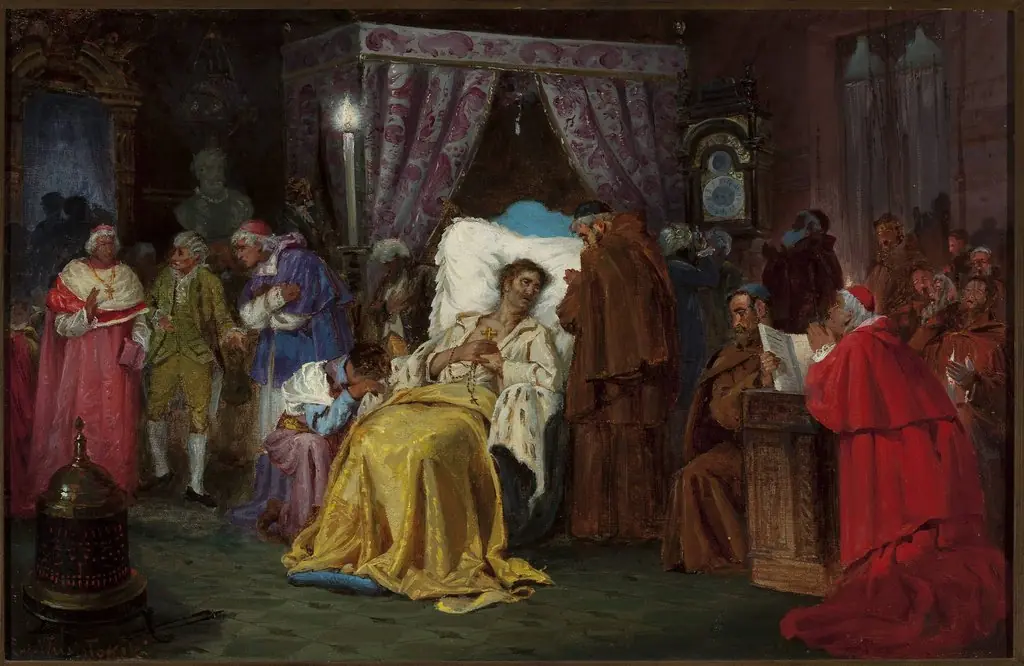 Aleksander Sobieski on his deathbed in Rome in 1714
 Queen Isabel la Católica dictating her last will and testament
 The Daughter of Jairius
 Death of Barbara Radziwiłł
 Lope de Vega en el cementerio
 The Awakening of Michel Montaigne
 The Death of the Duke of Berry