Artwork
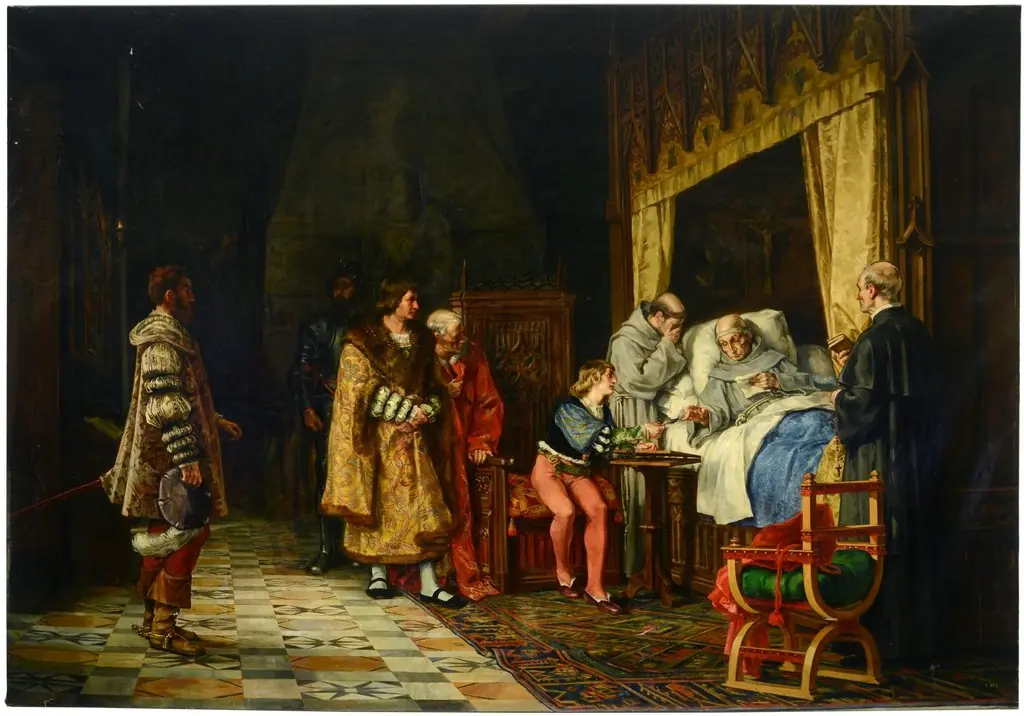
Aleksander Sobieski on his deathbed in Rome in 1714
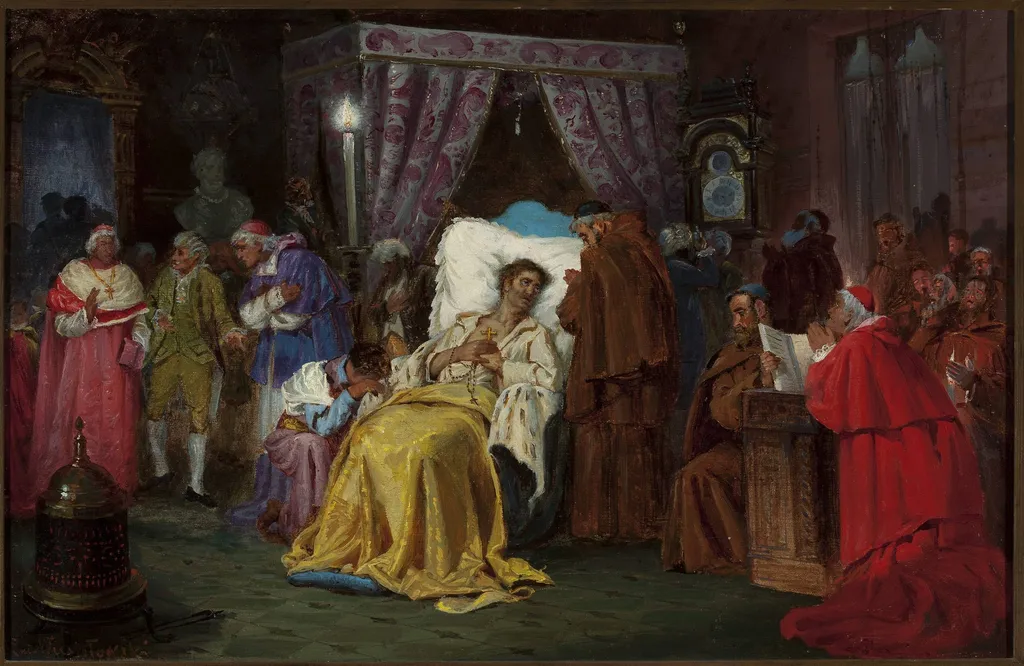
Aleksander Sobieski on his deathbed in Rome in 1714 is an oil painting by Ludwik Wiesiołowski. It is held in the collection of the National Museum in Warsaw.
About this work
Overview
The painting is part of the National Museum in Warsaw’s collection, where it remains a rare visual record of a Polish nobleman’s death far from home.
Painted in 1714 by Ludwik Wiesiołowski, this oil work depicts Aleksander Sobieski during his final hours in Rome. The scene captures a private moment of mortality, rendered with restrained solemnity. The painting is part of the National Museum in Warsaw’s collection, where it remains a rare visual record of a Polish nobleman’s death far from home. Its quiet intensity distinguishes it from more ceremonial portraiture of the era.
Subject & Meaning
Aleksander Sobieski, son of King John III Sobieski, is shown on his deathbed surrounded by attendants and clergy. His grip on a rosary suggests devotion in his final moments. The figures around him—some in ornate robes, others in plain garments—reflect a mix of personal attendants and religious figures, emphasizing both familial and spiritual presence. The scene conveys resignation rather than spectacle, focusing on the intimacy of death.
Technique & Style
Wiesiołowski employs chiaroscuro to model form and deepen emotional tone. Light falls selectively on the figure’s face and hands, contrasting with the shadowed corners of the room and the heavy canopy above. The texture of fabric—linen, velvet, and wool—is rendered with subtle gradations, while the stillness of the composition reinforces the gravity of the moment. The clock and window suggest the passage of time and the outside world beyond the chamber.
History & Provenance
Commissioned shortly after Sobieski’s death in Rome, the painting was likely intended as a memorial for his family in Poland. It entered the National Museum in Warsaw’s holdings in the 19th century, possibly through the collection of the Radziwiłł family or other Polish nobility with ties to the Sobieskis. Its survival through political upheavals underscores its significance as a personal and historical artifact.
Context
Sobieski died in exile, far from Poland’s political center, during a period when the Commonwealth was weakening. His death in Rome, a city associated with Catholic piety and European aristocracy, reflects the transnational networks of Polish nobility. The painting’s focus on private devotion rather than public legacy aligns with broader 18th-century trends in funerary imagery, where inner spirituality took precedence over dynastic display.
Legacy
Though not widely exhibited, the painting endures as a quiet testament to the personal dimensions of aristocratic life in decline. It offers insight into how Polish elites navigated death abroad, blending Catholic ritual with familial mourning. Its restrained realism distinguishes it from more theatrical Baroque works, marking it as a transitional piece in Polish portraiture toward greater psychological depth.
Artist & collection
Artist
Ludwik Wiesiołowski painted a single large oil portrait in 1714. It shows Aleksander Sobieski on his deathbed in Rome. The scene is quiet and formal. The artist’s style belongs to the early 1700s Polish–Roman tradition.…

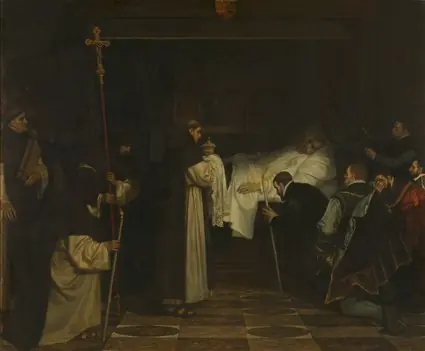 The death of Charles V
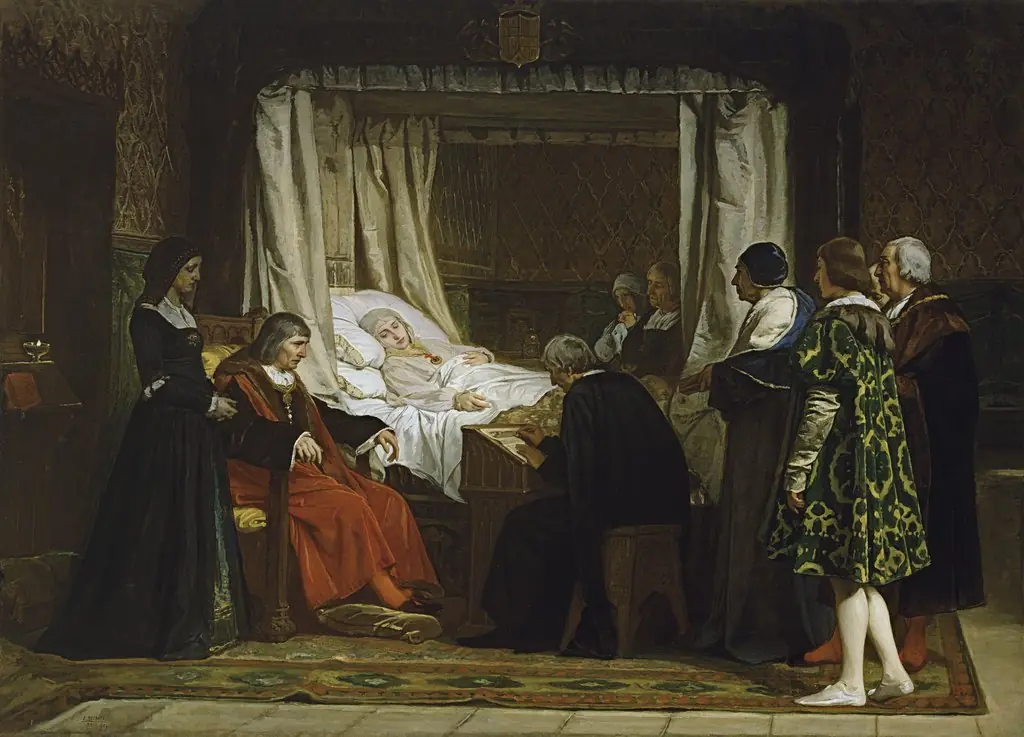 Queen Isabel la Católica dictating her last will and testament
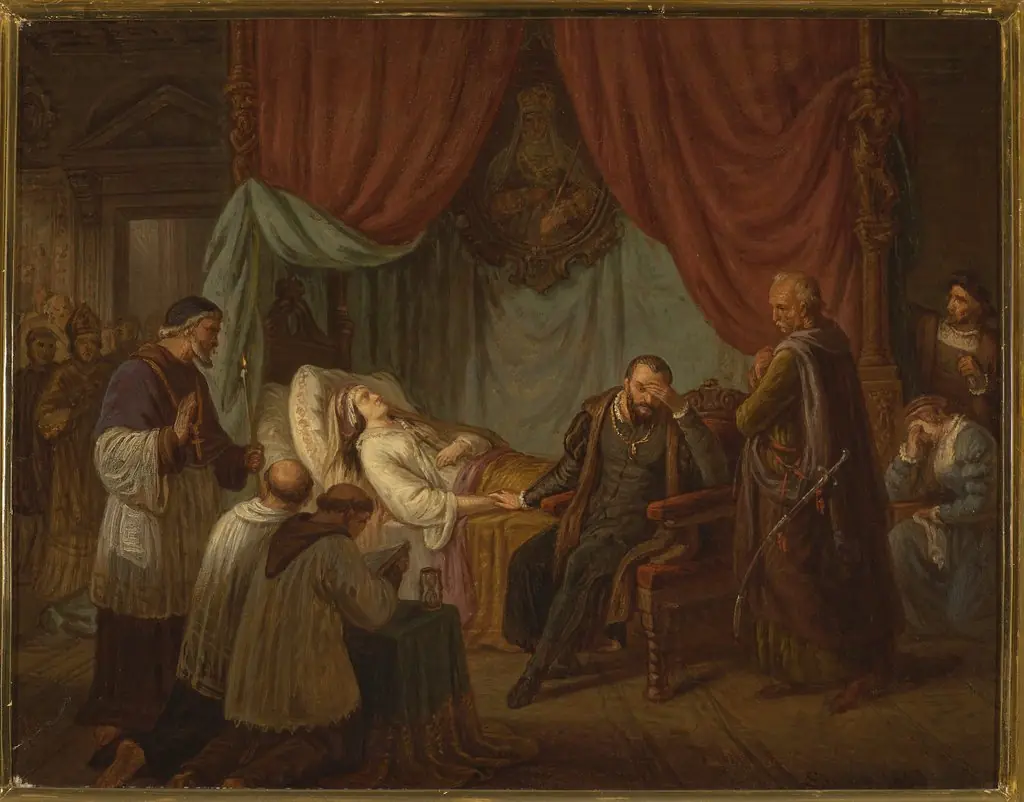 Death of Barbara Radziwiłł
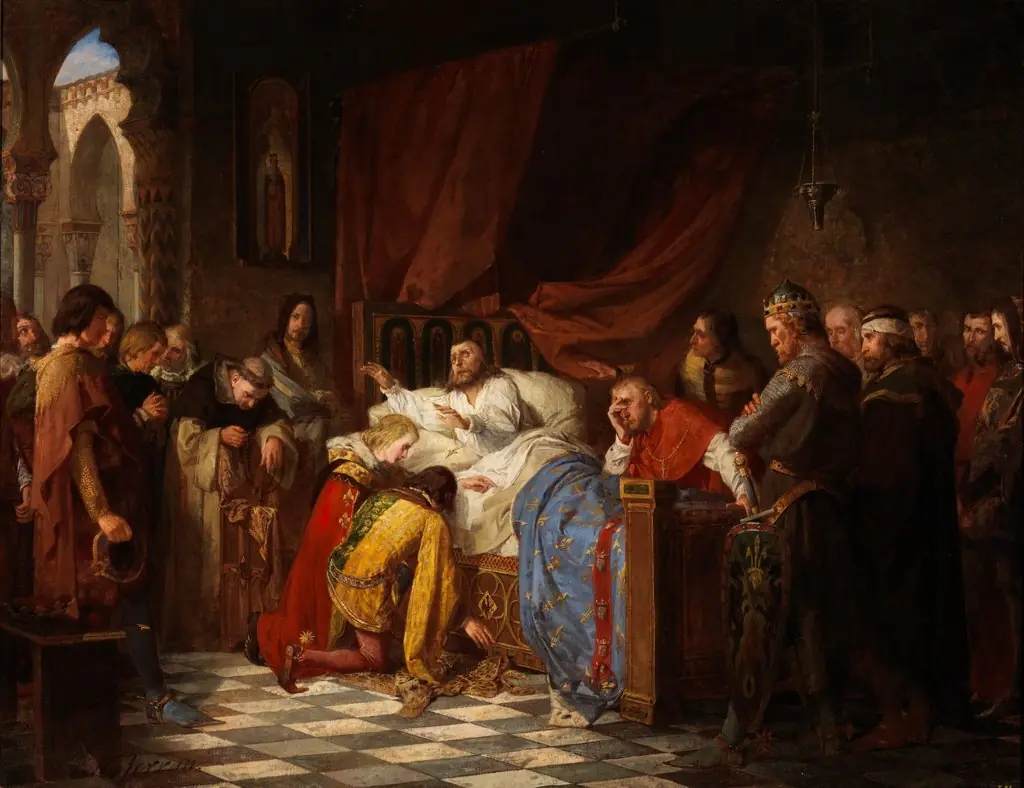 Felipe III de Francia moribundo bendiciendo a sus hijos
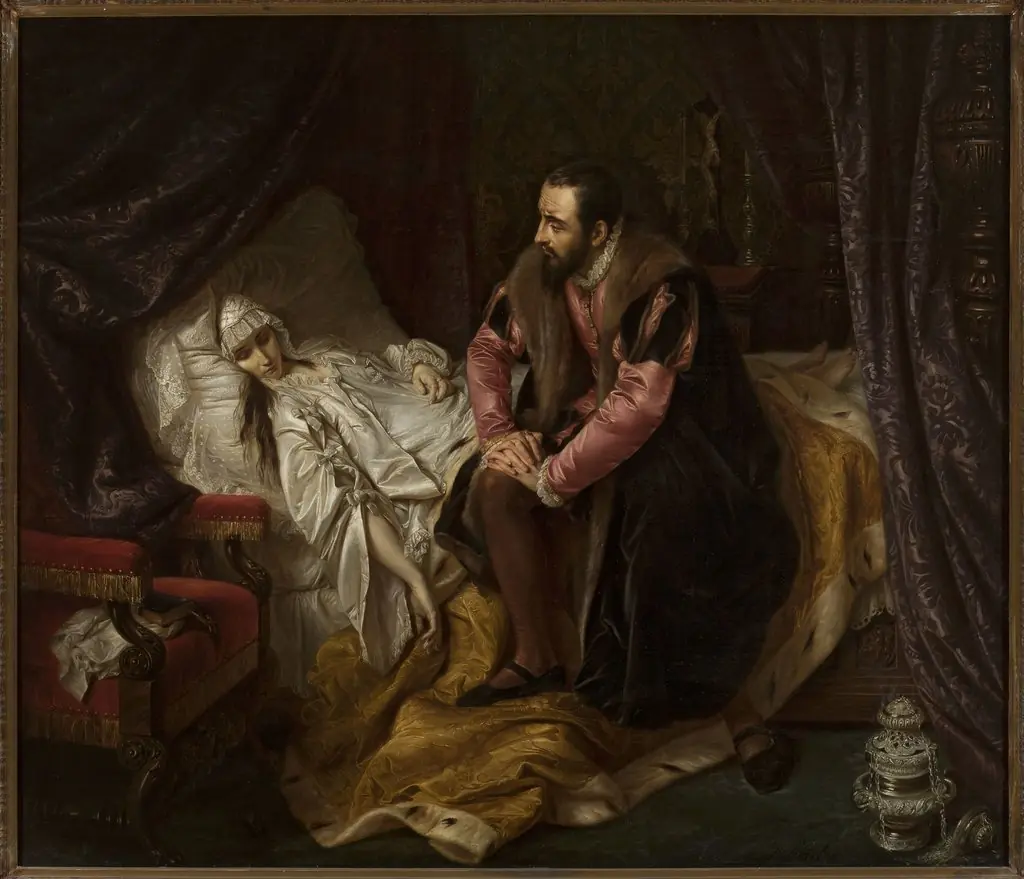 Death of Barbara Radziwiłł
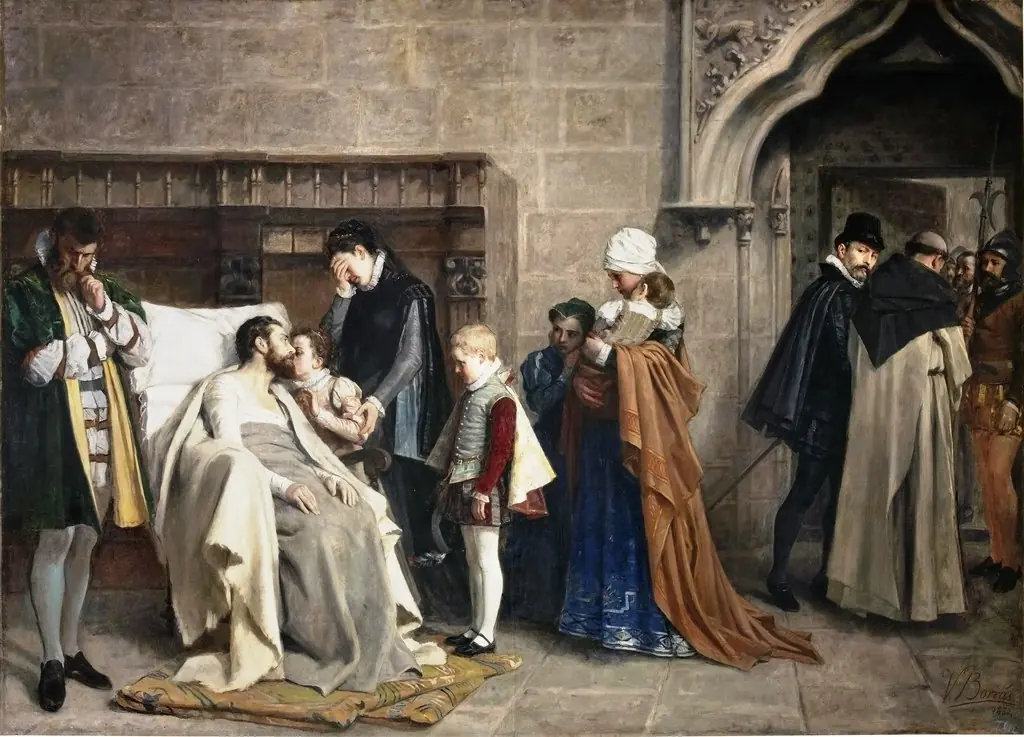 Antonio Pérez recibiendo a su familia después del tormento
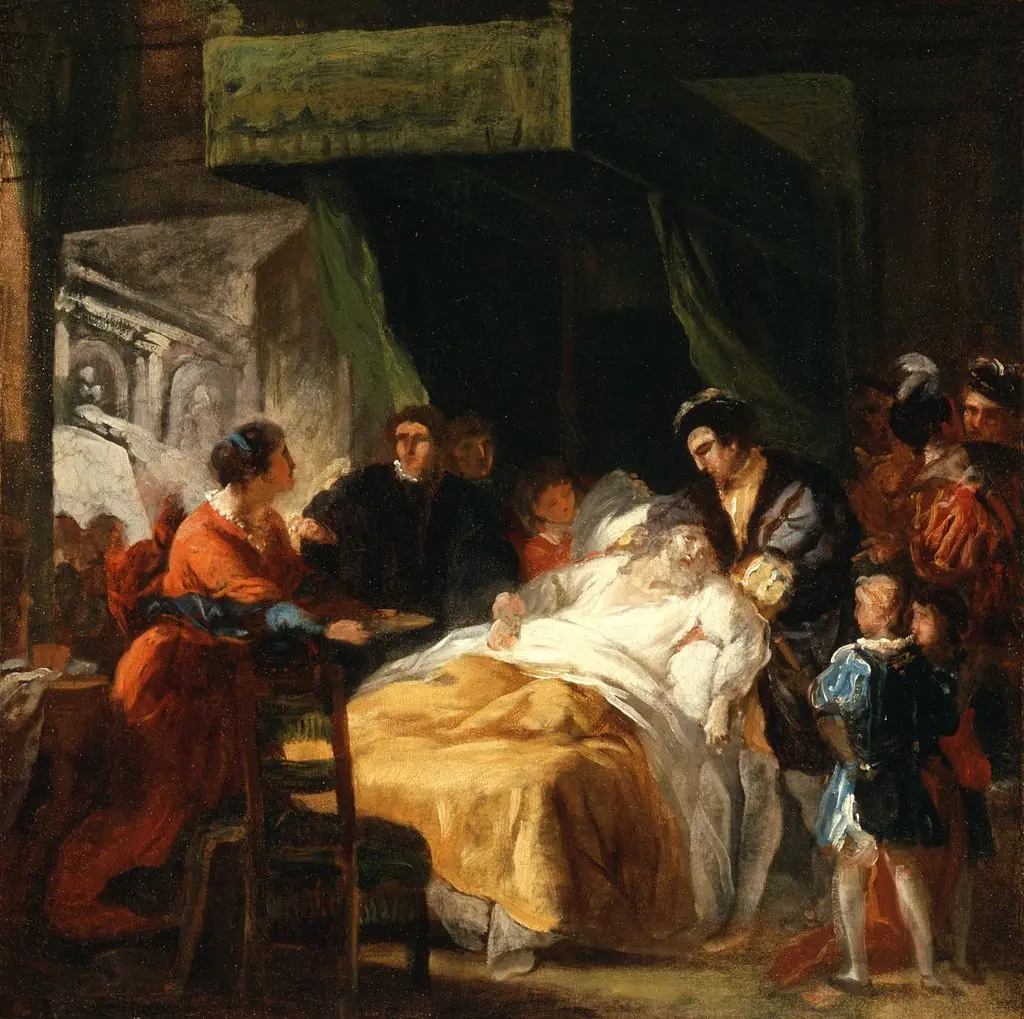 The Death of Leonardo da Vinci in the Arms of François I
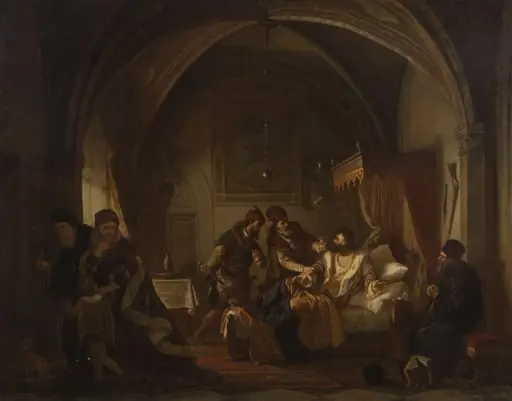 Moartea lui Alexandru Lăpușneanu
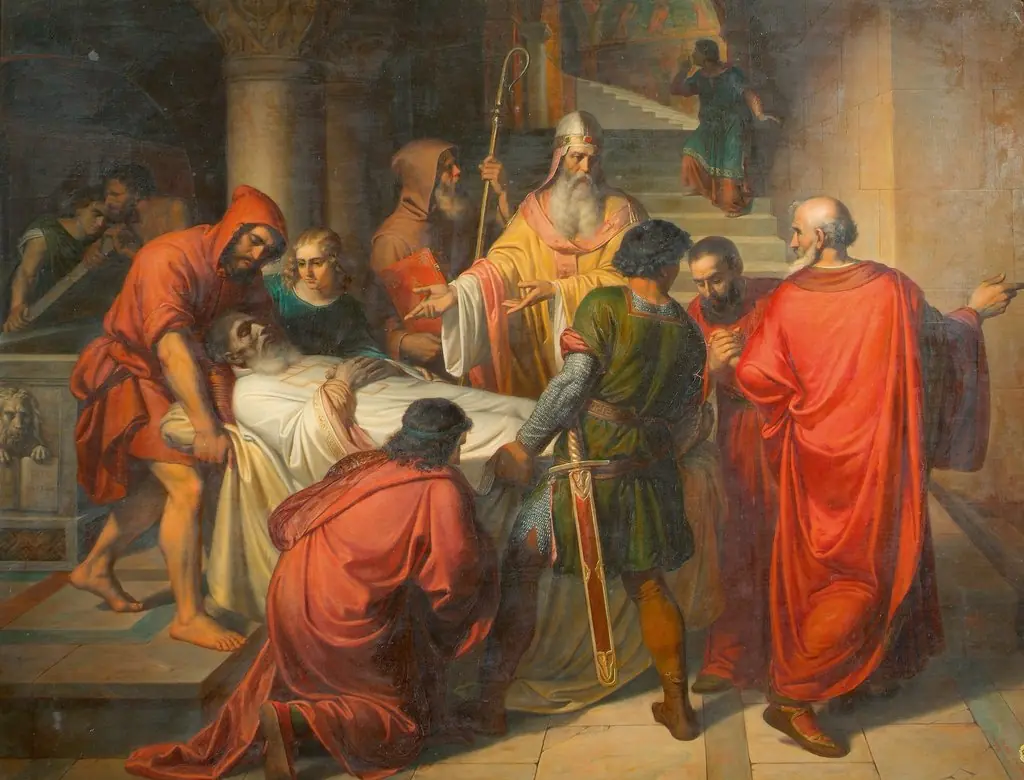 Übergabe des Leichnams des heiligen Markus in Alexandria an die Venezianer
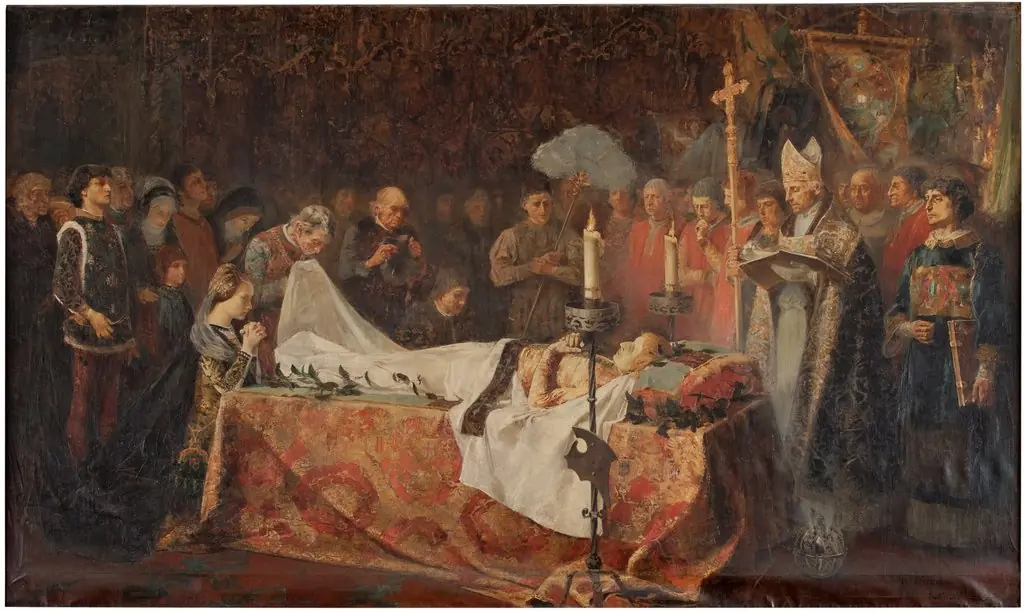 Muerte del príncipe de Viana
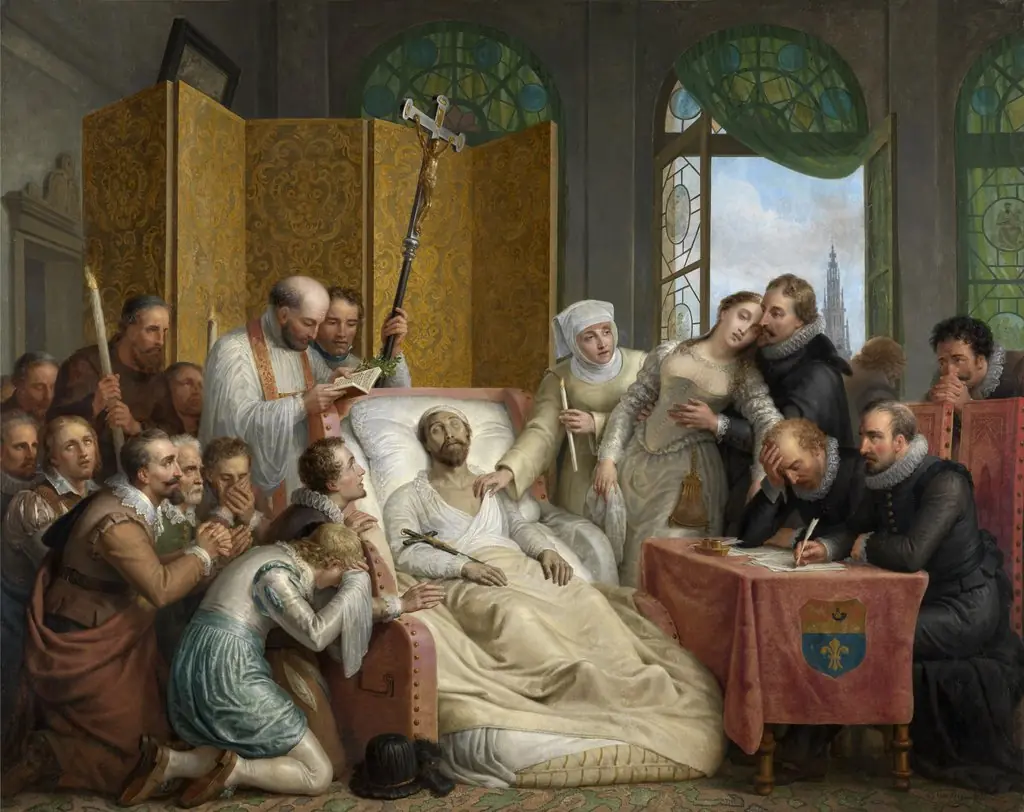 The Death of Peter Paul Rubens
 Mensaje de Carlos I al cardenal Cisneros (1517)