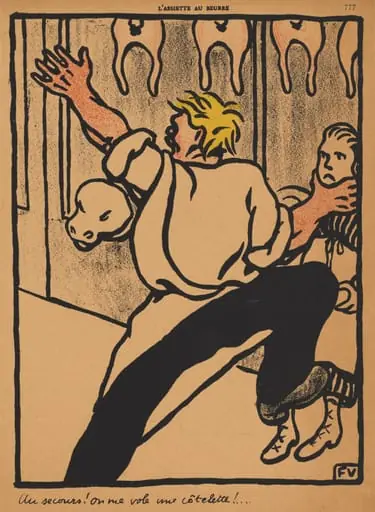
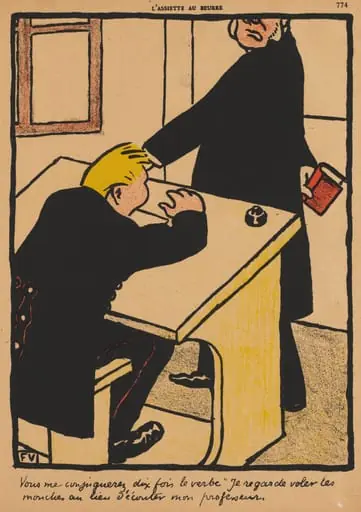
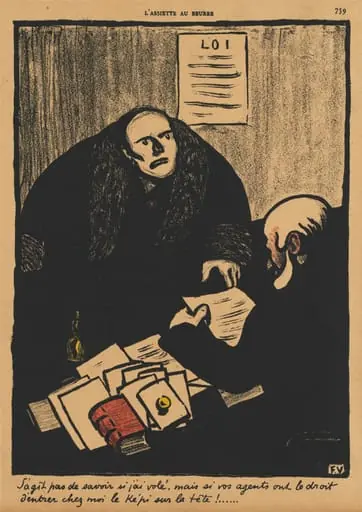
Artwork
It's about your father...
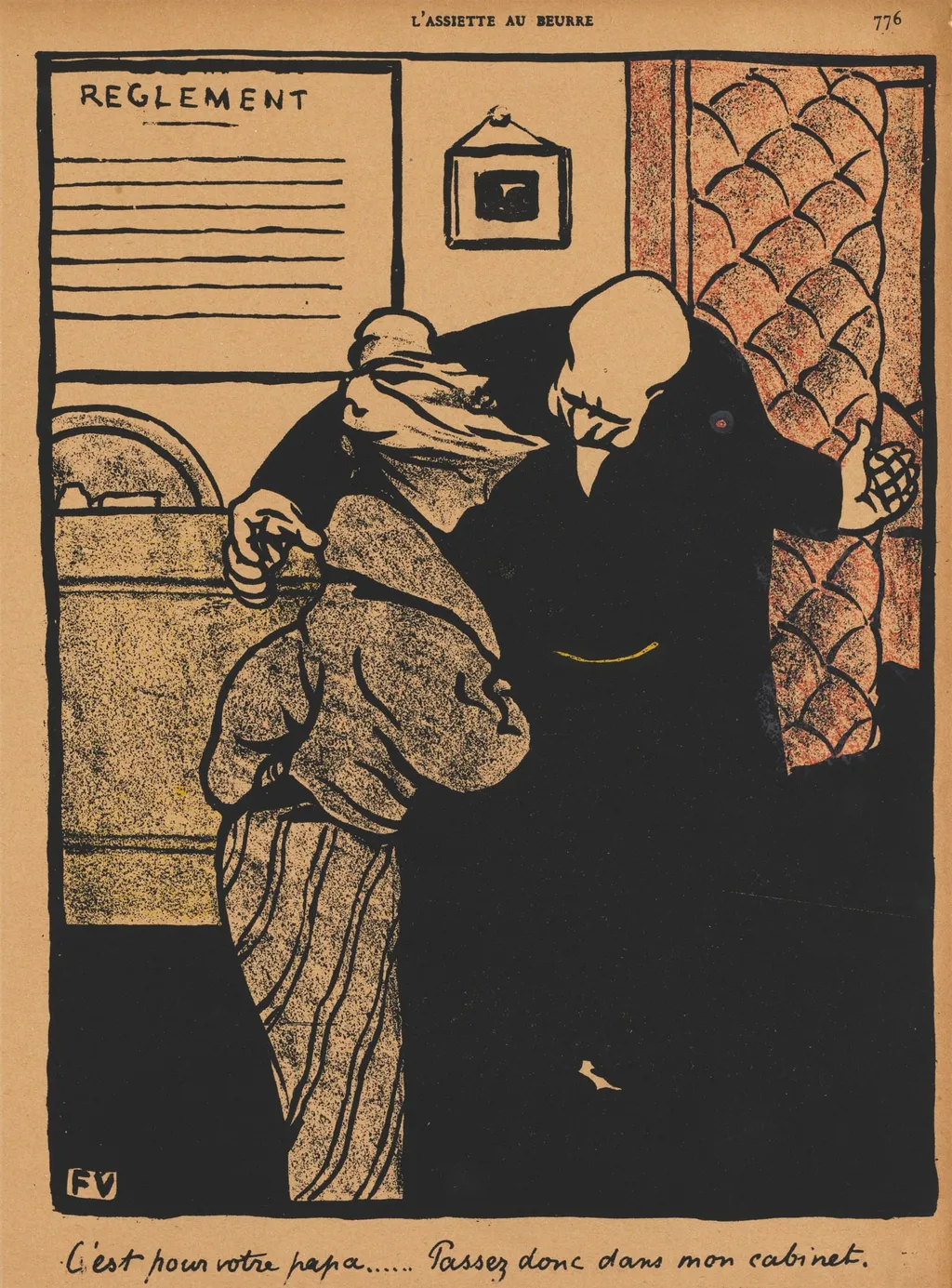
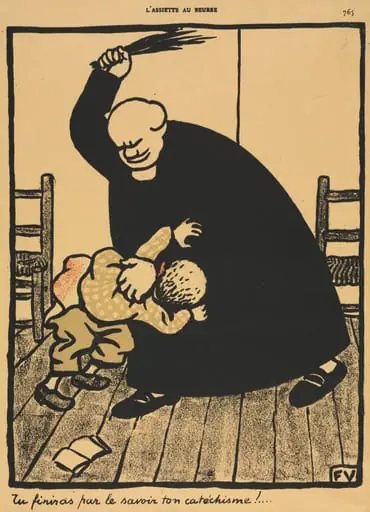
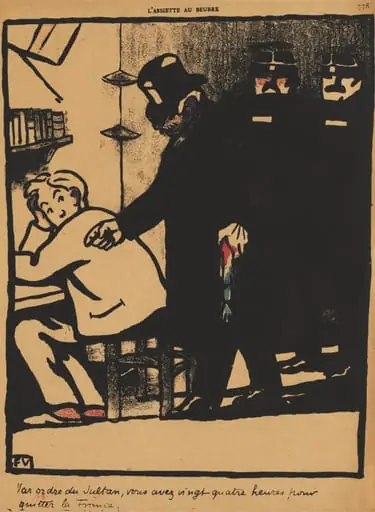
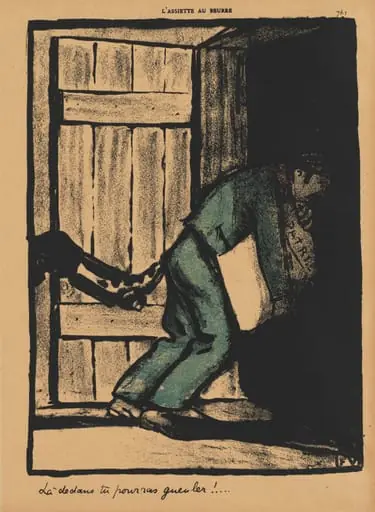
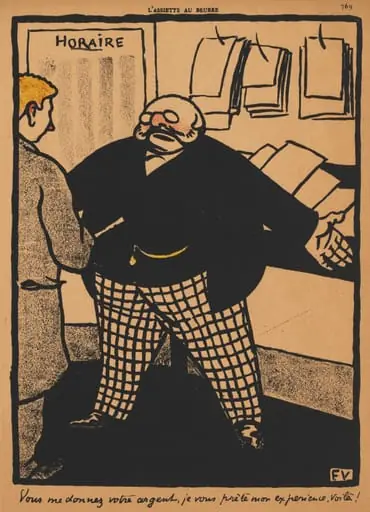
It's about your father... is a print by Félix Vallotton. It dates from 1901 and is held in the collection of the Cleveland Museum of Art. This woodcut print, published in L’Assiette au Beurre on March 1, 1902, is the nineteenth plate in the series Crimes and Punishments.
About this work
If you like how Vallotton turns everyday violence into stark images, look up *chiaroscuro*—the way light and dark create drama.
A man in a dark coat stands over a body on the floor, his back to us. The room is dim, lit only by a single lamp. Shadows stretch long and sharp.
This is a woodcut print from a series about crime and punishment, published in a French magazine in 1902. Vallotton’s lines are simple but precise, cutting right to the tension in the scene. The title hints at a personal betrayal—maybe the man killed his own father.
If you like how Vallotton turns everyday violence into stark images, look up *chiaroscuro*—the way light and dark create drama.
Overview
This woodcut print, published in L’Assiette au Beurre on March 1, 1902, is the nineteenth plate in the series Crimes and Punishments. Created by Félix Vallotton, it depicts a solitary figure standing over a prone form in a dim interior. The composition relies on stark contrasts of black and white, with minimal detail to heighten emotional tension. Its publication in a satirical French weekly situates it within early 20th-century social commentary.
Subject & Meaning
The title, 'It's about your father...', suggests a familial crime, implying betrayal or patricide. The figure, facing away from the viewer, holds an ambiguous posture—neither triumphant nor remorseful. The stillness of the scene and the absence of blood or struggle invite psychological interpretation rather than narrative clarity. The work evokes guilt, secrecy, and the quiet rupture of domestic trust.
Technique & Style
Vallotton employed the woodcut medium with disciplined precision, carving bold, clean lines that define form through contrast rather than shading. The single lamp casts elongated, angular shadows, enhancing the scene’s isolation. His style rejects naturalism in favor of flattened planes and rhythmic contours, drawing from Japanese prints and Symbolist aesthetics to convey mood over realism.
History & Provenance
The print originated as part of a serialized series in L’Assiette au Beurre, a French illustrated magazine known for its political and social satire. Vallotton contributed multiple plates to the Crimes and Punishments series between 1901 and 1903. The work was widely distributed in its original context, though individual prints were later collected by institutions and private collectors interested in modern graphic art.
Context
Early 1900s France saw rising public interest in crime, justice, and moral decay, reflected in popular media. Vallotton’s series responded to this climate, using stark imagery to critique societal hypocrisy. Unlike sensationalist journalism, his approach was restrained, inviting viewers to confront uncomfortable truths without graphic detail. The magazine’s satirical tone allowed for subversive commentary under the guise of entertainment.
Legacy
Vallotton’s woodcuts influenced later generations of printmakers and expressionist artists for their emotional economy and formal rigor. Though less known than his paintings, these prints remain significant for their fusion of social critique and minimalist aesthetics. The series as a whole is studied for its role in bridging 19th-century illustration and 20th-century modernist graphic design.
Artist & collection
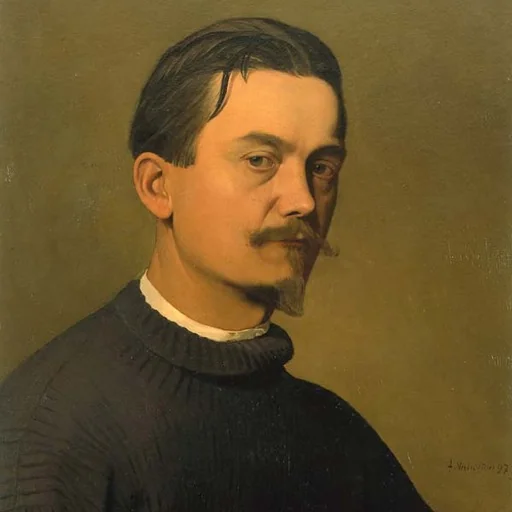
Artist
Félix Édouard Vallotton (French: ; December 28, 1865 – December 29, 1925) was a Swiss and French painter and printmaker associated with the group of artists known as Les Nabis.