Artwork
You'll learn...
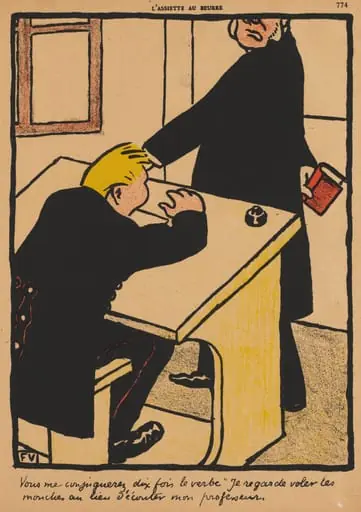
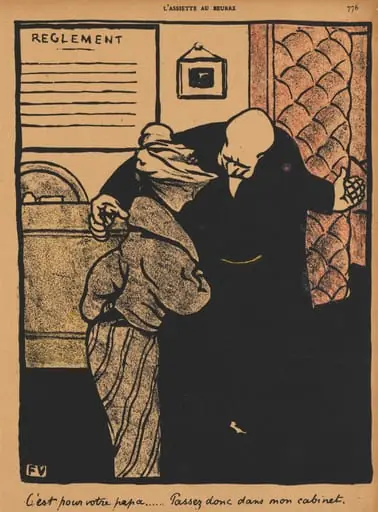
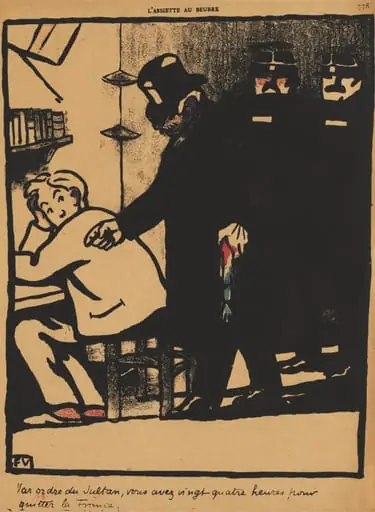
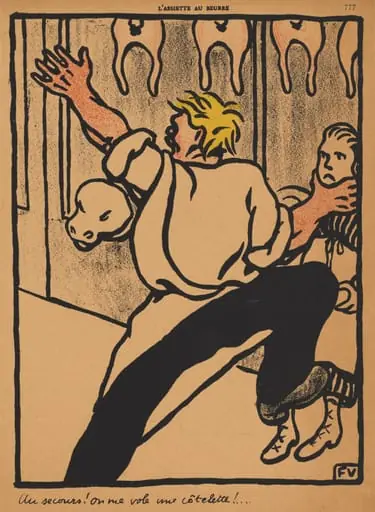
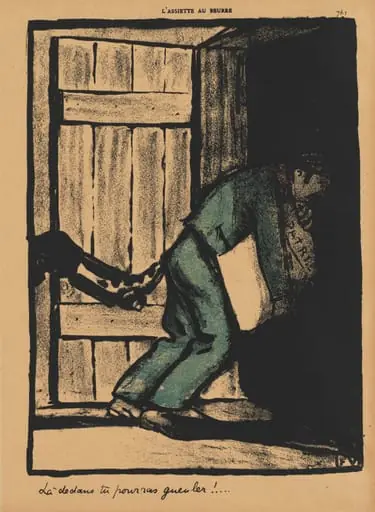
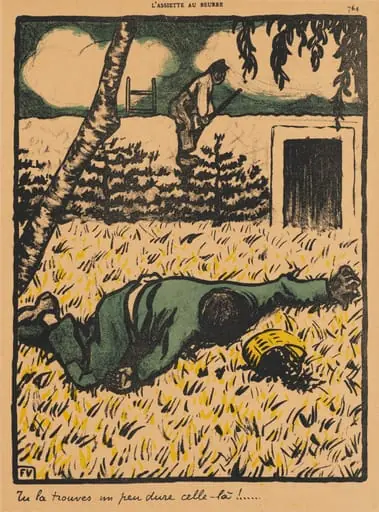
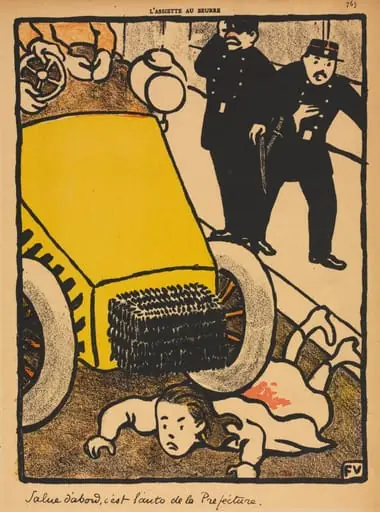
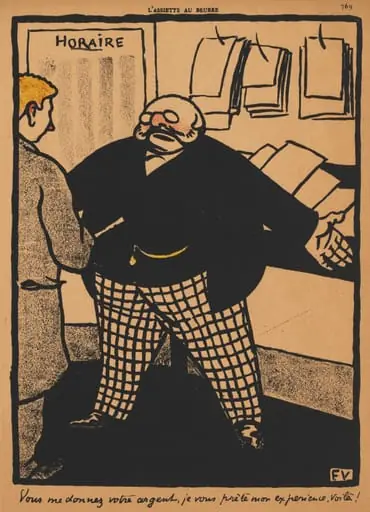
You'll learn... is a print by Félix Vallotton. It dates from 1901 and is held in the collection of the Cleveland Museum of Art. This woodcut appeared in the March 1, 1902, issue of L’Assiette au Beurre as the eighth plate in the series Crimes and Punishments.
About this work
Vallotton used sharp lines and flat black shapes to make the scene feel cold and almost cartoonish—like a news illustration, not a dramatic painting.
A man in a dark suit stands over a body wrapped in white sheets. Blood pools on the floor, and a knife lies nearby.
This print was made for a satirical magazine in 1902. Vallotton used sharp lines and flat black shapes to make the scene feel cold and almost cartoonish—like a news illustration, not a dramatic painting. The title, *You’ll Learn...*, hints at a lesson, but the image leaves the crime’s story untold.
Look up the technique chiaroscuro to see how other artists used light and shadow to create mood.
Overview
This woodcut appeared in the March 1, 1902, issue of L’Assiette au Beurre as the eighth plate in the series Crimes and Punishments. Created by Félix Vallotton, it depicts a solitary figure in a dark suit looming over a shrouded body, with blood staining the floor and a knife resting nearby. The image carries no narrative clarity, instead emphasizing stark visual contrast and emotional detachment.
Subject & Meaning
The title, You’ll Learn..., suggests a punitive lesson, yet the scene offers no context for the crime or its perpetrator. The absence of facial expressions and the anonymous figures imply a systemic or impersonal violence, possibly critiquing societal justice. The ambiguity invites viewers to confront the banality of violence rather than its drama.
Technique & Style
Vallotton employed bold, flat areas of black ink and sharp, angular lines typical of woodcut printing. He avoided modeling or gradation, rejecting traditional chiaroscuro in favor of graphic simplicity. The result is a cold, almost mechanical composition that resembles a newspaper engraving, heightening the sense of detachment and immediacy.
History & Provenance
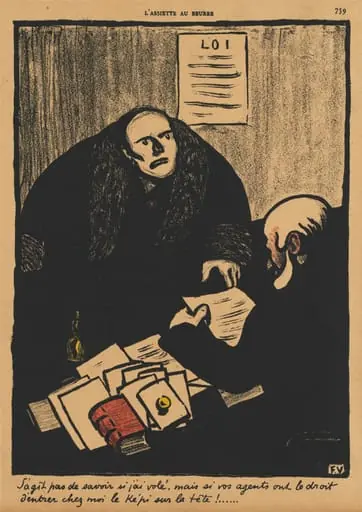
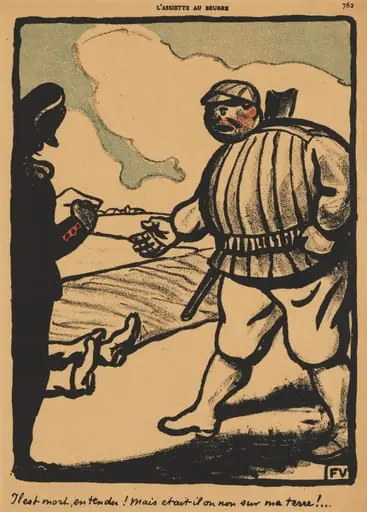
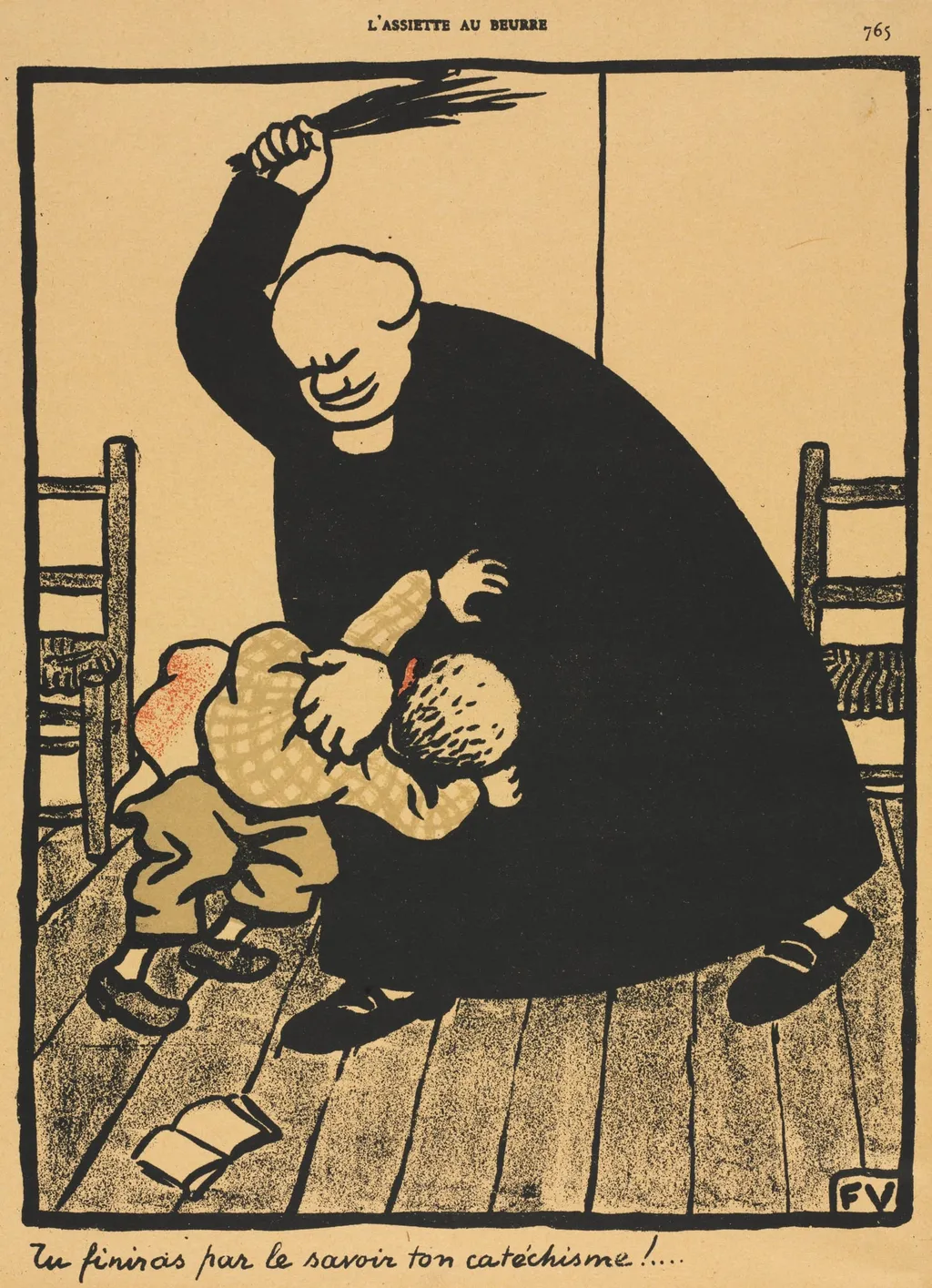
The print was produced for L’Assiette au Beurre, a French satirical weekly known for its political and social critiques. Vallotton contributed regularly to the magazine between 1899 and 1903, using its platform to explore themes of power, morality, and class. This piece was part of a series examining retribution and its consequences in modern society.
Context
In early 20th-century France, illustrated satirical magazines served as vehicles for public dissent, often targeting corruption and hypocrisy. Vallotton’s work aligned with this tradition, using visual economy to expose uncomfortable truths. His style diverged from academic painting, embracing print media’s accessibility and directness to reach a broad audience.
Legacy
Vallotton’s approach influenced later graphic artists and illustrators who favored minimalism over realism. His use of stark contrasts and narrative ambiguity prefigured 20th-century editorial illustration and even film noir aesthetics. Though not widely exhibited in fine art contexts during his lifetime, his prints are now recognized for their incisive commentary on modern alienation.
Artist & collection
Artist
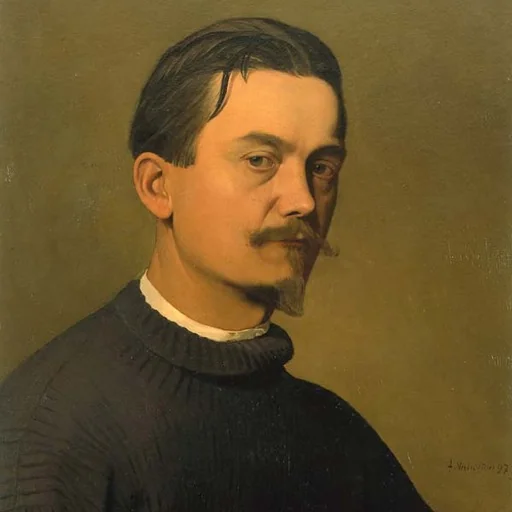
Félix Édouard Vallotton (French: ; December 28, 1865 – December 29, 1925) was a Swiss and French painter and printmaker associated with the group of artists known as Les Nabis.