Artwork
Ten past one...
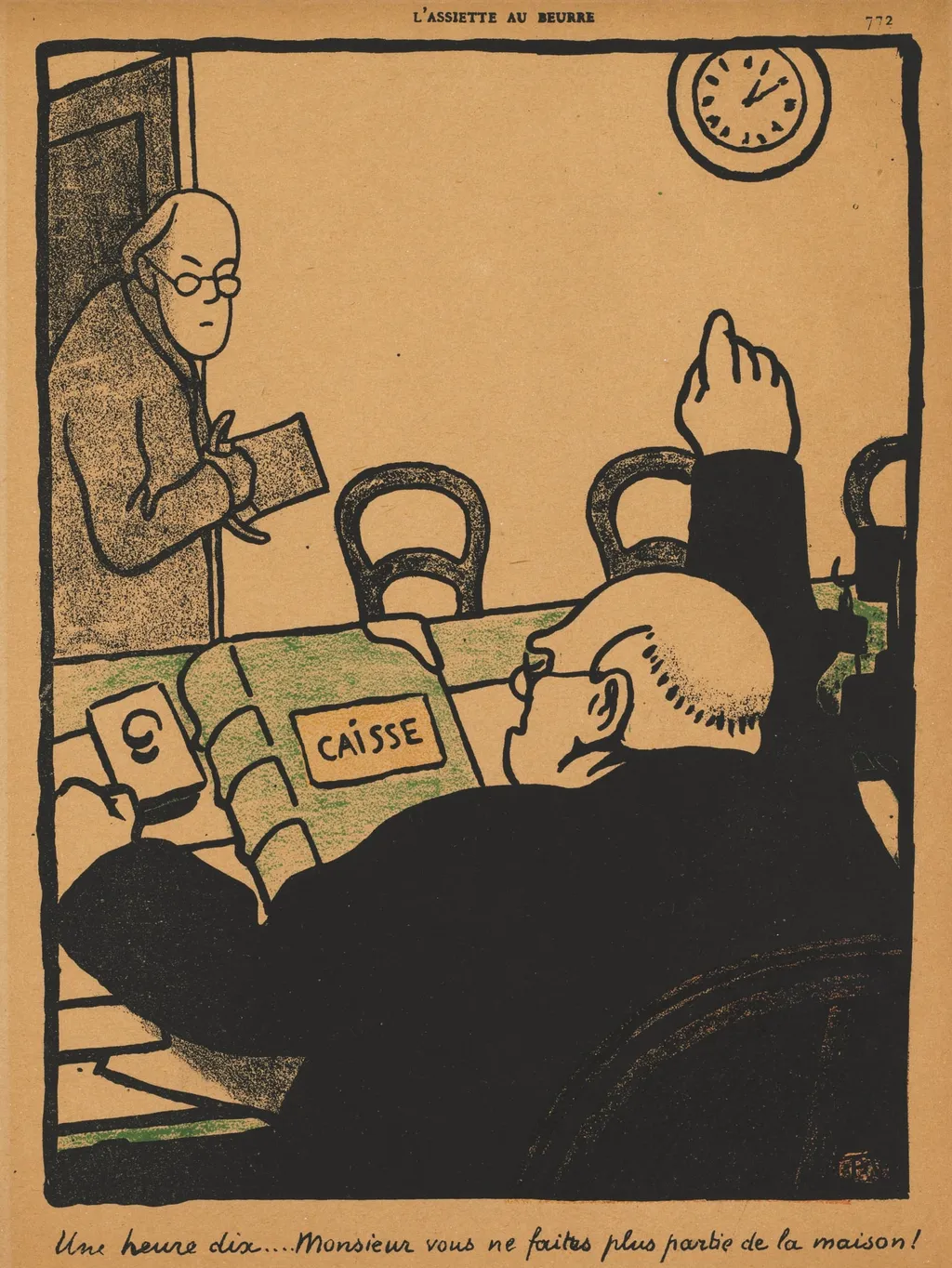
Ten past one... is a print by Félix Vallotton. It dates from 1901 and is held in the collection of the Cleveland Museum of Art. This woodcut print, published in L’Assiette au Beurre on March 1, 1902, is the fifteenth plate in the series Crimes and Punishments.
About this work
A woman in a dark dress stands over a man sprawled on the floor, blood pooling under his head.
A woman in a dark dress stands over a man sprawled on the floor, blood pooling under his head. The clock on the wall reads ten past one.
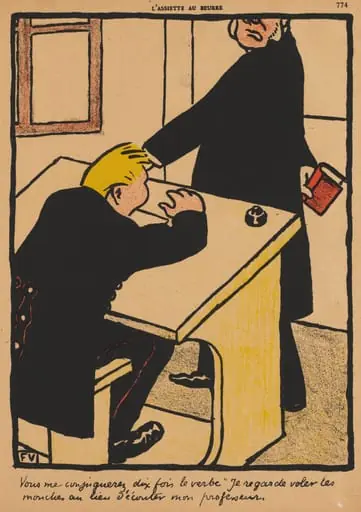
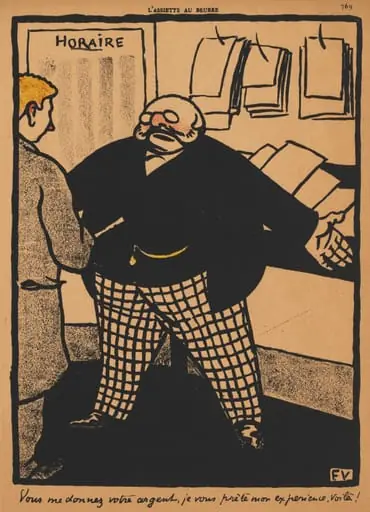
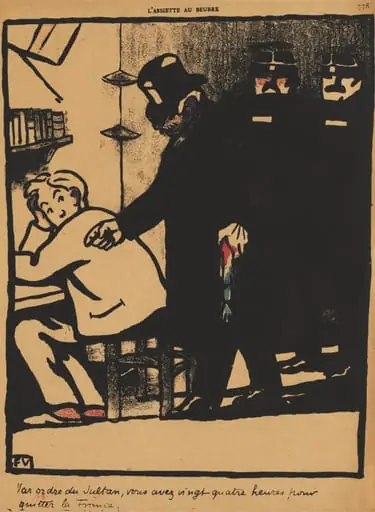
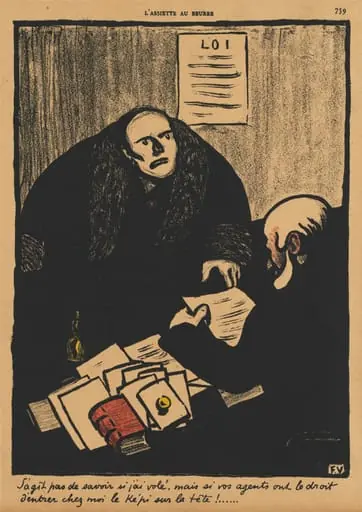
This is a woodcut print from a series about crime, published in a French magazine. Vallotton strips the scene down to sharp black and white shapes—no shading, no extra details. The flat patterns make the violence feel almost quiet, like a newspaper headline.
To see more of this stark style, look up Félix Vallotton (Swiss French, 1865–1925).
Overview
This woodcut print, published in L’Assiette au Beurre on March 1, 1902, is the fifteenth plate in the series Crimes and Punishments. Created by Swiss-French artist Félix Vallotton, it presents a single moment of violence with minimal detail. The image relies entirely on stark contrasts of black and white, eliminating gradation and ornamentation to focus attention on the figures and their spatial relationship.
Subject & Meaning
A woman in a dark dress stands over a prone man, his head resting in a pool of blood. The clock on the wall, reading ten past one, anchors the scene in a precise, ordinary time, suggesting the crime occurred in a domestic setting. The lack of facial expression or dramatic gesture invites interpretation: is this retribution, accident, or cold calculation? The silence of the image amplifies its unsettling ambiguity.
Technique & Style
Vallotton employed the woodcut medium to achieve sharp, angular forms and flat planes of black and white. By avoiding shading and texture, he reduced the scene to essential shapes—sharp lines for the woman’s dress, angular limbs, and the clock’s circular face. This stylistic austerity strips away sentimentality, transforming the moment into something detached, almost journalistic in its clarity.
History & Provenance
The print was originally published as part of a serialized series in the French satirical magazine L’Assiette au Beurre, known for its political and social commentary. Vallotton contributed multiple works to the magazine between 1900 and 1903. This particular plate was issued in 1902 and later entered museum collections, where it is now recognized as a key example of early 20th-century graphic art.
Context
The series Crimes and Punishments responded to contemporary debates about justice, class, and gender in France. Published during a period of heightened public anxiety over crime and moral decay, Vallotton’s images avoided sensationalism. Instead, they presented crime as an intimate, quiet occurrence—often within the home—challenging romanticized notions of violence in art and media.
Legacy
Vallotton’s woodcuts influenced later generations of graphic artists and expressionists through their emotional restraint and formal precision. His ability to convey psychological tension without narrative exposition set a precedent for modern illustration and printmaking. Today, the work is studied for its economy of form and its quiet subversion of traditional depictions of violence.
Artist & collection
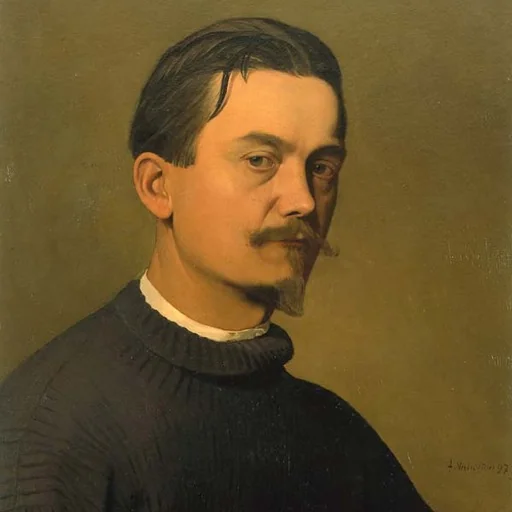
Artist
Félix Édouard Vallotton (French: ; December 28, 1865 – December 29, 1925) was a Swiss and French painter and printmaker associated with the group of artists known as Les Nabis.