Artwork
Daedalus and Icarus
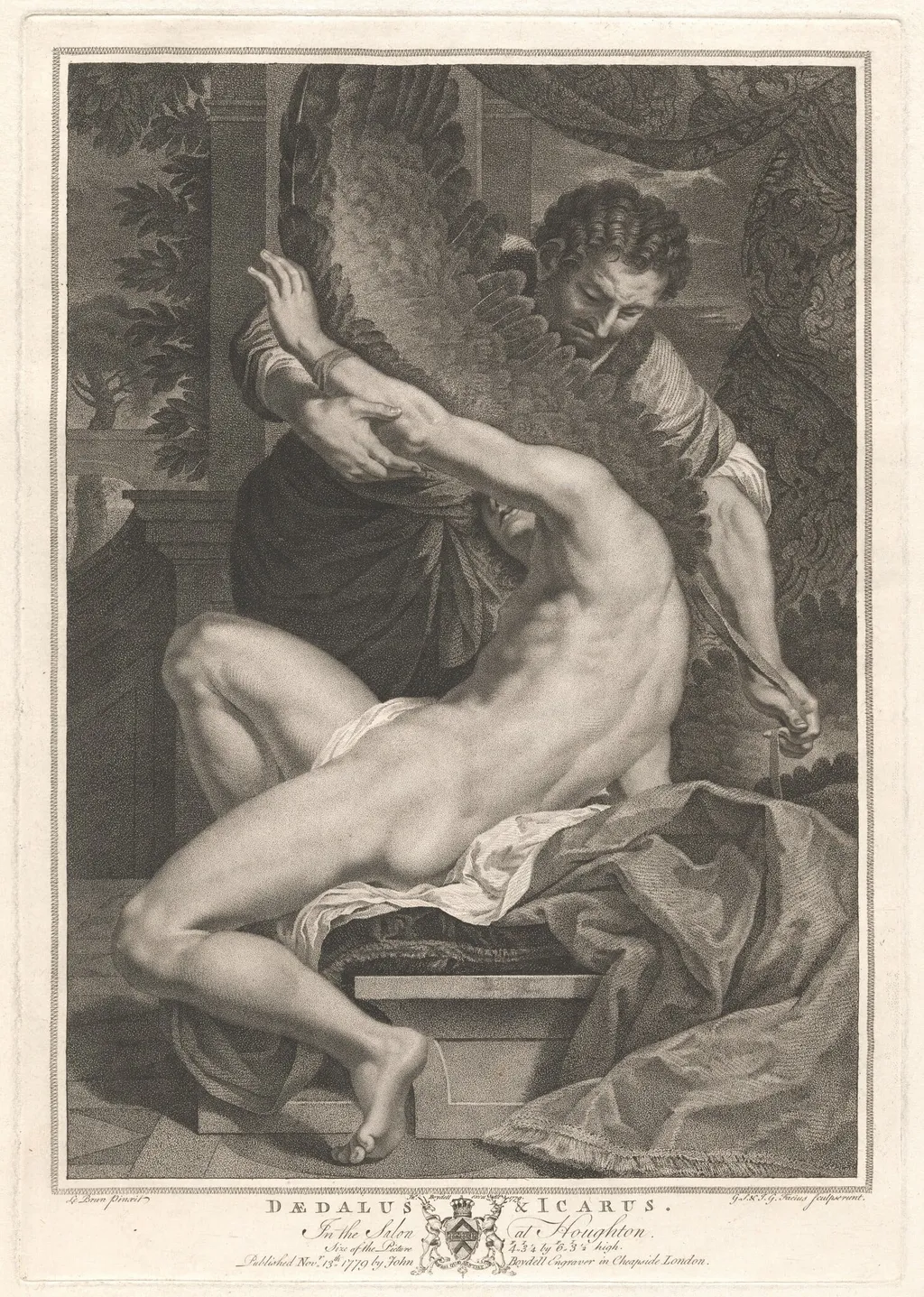
Daedalus and Icarus is an ink print by the Romanticist artist Georg Siegmund Facius. It dates from 1779 and is held in the collection of the National Gallery of Art.
About this work
Overview
Created in 1779 by Georg Siegmund Facius, this print depicts the myth of Daedalus and Icarus using stipple etching and engraving on laid paper.
Created in 1779 by Georg Siegmund Facius, this print depicts the myth of Daedalus and Icarus using stipple etching and engraving on laid paper. It is part of the National Gallery of Art’s collection in Washington, D.C. The technique allows for subtle gradations of tone, capturing the emotional weight of the scene with precision. The work belongs to a period when classical narratives were frequently revisited in European graphic arts.
Subject & Meaning
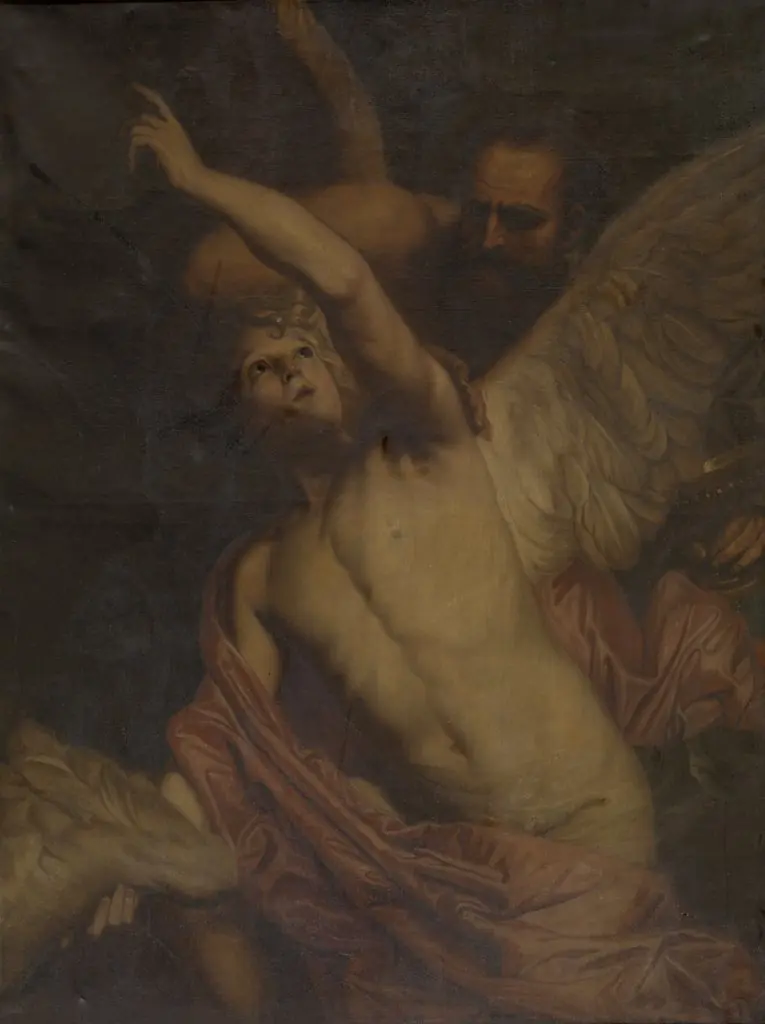
The scene captures the moment Daedalus carries his son Icarus through the air, just after their escape from Crete. Daedalus, focused and solemn, holds Icarus, whose body twists in alarm as he looks toward the sun. The myth, warning against hubris, is rendered not as triumph but as impending tragedy. The tension lies in the contrast between the father’s control and the son’s panic, underscoring the fragility of human ambition.
Technique & Style
Facius employed stipple etching to model form through delicate dots and lines, creating soft transitions between light and shadow. Engraved contours define the figures’ musculature and the texture of their feathered wings. The background, composed of stylized foliage and drapery, recedes into muted tones, directing focus to the central figures. The method emphasizes tactile detail without overt theatricality, aligning with late 18th-century print aesthetics.
History & Provenance
The print was produced in Germany during a period of renewed interest in classical mythology among artists and collectors. Facius, known for reproductive engravings, likely based his composition on earlier paintings or sculptures. It entered the National Gallery of Art’s collection in the 20th century, where it remains as part of a broader archive of European graphic works from the Enlightenment era.
Context
Though created before Romanticism’s full emergence, the print anticipates its emotional intensity and focus on mythic tragedy. Contemporary audiences would have recognized the story from Ovid’s Metamorphoses, often used to reflect on human limits. The work reflects a broader trend in printmaking: using ancient tales to explore psychological depth, rather than merely illustrating legend.
Legacy
Facius’s interpretation remains a notable example of late 18th-century German printmaking, valued for its technical refinement and restrained drama. While not widely reproduced, it contributes to the understanding of how classical myths were visually adapted in print culture. Its presence in a major American museum underscores its role in transnational artistic dialogue of the period.
Artist & collection