Artwork
Guardian Angel
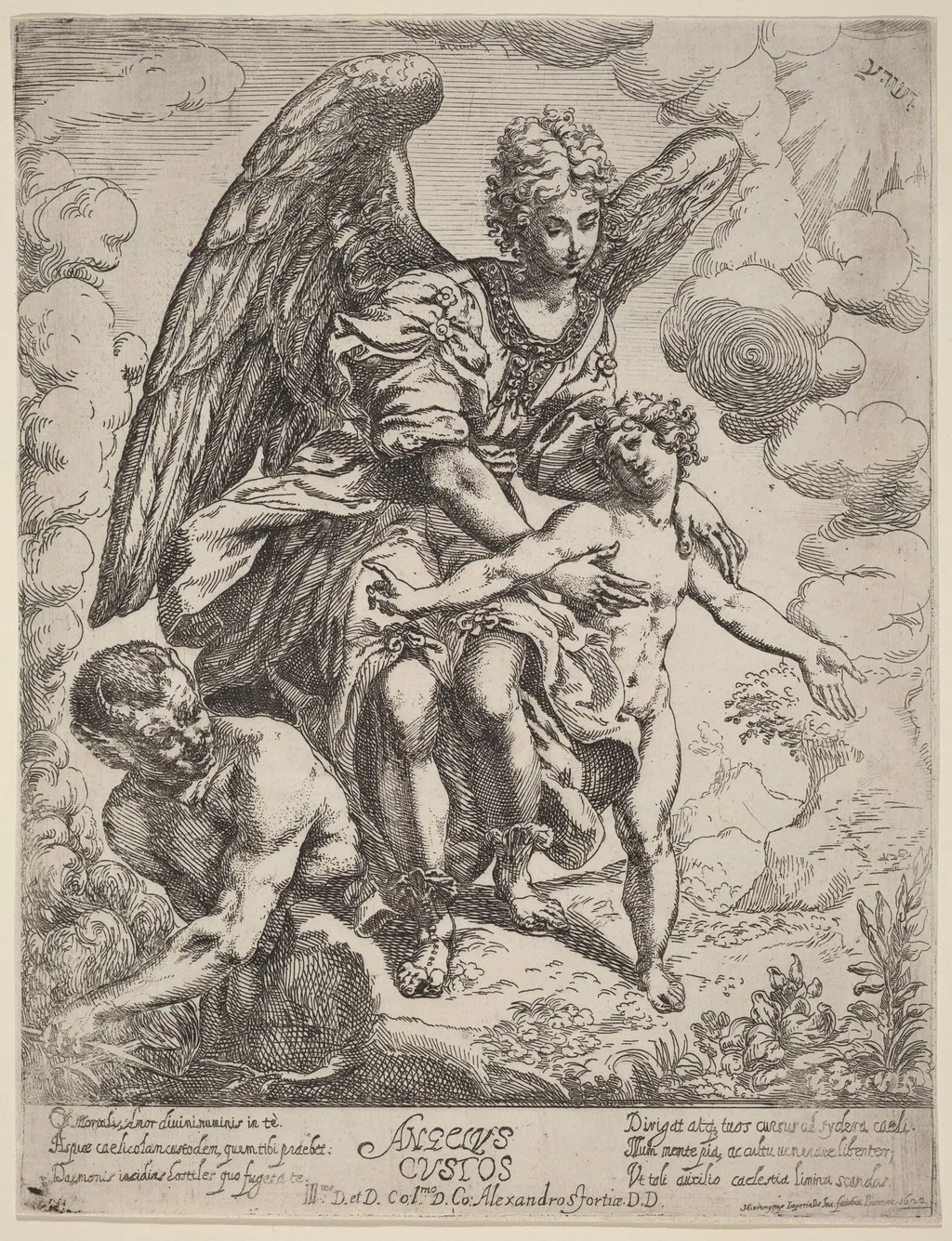
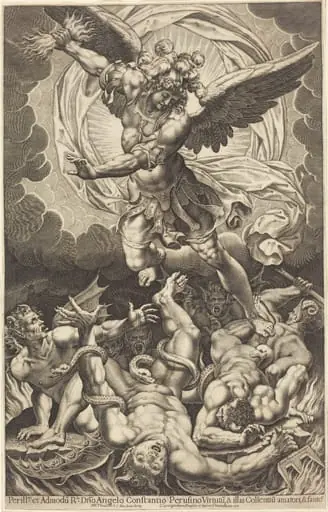
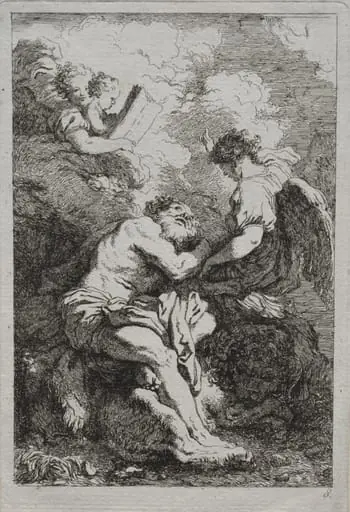
Guardian Angel is an ink print by the Baroque artist Girolamo Imperiale I. It dates from 1622 and is held in the collection of the National Gallery of Art.
About this work
Overview
Created in 1622 by Girolamo Imperiale I, this print combines etching and engraving techniques to depict a celestial guardian cradling an infant. The work belongs to a tradition of religious imagery that visualized divine protection, rendered with precision through fine linear detail. Its composition balances stillness and motion, anchoring the sacred figure against a dynamic, cloud-filled sky.
Subject & Meaning
The central figure is a winged angel, solemn and protective, holding a child as if safeguarding its soul.
The central figure is a winged angel, solemn and protective, holding a child as if safeguarding its soul. The presence of small figures in the background suggests earthly observers or souls under divine watch. The angel’s outstretched wings and firm stance convey vigilance, reinforcing the theological concept of personal guardianship by heavenly beings, a theme common in Counter-Reformation devotional art.
Technique & Style
Imperiale employed fine, controlled lines to model the angel’s feathers and flowing robes, using engraving for sharp definition and etching for softer tonal gradations. The contrast between the solid, textured form of the angel and the swirling, indistinct clouds enhances spatial depth. Light is suggested through varying line density, creating volume without overt chiaroscuro, typical of Northern Italian printmaking of the era.
History & Provenance
The print was produced in the early 17th century in Italy, likely for private or ecclesiastical use. Few impressions survive, and its circulation was probably limited to religious circles or collectors of devotional imagery. No documented ownership before the 19th century is known, suggesting it was not widely reproduced or publicly displayed in its time.
Context
This work emerged during a period when the Catholic Church emphasized visual aids for piety following the Council of Trent. Angels as protectors were popular subjects in prints, serving as accessible tools for meditation. Imperiale’s style reflects the influence of both Venetian draftsmanship and the detailed line work of Northern European engravers, blending regional traditions in a distinctly Italian devotional context.
Legacy
Though not widely known today, the print exemplifies the quiet intensity of early Baroque religious prints. Its technical precision and emotional restraint align it with lesser-known but skilled artisans who sustained devotional imagery outside major artistic centers. It remains a quiet testament to the role of printmaking in personal spirituality during a time of religious renewal.
Artist & collection