Artwork
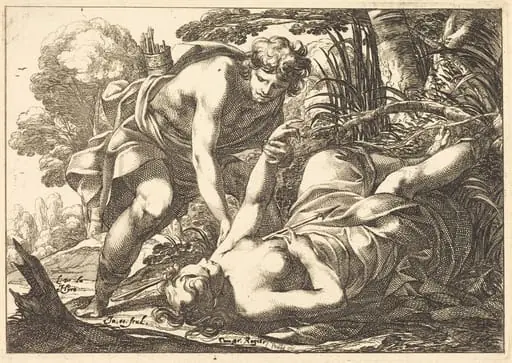
The Death of Adonis
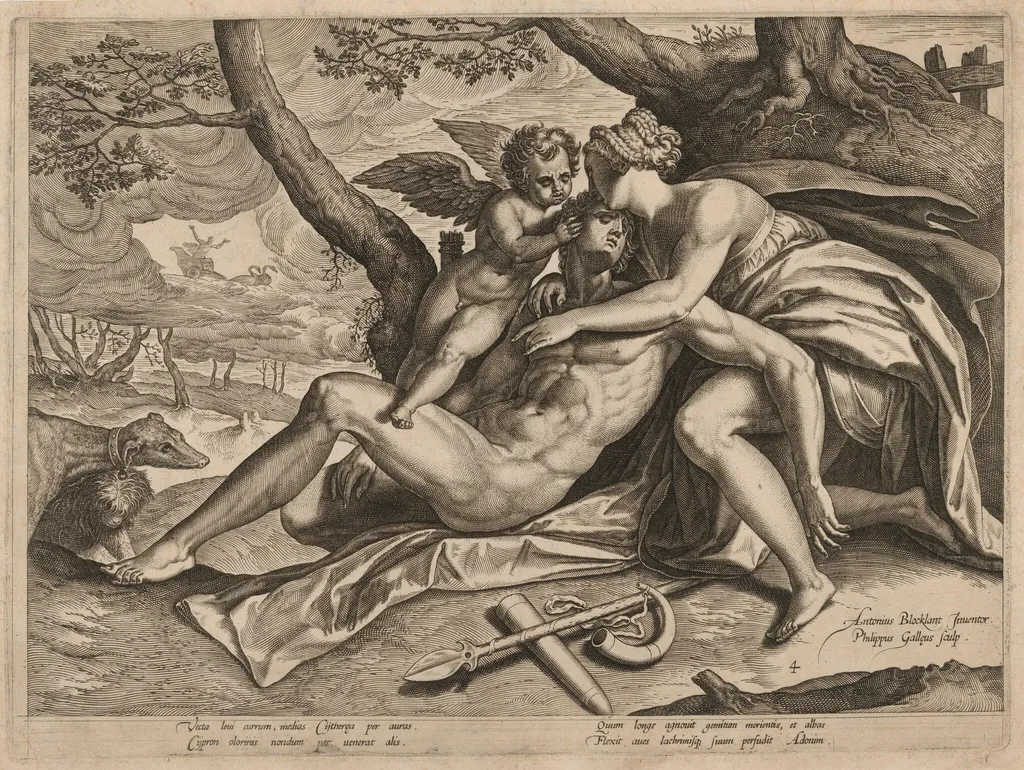
The Death of Adonis is an ink print by the Renaissance artist Philip Galle. It dates from 1579 and is held in the collection of the National Gallery of Art.
About this work
Overview
Philip Galle’s 1579 engraving depicts the mythological death of Adonis, rendered in fine linear detail on laid paper.
Philip Galle’s 1579 engraving depicts the mythological death of Adonis, rendered in fine linear detail on laid paper. As a prominent Dutch print publisher, Galle specialized in translating painted compositions into reproducible prints. This work exemplifies the late sixteenth-century practice of disseminating classical narratives through print, making them accessible beyond elite collectors and expanding the reach of Renaissance imagery across Europe.
Subject & Meaning
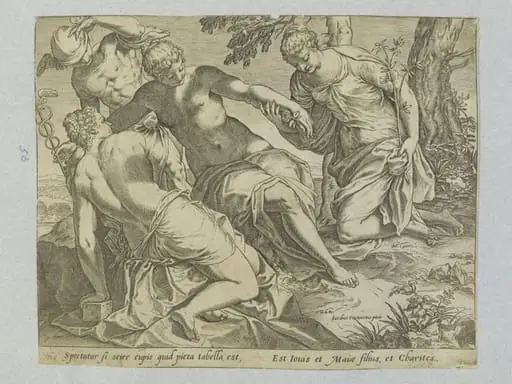
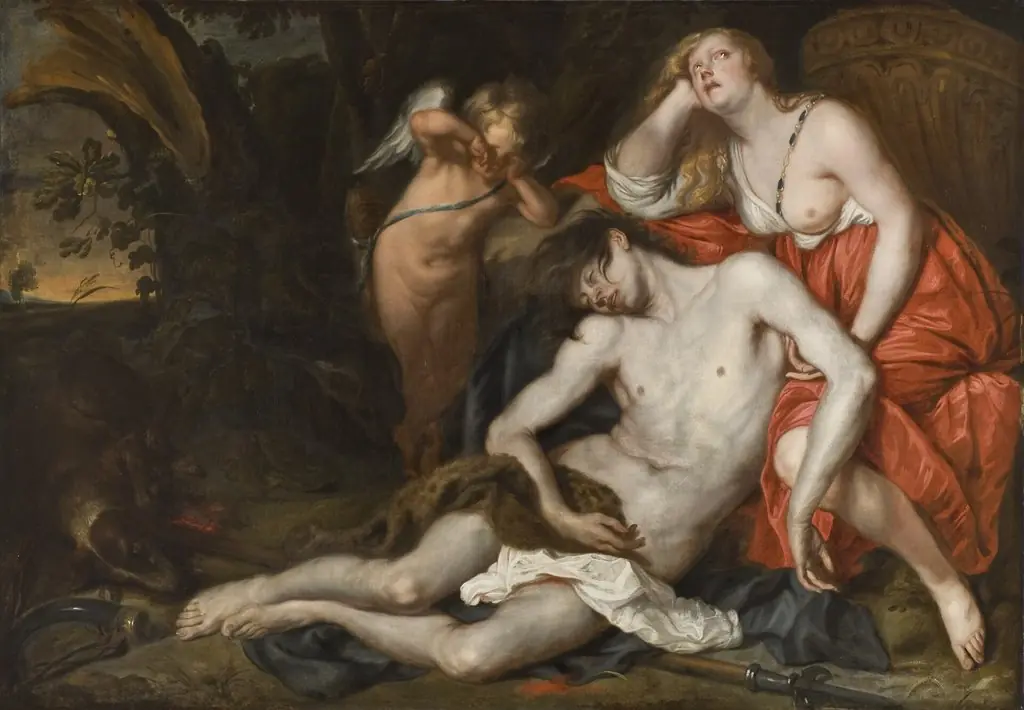
The scene captures the moment after Adonis’s fatal wounding, with Venus mourning over his body. A winged figure hovers above, offering a wreath—perhaps symbolizing honor or the fleeting nature of life. A dog, loyal companion to the hunter, investigates the fallen figure, while a snake, often linked to betrayal or fate, moves nearby. The natural setting underscores the tragedy’s connection to the cycles of life, death, and renewal in classical mythology.
Technique & Style
Galle employed the engraving technique, incising precise lines into a copper plate to create tonal variation and texture without color. Fine, controlled strokes define the contours of the figures, the texture of fur and foliage, and the subtle gradations of shadow. The absence of color emphasizes line and composition, reflecting the print’s function as a faithful reproduction of a painted original, prioritizing clarity and detail over atmospheric effect.
History & Provenance
Created around 1579, the print emerged from Galle’s Antwerp workshop, a hub for reproductive printmaking in the Low Countries. It was likely produced to meet demand for classical imagery among educated patrons and collectors. Though the original painting it reproduces is now lost, Galle’s version survives in multiple institutional collections, testifying to its circulation and enduring role in the transmission of visual culture during the Renaissance.
Context
In the late 1500s, reproductive prints like this one served as primary vehicles for disseminating artistic ideas across Europe. Galle’s work responded to a growing market for mythological subjects, fueled by humanist interest in antiquity. Engravings allowed artists and patrons without access to original paintings to engage with classical narratives, reinforcing cultural continuity and shared visual language among diverse regions.
Legacy
Galle’s engraving contributed to the standardization of mythological iconography in print form. Its precise technique and narrative clarity influenced later printmakers and helped preserve the visual language of classical stories beyond the reach of original paintings. Though overshadowed by later artistic movements, the work remains a significant artifact of how Renaissance imagery was reproduced, circulated, and remembered in early modern Europe.
Artist & collection
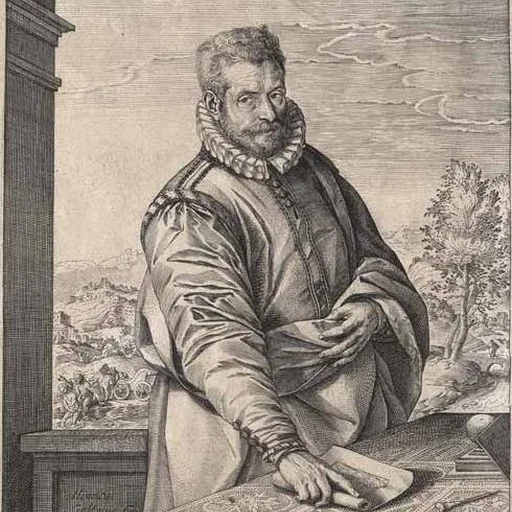
Artist
Philip (or Philips) Galle (1537 – March 1612) was a Dutch publisher, best known for publishing old master prints, which he also produced as designer and engraver. He is especially known for his reproductive engravings of paintings.

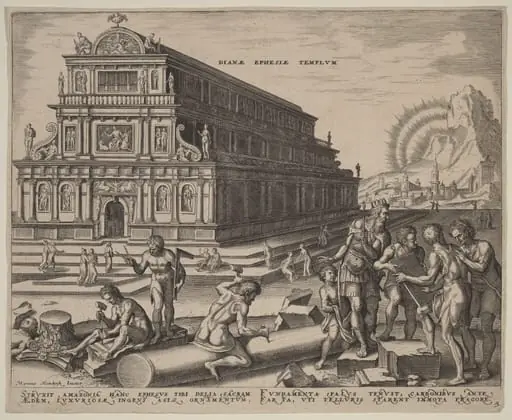 Dianae Ephesiae Templum (The Temple of Diana at Ephesus)
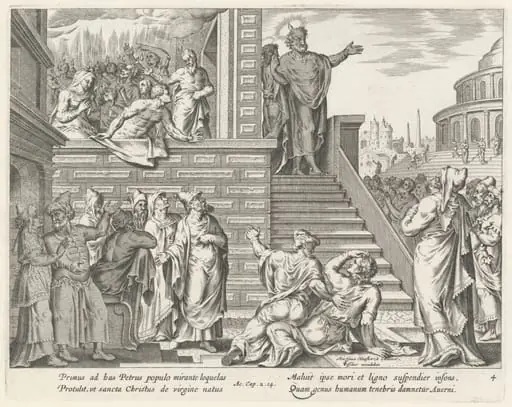 Saint Peter Speaks to the People about Christ
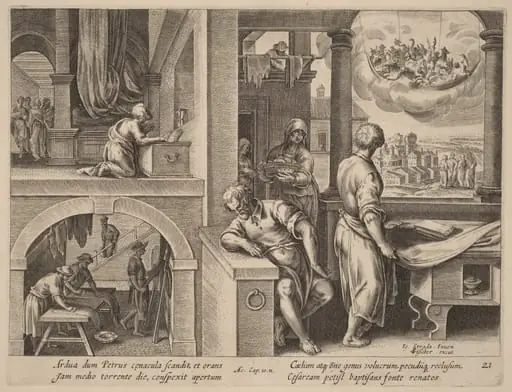 The Vision of Saint Peter
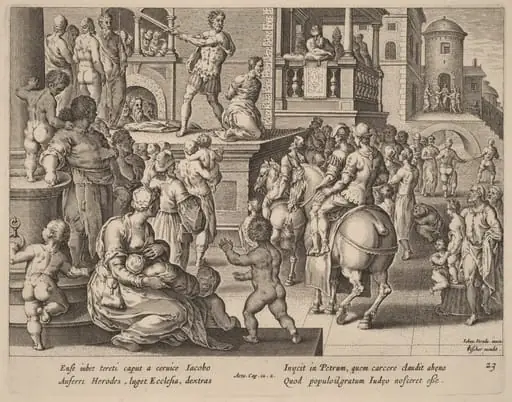 Beheading of Saint James
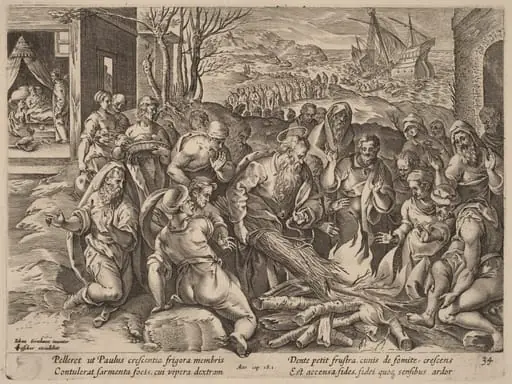 Saint Paul Shipwrecked on the Island of Melita
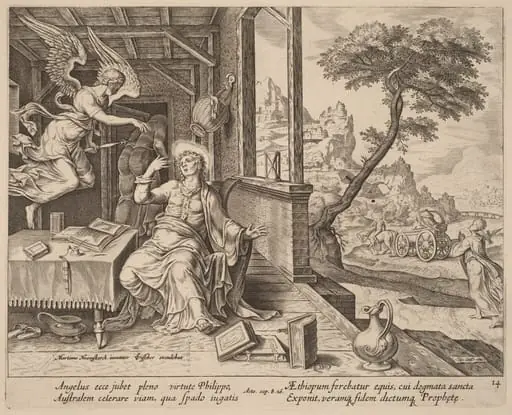 The Angel Orders Saint Philip to Accompany the Ethiopian Eunuch
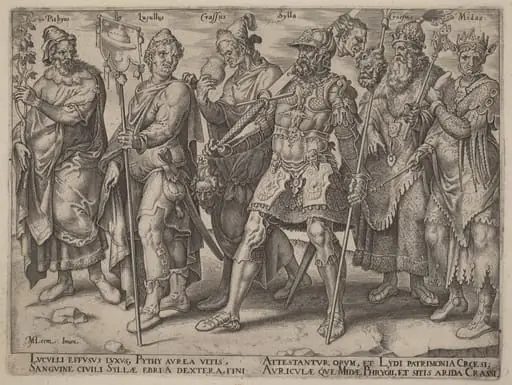 Notorious Examples of Wealth from Antiquity
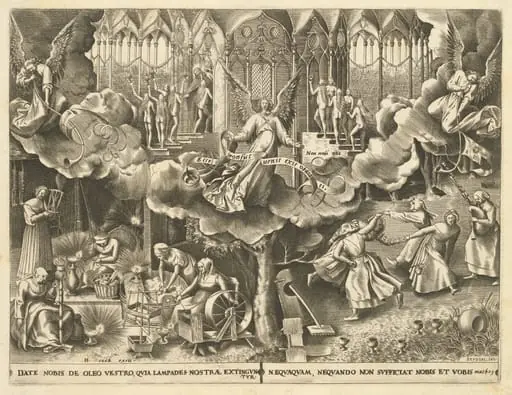 The Parable of the Wise and Foolish Virgins