Artwork
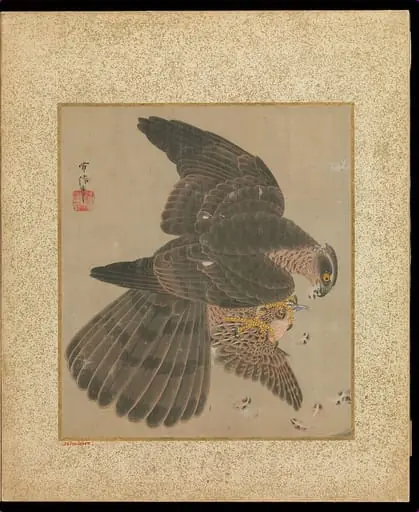
A hawk attacking a night-jar
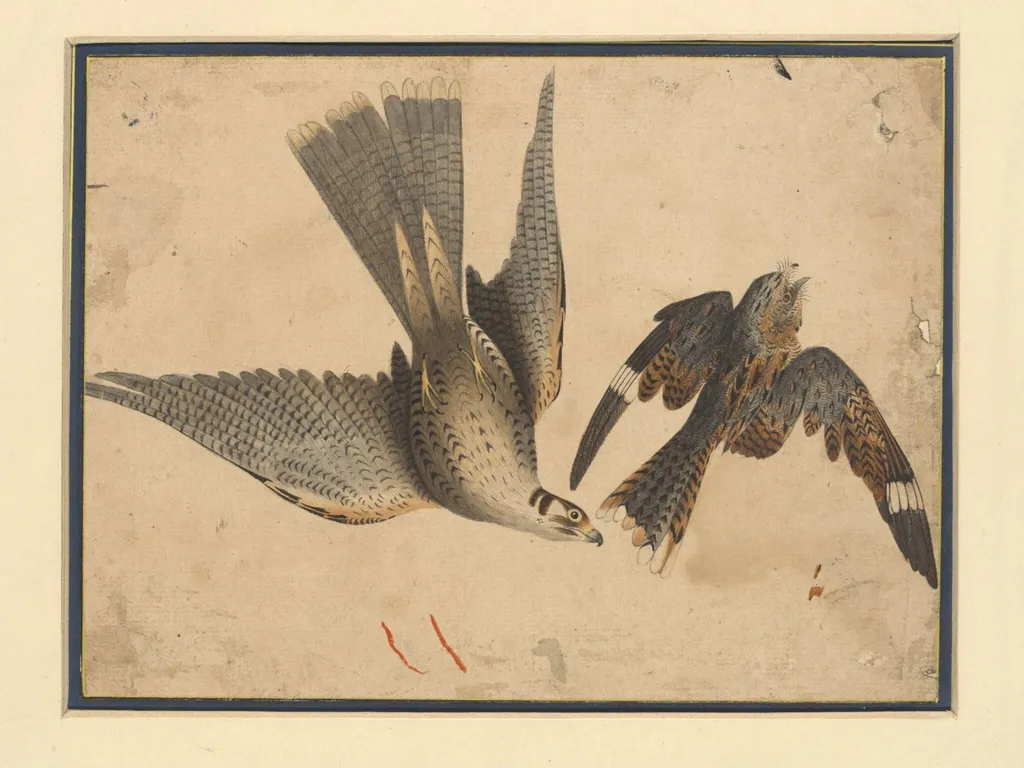
A hawk attacking a night-jar is a paint painting by the Impressionist artist Fakir Chand La. It dates from 1850 and is held in the collection of the Victoria and Albert Museum.
About this work
Overview
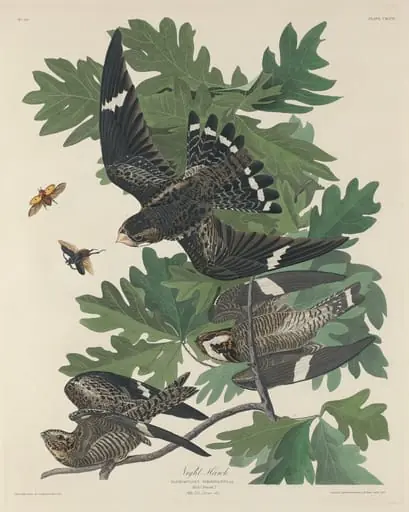
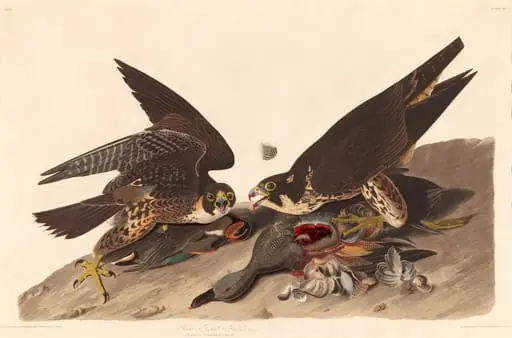
Fakir Chand La’s watercolour, dated 1850, captures a dramatic aerial encounter between a hawk and a night‑jar. The composition isolates the two birds against an unadorned backdrop, emphasizing the tension of the predator’s strike. The hawk’s outstretched talons and focused expression dominate the scene, while the smaller night‑jar appears caught mid‑flight, its wings drawn close to its body.
Subject & Meaning
The work portrays a classic predator‑prey dynamic, with the hawk representing swift, decisive action and the night‑jar embodying vulnerability. By freezing the moment of attack, the painting underscores the natural cycle of survival, inviting viewers to contemplate the fleeting nature of life and the relentless energy of the animal kingdom.
Technique & Style
Executed in watercolour, the piece relies on precise brushwork to render the hawk’s sharp plumage and the night‑jar’s mottled brown‑black feathers. The limited palette and restrained background enhance the contrast between the two birds, while the fluid strokes convey motion and tension without resorting to elaborate detail.
History & Provenance
La’s composition closely follows an earlier lithograph by Christopher Webb Smith, an artist active between 1793 and 1835. Smith’s print is preserved in Sir Charles D’Oyley’s Scrapbook, housed in the India Office Library, indicating that La likely used the lithograph as a reference while adapting the scene to his own medium and style.
Artist & collection
Artist
Fakir Chand Lal was the Mughal emperor’s bird painter who kept a tame hawk on his wrist while he sketched in the Delhi gardens.